
The philosophical problems the WEC's new Hypercar class is already facing
OPINION: Most of the column inches after the World Endurance Championship's opener were centred around the relative pace of the Hypercar class and the LMP2s, but there's another question that needs addressing in order for the new division to have a successful future

The 2021 World Endurance Championship opener at Spa last weekend offered a taste of a bright new era for top-flight sportscar racing. We finally got to see a Le Mans Hypercar in anger, but we also received a wake-up call about the political machinations and manoeuvrings that will inevitably be a part of the brave new world that lies ahead.
The WEC's Hypercar class, which will incorporate the LMDh machinery from Porsche, Audi, Acura on occasion and perhaps others in 2023, is a Balance of Performance category. If you don't like it, tough, because it has played a key role in rekindling the massive interest from major manufacturers in the pinnacle of prototype racing.
If there weren't multiple routes of entry into Hypercar, the future right now would be looking a whole lot less rosy. There arguably might not be a future, or at least a very different one.
The BoP inevitably leads to debate, discussion and dispute. If it disappears from the headlines, you can be sure that it's still a heated topic in what we once would called smoke-filled rooms.
The big controversy through the week of the Spa 6 Hours was not actually about the BoP. If you believe Toyota Gazoo Racing Europe technical director Pascal Vasselon it wasn't about politics at all. I think he's probably right. It was philosophical rather than political.

#7 Toyota Gazoo Racing Toyota Gr010 - Hybrid: Mike Conway, Kamui Kobayashi, Jose Maria Lopez, #22 United Autosports Usa Oreca 07 - Gibson: Philip Hanson, Fabio Scherer, Filipe Albuquerque
Photo by: Erik Junius
Toyota argued that the LMP2s, for all the efforts to slow them down, were far too quick in comparison with the cars competing in the Hypercar category. Don't forget the new generation of car has been conceived to increase laps times by approximately five seconds at a regular WEC track.
The Japanese manufacturer pointed out that, if Hypercar is the top division and P2 is the secondary prototype class, then there has to be a clear distinction between them in terms of lap time. Or, as Vasselon said, they have to be in "different ballparks".
Someone shouldn't be able to pitch up with an old car and compete on equal terms with the new. Because what would be the incentive to build something to the latest rules? The investment of doing so needs to be protected
So I'm going to put that debate aside for the moment, even though it was the one that dominated the event and generated the most column inches. We had to wait for after the race for the first BoP wrangle of the Hypercar era.
The Alpine-Gibson A480 grandfathered LMP1, the ORECA design that you and I knew as the Rebellion R-13, should by rights have been at the very least pushing the winning Toyota GR010 HYBRID all the way to the finish on Saturday. That it failed to do so was the result of the BoP, though admittedly a quirk of the BoP.
PLUS: How stumbling Toyota drew first blood in the WEC's new era
Nicolas Lapierre, Matthieu Vaxiviere and Andre Negrao finished second in the Signatech-run Alpine, a minute behind the winning Toyota GR010 HYBRID of Sebastien Buemi, Kazuki Nakajima and Brendon Hartley after six hours. It led the race on multiple occasions — for 47 of the event's 162 laps in fact — but it was never likely to win.

#36 Alpine Elf Matmut Alpine 480 Gibson: Andre Negrao, Nicolas Lapierre, Matthieu Vaxiviere
Photo by: JEP / Motorsport Images
The reason for that was the need to complete an extra stop for fuel as a result of the BoP. That requirement cost it well in excess of a minute, so it's easy to arrive at the conclusion that Alpine could have won the first race of the Hypercar era in Belgium.
The slightly nebulous concept of grandfathering — an American term, the origins of which I'm unclear — is to allow a previous generation of machinery to race on against a new breed of car. The idea is that they should be a tad behind in terms of pace. Being in the same "performance window" is the phrase used by the FIA and the Automobile Club de l'Ouest, the WEC's rule makers.
Someone shouldn't be able to pitch up with an old car and compete on equal terms with the new. Because what would be the incentive to build something to the latest rules? The investment of doing so needs to be protected.
My belief is that the objective of grandfathering is to allow previous-generation machinery to be close enough so that if the new cars have hiccups along the way, the old can get in among them and potentially win.
The new cars, which for Spa was just the Toyota, did have problems last weekend. The grandfathered Alpine didn't and managed to split them, but it was never likely to win thanks to that need for that extra stop.
The Toyota it beat, the car driven by Kamui Kobayashi, Mike Conway and Jose Maria Lopez, suffered a number of delays, the Japanese driver's off as the result of a braking issue at the Bruxelles hairpin among them. That was enough to leave the reigning WEC champions a lap down in third position at the finish.

#7 Toyota Gazoo Racing Toyota GR010 - Hybrid: Mike Conway, Kamui Kobayashi, Jose Maria Lopez
Photo by: JEP / Motorsport Images
The victorious Toyota's problems cost it significantly less time, approximately 40s as a result of two pitlane infractions. That wasn't enough to bring the Alpine into the equation.
So the question is what constitutes a reasonable delay for a Hypercar before a grandfathered car merits getting ahead of it? Not half a minute as things stand, so a minute, a minute and a half, two minutes? We're back to philosophy, I think.
Logic suggests that if Hypercar is a BoP category then something must be done to address Alpine's issue. But then you could also argue that a grandfathered car is on the grid by special invite and if it happens that, as a result of its design, it can't hit the distance of the new cars then so be it
It has been suggested that the grandfathering concept needs to reflect the fact that the LMH cars from Toyota and Glickenhaus - which should arrive in the WEC at round two at the Algarve circuit in June - are new and therefore likely to be less reliable than a proven car such as Alpine's ORECA design.
There might be some logic there, but what about next year when Peugeot arrives with its LMH? Will it be given a helping hand under the BoP because it doesn't have a season of racing under its belt? Ditto, Audi and Porsche when they pitch up with their LMP2-based LMDh contenders in the WEC come 2023. That sounds highly contentious to me.
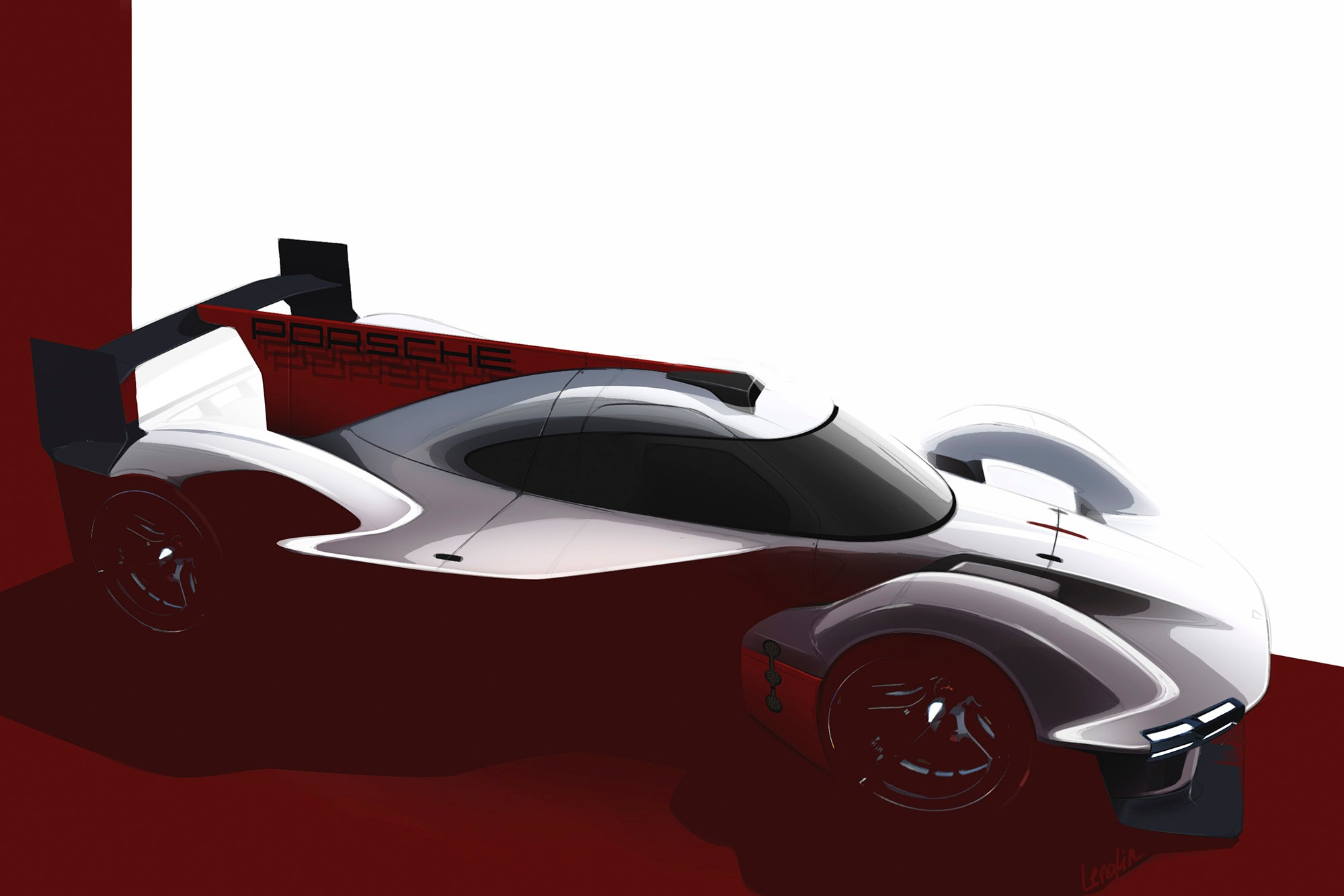
Porsche LMDh concept design
The rule makers got the Hypercar BoP pretty much spot on last weekend, at least in terms of pace around the majestic Circuit de Spa-Francorchamps. The Alpine was a gnat's whisker over four tenths slower than the winning Toyota over the race distance and only a few hundredths more than that if you average out the fastest 100 laps.
But what they didn't get right was the length of a stint on the fuel. The Toyota could repeatedly hit 25 laps, the Alpine was lucky to get to 23, thus the need for an additional stop.
But it's not necessarily correct to say that the FIA and the ACO got it wrong. That the Alpine couldn't match its rival on stint length was the result of a historical anomaly.
Think back to the end of 2018. Rebellion Racing made a late decision to return to the LMP1 ranks after a successful sabbatical in LMP2. Its call followed the announcement of the 2018-19 WEC superseason and the so-called guarantees that came with it about parity for the non-hybrid privateers with Toyota, the last manufacturer left standing in LMP1 after the withdrawal of first Audi and then Porsche.
What we used to call the R-13 was hastily conceived and developed out of ORECA's 07 LMP2 design. That explains the shortfall on the number of laps the Alpine could do between stops at Spa. It couldn't accommodate the amount of fuel — measured in megajoules per stint — allocated to it under the BoP, which to my understanding was calculated to allow it to go the same distance on a tank as Toyota's LMH. The A480 wasn't handicapped by design, rather by accident.

#36 Alpine Elf Matmut Alpine 480 Gibson: Andre Negrao, Nicolas Lapierre, Matthieu Vaxiviere
Photo by: JEP / Motorsport Images
Logic suggests that if Hypercar is a BoP category then something must be done to address Alpine's issue. But then you could also argue that a grandfathered car is on the grid by special invite and if it happens that, as a result of its design, it can't hit the distance of the new cars then so be it.
The problem for the rules makers is that it appears there's no room in the A480's monocoque for a bigger tank. So that means the only solution would be to cut the energy allocation of the LMH machinery, which in the Toyota's case also includes electric energy from its front-axle hybrid system.
That would be problematic in relation to the other big debate at Spa, the one concerning the speed of the Hypercars in relation to the P2s. Vasselon was never suggesting that the GR010s were going to be beaten by the LMP2s if they proved reliable. One of the advantages of the cars in the Hypercar class is that they require fewer pitstops than the secondary prototypes.
The WEC is in a bit of a pickle right now, but then we always knew there would be teething problems on the road to the nirvana of 2023
Having the P2s another step closer to the Hypercars isn't a great advert for the new category at a time when we know there are other manufacturers keeping a weather eye on what's going on in the WEC right now.
That they are so close — Toyota has calculated that the winning United Autosports ORECA-Gibson 07 was quicker than the GR010s over approximately 45% of the laps last weekend — can be explained by recourse to the history books. The latest P2 rules introduced in 2017 resulted in a massive performance step. So quick are the cars that even a 65bhp reduction in power, a 20kg increase in minimum weight and the requirement to run low-downforce Le Mans aero at all tracks hasn't been enough to put them a suitable margin behind the Hypercars.

#22 United Autosports USA Oreca 07 - Gibson: Philip Hanson, Fabio Scherer, Filipe Albuquerque
Photo by: JEP / Motorsport Images
United's victorious entry shared by Filipe Albuquerque, Phil Hanson and Fabio Scherer was only down on the winning GR010 by 1.3s over a 100-lap average. Toyota would like to see a much bigger gap, pointing out that when more cars arrive in Hypercar the inevitable spread of performance will make the P2 problem even more acute.
The ACO and the FIA are facing two problems right now and I'm not sure the solutions for them are compatible. Reducing the number of laps per stint the Hypercars can achieve isn't going to help what has been dubbed class stratification. The rule makers have already said they won't be slowing the P2s, but making the Hypercars faster will potentially worsen Alpine's plight.
The reason for that is the only way of doing it would be to increase the power allowed to the Hypercars, even though Toyota has said it couldn't go up on present levels in the short term. Don't forget that a year ago the minimum weight for LMH machinery was reduced from 1100kg to 1030kg for two-wheel-drive cars and 1040kg for four-wheel-drive machinery to bring it in line with what's being planned for LMDh. That suggests there's not a lot of scope for getting weight out of the new cars.
The WEC is in a bit of a pickle right now, but then we always knew there would be teething problems on the road to the nirvana of 2023. Yet we shouldn't pretend that they're going to disappear when we get there. That's because the creeping tentacles of the BoP have reached all the way up to the pinnacle of sportscar racing.

#7 Toyota Gazoo Racing Toyota GR010 - Hybrid: Mike Conway, Kamui Kobayashi, Jose Maria Lopez
Photo by: JEP / Motorsport Images


Why Toyota’s 2026 WEC triumphs have put it into the all-time greatest endurance racing team debate

How Toyota destroyed the competition to seal the WEC crowns

When Can-Am made its controversial comeback

WEC Barcelona: Genesis secures maiden series pole from Toyota

How Ford is "hitting milestones" in preparation for WEC Hypercar assault

How Porsche Penske finally broke its Petit Le Mans duck

Why there’s no perfect solution to the WEC safety car conundrum

How an “informed gamble” enabled Toyota to beat Alpine in the Fuji 6 Hours

FIA expects F1 races in Qatar and Abu Dhabi to run as planned

Top five roles on Motorsport Jobs this week

Champions crowned at incident-filled Donington Park 750 Motor Club meeting

Why Toyota’s 2026 WEC triumphs have put it into the all-time greatest endurance racing team debate
Subscribe and access Autosport.com with your ad-blocker.
From Formula 1 to MotoGP we report straight from the paddock because we love our sport, just like you. In order to keep delivering our expert journalism, our website uses advertising. Still, we want to give you the opportunity to enjoy an ad-free and tracker-free website and to continue using your adblocker.


Top Comments