
The 10 best GT3 cars since group debut in 2006
This year marks the 20th anniversary of GT3 and during that time there have been some truly standout machines - here's the top 10

Autosport Retro
Telling the forgotten stories and unearthing the hidden gems from years gone by.
10. Bentley Continental GT3 (first-generation)
Bentley kept its promise that it would return to the race track after parking the Speed 8 LM-GTP following its victory in the 2003 Le Mans 24 Hours. Eventually. It took 10 years and came via an unlikely route. The Continental didn’t look like the ideal base for a racing car, but the GT3 regulations gave the M-Sport team chosen to develop a behemoth of a car the freedoms required.
Victory in the Blancpain Endurance Series round at Silverstone in the second race of its first full season in 2014 proved again that the fundamental principles of GT3 worked but also that a rally team could build a racing car. A never-say-die last-stint performance from Steven Kane secured the win, giving Bentley its first international race victory on home turf in more than 80 years.
It was just the start of an impressive career for the gen-one Bentley GT3 racer. More Blancpain wins, as well as a drivers’ title in the Sprint Cup segment and a teams’ crown in endurance, would follow. The shame for the car was that it never triumphed in one of the big GT3 enduros, though there were near-misses. It wasn’t until a second-generation GT3 was produced on the next Continental platform that Bentley put that right with victory in the 2020 Bathurst 12 Hours in what turned out to be the twilight of the programme.
9. Dodge Viper Competition Coupe
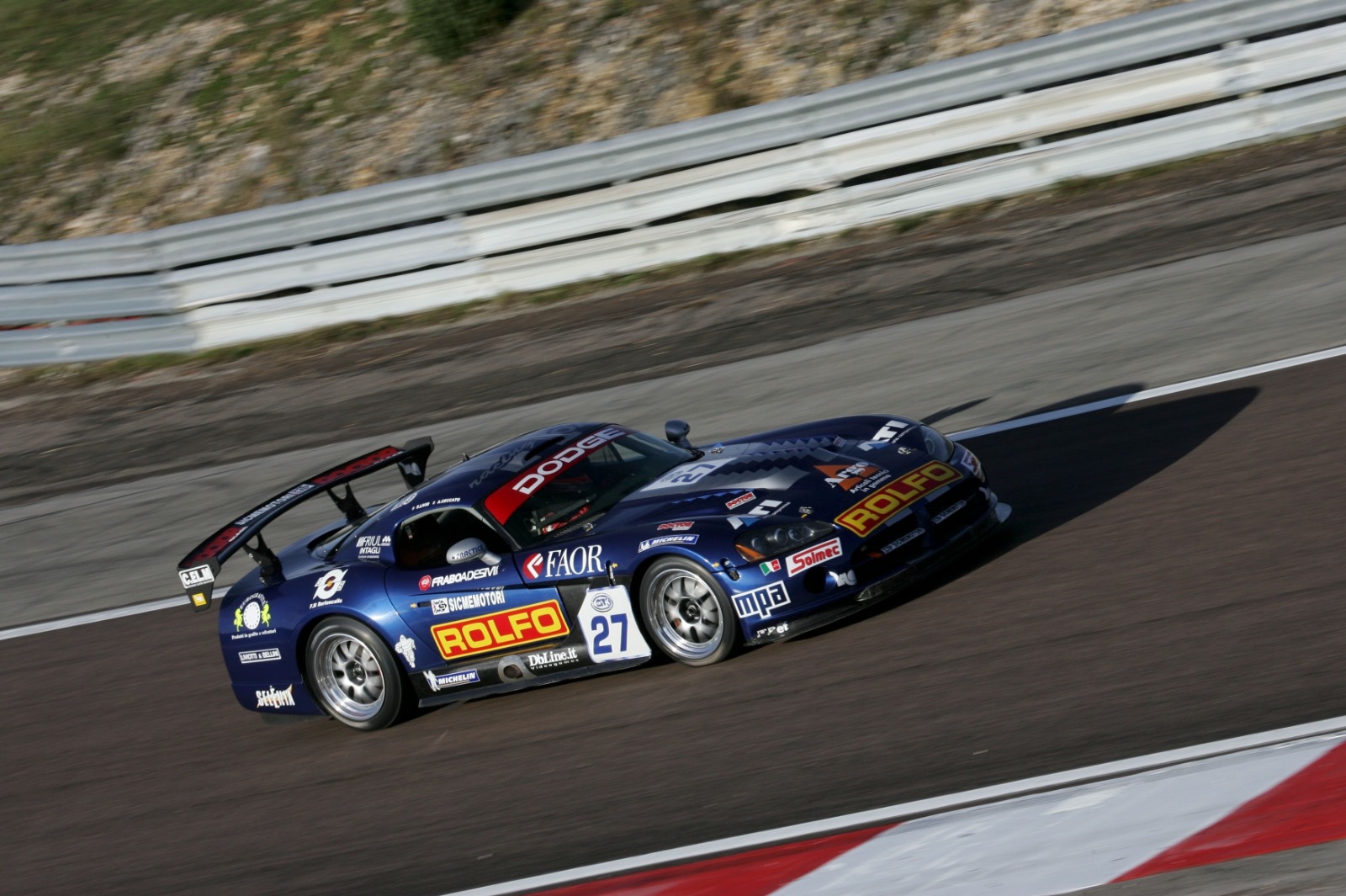
The Dodge was there for the debut of the FIA GT3 European Championship
Photo by: Sutton Images via Getty Images
Stephane Ratel billed his idea for GT3 as the “cup of cups”. Incorporating one-make machinery was a way of getting the category and the new-for-2006 FIA GT3 European Championship off the ground. But when he suggested at a meeting of the FIA GT Commission that Chrysler might like to participate with its Dodge Viper Competition Coupe, he got short shrift from the manufacturer’s representative. He was told if he wanted the cars, he’d have to go to America and buy them himself. So that’s what he did!
Ratel purchased nine examples of the VCC, built for the Viper Cup in North America, and each of them was on the grid for the FIA GT3 opener at Silverstone in May 2006. Put simply, the Viper helped GT3 make the flying start that it did, and the car was competitive to boot. Two of the trio of teams each running three cars, Racing Logistics (a spin-off of GT stalwart Larbre Competition) and Racing Box, were race winners in year one.

It was out in the regions as GT3 spread around the globe where the Viper scored its biggest successes. It won the inaugural GT3 Brazilian Championship in 2007. Autosport readers will be more familiar with its successes in the British GT Championship that year and the next, Team RPM and then Brookspeed claiming the honours.
The Viper faded from the scene thereafter, but it had carved itself a little place in GT3 history.
8. Porsche 911 GT3-R (991-shape)

Porsche was initially opposed to GT3, but has since found vast success
Photo by: Brian Cleary/Getty Images
Porsche came out against GT3 as soon as Ratel put his ideas for the new class forward at the end of 2004. It viewed it as unnecessary - or perhaps a threat - at a time when its pyramid of one-make series topped by the Formula 1-supporting Supercup was expanding. The irony was that Ratel and FIA had chosen the new-for-2005 911 GT3 Cup as the performance benchmark for GT3.
The necessary homologation for the car to compete in FIA GT3 was undertaken by ORECA Motorsport as a result of Porsche’s opposition, but the manufacturer slowly came around to the new category. There were some add-ons for the Cup car in 2007 and then an upgraded version thereof called the Cup S for the following year. Only in 2010 did it develop a bespoke car, a 997-shape machine known like its successors as the 911 GT3-R.
It won the inaugural Blancpain Endurance Series race at Monza in 2011. But one thing it couldn’t do was add to Porsche’s victory tally in either of the big 24-hour races at Spa or the Nurburgring. The second-generation 911 GT3-R, based on the 991-shape version of Porsche’s enduring sportscar, put that right after its arrival in 2016.
First off, it claimed victory at the ‘Ring with Nick Tandy, Frederic Makowiecki, Richard Lietz and Patrick Pilet driving a Manthey car in 2018. Tandy’s success at the ‘Ring got him thinking about completing his set of victories at the big 24-hour enduros (he only had a class win at Daytona at that point) by winning at Spa. He went seeking a drive in a race that he’d previously only contested once. A near-miss with Rowe Racing in 2019 was followed by the win he craved in ’20 with the German team.
“It was a nicer car to drive, just easier to handle, though it still felt like a Porsche 911,” says Lietz when comparing the 991 and 997 GT3 cars. “It was a bigger car and had a lot more downforce. It was a big step for us.”
7. McLaren 650S GT3
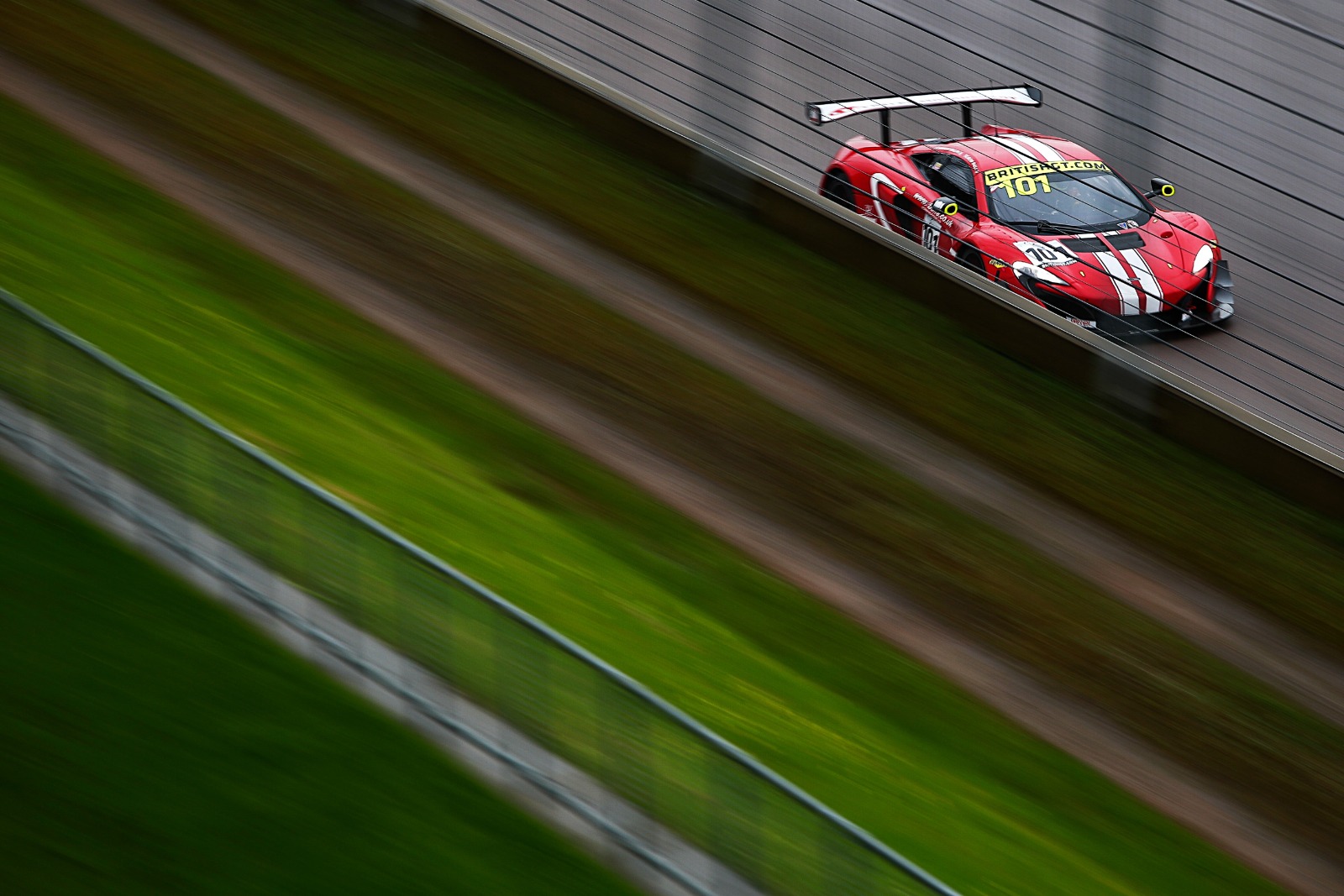
"The 650 was a big step forward" for McLaren, says Rob Bell
Photo by: JEP
McLaren had gone GT racing for the first time since the end of the career of the 1995 Le Mans-winning F1 GTR in partnership with CRS Racing from 2011. Its first car, the MP4-12C, wasn’t bad, especially after an evolution for its second season. The 650S that followed was essentially the same car with revised aero and an Xtrac gearbox instead of the 12C’s Ricardo transmission. It was an improvement out on the race track and in the looks department.
The VonRyan Racing squad had won Blancpain races in the new car’s maiden season in 2015 before CRS opted to field a works team under the Garage 59 banner, a name taken from the race number of the triumphant F1 GTR at Le Mans. It duly won the Blancpain title with Shane van Gisbergen, Rob Bell and Come Ledogar. There was also a Bathurst 12 Hours victory the same year for Garage 59 running under the Tekno Autosports banner.
“The 650 was a big step forward,” says Bell. “The aero was the big thing - it put us in line with the other quick cars of the day. It was also more reliable, which wasn’t always the case with the 12C.”

6. Mercedes-Benz AMG SLS GT3

The gullwing doors were a unique feature on the SLS GT3, which was an immediate success for Mercedes
Photo by: Hoch Zwei/Corbis via Getty Images
Mercedes joined the GT3 party in 2011 with the SLS developed by long-term motorsport partner HWA, architect of its DTM programmes. The thing looked the part, complete with gullwing doors, and was pretty much an immediate success: it won its first race before it was even homologated at the back end of 2010.
The Mercedes-AMG GT3 that followed in 2016 is still going strong, 10 years and an evolution later. It has won more big races and championships than its predecessor, but the first Merc GT3 gets the nod on this list. There are two reasons: those gullwing doors and that it allowed DTM legend Bernd Schneider the chance to remind everyone of his undoubted talents in his dotage.
Schneider might have been more or less retired for three years prior to the previous season and was knocking on the door of the big five-O, but in 2013 he showed his class over the course of an amazing campaign.
Not only did he claim overall wins in the Spa, Nurburgring and Dubai 24-hour races, but he also won over 12 hours at Bathurst and Yas Marina. The Spa performance was particularly impressive. Jeroen Bleekemolen, one third of the line-up in the HTP Motorsport entry, had to leave early after his wife went into labour, leaving driving duties to the veteran and his young team-mate, Maximilian Gotz.
5. Ferrari 430 GT3 (all evolutions)

Ferrari is a GT3 stalwart
Photo by: Sutton Images via Getty
Ferrari was against GT3 like Porsche. Or at least it stuck its hand up in opposition in all the FIA meetings, according to Ratel. But it was more than happy to allow the Swiss Kessel Racing team to develop a car based on its Challenge one-make racer for year one of the category.
Having Ferrari on the grid was important for the fledgling class. It gave it an all-important cachet in the same way as Prodrive’s 550 Maranello GTS had done in the FIA GT Championship from 2001. But it also established a foothold in GT3 for the Prancing Horse that would be exploited by the factory when it came with its own 458 Italia GT3 in 2011. Somewhere in the region of 500 cars later, Ferrari is indelibly associated with a class it might or might not wanted to happen in the first place.
There were three versions of the Kessel 430. The first was a Challenge car with nothing more than a wing at the back and a splitter at the front. The second, introduced in 2007, incorporated revised bodywork to accommodate a bigger wheel/tyre package and claimed the FIA GT3 title that year. The third, the 2009 car known as the Scuderia, got a bigger, more powerful engine and a racing gearbox. Together, they put Ferrari on the GT3 map.
4. Aston Martin V12 Vantage GT3

The V12 Vantage has won a record-breaking four British GT titles
Photo by: Jakob Ebrey / Motorsport Images
Aston Martin’s second stab at a car for a still fledgling category was a gem that hit the GT3 nail on the head. The V12 Vantage, introduced for 2012, was a user-friendly machine that the amateur could truly exploit. A quartet of British GT Championship crowns with three teams and two gentlemen and one gentlewoman — Flick Haigh in 2018 - are testament to that.
Jonny Adam, who began a career as an Aston Martin Racing factory driver that continues to this day in ’12, is in the record books as winning three of the V12 Vantage’s British titles, but he reckons he should be credited with all four. He missed out on sharing the crown with Beechdean team-mate Andrew Howard in 2013 as a result of a points penalty for, of all things, inadvertently going across the grass at Snetterton’s Esses. Amends were made in 2016 when they shared the title.

“The V12 Vantage was a great turn-key car,” says Adam, who has custody of the championship trophy from 2013. “It wasn’t too complicated to run and get those last couple of tenths out of it. Once you got it in the window, the customers thrived in it.”
3. Lamborghini Huracan GT3 (all evolutions)

The Huracan is in its final full year of competition and what a success it has been
Photo by: JEP
Lamborghini had been represented by Reiter Engineering’s line of Gallardos from the get-go of GT3, but it opted to create an in-house motorsport department known as Squadra Corse in 2013. Its first product was the Huracan GT3, a car launched in 2015 but still racing today. The Temerario GT3 may have been introduced for 2026, but it is only racing in the hands of a selected few factory-backed teams.
The Huracan won on debut in the opening Blancpain round in ’15 and pretty much continued winning for 10 years. It notched up two Blancpain GT Series Endurance Cup titles, one in the Sprint Cup and another pair of overall BGTS crowns. There was a hat-trick of GT Daytona victories at the Daytona 24 Hours in 2018-20 followed by one in GTD Pro in 2022 and a DTM title in 2024. That’s not to forget Barwell Motorsport’s successes in British GT and beyond.
But one thing it hadn’t done was claim a victory in one of the big GT3 enduros. The Grasser team, which had been part of the programme since the beginning, put that right at the Spa 24 Hours last year with the EVO2 version of the Huracan. It was a great way to end the frontline career of one of the GT3 greats.
2. Audi R8 LMS GT3 (gen-one car, 2009-14)
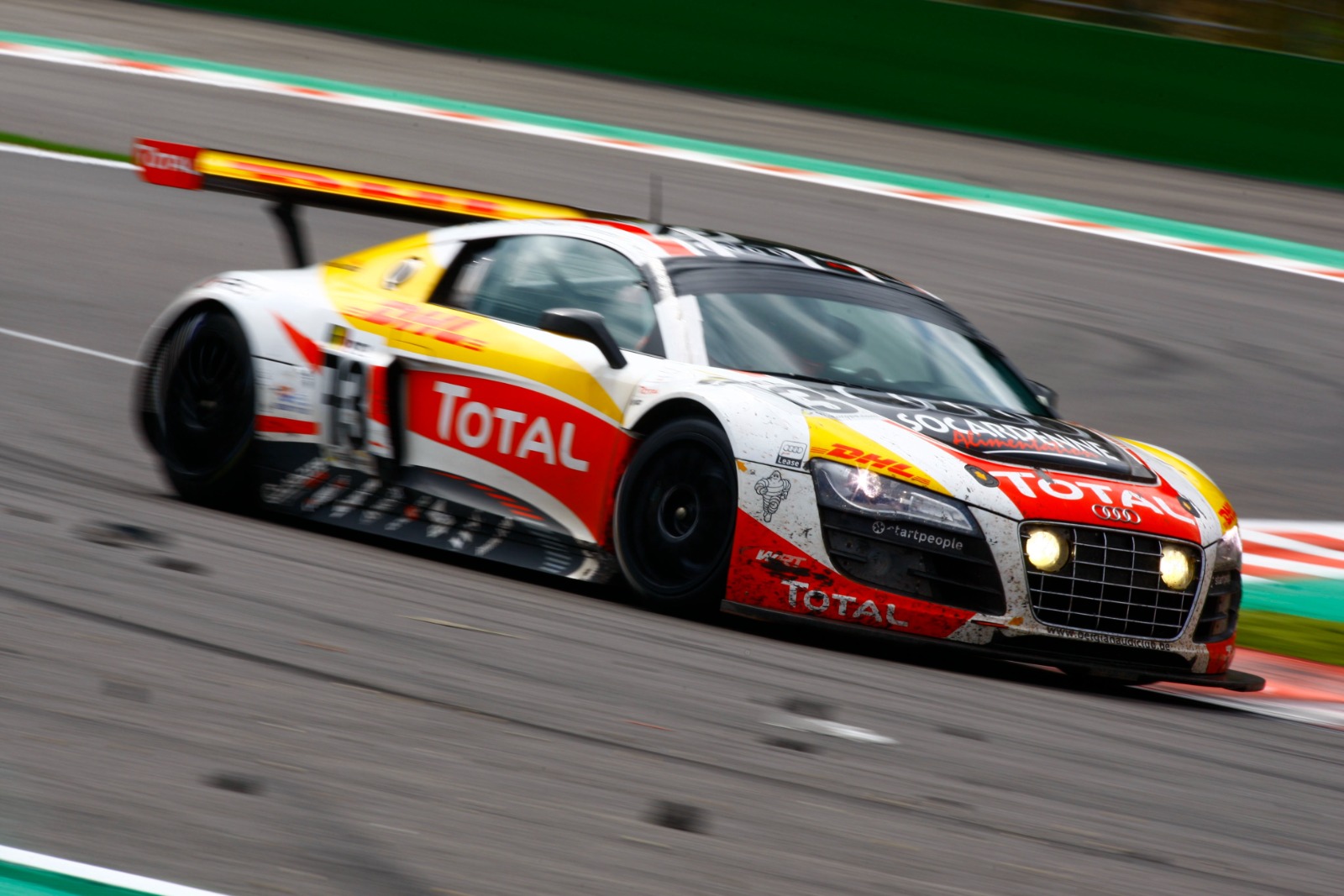
Audi set the standard with its factory driver programme
Photo by: Malcolm Griffiths/LAT Images via Getty Images
Audi’s arrival in GT3 with the R8 at the beginning of 2009 was a turning point in the story of the category. It didn’t do things by half, not surprising for a marque that was on eight Le Mans 24 Hours wins and counting. Significantly, it took its V10-engined machine endurance racing: competing at the Spa and Nurburgring 24 Hours was a key component of its programme.
Moreover, it saw the value in supporting the best of its customers and employed a pool of drivers who could be loaned out for the major events. It was a model that would eventually be followed by all the other big players in the category.
Audi reaped the rewards of the strategy. Not only did it take a total of 11 victories at Spa and the ‘Ring combined but it also sold an amazing number of cars. Across two generations of R8, more than 300 were produced before the programme was wound down at the end of 2024.
1. BMW Z4 GT3
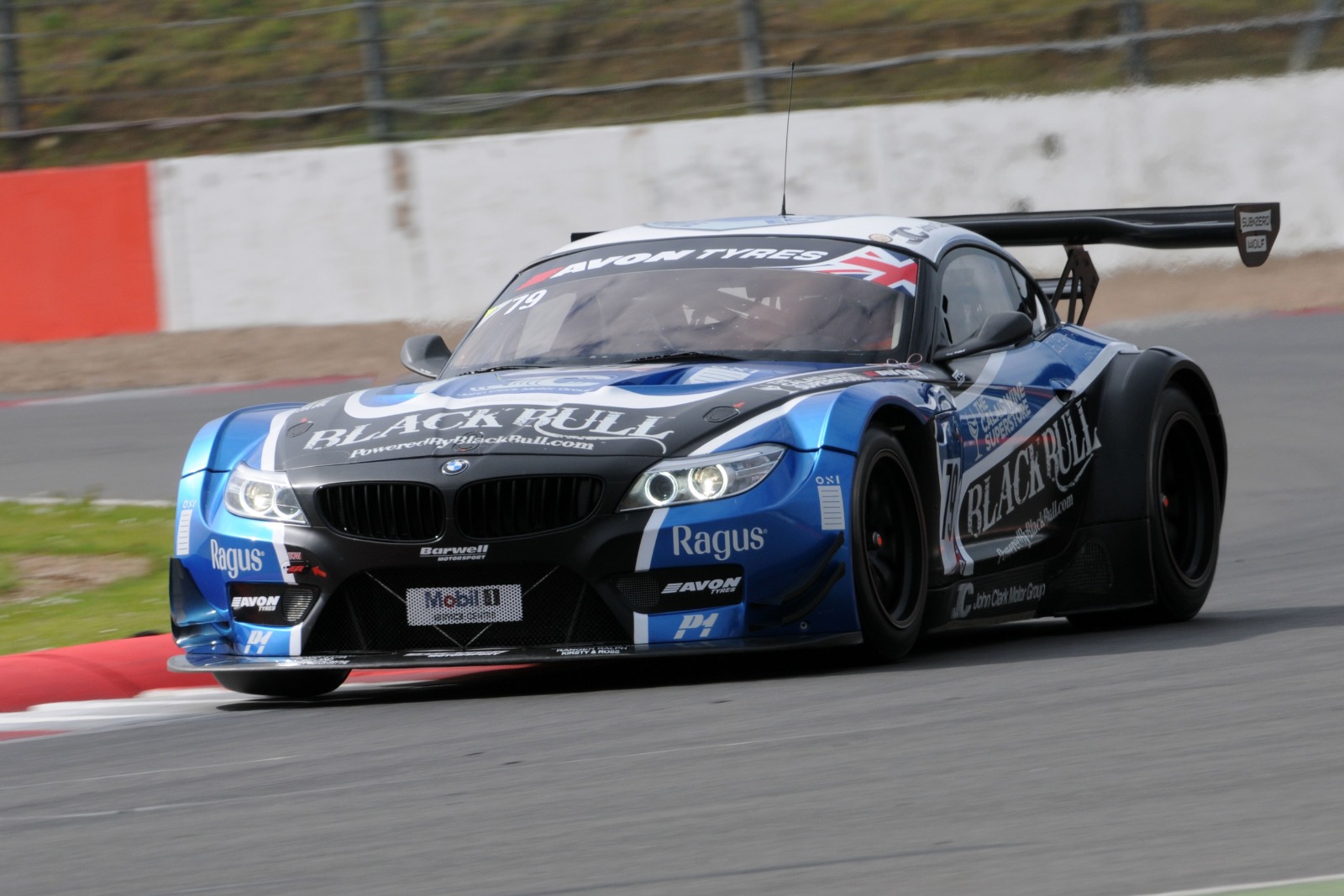
The Z4 GT3 is considered a favourite by many
Photo by: Jakob Ebrey/LAT Images via Getty
BMW’s Z4 espoused the original spirit of GT3 perhaps like no other. It won a lot of races, the Spa 24 Hours included. The drivers loved the thing. And it looked good and sounded even better. All reasons why it should be #1.
After the Munich marque decided that the M6 wouldn’t cut the mustard in GT3, it realised it didn’t have a suitable base to produce a car for the fledgling class. So it dipped into the parts catalogue to create one! It had already offered a customer car aimed at Nordschleife privateers based on the previous iteration of the Z4, so now it took out the three-litre straight-six turbo of E89 version and shoehorned in the four-litre V8 from the M3 that built on its experience with a GT2 version of that car. Developing a GT3 car back then was all about hitting a performance target rather than adhering to a prescriptive set of regulations.
The result of its blue sky thinking was a machine good enough to win at the highest level of GT3 in only its second season in 2011, admittedly after a bit of a rework: an evolution version of the car included an increase in engine capacity to 4.4 litres. The Belgian Marc VDS squad, which would become synonymous with the Z4, took a pair of end-of-season victories in the new Blancpain series.

There was also a pole position for Marc VDS at the Spa 24 Hours, the centrepiece Blancpain round, and a second-place finish for the Schubert team, which had led development of the car through 2010. It was the beginning of a Spa saga for the Z4.
There were any number of reasons why it didn’t win the years that followed, an exploding fire extinguisher among them. And don’t mention the collision with an errant hare! Yet win the big one the Z4 finally did, just sneaking under the wire to notch up the victory in 2015 before it was replaced by the M6 GT3 the following year.
Nicky Catsburg, who shared the winning Marc VDS car with Markus Palttala and Lucas Luhr, names the Z4 as his favourite racing car. Ever. “I loved it: it was small and nimble, and loud and beautiful,” he says. “It gave me some good results and really helped my career a lot. That car for me will always remain very special.”

Winning the 2015 Spa 24 Hours was the highlight for the Z4
Photo by: BMW


The hope for Lola’s comeback and what it could mean

Why Lola has got big ideas for its future

The debate on whether WEC prioritised 'entertainment' over 'sport' in Austin

Shwartzman to make WEC return with Peugeot

How Ferrari profited from late Toyota pain in Austin

WEC Austin: Ferrari takes pole from Cadillac after identical qualifying times

McLaren has already completed 30-hour endurance test with LMDh challenger

Is GT3 entering ‘the danger zone’?

WRC Chile: Pajari to take deeper look to understand lack of speed in Chile

WRC Chile: Solberg saves best until last to pull away from Evans

How Norris unfurled a surprising - and "unrepeatable" - Spanish GP pole lap

F1 drivers criticise Madrid circuit, Verstappen laughs: "I'll sort it out"
Subscribe and access Autosport.com with your ad-blocker.
From Formula 1 to MotoGP we report straight from the paddock because we love our sport, just like you. In order to keep delivering our expert journalism, our website uses advertising. Still, we want to give you the opportunity to enjoy an ad-free and tracker-free website and to continue using your adblocker.


Top Comments