


How the Red Bull-Ford powertrain partnership has delivered so quickly
Setting up a brand-new engine operation seemed like a massive risk – but, after a problematic start to the 2026 season, this alliance has already started winning

When Autosport visited former Red Bull team principal Christian Horner’s country pile, he revealed that in the very same room we were setting up our cameras, he’d conducted many of the interviews to recruit key personnel for Red Bull’s powertrain project early in 2021. Just as the on-track rivalry with Mercedes spilled over into outright bitterness that season, there was a similar degree of wrangling behind the scenes as Red Bull poached key staff.
As was typical of that curious dynamic between Horner and his Mercedes counterpart, Toto Wolff, this battle entered the public domain as the various parties disputed the numbers of how many Brixworth personnel ‘crossed the floor’.
Regardless of this battle of the handbags, many of the early recruits to the core leadership team were indeed ex-Mercedes, including technical director Ben Hodgkinson, along with Steve Blewett, Omid Mostaghimi, Pip Clode, Anton Mayo and Steve Brodie, whose roles encompass responsibility for everything from design to production of the internal combustion engine, the electrical system, and the control electronics.
As the project ramped up, Red Bull also scored the notable coup of poaching Mercedes chief engineer Phil Prew, whose career includes stints at venerable specialist Ricardo as well as McLaren, where he race-engineered Lewis Hamilton to the 2008 world championship.
All this recruitment, along with the infrastructure investment, represented a huge financial and political risk: in scuppering a putative collaboration with Porsche, deeming its technical facilities insufficiently state of the art, Horner not only committed to building the powertrain ‘in house’, but he made an enemy of his future boss at Red Bull, Oliver Mintzlaff, who had initiated the Porsche deal.
Ford came on board in 2023 with a very different outlook. Where Porsche wanted equity in the business and to be hands-on in development, the Ford deal is a straightforward technical partnership in which Red Bull Powertrains can tap into the Blue Oval’s vaults of accumulated expertise.
“It’s a very open relationship, and the scope is not hemmed in at all,” says Prew. “And that’s one thing that we’re able to leverage very much, the deep expertise that exists in Ford across just any topic. We make a phone call, ‘Do you have somebody who knows about a bearing or a specific component?’ And within a couple of hours, literally, we’re talking to an expert in that field.
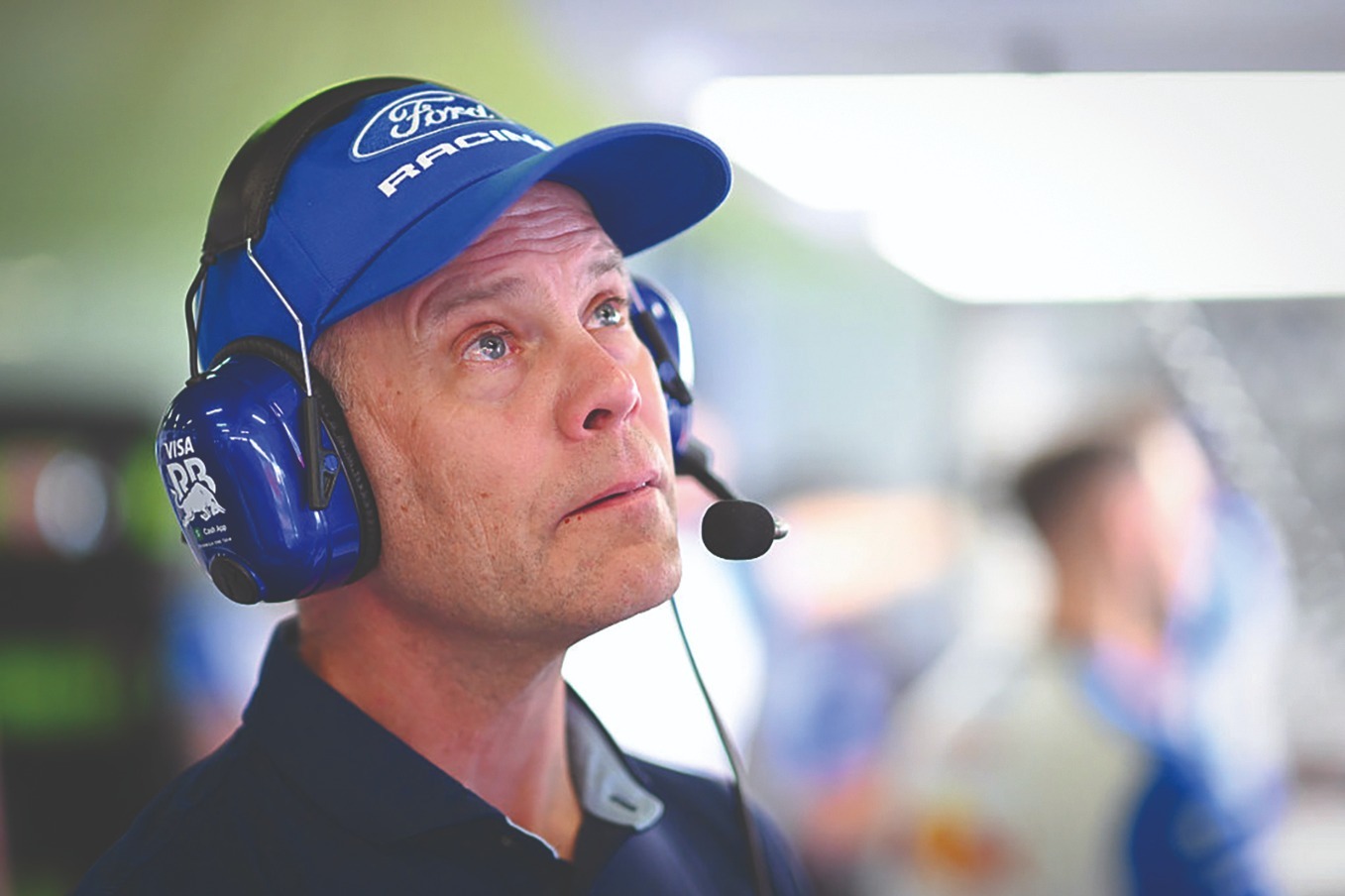
Rushbrook relates how Ford employees relish any level of involvement in the Formula 1 project
Photo by: Rudy Carezzevoli/Getty Images
“And while Formula 1 is very specialised, the expertise of these things is very much shared, and we’re able to solve problems together. And that’s on such a broad field of topics. I don’t know what the topic will be the next time I phone up, but with the experience and the breadth of Ford’s history it means that we often talk to the expert.”
“The excitement of those employees,” adds Mark Rushbrook, Ford Racing’s global director, “because they may be, in that example, a bearing specialist, they may have been working on bearings for 30 years, on production engines. And when they have the opportunity to contribute to a Formula 1 programme, that’s special for them. And they get so excited about that.
“So it’s been good for us as well to get employees excited about what the F1 programme is. They may not be working on it every day. They may only work on it for a handful of days, but they know they’re able to make a contribution. And then when that first win came, the reaction inside of our World Headquarters building, our own Ford Racing building, for Ford employees to be part of a win in F1 again, it was pretty special.”
Max Verstappen’s breakthrough victory in Malaysia, followed by a clean sweep of the sprint and grand prix in Singapore, came in the wake of being a strong podium contender in Italy, Spain and Azerbaijan. Red Bull’s RB22 didn’t look like a winning car at the start of the season but, rather like last year, development has elevated its competitiveness, if slightly later in the day.
"Where you spend that energy around the lap is critical to lap time. You can come up with a numerical optimal in simulation world, but as soon as you put it into the car, interactions with the drivers, interaction with the car requirements, high-speed corners, tyre management, all of these things… that’s been a constant evolution" Phil Prew
Looking from the outside in, it’s difficult to decouple car and engine performance, particularly given Verstappen’s predisposition to complain about every aspect of the package when it doesn’t meet his expectations. Early on, the RB22 lacked efficient downforce relative to the class-leading Mercedes and couldn’t match Ferrari’s SF-26 for slow-corner performance.
It also exhibited a peculiar tendency to lose performance in race conditions, a phenomenon the team has naturally declined to explain in detail but which is understood to be caused by a combination of underlying structural factors. At Monza, where he finished on the podium, Verstappen said the car felt like it was “made of paper”.
Verstappen has also been vocal about the power unit on occasions, though his comments tend to merge into his well-known disdain for the present technical regulations and their effect on the racing.

After unpromising start to 2026, development bore fruit with breakthrough victory in Malaysia
Photo by: Sam Bagnall/Sutton Images via Getty Images
But although the Red Bull-Ford power unit has been occasionally temperamental, it has rarely been terminally so: at the time of writing, before the Sao Paulo GP, Verstappen is yet to exceed his allocation of PU components for the year, while newly crowned world champion Kimi Antonelli and his Mercedes team-mate George Russell have both taken grid drops for passing the annual limit.
Others in the Red Bull family have been less fortunate – Isack Hadjar is on his seventh internal combustion engine (ICE) of the year, Liam Lawson his fifth, and Arvid Lindblad his sixth, but even these aren’t significant outliers in the context of other manufacturers and their customers under the new technical regulations.
The latest power units, with the near 50:50 split of ICE power to electrical energy, have required all the manufacturers to grow up in public. Only the first ‘shakedown week’ was held behind closed doors. The opening three rounds of the season, before a month’s hiatus owing to the cancellation of races in Bahrain and Saudi Arabia, exposed teething troubles up and down the grid.
Verstappen was eliminated in Q1 in Australia when he was caught out by an unexpectedly savage grab of engine braking into Turn 1, spinning him into the barrier. He and Lawson then made very slow starts.
Launches had been a hot topic since the pre-season, owing to a largely unforeseen consequence of the new technical rules: turbo lag, which under the previous rules was minimised by the MGU-H element of the hybrid system now banned. That required an adjustment to the starting procedure, but even then some drivers continued to get their launches wrong.
Mitigating turbo lag at the start requires a sophisticated balance of engine modes, target revs and clutch control, and for some teams it remains a problem. Along with the demands of managing energy output to attain the optimal lap, rather than driving to the limits of grip at each corner, launches form the core of driver complaints about the new formula.
“Obviously the regulation change with the increased electrification was a really big step,” says Prew. “And where you spend that energy around the lap is critical to lap time. You can come up with a numerical optimal in simulation world, but as soon as you put it into the car, interactions with the drivers, interaction with the car requirements, high-speed corners, tyre management, all of these things… that’s been a constant evolution. We’re learning literally every day, every lap we do. I don’t see an end to that at the moment.

Milton Keynes facility tailor-made to align with budget cap and needs of electrification
Photo by: Red Bull Content Pool
“It will just continue. I like to think we’re getting better, but it’s a big part of the regulations. I think for the internal combustion engine itself, putting that into the right space where it operates best is something that we’ve learned, as well across all the launch conditions, through-corner conditions, turbo lag, and all of these new challenges that we’ve faced.
“So it’s a really big space to operate in. If we consider the power unit itself, it has a kind of boundary of its capability, and it’s our job to ensure that we’re always operating at the edge of that boundary – that’s what we’re doing at the track and interacting with the car the whole time to make sure we’re using up all the engine.
“And then at the same time, and this is another challenge that we have now, is that the factory and the guys back in Milton Keynes doing the development for the 2027 engine are trying to make that envelope bigger so we’ve got more performance. That’s the constant challenge we have.”
“It’s raised our game, the quality that’s required for F1, for these power units. So there’s a lot of parts that are being made on a daily basis in southeast Michigan that are headed to Milton Keynes” Mark Rushbrook
Where the Red Bull-Ford project potentially has an advantage over its competitors is that the Milton Keynes facility was specified after the budget cap and the various limitations enshrined in it had been agreed, and with foreknowledge of the increased electrification coming in 2026.
So as well as having cutting-edge dyno facilities, it has space for extensive rig testing of ancillary components to prove their reliability before they go on the dyno. The baseline for dyno hours is currently 710, subject to additional allowances based on the number of customers and whether the power unit qualifies for the FIA’s Additional Development and Upgrade Opportunities framework (ADUO).
Given the compressed timescale of the project, Red Bull was also able to lean on Ford’s facilities in Dearborn for nuances such as proving its turbocharger design while the necessary infrastructure was still coming together in Milton Keynes. To meet the deadline of being on the 2026 grid, the partnership ended up going beyond the originally envisioned remit of an electrical-system and prototyping technology share.
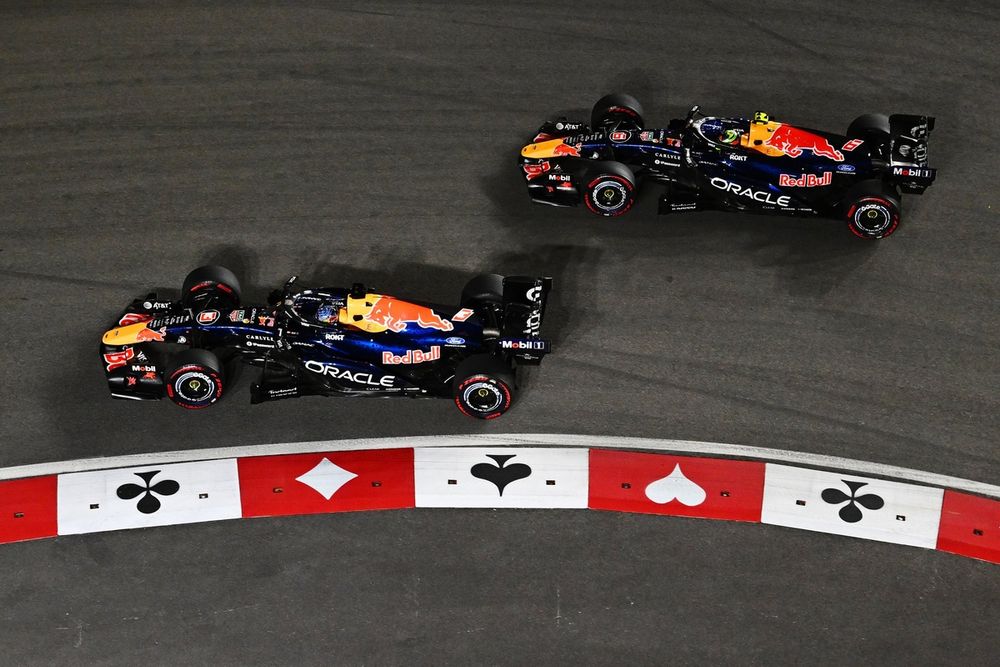
Ford has increased its involvement than originally planned due to tight timeframes to be ready for 2026
Photo by: Manuel Eletto
“We didn’t want to come in and have control,” states Rushbrook. “We had owned that team once and it didn’t work so well [Ford sold Jaguar Racing to Red Bull for a nominal £1 in 2004]. Red Bull showed how they were able to run the team and consistently win races and win championships. Our strategy at the time was to come in and be able to contribute to that, knowing the challenges they were taking on for the first time with the power unit.
“We started with a list of where we knew we could contribute, where Ben Hodgkinson felt they needed some help. That list has only grown. It was initially on the electrification side, with a focus there, but now it’s grown to… In Dearborn, we make a lot of advanced manufacturing or additive manufacturing parts with different materials.
“It’s raised our game in terms of the dimensional control, the quality that’s required for F1, for these power units. So there’s a lot of parts that are being made on a daily basis in southeast Michigan that are headed to Milton Keynes.”
If getting to the grid on time was an achievement in itself, the ambition has evolved over the year. That first win was still months away when the Red Bull-Ford ICE was judged the most powerful on the grid, and therefore not eligible for the resource breaks granted by ADUO. This proved contentious enough that CEO Mintzlaff petitioned FIA president Mohammed Ben Sulayem directly for a recount.
“It’s one of those mixed messages, right?” says Rushbrook. “It’s congratulations, but… So it was reassurance of the team in terms of everything they had accomplished. Validation, really, of how we were doing it got us to that position. But then it ties your hands with what you can do for the future. But that’s part of what the rules and regulations are, part of what we signed up for.”
“We were very proud,” adds Prew. “Surprised, of course, but there was an assessment, and for us to even be in consideration in our first year of racing is a remarkable achievement. Of course, we had much engagement and discussion with the FIA about the context of that assessment, which Laurent [Mekies, team principal] has spoken much about, but the very fact that we were in that discussion was a very proud moment, for sure.”
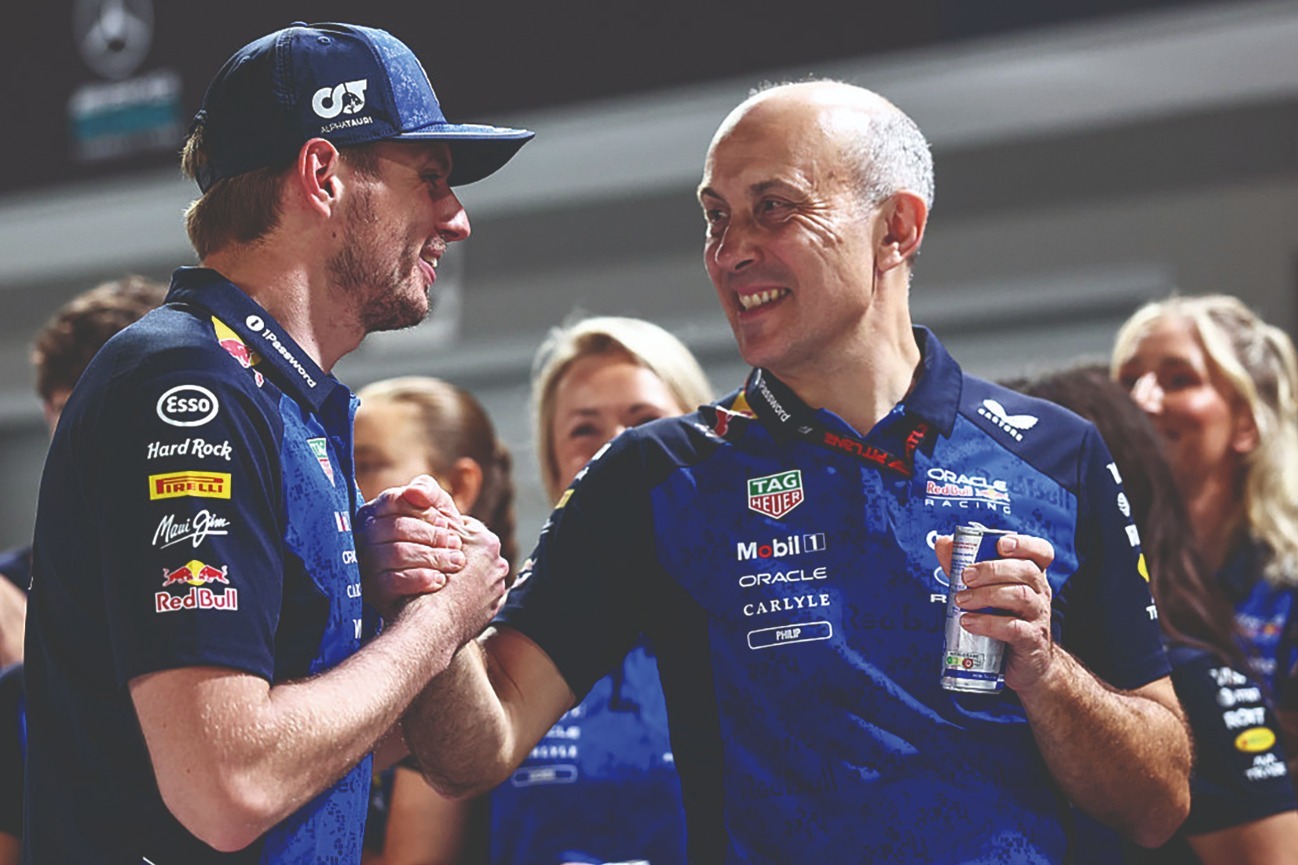
Ex-Mercedes man Prew celebrates Red Bull’s Singapore sprint and grand prix clean sweep with Verstappen
Photo by: Andy Hone/LAT/Getty Images
What’s perhaps most interesting about the progress Red Bull has made with its PU this year is that it has been able to do it without the breaks permitted by ADUO. The combustion chamber design is understood to be aggressive, one of several elements Red Bull pushed to the edge of pre-season deadlines – which meant sacrificing time for optimisation work. For much of the season, then, it’s been a case of learning how to exploit the inherent potential of the ICE.
It can still be occasionally truculent, as in Baku where Verstappen was compromised by misfires in qualifying. But there’s no doubt that the Red Bull-Ford power unit packs a considerable straightline punch.
Lindblad often describes his VCARB as “a rocketship”, while Verstappen’s ability to close in on race leader Russell even without access to Overtake Mode prompted Mercedes deputy team principal Bradley Lord to say it felt like the Red Bull was attached to the Mercedes “on a massive bungee cord”.
What’s perhaps most interesting about the progress Red Bull has made with its PU this year is that it has been able to do it without the breaks permitted by ADUO
Adapting to the small but significant PU changes coming next year will be a challenge. The reduction in electrical output is being offset by increased fuel flow, which will require detailed recalibration of the combustion process.
But given the progress so far, few would bet against Red Bull being a title challenger next season – and that, in the second year of the project, would be truly extraordinary given how long Honda took to reach that point in its last F1 cycle.

This article is one of many in the monthly Autosport magazine. For more premium content, take a look at the December 2026 issue and subscribe today.
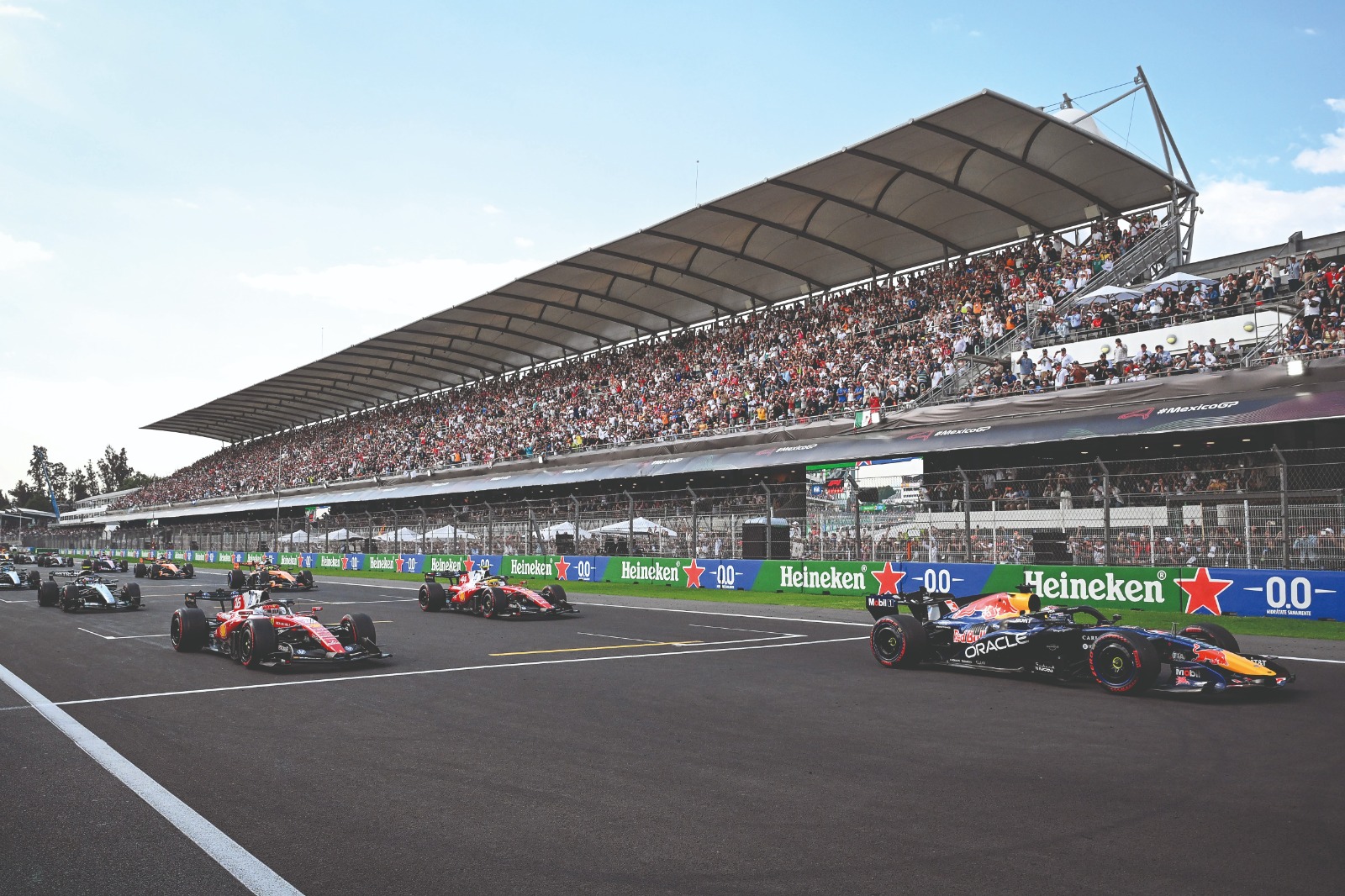
Verstappen leads the pack at Mexico City restart; Red Bull has been learning to exploit the potential inherent in its power unit
Photo by: Mark Sutton/Formula 1/Getty Images


Hankook poised to enter race for F1 tyre supply contract

The two debates at the heart of F1’s overtaking quandary

F1 drivers go through quizzical exercise in stewarding debate

War of the words: What will Verstappen and Russell do for an encore?

Who was the biggest loser as Antonelli played draft excluder in Las Vegas?

Cadillac retaining Bottas for F1 2027 is the logical move

The factors behind the abortive 2030 F1 rules announcement

What has Cadillac got to lose by picking Herta?
How the Red Bull-Ford powertrain partnership has delivered so quickly

FIA explores DRS return alongside push-to-pass system for F1’s V8 engines

Supercars Adelaide: Title fight goes down to Sunday after Feeney win in Race 2

MotoGP Valencia GP: Bezzecchi takes stunning pole, Marquez second
Subscribe and access Autosport.com with your ad-blocker.
From Formula 1 to MotoGP we report straight from the paddock because we love our sport, just like you. In order to keep delivering our expert journalism, our website uses advertising. Still, we want to give you the opportunity to enjoy an ad-free and tracker-free website and to continue using your adblocker.


Top Comments