


The tech changes helping Renault F1 team's best of the rest push
The new front wing concept Renault introduced at Formula 1's German Grand Prix was subject to further alterations in Hungary, as the team continues to develop its 2018 car

The wing, which only Nico Hulkenberg raced in Germany, features a multi-element endplate plus a novel flap and adjuster arrangement with the aim of fixing medium- and high-speed cornering issues.
But the team had reason to modify at the Hungaroring, where speeds are much lower and maximum downforce is firmly on the agenda.
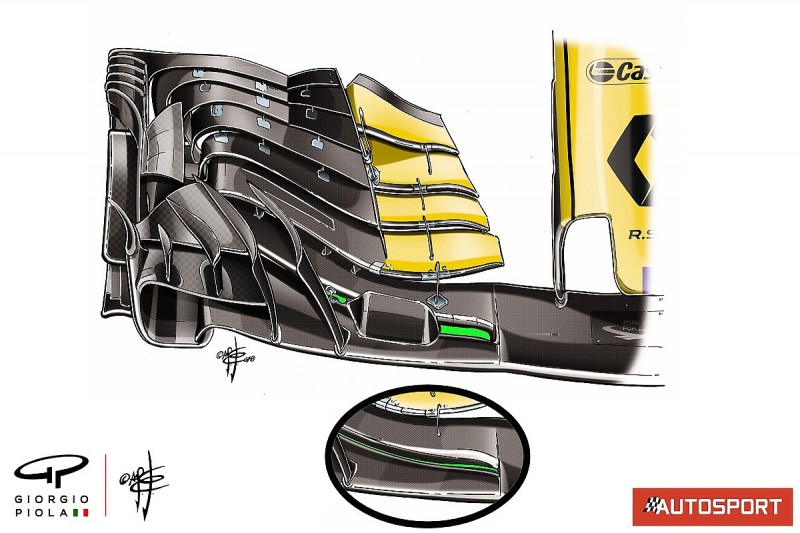
A large wedge-shaped panel was stitched in to the front wing's mainplane, which meant there were slots either side of it (highlighted in green) rather than running the full width of the wing as was originally intended (highlighted in green, inset).
This change altered not only the proportional amount of downforce that can be generated, but also the way in which the Y250 vortex forms, plus the outwash generated by the outer section of the wing.
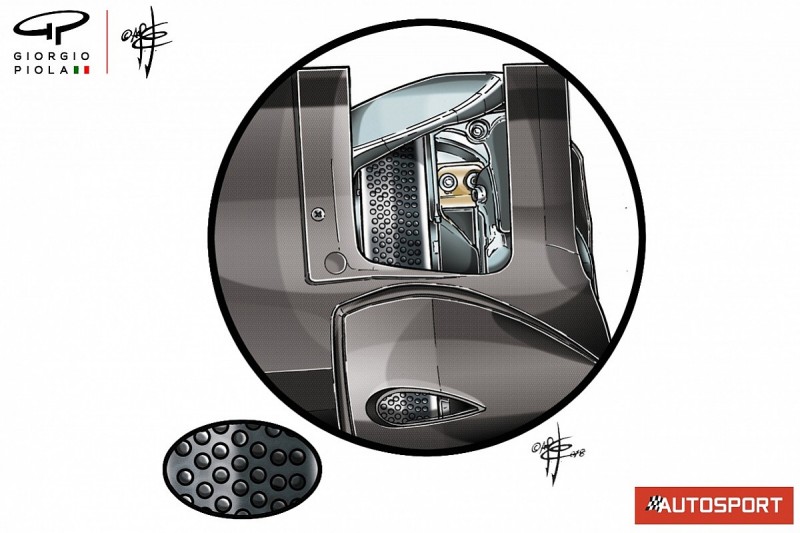
Renault also made a specification change to its brake disc set-up in Hungary.
The team, which is supplied by Carbon Industrie, has opted for a more aggressive brake disc selection in the last couple of races as it did at stages of its 2017 campaign.
The design features a scalloped face rather than a flat one and alters the way in which heat is rejected by the disc, with the drill positions amended to take advantage.
The upshot of this is that the team does not have to suffer the aerodynamic penalty of using a larger capacity cooling inlet, as the disc can reject more heat.
Share Or Save This Story

The downforce choices that proved key at the Saudi GP

Revealed: Ferrari’s radical 2022 F1 nose idea

Piola: How new parts will influence 2020 designs


You Ask The Questions: Robert Kubica

Eight shock Formula 1 team principal changes

The key moments in Renault's F1 history as it bids farewell

The numbers behind Ducati becoming a modern MotoGP powerhouse

Russell to take grid penalty in Singapore due to Sepang retirement

Le Mans 24 Hours winner Conway to retire at the end of WEC 2026

Neuville assessing his future options with WRC 2027 drive unconfirmed
Subscribe and access Autosport.com with your ad-blocker.
From Formula 1 to MotoGP we report straight from the paddock because we love our sport, just like you. In order to keep delivering our expert journalism, our website uses advertising. Still, we want to give you the opportunity to enjoy an ad-free and tracker-free website and to continue using your adblocker.


Top Comments