
Why the casualty of rallying's evolution should still be cherished
The WRC's support categories are in a process of streamlining that will spell the end of a formalised 2WD world championship-level category. While its relevance to the top level has been questioned for some time, that doesn't mean it should be swept quietly under the carpet
The announcement that two-wheel-drive cars will no longer feature among the supporting classes of the World Rally Championship did not provoke great emotion in many.
It is 40 years since four-wheel-drive began to take over the top-flight with the arrival of the Audi Quattro and more than 20 years since two-wheel-drive had any great relevance in determining the outcome of an event outright. And there was no wailing or gnashing of teeth over how potential stars of the future might find an affordable platform to showcase their skills on the WRC stage… primarily because it wasn’t that affordable to begin with.
Nine-time WRC champion Sebastien Loeb, who himself burst onto the WRC scene at the wheel of a two-wheel-drive Citroen Saxo and won the inaugural Junior WRC title for front-wheel drive 1600cc machinery in 2001, told Autosport that a young driver’s objective today had to be getting to WRC2 as fast as possible.
While all things are relative, the value of a WRC2 budget looked extraordinarily good next to the costs of competing in the current one-make iteration of the Junior WRC (all competitors drive the 2WD M-Sport Fiesta Rally4) and so, Loeb reasoned, it would be better to jump right into the bigger 4WD cars to sink or swim. With such pragmatism as this, rallying has moved on.
Images of rear-wheel-drive Escorts, Sunbeams, Lancias and Mantas cornering on the limit will forever set the high water mark for rally stylists the world over but, in the wake of the game-changing Quattro, the rally world was a very different place.
PLUS: The Group B pioneer that transformed rallying forever
There was a 2WD revival in the 1990s, thanks to the front-wheel-drive F2 category which allowed manufacturers to use their 2-litre touring car technology to great effect. F2 prompted the arrival of Hyundai as a rallying force, while long-standing supporters such as Vauxhall, Renault, Nissan and Skoda were able to compete for the FIA Cup for Manufacturers without having to break the bank.
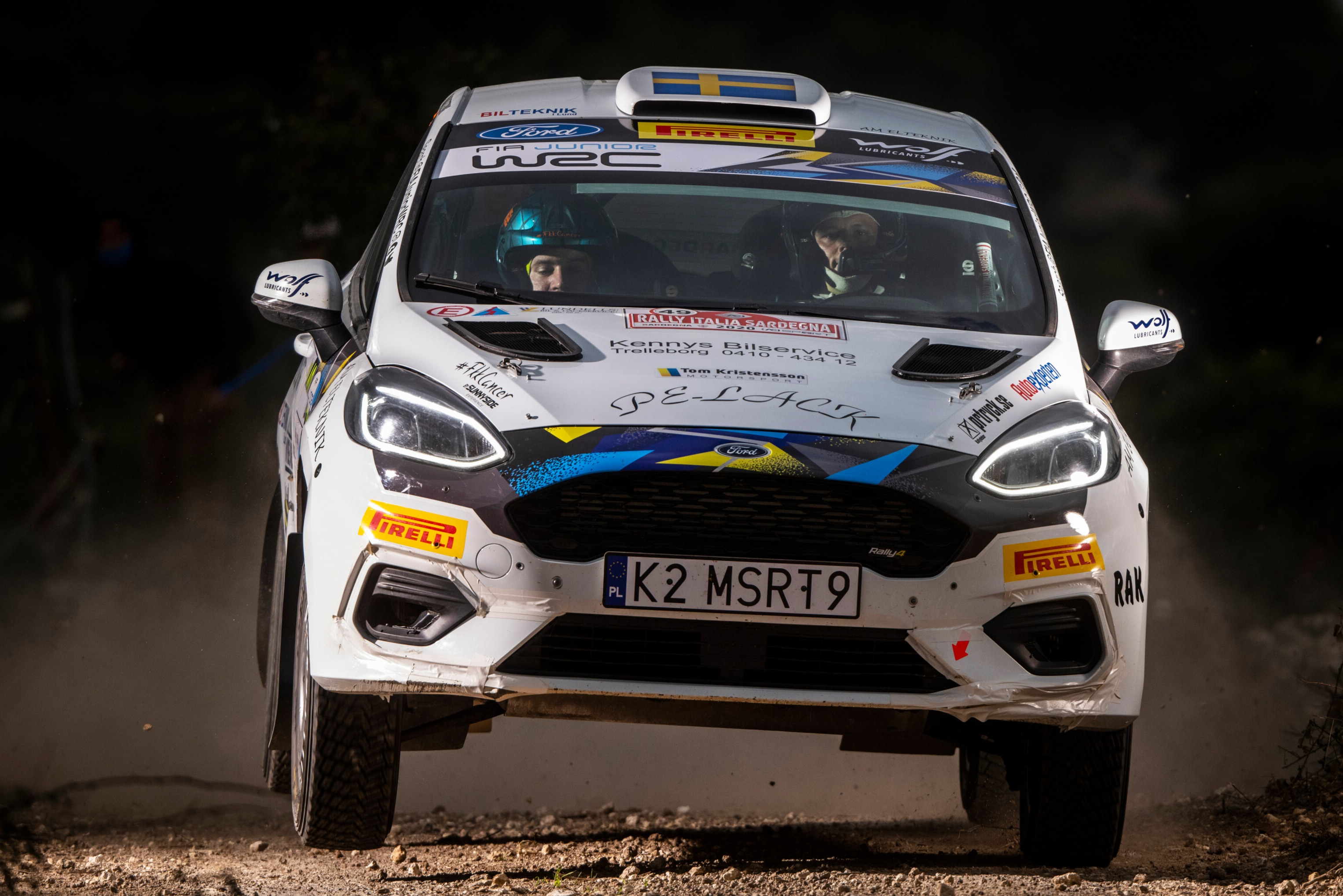
Tom Kristensson, Junior WRC 2020 Rally Sardinia
Photo by: Jaanus Ree / Red Bull Content Pool
Peugeot’s 306 Maxi remains up there in the pantheon of all-time great rally icons because of its ability to humble the Imprezas and Evos on paved roads. Then there was the time that WRC cars were shown the way home on snow.
This year marks your correspondent’s quarter-century in rallying, which began in the F2 classes of the British Rally Championship and WRC with Skoda. Having overcome the bewilderment that afflicts anyone who moves from a circuit racing background to rallying, not least learning where to leap when the marshal’s whistle blew while walking through a stage, these were without doubt the happiest years I have spent in the discipline.
Skoda was still a very small operation at the time, which meant that the catering was done by two retired former heads of the motorsport department. Officially I was the press officer, but in the course of three seasons I also carried innumerable wheels, fuel cans and spare parts around to remote service areas, represented Skoda in an FIA manufacturers’ meeting and managed an entry on the RAC Rally!
Without doubt, the most remarkable few days of all fell on the 1996 RAC Rally. This was a year when the FIA chose not to run the WRC proper in Britain, but instead handed the event on to the FIA Cup for Manufacturers. Even so, there were plenty of current WRC cars around. Toyota celebrated the end of its enforced absence after ‘turbogate’ by sending a trio of full-house Celicas for Juha Kankkunen, Ian Duncan and Armin Schwarz.
Blomqvist held sixth place overall through the opening stages; the fastest non-WRC car by some margin. Then as the field moved from England to Scotland, the snow got deeper and Stig got faster
M-Sport had the fastest Escort Cosworths of the era and Ari Vatanen at the wheel, while RAS Motorsport’s example was pedalled by Krzysztof Holowczyc and Formula 1 driver Martin Brundle in a third car from Mike Little’s team as well as a host of domestic entries. Finally, Prodrive was present with the ex-Richard Burns Impreza M555 STE for Japanese driver Masao Kamioka.
The F2 ranks featured works entries from SEAT, Ford, Renault, Volkswagen, Honda, Nissan and finally Skoda, which as ever was using its 1600cc Felicias to take on the 2-litre cars of the other manufacturers.
Skoda UK was determined to steal all the headlines from the event and so a fleet of Felicias was wheeled out for WRC regulars Pavel Sibera and Emil Triner, tarmac specialist Bernard Munster, BBC Top Gear presenter Tiff Needell and Skoda Trophy winner Dave Jennings. Plus, there was Paul Wedgbury in a standard Group A car. And then there was Stig Blomqvist.
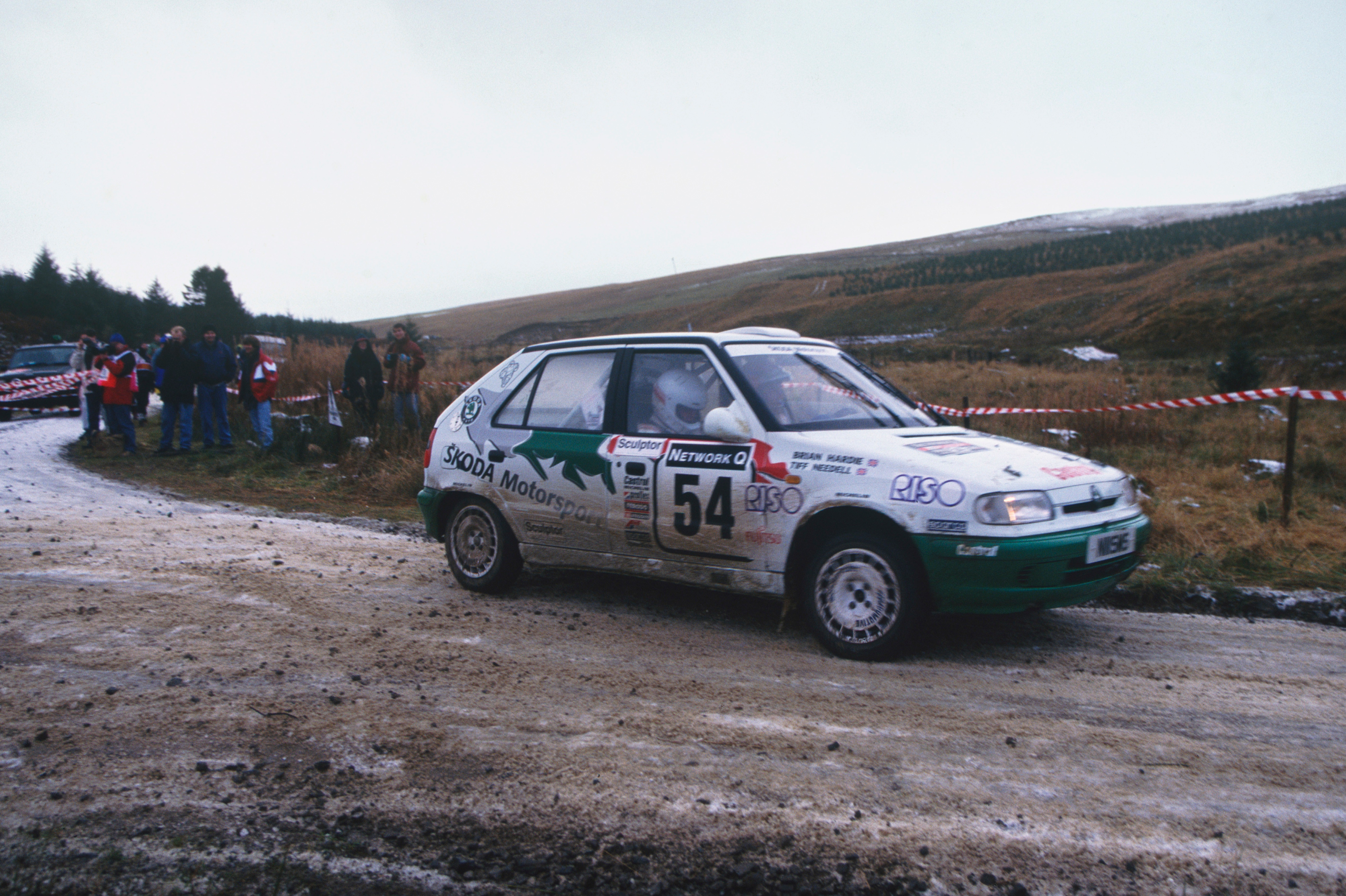
Tiff Needell, 1996 RAC Rally
Photo by: Motorsport Images
Stig’s star power needed little introduction and the press were thrilled to see him, even if his answer to most of their questions was ‘Nyaaaa – okayyy.’ Stig prefers to let his car do the talking, and on the preview day it was eloquence itself; leaving all of us lucky enough to get a ride breathless as a result. The car’s trajectory and speed were managed entirely through the soles of Stig’s feet while his fingertips rested lightly on the wheel, conducting the symphony going on across the pedals below.
What happened next has rightly passed into legend. A massive dump of snow before the start left many of the entrants at a loss because studded tyres aren’t permitted on UK events. Stig held sixth place overall through the opening stages; the fastest non-WRC car by some margin. Then as the field moved from England to Scotland, the snow got deeper and Stig got faster. Then he got faster again.
After the first stage, he had been 2m40s behind Schwarz’s Toyota. After the fifth stage he was just 41s in arrears and comfortably holding third overall. And that was where the little Felicia would stay to the finish, from Scotland back to England and all around Wales before returning to Chester; completing the podium behind Schwarz’s victorious Toyota and Masao’s Impreza.
It was of course a world away from the production-based two-wheel-drive cars of recent times, in the same way that fleets of team vans charging around a vast loop of mainland Britain are an anathema to our era of centralised service parks and vast manufacturer pagodas.
Of course two-wheel-drive cars will remain on the entry list at each event, too, giving us the chance to enjoy spotting Fiat Pandas, Renault Clios and Proton Satrias standing on their door handles at many more rallies to come.
Ultimately, the loss of two-wheel-drive categories as a permanent fixture of the WRC isn’t big news in itself. But the health and variety of the rallies themselves will continue to rely on the smallest of cars. Long may they reign.
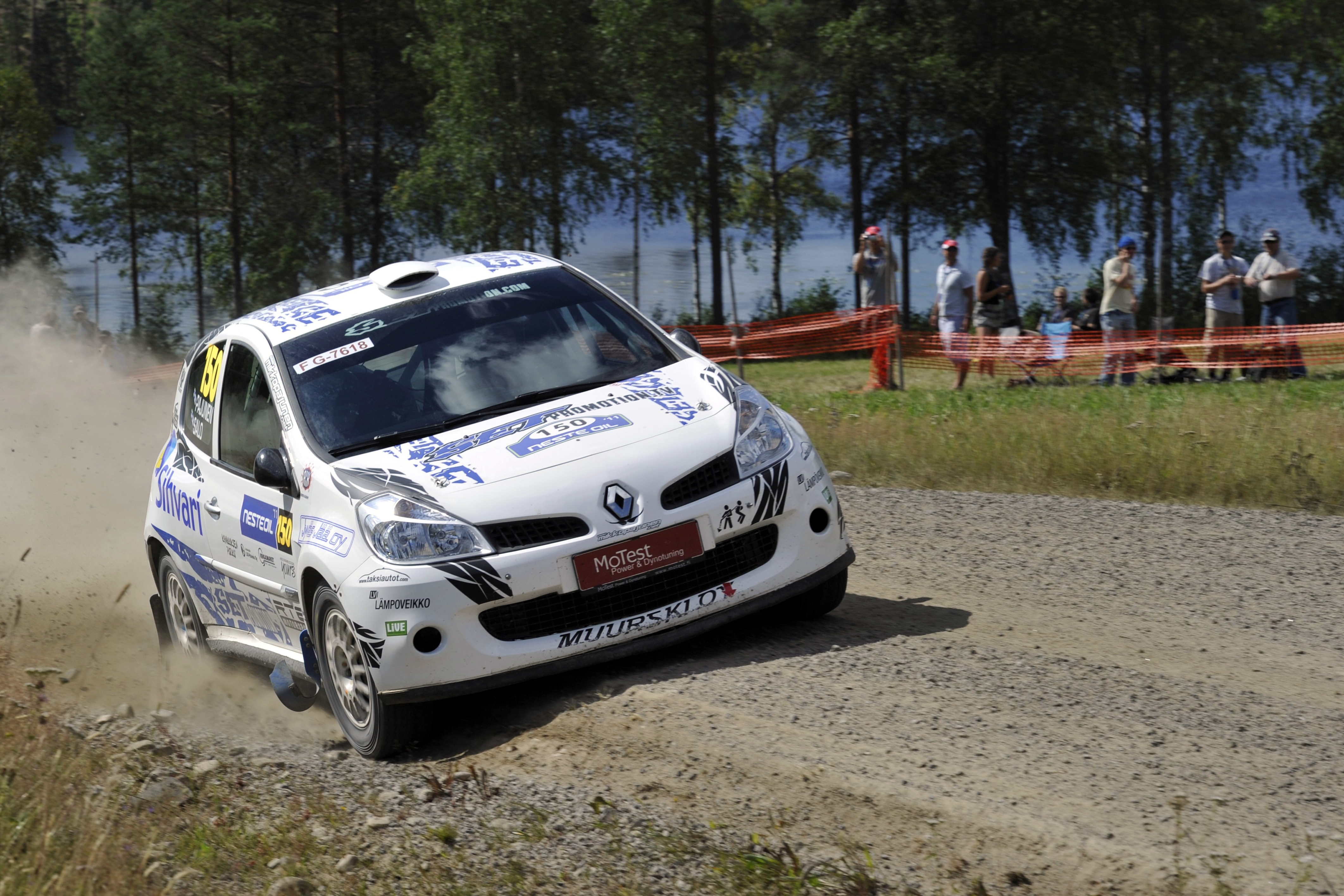
Mikko Pajunen, 2011 Rally Finland
Photo by: Motorsport Images

How Hyundai's latest self-destruction handed Evans Portugal victory

Portugal WRC: Evans boosts title push with Rally Portugal victory

Portugal WRC: Toyota's Evans takes lead after Tanak retires

Portugal WRC: Tanak presses home advantage as top three pull clear

Portugal WRC: Tanak holds overnight lead after dramatic Friday

Portugal WRC: Sordo leads Hyundai 1-2-3 after morning loop

Why there's no easy fix for Hyundai's operational Achilles Heel

How Ogier held on after a shock bump in the road to triumph in Croatia

Five things we learned from MotoGP’s cancelled Australian GP

The two recurring issues that hampered Verstappen and Red Bull again at the US GP

Alonso criticises quality of F1 backmarkers after Albon clash at United States GP

Russell scrambling for answers after "not being quick enough" at US GP
Subscribe and access Autosport.com with your ad-blocker.
From Formula 1 to MotoGP we report straight from the paddock because we love our sport, just like you. In order to keep delivering our expert journalism, our website uses advertising. Still, we want to give you the opportunity to enjoy an ad-free and tracker-free website and to continue using your adblocker.


Top Comments