
The WRC drivers that came of age at the Acropolis Rally
Five drivers have won first time out at the Rally Acropolis, transcending the tough dirt and gravel Greek roads to cement a place in rallying folklore. Here are three of the first-time winners' tales

The Acropolis Rally is regarded as one of rallying’s jewels in the crown. It’s not for the faint hearted, it’s tough on driver and car, but the unique challenge can be the making of a rally driver.
Returning to the World Rally Championship after eight years away, Autosport has picked out three editions of the Greek classic that crowned a new WRC winner.
If you are going to score a first WRC win, doing so by triumphing at the Acropolis Rally is a bold statement. Consulting the record books, five drivers have achieved this feat. Walter Rohrl (1975), Harry Kallstrom (1976), Ari Vatanen (1980), Carlos Sainz (1990) and Markko Martin (2003), and three of those went on to become world champions.
For Rohrl, his 1975 breakthrough in an Opel Ascona (some 35 minutes ahead of local driver Tasos 'Siroco' Livieratos) was the first of 14 WRC rally victories in a career that saw the German claim world championships in 1980 and 1982 before becoming synonymous with the Group B Audi Quattro. Datsun driver Kallstrom’s victory (by over five minutes from 'Siroco') was the only one of his WRC career.
In this trip down memory lane, we’ve decided to focus on the triumphs of Vatanen, Sainz and Martin.
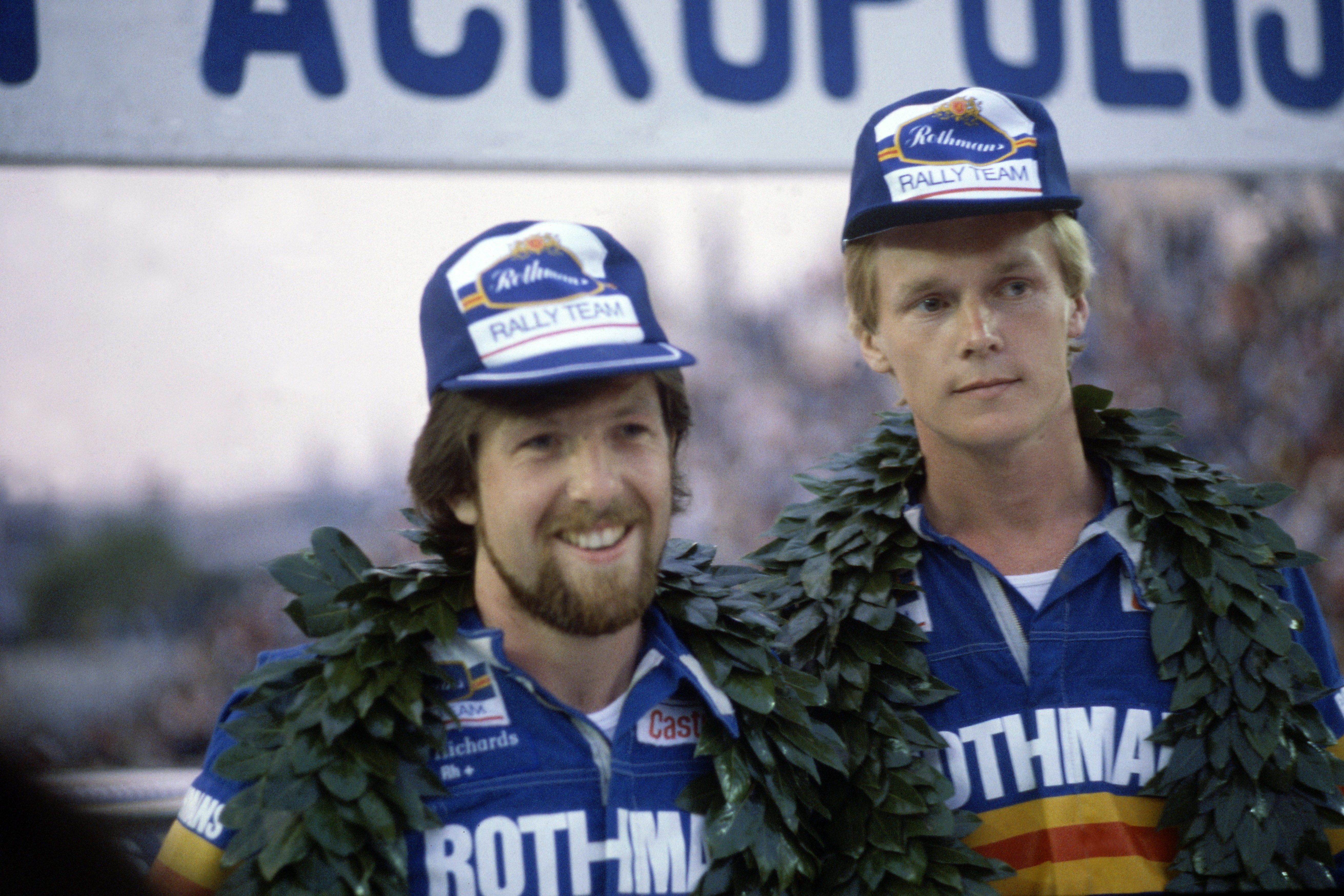
David Richards (left) and Ari Vatanen (right), after winning the 1980 Rally Acropolis
Photo by: Motorsport Images
1980 - Ari Vatanen
Team: Rothmans Rally Team
Car: Ford Escort RS1800
Compared to today’s WRC rallies, the 1980 Acropolis would be regarded a marathon as crews racked up nearly 1000km attempting to conquer a whopping 56 stages held on Greece’s roughest gravel roads and mountain passes.
Back then, it was true car-breaker, an event virtually impossible to navigate without encountering at least a puncture or a minor mechanical issue.
Vatanen had been steadily gathering attention following his WRC debut in 1974 in Finland, but it would take another six years before he was able to chalk up his first win. There had been podiums in New Zealand, Finland and Canada driving for the factory Ford team, but the first win was elusive until 1980 when driving for the Ford semi-factory Rothmans Rally Team alongside now Prodrive boss David Richards.
A quick glance of the results of that year’s Acropolis would suggest, at least by today’s standards, that Vatanen’s victory margin of 3m18s was a domination. But it was far from it.
As Autosport’s correspondent Rupert Saunders put it, “to say Vatanen and co-driver Richards dominated the rally would be misleading. Certainly they were the fastest crew over the special stages, but rallies like the Acropolis are not won on the special stages alone. A series of road penalties so nearly cost the Finn his first world championship win after almost 30 attempts.”
By the third stage, Vatanen emerged in the lead with a 33s advantage over Indian-Kenyan driver Shekhar Mehta while pre-rally favourite Rohrl, driving for Fiat, appeared out of the running early on after his gearbox jammed in fifth. He lost four minutes on the stage and further 23 minutes to fit a new 'box, his mechanics having to be helicoptered in to complete the job.
Vatanen would go on to win a further 26 stages, but it was far from plain sailing. He initially faced a challenge from team-mate Hannu Mikkola, before his charge faded after 13 stages. An electrical fault that took an hour to locate ultimately called time on his rally.
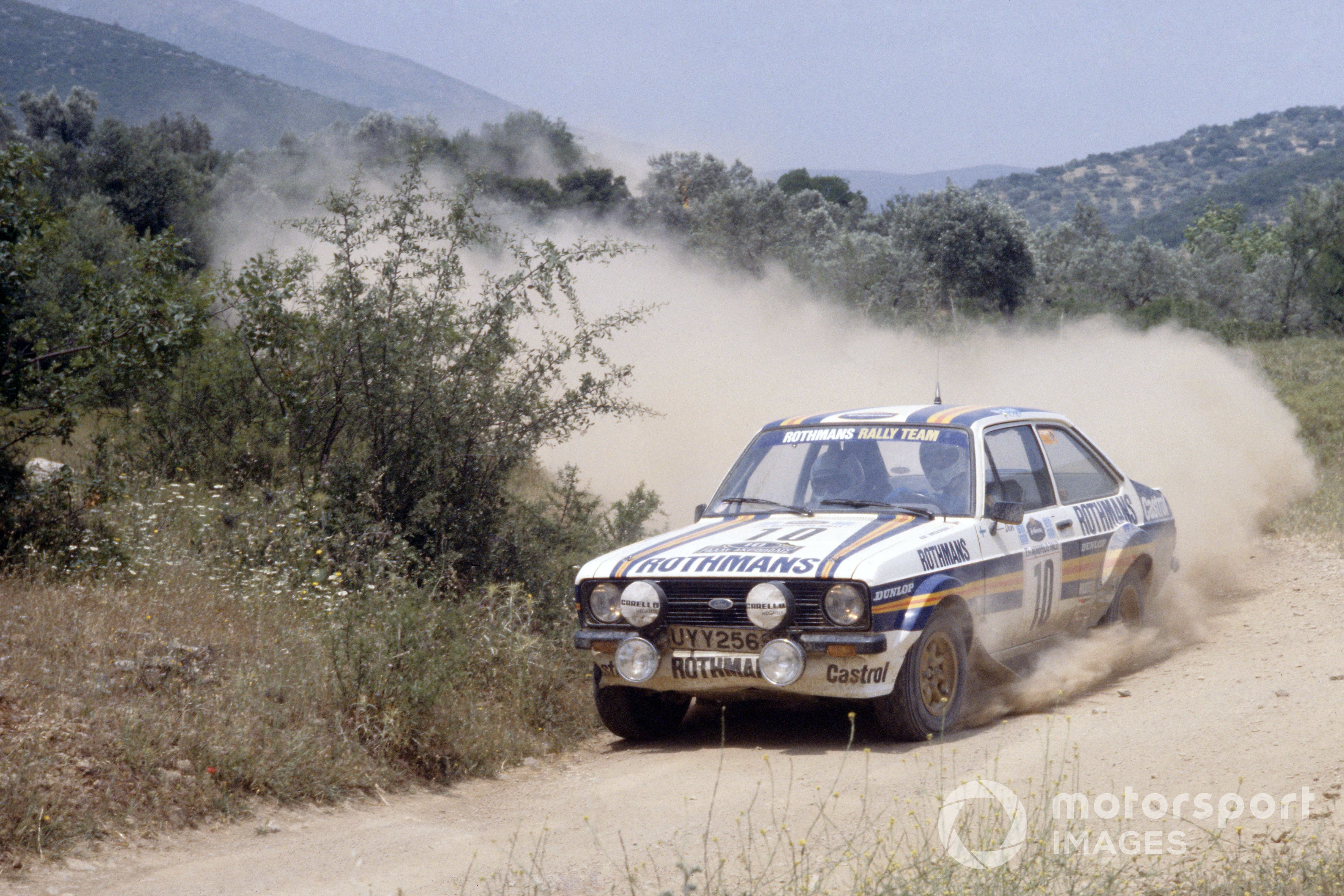
Ari Vatanen/David Richards, 1980 Rally Acropolis
Photo by: Motorsport Images
The rally leader then had an issue of his own when a puncture struck, a faulty jack costing Vatanen and Richards three minutes. But as luck would have it, the rivalling Opel of Anders Kullang slipped off the road and lost a similar amount of time.
At one point, Vatanen held a lead over six minutes but that was soon whittled away as the rally progressed. The Ford driver lost time when co-driver Richards misread his watch while at a service point before another puncture halted progress.
Come the final day on Wednesday, yet more drama struck that threatened Vatanen’s lead as the Finn elected to change the steering rack before the first stage of the day. “It shouldn’t have been a difficult job,” wrote Saunders, “until the service crew discovered the new rack is shorter than the one taken off...”
With no time to make the switch back, the pair continued with the old rack eventually re-installed. “There was a last minute confusion when somebody forgot to tighten the steering knuckle joint,” reported Saunders, “and then Vatanen roared away into the darkness, passing a motorway booth flat in fifth driving for the lead.” He would lose three minutes altogether.
The pair would cop three more punctures but avoided defeat being snatched from the jaws of victory, eventually making the finish ahead of the solid and reliable Datsun driven by Timo Salonen.
Vatanen and Richards would combine again in the Rothmans Ford Escort RS1800 to win the 1981 Acropolis before going on to win that year’s world championship. The pair were reunited with the car at this year’s Goodwood Festival of Speed.
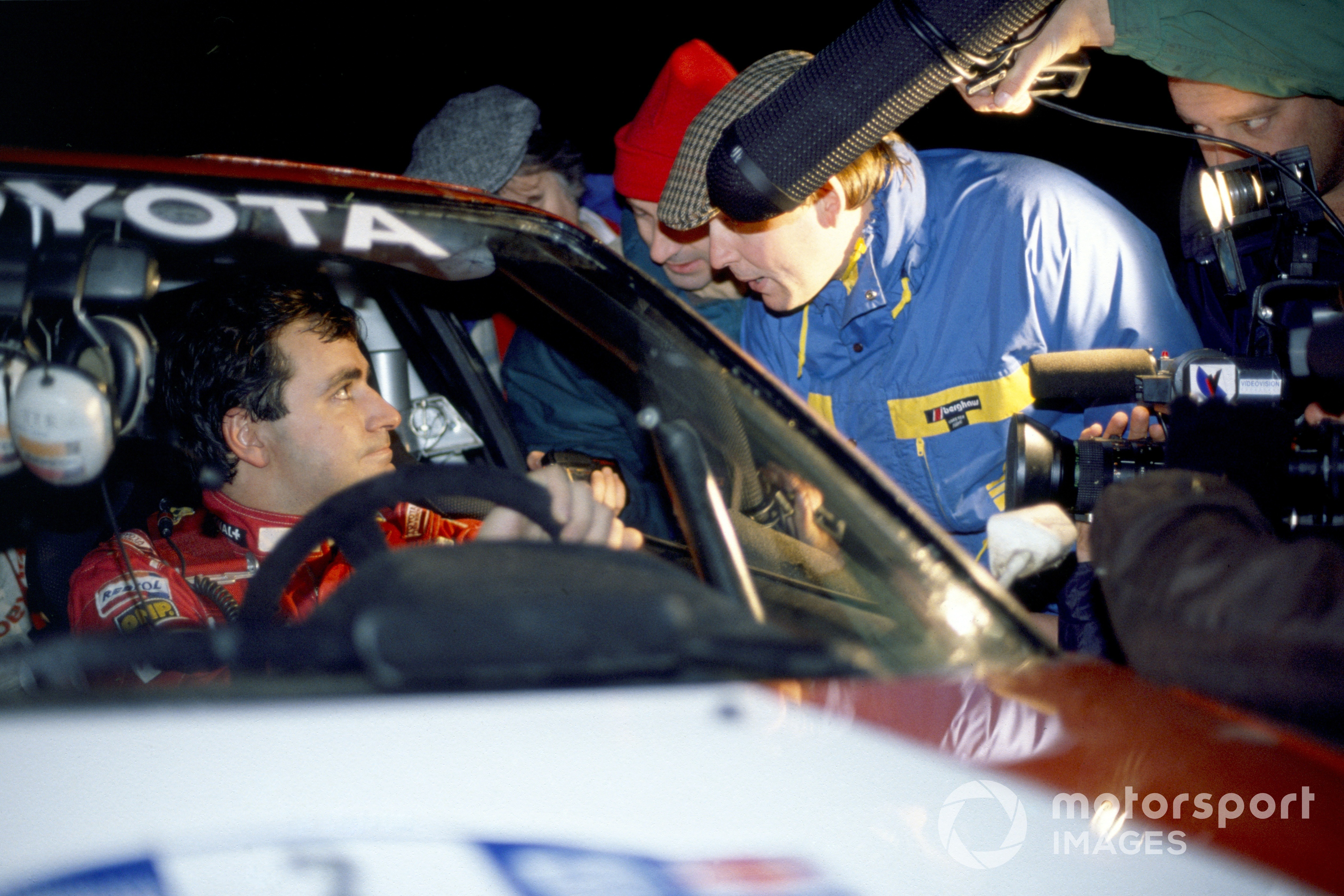
Carlos Sainz, Toyota Team Europe 1990
Photo by: Motorsport Images
1990 - Carlos Sainz
Team: Toyota Team Europe
Car: Toyota Celica GT Four ST185
Ten years later, the Acropolis crowned its next first-time WRC winner as ‘El Matador’ Carlos Sainz finally notched up his elusive maiden WRC victory.
Sainz should have already achieved the feat by the time the 1990 season came around having been on course to win the previous year’s RAC Rally, only for a mechanical issue to drop the factory Toyota driver to second.
His bad luck continued into the start of 1990, leading the opening four rallies of the season only to finish no higher than second on the Monte Carlo Rally and in Corsica. But as the championship headed to Greece for the fifth round, everything aligned for the Spaniard as he saw off the Lancia of Juha Kankkunen to win by 46 seconds - opening the floodgates as Sainz won three times over the remainder of the season to secure his first of two WRC titles.
Such was the challenge the Acropolis presented, championship leader Didier Auriol was simply happy to reach the finish rather than hunt for the victory.
“This year is different for me because I am the leader of the championship,” said the Lancia driver. “I think for me finishing is the most important. In Acropolis, it is a rally that is different from the others it is very hard for the car and you can do many mistakes. I think this is the most competitive rally and I think there are seven drivers who can win this rally.”
Lancia and Toyota made up the key contenders, with Auriol, Kankkunen and Miki Biasion in the former camp, while Sainz and Mikael Ericsson led the Japanese charge. Vatanen too was in the mix, hoping to repeat the feat of 10 years previous, this time driving a Mitsubishi Galant VR 4.
The Toyotas came out of the blocks fast, but it was Ericsson that led Sainz by four seconds at the end of the first day. When stage six was cancelled, angry spectators threw rocks at the cars as they passed through at road speed, one smashing Vatanen’s windscreen.
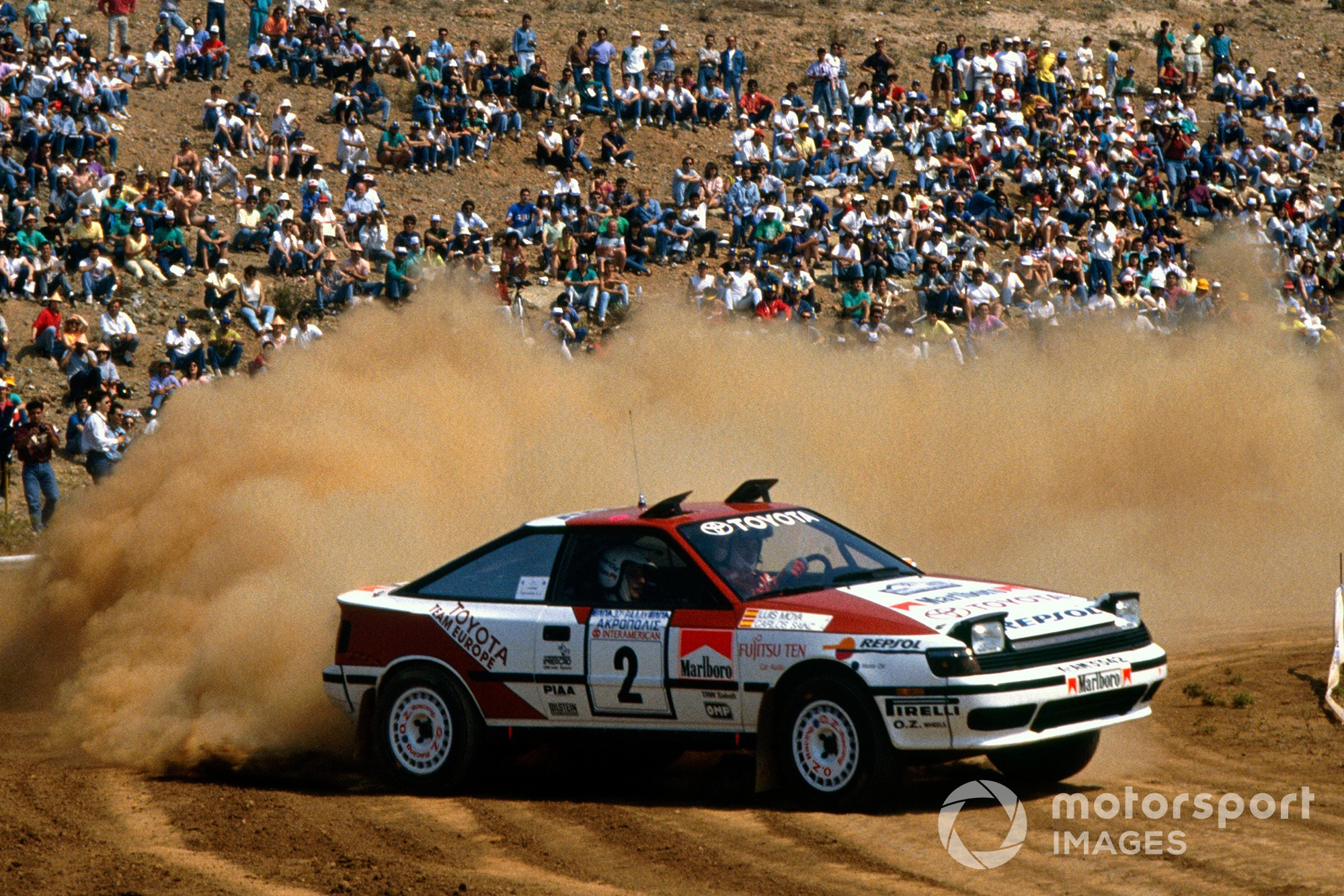
Carlos Sainz/Luis Moya, 1990 Rally Acropolis
Photo by: Motorsport Images
Sainz took command on the second day after Ericsson lost 30s due to a power steering failure on his Celica, dropping the Swede to seventh overall.
While Sainz enjoyed top spot, he came under attack from Kankkunen, who rocketed up the timesheets after piloting his Lancia Delta to a string of fast stage times to end the day only two seconds in arrears.
The third day provided a mammoth battle between Sainz and Kankkunen as the then-double champion continued his charge, which resulted in the Finn taking the overall rally lead after stage 20. However, Sainz responded taking the advantage back on the next stage.
Once back ahead, Sainz opened up healthy 43s lead over Kankkunen by the end of the day, despite his Toyota suffering a power steering failure that required Sainz to muster all his strength to haul the Celica through the stages. Luckily for him, Kankkunen faded while Auriol retired with a split crankcase.
On the final day, Sainz was untouchable as he rattled off six stage wins from the final nine stages to finally get the monkey off his back and claim a WRC win. His victory gave him a five point lead in the standings, but it was the win that mattered to Sainz.
“I am leading the championship but that is not important,” he told Autosport. “What matters is this win. Everyone has worked so hard and now they rewarded.”
Kankkunen added: “The matador was terrific. No matter how hard I tried, I just couldn’t beat him.”

Markko Martin/Michael Park, 2003 Rally Acropolis
Photo by: Ralph Hardwick
2003 - Markko Martin
Team: Ford World Rally Team
Car: Ford Focus RS WRC 03
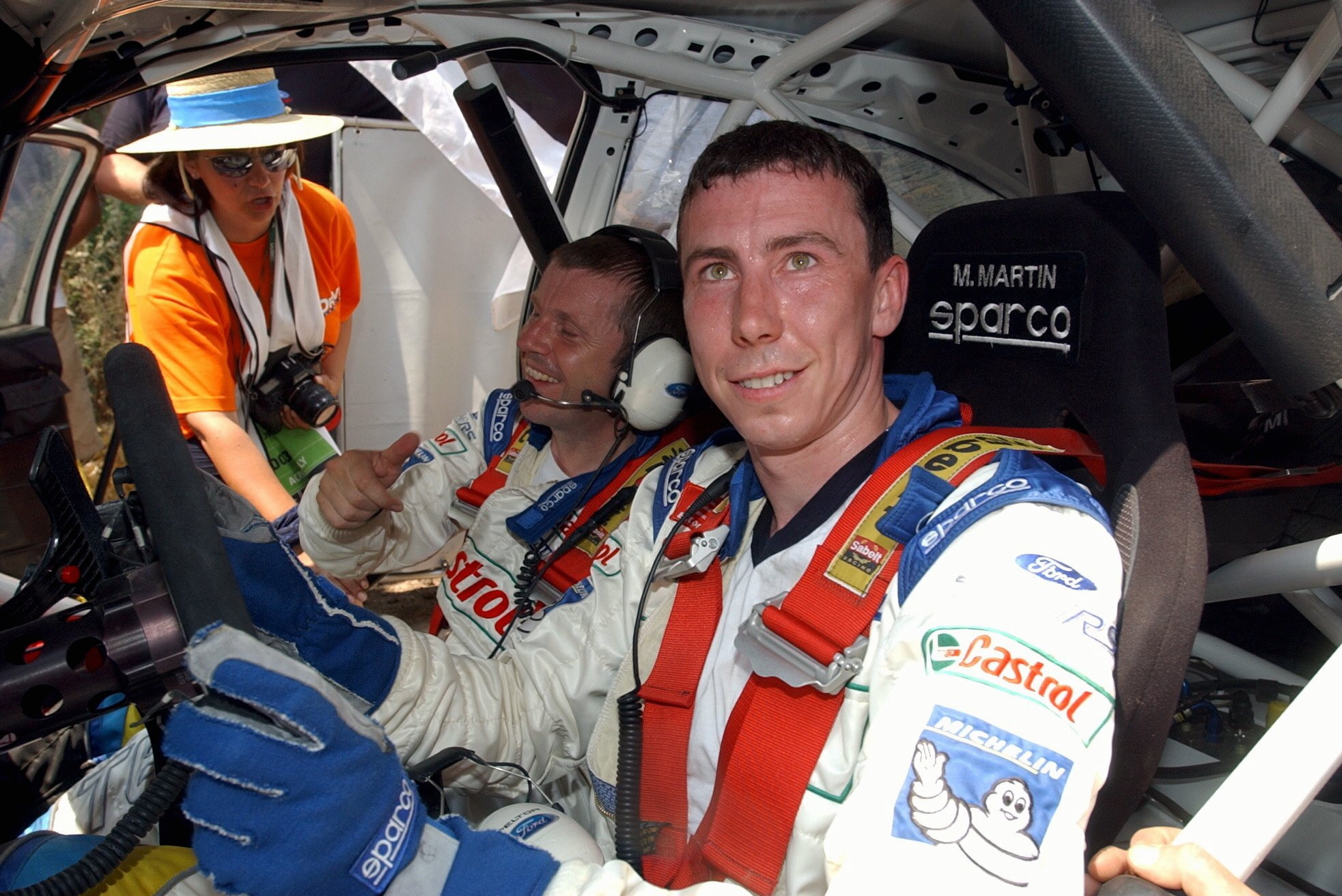
Colin McRae rightfully earned the 'King of the Acropolis Rally' moniker with his five victories, but his streak of three wins on the trot was ended when the unassuming Markko Martin broke through for his maiden WRC triumph in 2003.
The WRC was then arguably enjoying one of its golden periods in the Group A era. Six manufacturers in Peugeot, Citroen, Subaru, Ford, Hyundai and Skoda were doing battle for honours, featuring a driver roster that included five world champions in McRae, Marcus Gronholm, Tommi Makinen, Richard Burns and Carlos Sainz plus the rising stars that would ultimately contest the 2003 title battle - Petter Solberg and Sebastien Loeb.
Reigning world champion Gronholm headed into the 2003 Acropolis Rally fresh off the back of a victory in Argentina, but it was Peugeot team-mate Burns that led the standings by two points.
A fresh-faced Martin, for whom the event presented a chance at redemption after being denied a likely win by a puncture the previous year, was leading Ford’s charge armed with the new-for-2003 Focus RS that was introduced two rallies previously in New Zealand. The new car featured a lighter body shell and a new aerodynamically-enhanced front bumper and wing.
In contrast to previous editions of the Acropolis, the 50th anniversary event was contested over a measly 400km, but was no less brutal for it.
The Fords of Francois Duval and Martin started strongly, with the Belgian winning the opening stage. Soon after, one of the pre-rally favourites found trouble as McRae incurred a 50s time penalty when he checked into the time control late. He had stopped on a road section to change tyres, but was unable to re-fire his Citroen Xsara.
Martin survived a scare when his bonnet pins came loose and caused the bonnet to obscure his view
Photo by: Motorsport Images
The day was not without further drama, as Martin produced one of those iconic moments for which the WRC is revered. Having taken the rally lead from his team-mate, the Estonian hit a compression on Stage 5 - the longest of the event. The force resulted in the bonnet of his Focus smashing into his windscreen and he was left to drive effectively blind for the remaining 20kms.
“Somehow the bonnet pins came loose and the bonnet just came up,” explained Martin’s co-driver Michael Park. “It was a bit of a panic at first, we were not sure what to do and it is impossible to stop because we would lose 30s straight away by trying to repair it.
“Obviously the visibility was quite bad. It was okay for me, as I sit on the floor, but with Markko sitting higher he could only see 30 metres in front - which meant he had to listen to the pace notes very carefully and try and feed the car into where he thought the corner was.”
While Martin avoided disaster, team-mate Duval wasn't so lucky as a misunderstood pace note resulted in his Focus careering off the road and into retirement.
Martin held a 4.8s lead over Harri Rovanpera's sole remaining Peugeot at the end of the opening day, after Gronholm retired with fuel pump failure and Burns suffered gearbox issues.
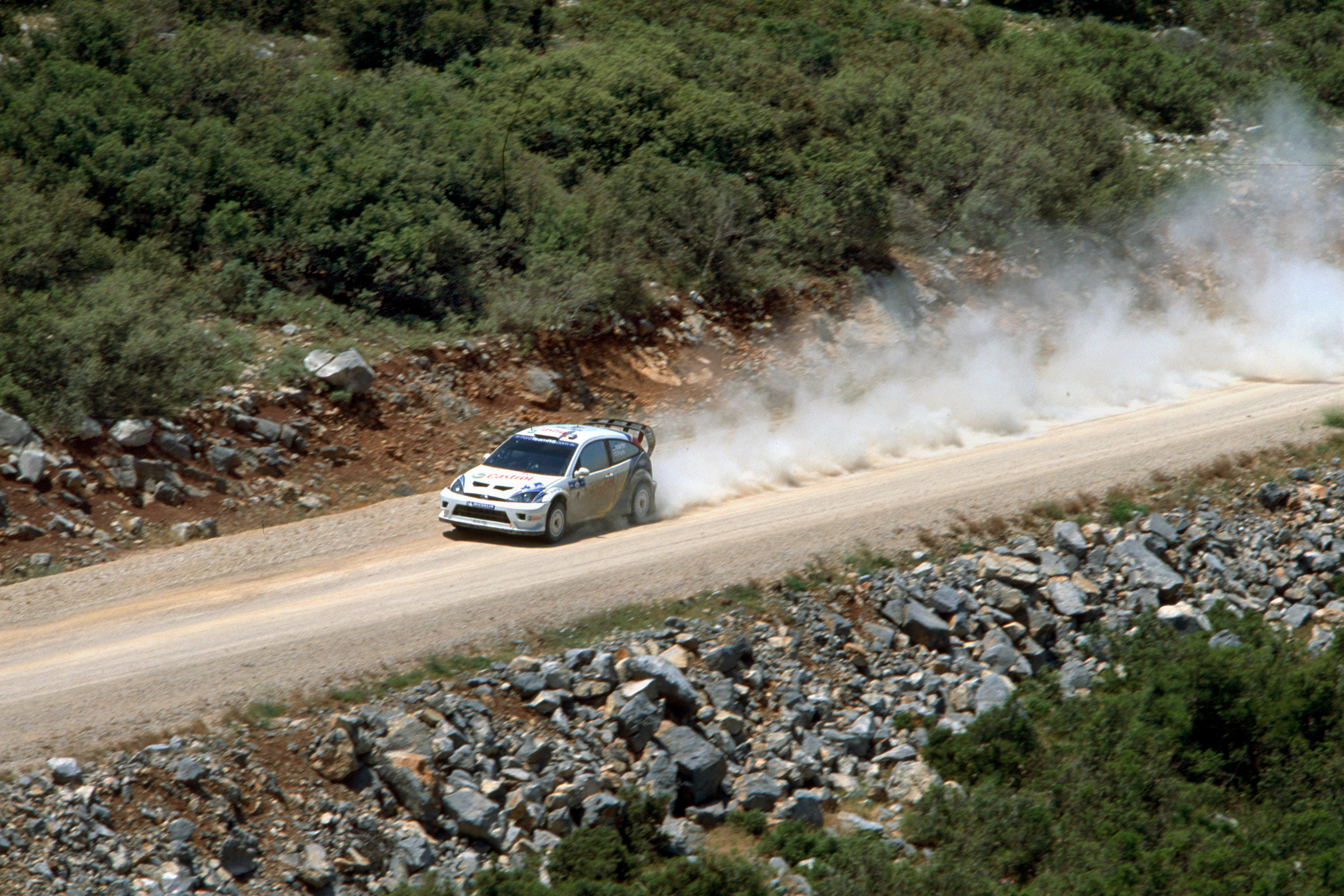
Markko Martin/Michael Park, 2003 Rally Acropolis
Photo by: McKlein/Motorsport Images
The second leg belonged to Martin as a succession of stage wins edged him ever closer to his breakthrough victory, while gearbox gremlins accounted for Rovanpera. Martin led Citroen’s Sainz by 55.8s, while McRae had recovered to third.
Despite a little scare courtesy of broken anti-roll bar, Martin cruised to victory on the final day to truly announce himself on the world stage as a WRC winner, beating Sainz by 46s. Subaru’s Solberg claimed third after McRae suffered an engine problem that dropped him to eighth.
“This is a great result for us and great result for the team.” said Martin. “There has been a lot of team effort to make the new Focus win a World Championship event.”
Following his success in Greece, Martin recorded four more WRC wins before tragedy struck at the 2005 Wales Rally GB. The death of co-driver Park in an accident prompted a shaken Martin to pull out of the remaining four events that season, after which he effectively retired from top-level competition, making only sporadic appearances. His last came at Rally Estonia in 2019.
The odds of history repeating itself and the Acropolis producing another new winner this weekend appear unlikely. But of those yet to notch up their first victory, perhaps M-Sport’s highly-rated Adrien Fourmaux has the best chance of springing a surprise and joining the fabled list of first-time Acropolis winners.

Adrien Fourmaux, Renaud Jamoul, M-Sport Ford WRT Ford Fiesta WRC
Photo by: M-Sport


Evans: Late puncture was “harsh” but WRC title position is still "okay”

WRC Chile: Solberg seals victory as Toyota wraps up manufacturers’ crown

WRC Chile: Penultimate stage puncture dashes Evans’ Chile podium bid

Pajari to take "deeper look" to understand lack of speed at WRC Chile

WRC Chile: Solberg saves best until last to pull away from Evans

WRC Chile: Solberg maintains lead as Neuville and Armstrong suffer rolls

Solberg stresses need to drive "clever" ahead of tyre punishing Rally Chile Saturday

Could the WRC be set for a manufacturer boom?

Evans: Late puncture was “harsh” but WRC title position is still "okay”

How Antonelli is proving unbeatable, even when he's beaten

F1 drivers push for Madring changes after "very poor" Spanish GP: "I almost fell asleep"

WRC Chile: Solberg seals victory as Toyota wraps up manufacturers’ crown
Subscribe and access Autosport.com with your ad-blocker.
From Formula 1 to MotoGP we report straight from the paddock because we love our sport, just like you. In order to keep delivering our expert journalism, our website uses advertising. Still, we want to give you the opportunity to enjoy an ad-free and tracker-free website and to continue using your adblocker.


Top Comments