
The E-Type 'Beast' that took on club racing's greats
Thousands of Jaguar E-Types were produced over the years, but 60 years on from its birth, none can quite match the mighty machine that was campaigned with great success in club racing by Malcolm Hamilton
Ever since Graham Hill gave the brand-new Jaguar E-type a debut win at Oulton Park in April 1961, people have raced E-types. But none of them can match the fastest and most way-out of all: the 7.3-litre monster developed and raced by Malcolm Hamilton and affectionately known as ‘The Beast’
Hamilton’s car was the device that set the standard in the once highly competitive Aston Martin Owners Club Intermarque Championship. In its ultimate specification it ran a 7300cc Jaguar V12 pushing out around 700bhp and weighing in at 1275kg. It could do 0-150mph in around eight seconds and was clocked on an airfield at 185mph. The diff exploded on a second run when Hamilton reckoned it would have hit 200mph.
But it was on British race tracks that this car really made its name, scoring 52 wins in 13 seasons, mainly in the care of Rob Beere Racing. Sadly, its reign came to an end thanks to an errant Porsche at Oulton Park at the end of 2001.
PLUS: Why Britain's greatest sportscar was eclipsed on the world stage
The damaged car was put away and sat in storage for nearly a decade before racing E-type guru Peter Griffiths bought the remains and set about having the car rebuilt. It’s been finished for about five years and is now offered for sale in the hope that someone will take it back into racing.
The story really began with Hamilton’s previous car, a six-cylinder E-type he raced in the mid-1980s. It was a quick car, but not quick enough.
“I was always being beaten by the 500bhp and 600bhp Aston Martins, with people like Gerry Marshall, that just kept driving past me on the straights,” recalls Hamilton.
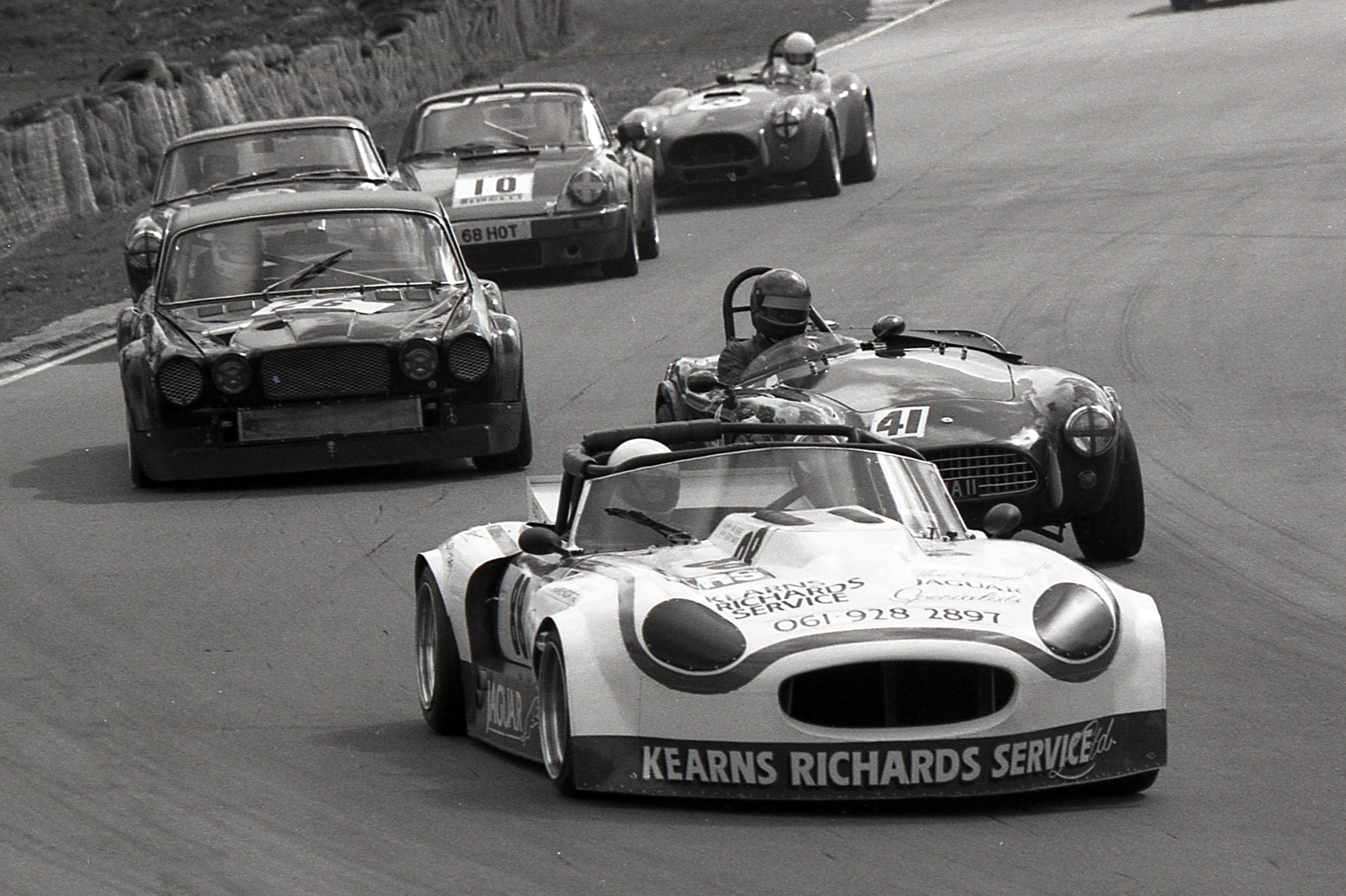
Hamilton's specced-up E-type ran as an open-top roadster in its early days
Photo by: Gary Hawkins
The six-cylinder was maxed out, so Hamilton’s search for more power pointed to a V12. Yorkshire-based racer Fred Cliffe had a V12 Roadster that had been developed to a certain extent and came with an ex-Broadspeed 5.3-litre V12 engine as used in the XJ12 touring car project.
“I’d seen this V12 outside in the corner and it was really just an abandoned car,” says Hamilton, who visited Cliffe from time to time to collect parts.
The car first appeared in the 1988 season as an open-top roadster, run by Kearns Richards Services in Stockport.
"We had engines ranging from six litres to 9.3 litres, but the 7.3-litre version was the best. Rob [Beere] was putting special liners in the block and making his own pistons" Malcolm Hamilton
“We went along the lines of the American Group 44 cars, but I couldn’t see where I was going,” says Hamilton. “We changed it a lot from what Fred had – we chopped six inches out of the wheelbase and made the wheelbase halfway between the six-cylinder and the 12-cylinder to give it more positive turn-in. We started off with one of the 5.3 Broadspeed engines, but they were a real mess.”
Rob Beere had worked on the car at Kearns Richards and, when that company folded, he set up on his own back near his home in Coventry and the E-type went with him.
“Rob developed and developed it and we had engines ranging from six litres to 9.3 litres, but the 7.3-litre version was the best,” says Hamilton, who at the time was running the racing school at Oulton and living in a house that backed on to Druids Corner. “Rob was putting special liners in the block and making his own pistons.”
Through the 1990s, the E-type – which had several colour schemes – continued to win races and the hearts of club racing fans. Easy-going and approachable out of the car, Hamilton was a fierce competitor once the flag dropped. One of his regular rivals was Marshall in the well-developed V8 Aston Martins of Geoffrey Marsh.
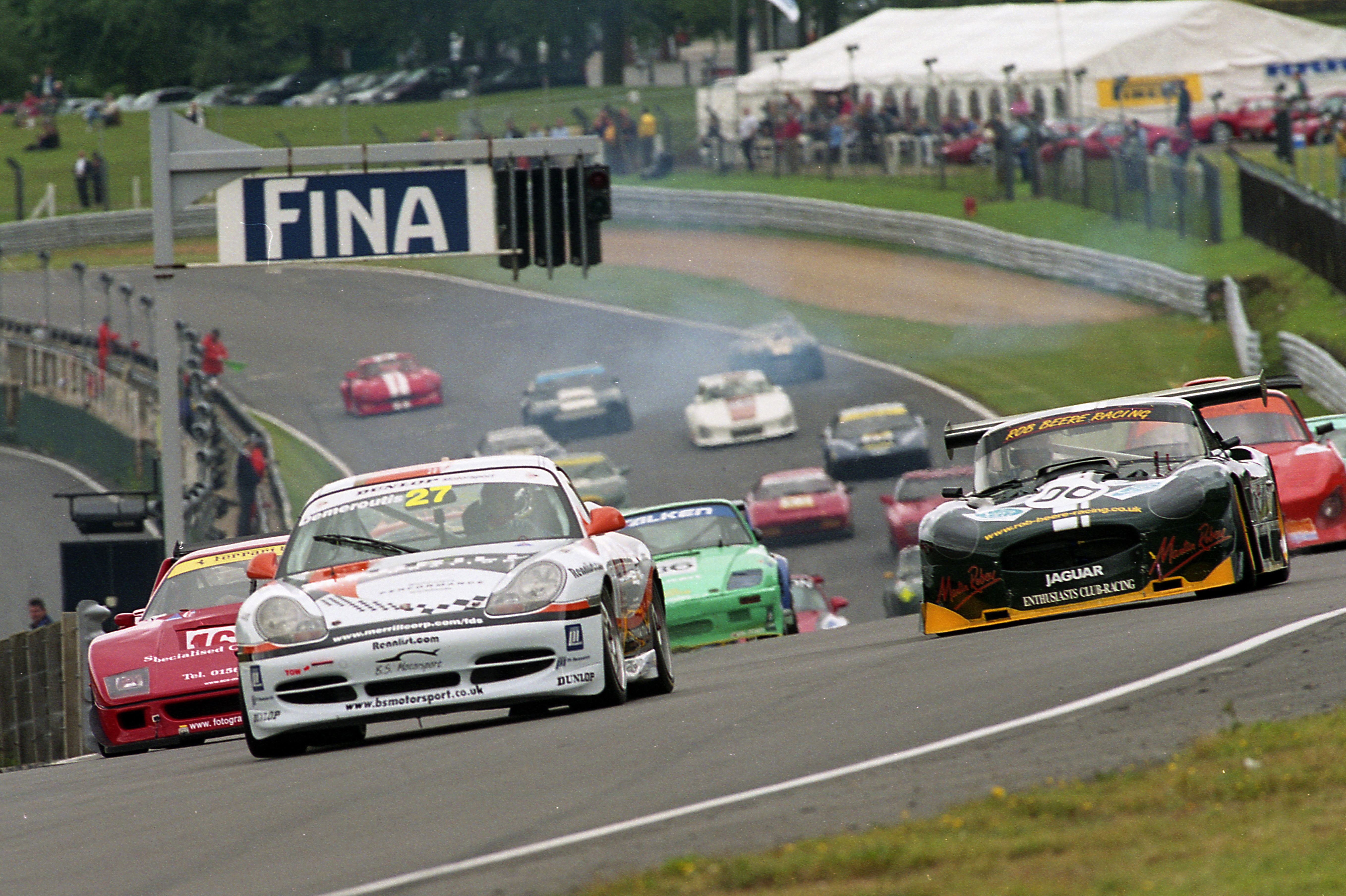
The E-Type remained active in competition into the 21st Century, 40 years after its debut
Photo by: Gary Hawkins
“Gerry was my hero! I was terrified, obviously, the first time I met him but then I got used to him and we became good friends,” says Hamilton, who often hosted Marshall at his home near Oulton Park.
PLUS: The greatest club racing characters
Surprisingly, Hamilton reckons that the E-type was not the untamed monster it might have been once unleashed on a race track.
“I suppose it was a challenge but it actually felt slow, sitting there waiting for it to really take off after a corner,” he explains. “At first it was horrendous because it didn’t really handle too well. We had a lot more power and it was arriving at the corners fast and didn’t want to go around. We did a lot of work in the windtunnel at MIRA.”
Being allowed to use the windtunnel for free after hours helped them to improve the handling considerably. The project did miss a couple of seasons early on while they battled reliability issues, and funds to run the car were always stretched.
Realising that he needed some sponsorship to help pay for the racing, Hamilton capitalised when the E-type featured on the cover of the Jaguar Drivers’ Club magazine. He approached every advertiser in the magazine and they all said no until he got to Martin Robey, who specialised in E-type panels.
PLUS: Why the Jaguar E-type remains special at 60
A deal was struck for Robey to pay £1000 per race started, which was a massive boost. Now, 25 years on, Hamilton admits there were times when, after problems in qualifying, the car was fixed sufficiently to get off the startline and into almost instant retirement in order to collect the sponsorship.
After many more wins, the project came to an unexpected and sudden halt at Oulton Park at the end of the 2001 season. By now, the mighty Porsche 935 lookalike of Richard Chamberlain had become one of Hamilton’s key rivals. Early in the race, both cars spun onto the grass as they battled for the lead and Chamberlain rejoined some way ahead. When he finally got the E-type off the wet grass, Hamilton set about trying to salvage a result.
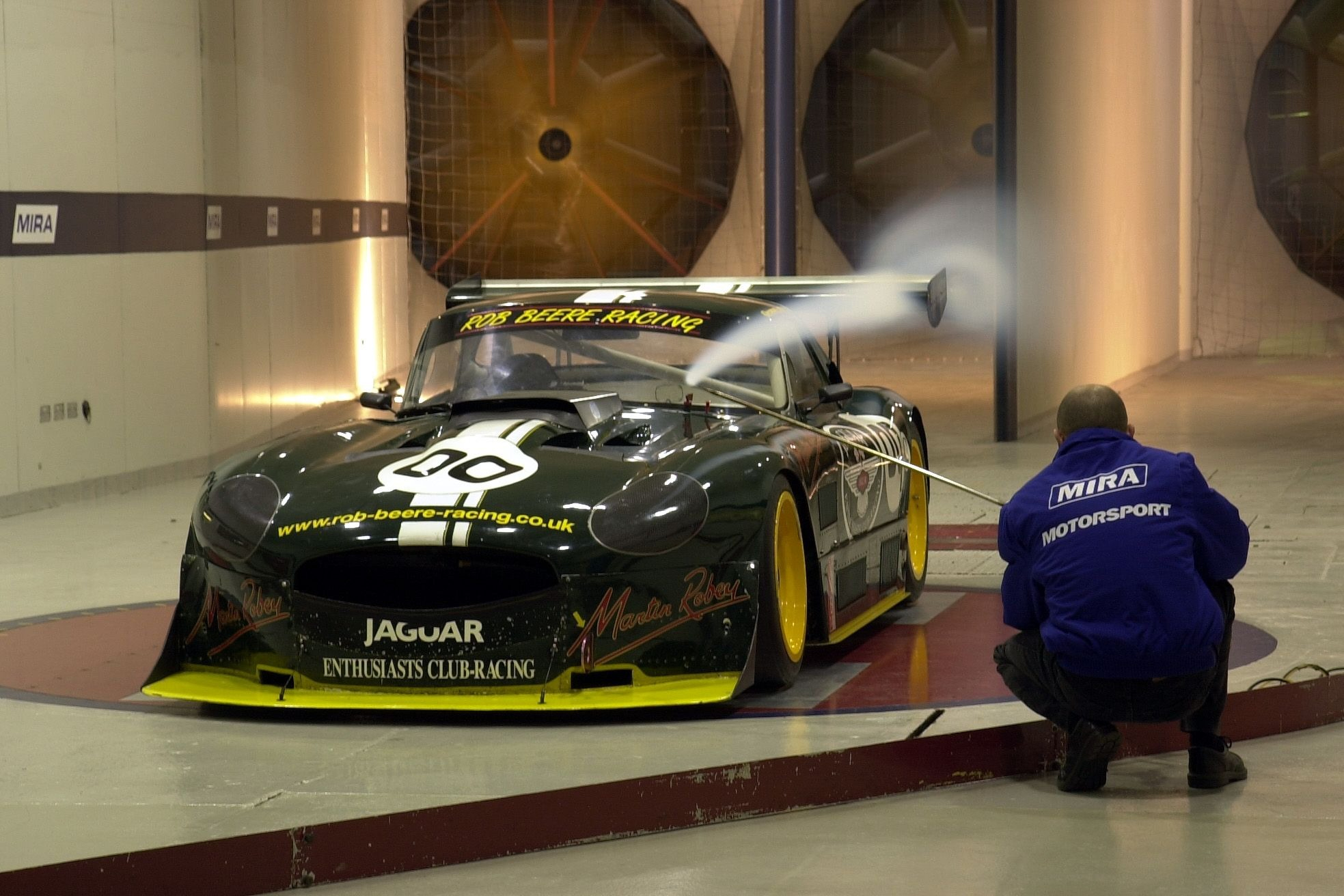
Windtunnel testing at MIRA significantly improved the handling
“I wasn’t one for backing off,” admits Hamilton, who made good ground until he caught a Porsche, known for being rather wide. “I got back up to about fourth, which is where this fella in the green Porsche was. He just swerved around in front of me and I was probably doing 50mph more than he was.”
Finally, Hamilton squeezed through into Old Hall and thought that the matter was resolved, until he felt a big whack in the back of the E-type, which pitched it into the barriers.
"At first it was horrendous because it didn’t really handle too well. We had a lot more power and it was arriving at the corners fast and didn’t want to go around" Malcolm Hamilton
“If that had happened in the middle of the season, I would have been racing the next weekend – Rob would have had it ready,” says Hamilton. But, given the threat from Chamberlain, it seemed the obvious time to do some more development. Sadly, funds and enthusiasm were depleted and the car has not raced since.
New owner Griffiths has slowly had it restored to its former glory over several years.
“Structurally, the car was OK but it was disassembled and a few parts, like the exhaust, had been borrowed,” says Griffiths. “We had to make a new exhaust, which was very expensive.”
Griffiths was keen to retain as much of the original car as possible, and even the twisted aluminium passenger door was saved. He has no intention of racing it, hence putting it up for sale. What it really needs now is a new owner who wants to bring a one-off icon of national racing back to the grids. It would certainly spark some memories of what is widely considered to be the fastest Jaguar E-type in the world.
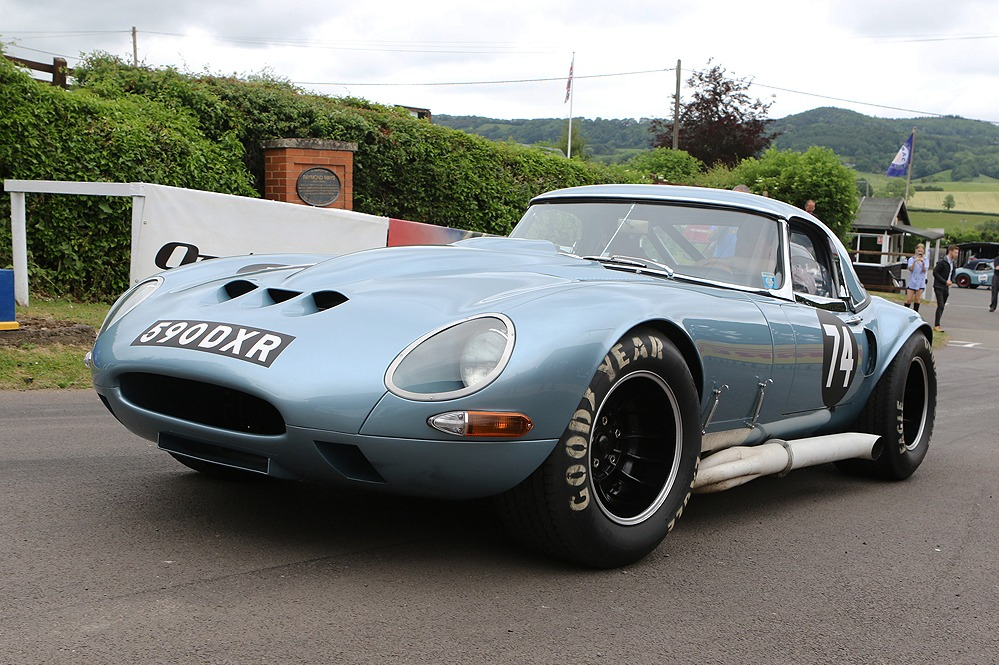
The newly-restored one-off Egal wowed onlookers at the Shelsley Walsh hillclimb
Photo by: Paul Lawrence
The Egal that landed
Two decades before the Hamilton E-type was created, another outrageous big-engined E-type was thrilling fans of national racing. After a very long hiatus, the Jaguar Egal is back in the UK and ready to run once more.
Like its younger cousin, the Egal is a complete one-off with no period international racing history, so it has limited options to go racing again. But even if it only runs in demonstrations – as it did in the recent E-type 60th birthday bash at Shelsley Walsh – it will be a head-turner.
The Egal was one of the ultimate club racing weapons of the mid and late-1960s, and was originally built by Geoff Richardson for owner Rob Beck. The E-type chassis came from a Semi-Lightweight that Beck had crashed at Castle Combe, and the engine installed was a seven-litre Holman and Moody Galaxie marine engine.
Chris Summers, noted for his fearless handling of some brutish single-seaters, was one of the early drivers, and later Barrie ‘Whizzo’ Williams was entrusted with the car. Williams’s combination of natural car control, desire to race anything, anywhere and the youthful enthusiasm that never left him made him an ideal candidate for a car that would have intimidated many.
Williams later recalled that Beck offered him the car to use on the road for a few days before his first event, and so he duly set off home to Bromyard with his dog Tom – a huge elkhound – sitting on the passenger seat!
In due course, the Egal could not live with the nimble Chevron B8s and Ginettas G12s in GT racing.
Once its racing days drew to a close at end of the 1960s, the car passed through several owners, including one Londoner who thought it would make a good road car. It eventually found its way to the US and a long restoration began. Unfortunately, the owner died before the car was finished.
Finally, the Egal returned to the UK a couple of years ago and, on behalf of the new owner, Chris Keith-Lucas at CKL Developments has been restoring it to period specification. He says there are plans to race it once more.
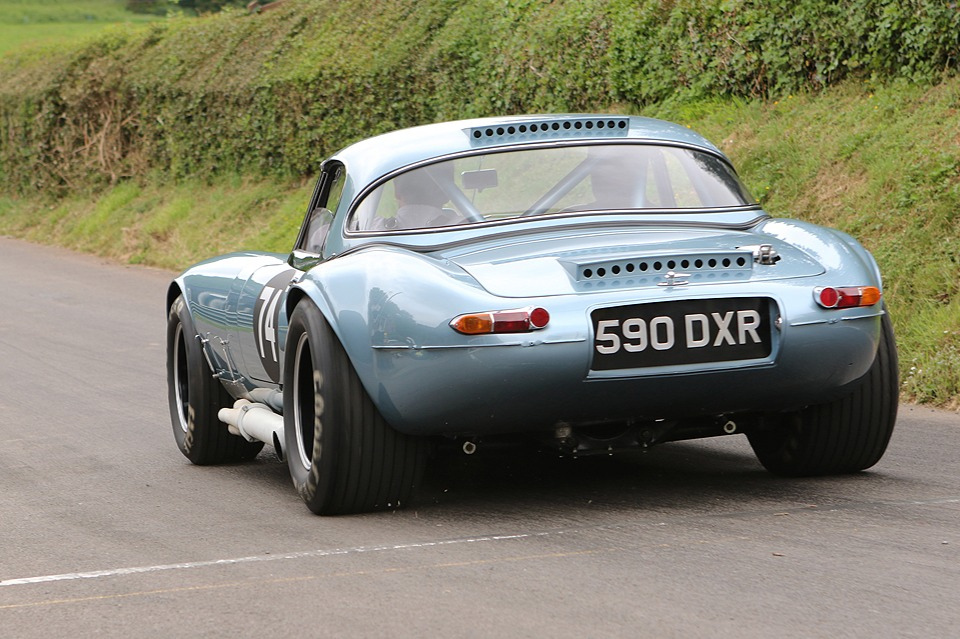
The Egal's huge torque meant Keith-Lucas was careful on the hill
Photo by: Paul Lawrence
“I went to New York and saw it over there and verified it – and then we brought it back,” says Keith-Lucas, who has secured its original registration of ‘590 DXR’ on behalf of the owner. “In America, it grew even wider, but a close inspection of it reveals all the old dings and dents.”
"I wasn’t doing tyre-burning starts, that would twist the propshaft like a toffee wrapper" Chris Keith-Lucas
The demonstration runs at Shelsley were completed with due regard for the Jaguar transmission, which was always a weak link in period.
“I wasn’t doing tyre-burning starts,” says Keith-Lucas. “That would twist the propshaft like a toffee wrapper. I’ve got the dyno figures where it has over 600 lb ft of torque, so it’s really an absolute monster. It is a complication because a car like this was never homologated. It did a huge amount of British club racing, but it didn’t do international events, so that limits what you can do.”
‘The Beast’ and the Egal are very different cars, yet they share much. They are two of the fastest E-types ever built, they are ferociously powerful, and they stir wonderful memories for those who saw them race in period. Importantly, both have been saved and are now ready for their next chapters.
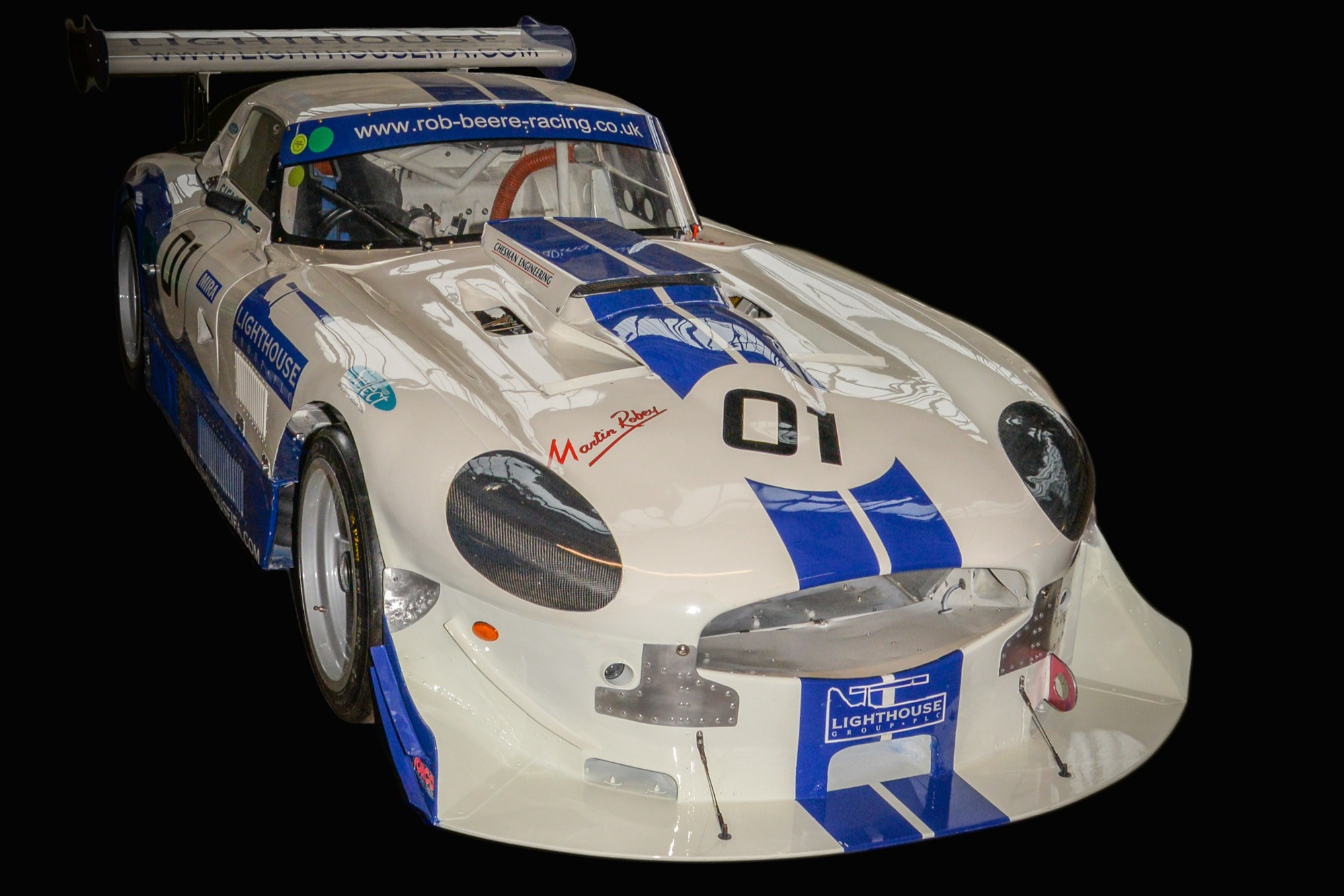
Hamilton's 'Beast' is unlikely to be surpassed as the fastest E-Type ever

How the BRC continues to build momentum after spell in the doldrums

Why the recent past represents historic racing's fast-growing future

The historic event on the up

The scruffy Spider that has terrorised bigger rivals for 100 years

The Triumph taking on the Escort Mk2 hordes on the UK's toughest rally

The king of the hill preparing for a gradual descent from the peak

10 key elements to watch at the Silverstone Festival

The second-generation Can-Am racers that took the UK by storm

How Antonelli levelled up his character to be F1 2026's world champion-elect

FIA set to close F1 cost cap loophole with new rules

Norris promises to make "better decisions" following fresh talks over Singapore GP clash

FIA expects F1 races in Qatar and Abu Dhabi to run as planned
Subscribe and access Autosport.com with your ad-blocker.
From Formula 1 to MotoGP we report straight from the paddock because we love our sport, just like you. In order to keep delivering our expert journalism, our website uses advertising. Still, we want to give you the opportunity to enjoy an ad-free and tracker-free website and to continue using your adblocker.


Top Comments