
The second-generation Can-Am racers that took the UK by storm
When Thundersports was introduced in 1983, few could have predicted that it would bring an army of heavy metal from the United States to British circuits. The awe-inspiring former Can-Am racers became a new domestic flagship category that captivated spectators and drivers alike
For a glorious seven-year period in the 1980s, British race tracks shook under the spectacle of Can-Am cars racing in Thundersports. In its pomp, the series earned support-race slots at Brands Hatch’s British and European grands prix, and as the decade progressed a smattering of second-generation Can-Am monsters set the pace and made a sensational spectacle seldom matched in British racing. The Lola T530, March 827 and March 847 were some of the biggest monsters even seen in action in Britain.
In the late 1960s, the Canadian-American Challenge Cup was racing’s Wild West. The series had few rules – if cars had two seats, enclosed wheels and met some basic safety rules, then they were in. For five seasons, from 1967 to 1971, Bruce McLaren, Denny Hulme and Peter Revson dominated for McLaren. Big sponsorship meant big prize money, and it was worth McLaren and Hulme criss-crossing the Atlantic to dovetail Can-Am races into their Formula 1 schedule.
It was Porsche that brought the McLaren rule to an end with the turbocharged 1000bhp 917/10. In the face of such power, Can-Am, usually motivated by seven or eight litres of Chevrolet grunt, eventually withered and died.
PLUS: The remarkable story of the Porsche 917
It was replaced at the top of the US tree by Formula 5000. But after a couple of dormant years, Can-Am returned in 1977, initially for single-seater F5000s with sportscar bodywork. There was also a two-litre class for bodied Formula 2 cars.
Meanwhile, in the UK, circuit boss and promoter John Webb was looking for a new domestic flagship category after the end of the single-seater F5000/Group 8/Aurora/British F1 epoch. Late in 1982, he announced Thundersports, a free-for-all sportscar category that drew inspiration from Can-Am.
From 1983 to 1989, there were 51 Thundersports races, mostly at the venues initially owned by Webb’s employers, Motor Circuit Developments. The calendar centred on Brands Hatch, Snetterton and Oulton Park, while Thruxton had a race most years and Donington Park hosted four rounds. In 1986, a race was planned for the Birmingham street circuit, but was abandoned when the tail end of Hurricane Charley arrived.
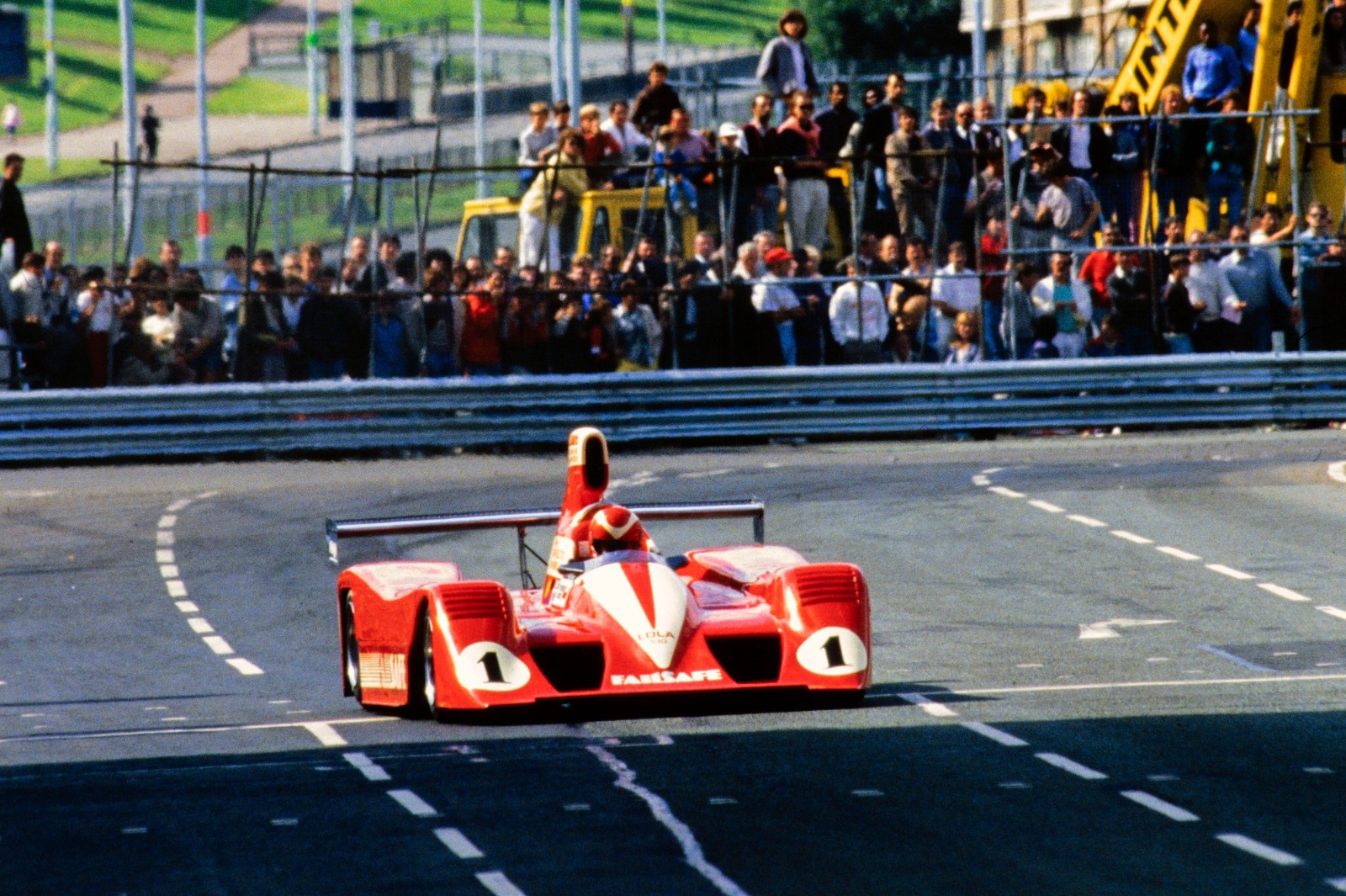
Thundersports' 1986 Birmingham race was abandoned due to weather, but only after Foulston's ex-Haas Racing Lola had taken pole
Photo by: Motorsport Images
Computer magnate and historic racer John Foulston was an early adopter of the Thundersports concept and went to Can-Am for his equipment. The 1980 T530 was Lola’s first dedicated ground-effect single-seater Can-Am design and, when Haas Racing folded its Can-Am programme at the end of 1981, two cars and lots of associated kit were sold to Foulston.
Foulston only ever ran one of the cars regularly, and his T530 was the sole competitive Can-Am car of the 1983 season. Even so, Foulston and co-driver Brian Cocks won only two of the seven races as transmission issues dogged the car. For Cocks, then boss of the Historic Sports Car Club and a friend of Foulston, it was a big step up from historic racing.
One or two first-generation Can-Am cars came out occasionally, including a McLaren M1B and a Lola T160, but the inaugural Thundersports race at Brands Hatch on Easter Monday was won by the Porsche 908/3 of Derek Bell and Siggi Brunn. By June, the Foulston Lola had won twice, but broke its crown wheel and pinion at Oulton Park. That race was run over the shorter Foster’s circuit, but there had been reports from testing that the T530 was lifting its nose over the crest at Hilltop on the longer layout.
The 1983 season ended on a high with a support race at the Brands Grand Prix of Europe and a 45-car entry. Foulston and Cocks were beaten by the Lola T280 of Ray Mallock and John Cooper.
"You could slide the car out of corners and the noise was sensational. They were racing drivers’ cars, with more than 600bhp. It was lovely to have that kind of power available and it made them easier to drive" Mike Wilds
For much of 1984, the more experienced John Brindley – racing coach and mentor for Foulston – replaced Cocks in the Lola, but engine issues dogged a season that delivered just two wins from nine rounds. Things were not greatly improved for 1985 when Foulston and Brindley won three times. It was also the year in which Foulston paid just over £5million for Brands Hatch, Oulton Park and Snetterton. It was reported early in 1987 that his Atlantic Computers business was heading for pre-tax profits of £40m.
The 1986 season finally brought a real upturn in Thundersports when the ambitious Burke Ratcliffe Racing team was formed to run two T530s. Funded by Suffolk landowner Nigel Burke and his mate Andrew Ratcliffe, the BRR squad sourced a pair of surviving T530s and employed former F1 racer Mike Wilds to drive one of them. Wilds flew to California with Burke to buy the cars, but the programme did not start well.
“I was testing on the Indy circuit at Brands in June and the brake pedal went to the floor at Clearways,” said Wilds. “I managed to spin it, but it went through 360 and still went in headfirst and I broke my leg.”
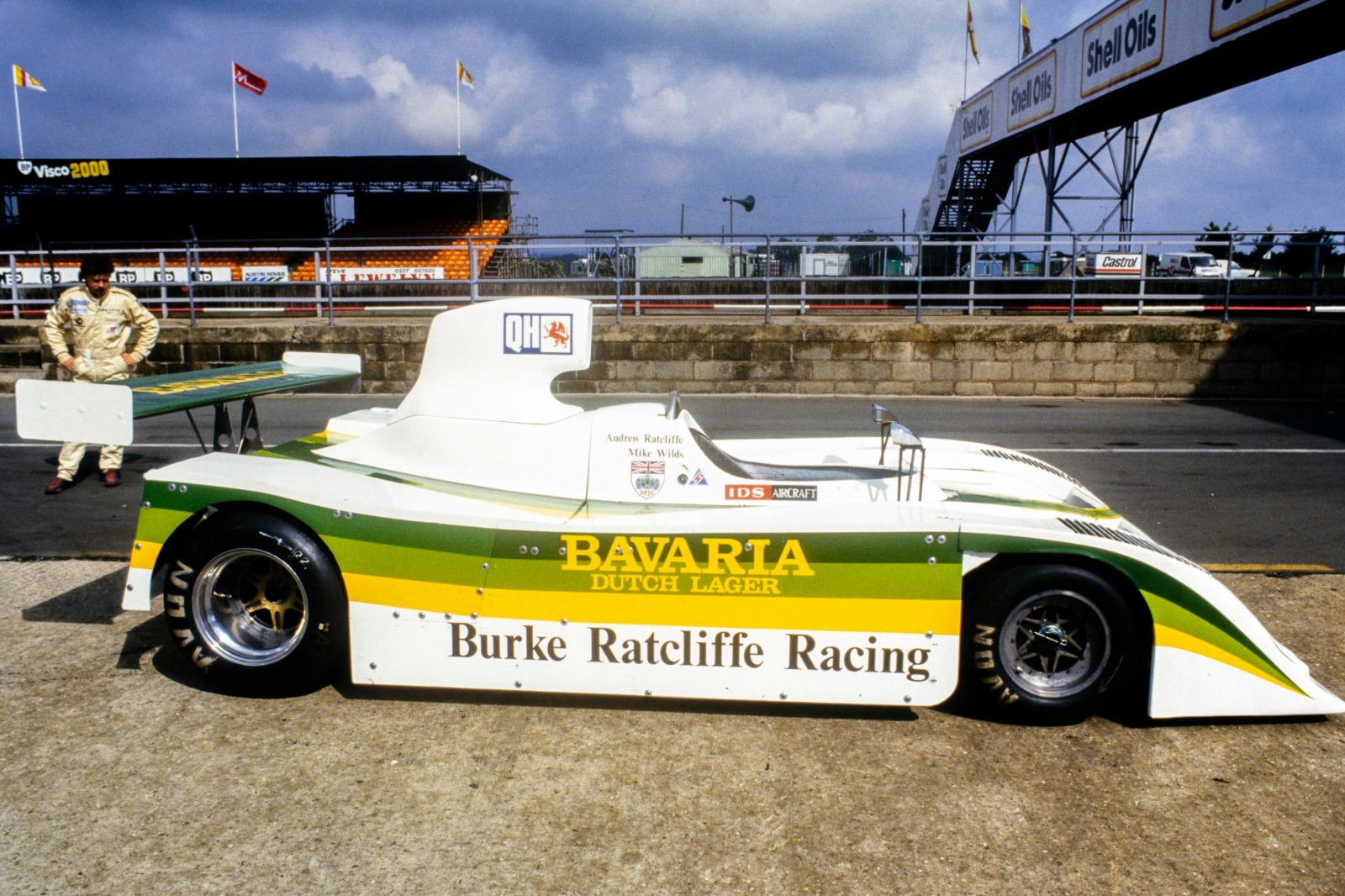
Burke Ratcliffe Racing sourced two Lola T530s, with Wilds picked to drive
Photo by: Motorsport Images
Conversely, Foulston and Brindley were cleaning up and were now equipped with an improved Team VDS development of the T530. They won five of the first six races in 1986 while the Burke Ratcliffe team struggled to get onto the grid. For the aborted Birmingham race, Wilds qualified second, less than 0.1 seconds behind Foulston, and then Ratcliffe and Wilds won at Brands Hatch in September. Ratcliffe was replaced by David Leslie for the Oulton Park final, and they won again. Finally, there was a Can-Am contest in Thundersports.
As one of Britain’s most versatile racers, Wilds loved the cars: “I just adored driving them. They were not monsters to drive as they were so docile and didn’t really have any vices. A Group C car had around 450bhp boosted to 850bhp by the turbo. But in a Can-Am car you could leave it in top gear, and it would pull from nothing. It had immense torque. They gave that lovely surge of power: you could slide the car out of corners and the noise was sensational.
“They were racing drivers’ cars, with more than 600bhp. It was lovely to have that kind of power available and it made them easier to drive. If you made a mistake you could power out of it, but you were travelling very quickly and they were not particularly strong.”
The 1987 season proved to be the high-water mark for Can-Am cars in the UK. Foulston and Brindley were back, BRR fielded two cars at times, and two Marches joined the grid. Simpson Engineering entered the fray with an 827 for wealthy Italian Stefano Sebastiani, who raced as ‘Stingbrace’, and team boss Robin Smith, while Patrick Capon rolled out an 847 for his mate Richard Piper and Tiff Needell. Bringing the Can-Am field to a possible six cars, Colin Pool imported a Lola T330-based Frissbee and shared it with Bill Wykeham.
“Colin bought it along with a lot of other stuff from Newman-Haas: he even got the popcorn machine!” laughs Wykeham. “He sold a lot of it on, but the Frissbee was left over and he ran it in Thundersports. It was short on fuel capacity but it was great fun to drive. It looked stunning but was too wide for most of the pit garages. It was usually a midfield finisher, but we got a podium when David Leslie shared it with me.”
Roy Kennedy was installed as team manager at BRR for 1987 and brought Ian Flux with him. Foulston and Brindley won at Oulton Park on Good Friday, but three days later at Brands the scale of the opposition became clear. Smith and Sebastiani put the March 827 on pole, and Wilds and Flux won, while Foulston retired after four laps with a broken gearbox.
Back at Brands in the early summer, Flux drafted Ian Taylor in to share the winning BRR Lola, while Foulston and Brindley were back in third behind Smith and Sebastiani. The March took a first win at Snetterton ahead of Piper/Will Hoy and Wykeham/Leslie as the Lolas faltered, and then Piper and Needell pipped Flux and Wilds to victory in a thriller at Thruxton. The year finished with six Can-Am cars making a mighty spectacle at Oulton Park, with Richard Jones and John Williams in the second BRR Lola.
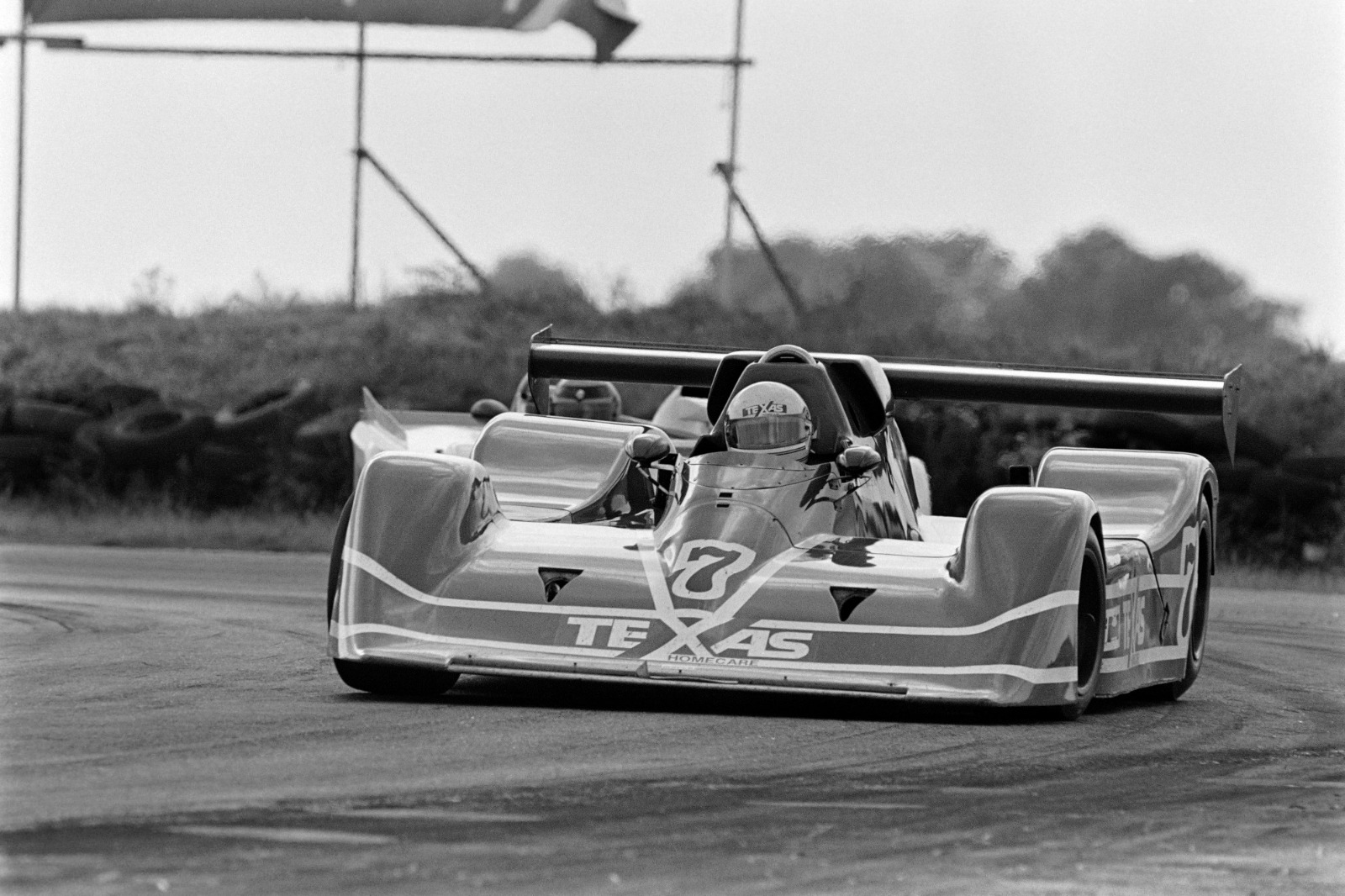
Richard Piper’s March 847 was a spectacular addition to the Thundersports grid in 1987
Photo by: Motorsport Images
Flux recalls the Oulton weekend: “It was my most satisfying Thundersports race. It was Oulton with the old Knickerbrook, and I went out on fresh rubber and put it on pole. I’d love to be able to watch an onboard of that lap. It was a case of take a deep breath and only do it once. It was pulling about 175mph on the approach to Knickerbrook. You had to have a lot of respect for those cars. They weren’t very strong, but they were bloody quick!”
Foulston and Brindley won at Oulton Park as the 1987 season closed, but three weeks later Foulston died at Silverstone while testing his McLaren M15 Indycar. It impacted the sport in many ways, and came at a time when Thundersports was at a crossroads. His T530 ran only once in 1988, when Wilds and Brindley won at Brands Hatch on Easter Monday.
"It was pulling about 175mph on the approach to Knickerbrook. You had to have a lot of respect for those cars. They weren’t very strong, but they were bloody quick!" Ian Flux
Otherwise, a sole BRR Lola won the other four races, with Flux, Wilds and Brindley making up the driver squad. Smith and Sebastiani had a season of unreliability, while Eddie McLurg dropped in once to share his two-litre Can-Am March-BMW 822 with Simon Hadfield.
Flux was sad to see the end of the 1988 season: “Of all the race cars I’ve been lucky enough to drive, it was my favourite by miles. I got £250 a race and 25% of the prize money. The money was brilliant, and so a win was worth £1250. I could live on about £150 a week back then!”
The 1989 season represented the end of Thundersports amid an ongoing decline of Can-Am cars. The BRR Lolas were sold back to the US, and the Simpson March recorded a single finish as a mere nine cars drew the curtains on the category at Oulton Park in September. Initial hopes that the new BRDC Group C2 Championship would prove a worthy replacement were not realised, but it did later morph into British GT. Sadly, those awe-inspiring second-generation Can-Am cars never raced again in the UK.
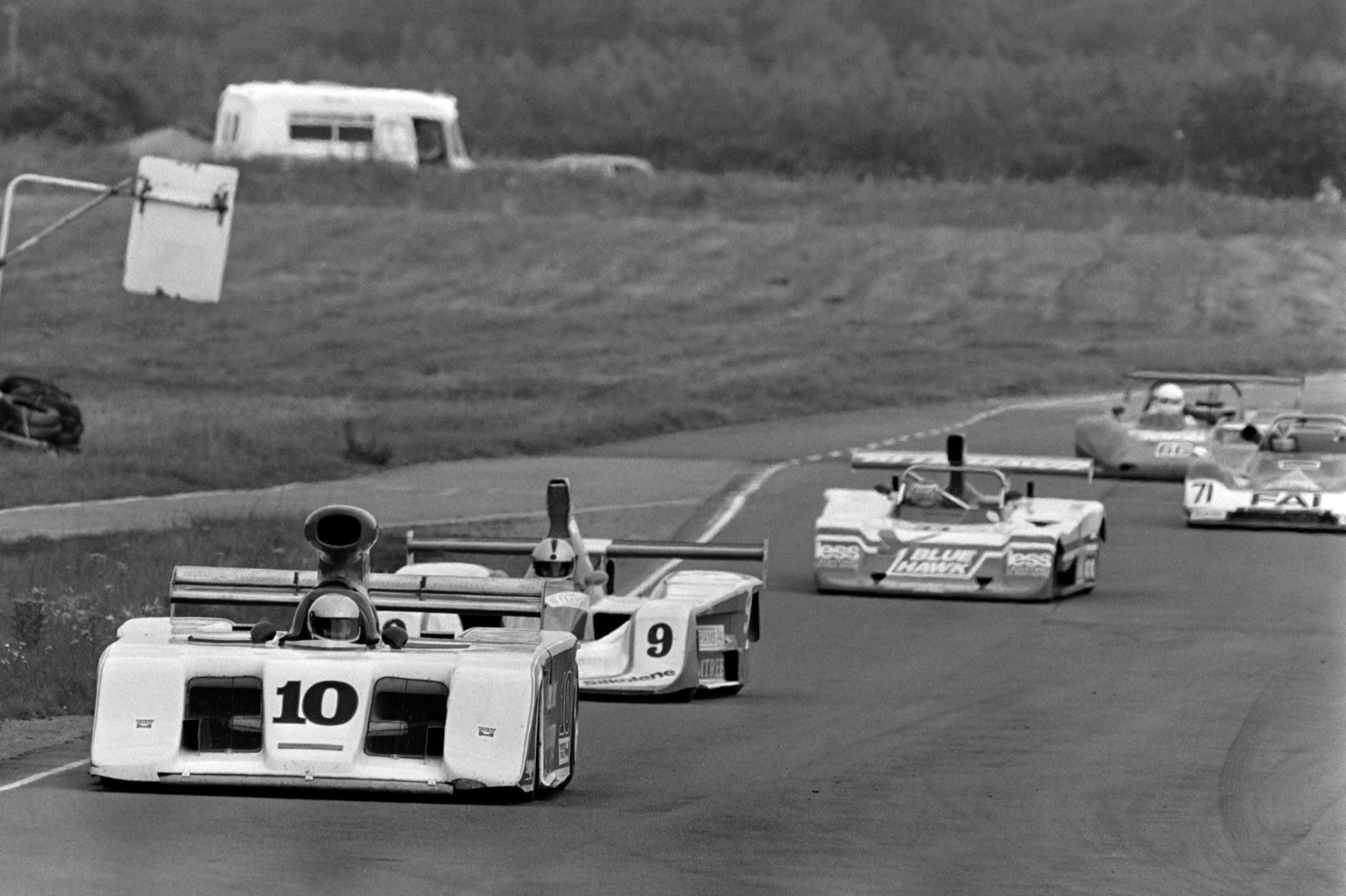
March 827 leads a gaggle at Snetterton in 1987 as the series reached its zenith
Photo by: Motorsport Images

How the BRC continues to build momentum after spell in the doldrums

Why the recent past represents historic racing's fast-growing future

The historic event on the up

The scruffy Spider that has terrorised bigger rivals for 100 years

The Triumph taking on the Escort Mk2 hordes on the UK's toughest rally

The king of the hill preparing for a gradual descent from the peak

10 key elements to watch at the Silverstone Festival

The E-Type 'Beast' that took on club racing's greats

How Andrew Jordan realised his teenage rallycross dream

Inside the competition building F1’s future engineering talent

WEC Barcelona: Toyota scores dominant 1-2 to clinch manufacturers’ title

When Can-Am made its controversial comeback
Subscribe and access Autosport.com with your ad-blocker.
From Formula 1 to MotoGP we report straight from the paddock because we love our sport, just like you. In order to keep delivering our expert journalism, our website uses advertising. Still, we want to give you the opportunity to enjoy an ad-free and tracker-free website and to continue using your adblocker.


Top Comments