
The F1 techniques club racers can use to go faster
Mercedes engineer James Wingfield is used to data in his F1 day job, but the Caterham racer shows how grassroots club drivers can also benefit from the tool
The introduction of data loggers and on-board cameras has transformed modern motorsport and driver development from the top levels all the way to grassroots racing. Much like modern car mechanics have had to move with the times and embrace the electrification of car control systems, race teams, drivers and driver coaches have done the same thing in motorsport and to great effect. No longer does the race engineer have to rely solely on the feedback from a disgruntled driver who is trying to justify why they are two seconds slower than the competition.
With electronic sensors recording all of the driver inputs, and on-board (and external) cameras showing racing lines and track positioning, a major aspect of race engineering has developed in a way that is no longer constrained by the unreliable human element of a racing driver’s sometimes selective recollection.
Race data has developed to include brake and throttle traces, often synchronised with on-board video footage and g-sensors offering an even greater opportunity to analyse exactly what the driver is doing across the entire lap. This has brought about a new role in the paddock for driver coaches, and it has proven to be a profitable earner for many a semi-pro or even pro racing driver who wants to top up their budget with some coaching work at other race events.
These days, I compete in the relatively grassroots Caterham Motorsports championships that play a big part in the UK racing scene by bringing 50-plus brand new ‘novice’ drivers into motorsport every year through the Caterham Academy. Even in these first few years, the drivers are already making use of data analysis, and it is unusual to see anyone racing without some level of driver coaching included in the annual budget.
PLUS: Why motorsport's 'intruders' are starting to make a mark
These coaches have a lot to offer in terms of data analysis as well as driver preparation, racecraft, wet racing lines, and they can even jump into your car to set you a target lap to copy. That said, there is a lot that can be done yourself even without a coach, provided you have a decent race logging kit such as a Racekeeper or VBOX system, and a bit of understanding.
It might be that you’re lucky enough to have two or three test days to hone your lap times before a race weekend, or you might be straight into qualifying as your first session on-track. Either way, it’s important to get the maximum benefit you can from every session and, to do that, there are a few golden rules to follow.
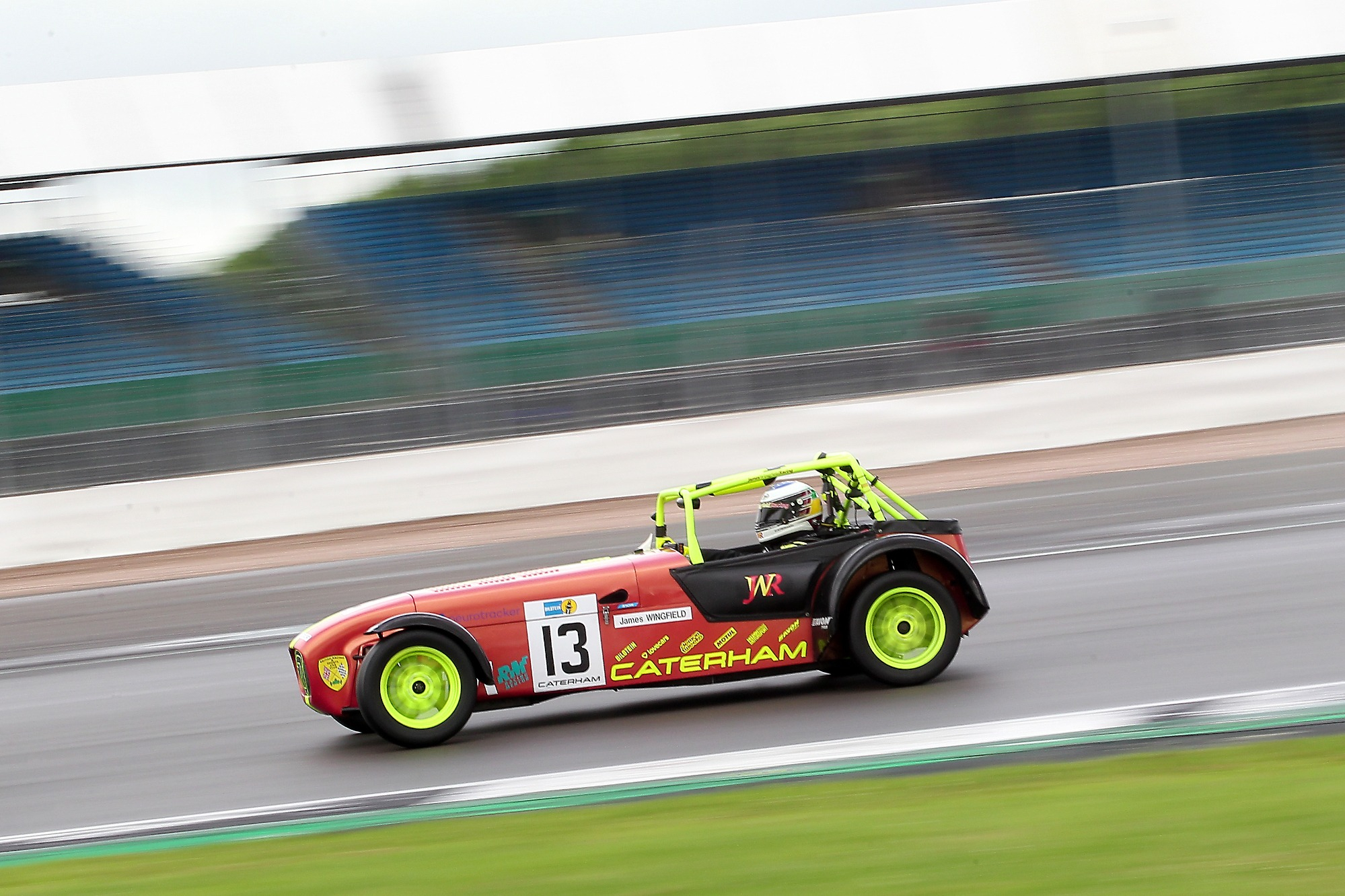
Affordability of data-logging tools means it is accessible to club racers
Photo by: Mick Walker
First, you need to know where to look for the biggest lap time gain. You also need to analyse the data and identify what to do to improve in those critical areas. And, finally, you need to focus on your plan and put it into action in the next session.
It helps if you have a reference lap that you’re aiming for, which is one of the key benefits to a driver coach, or running as part of a larger racing team with quick team-mates who can set a target lap that you can then look to copy. Even if that’s not available to you, there will always be variation in your own laps and, if you try a few different racing lines or styles through each corner, then you should be able to quickly home in on something that works well. The same is also true of car set-ups where you can easily compare how much faster you are and why, whenever you make a set-up change.
Every car and series is slightly different but, on the whole, the biggest lap time gains are to be had down the longest straights. This isn’t the time to talk about engine tuning or car/aero development, so I’ll omit that from this discussion and instead focus on the driving elements that are more likely to offer gains through the weekend.
Looking at the long Luffield corner, a faster entry carries the car wider at the middle of the corner and requires a slower and, critically, later minimum apex speed to get the car turned
At this point, we have to consider the specific track that you’re racing at, and to be aware that the critical corners may vary from class to class. As an example, we will run though some real-life data from my own Caterham 310R race car on the Silverstone Grand Prix circuit.
The first thing to look for is the overall speed trace, usually provided by a GPS sensor mounted to the car. From this you can immediately see where those long straights are, or more specifically, the longest continuous periods of high speed/wide open throttle (WOT). By starting those full throttle zones at a higher speed, you’ll carry the advantage all the way to the next braking zone, so they tend to be the best places to look first as any small gain is maintained for the longest durations.
The Caterham doesn’t have added downforce through devices such as wings, but it does benefit from some pretty good low-speed handling thanks to its low weight and good chassis dynamics. The straightline speeds are typically low due to high drag but, even so, at this fast F1 track, most of the corners still need some level of braking.
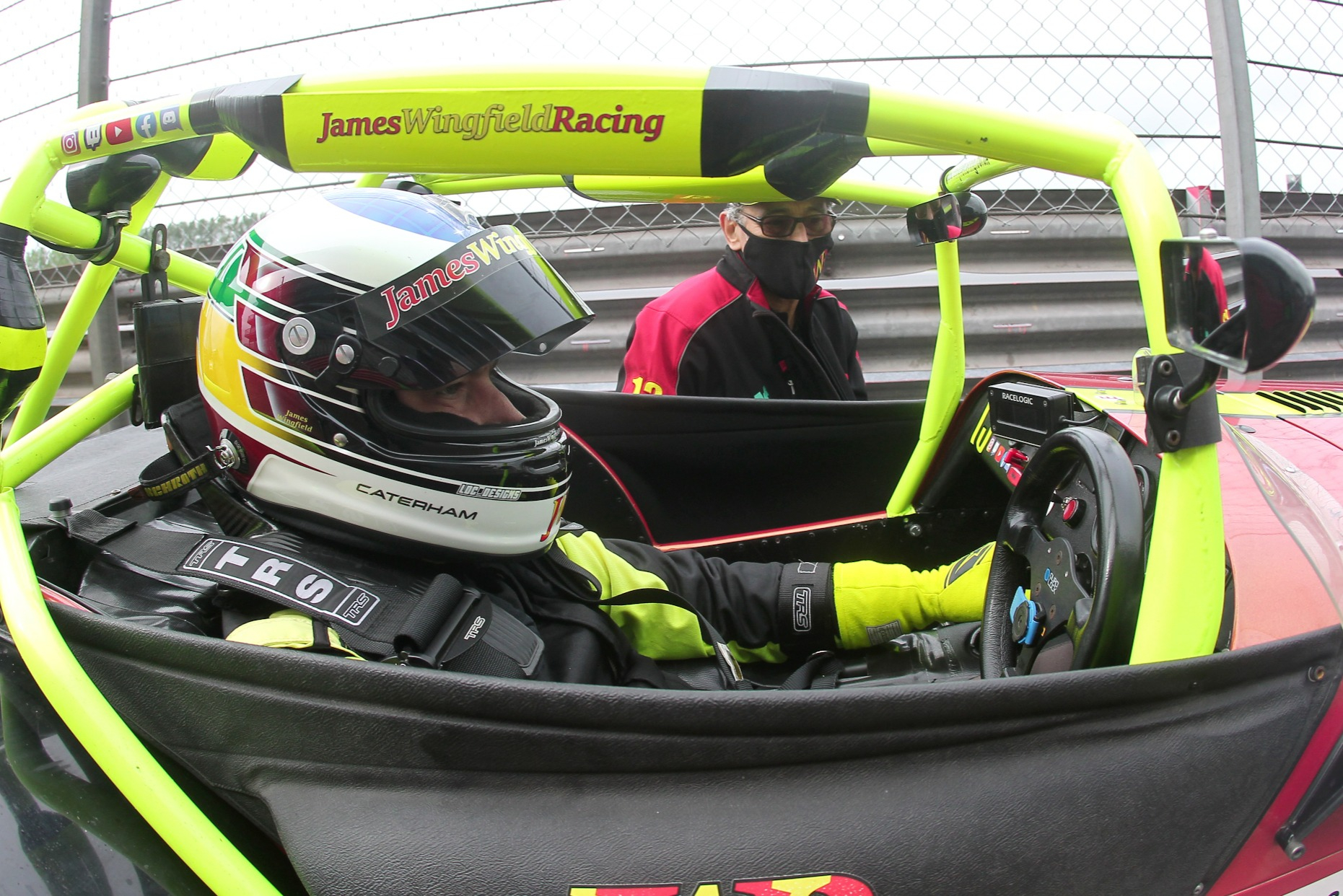
F1 engineer Wingfield uses data in his own Caterham racing
Photo by: Mick Walker
Car speed is the key parameter we’re interested in, and plotting it against distance shows how it varies around the lap. Immediately we can spot the long WOT zones and home in on the important corners. Silverstone is quite unusual in that there are several long straights, the longest of which are Wellington Straight following the Loop corner, Hangar Straight exiting Becketts, and the classic pit straight out of Luffield.
In the Caterham, as with most cars, both Woodcote and Chapel are full-throttle corners so, while they are strictly the corner preceding the two straights, we can ignore them and focus instead on the corners before where the WOT times start.
To get those corners right, we first focus on the driving elements to find any way to optimise the exit, even at the expense of a slower apex or entry, which will usually pay off with more speed all the way along the following straight. It’s often possible to take a different racing line to bias the speed towards the exit. Braking earlier and/or taking a wider entry line to get the car rotated earlier in the corner often allows a more aggressive throttle application and a faster exit.
Looking at the long Luffield corner, a faster entry carries the car wider at the middle of the corner and requires a slower and, critically, later minimum apex speed to get the car turned. When comparing with a more normal reference lap, there is initially an improvement, but all the way along the following straight you lose out, resulting in three tenths of a second overall loss.
Another example is the Maggotts-Becketts-Chapel complex, and this typifies the old adage ‘slow-in, fast-out’. Again, a faster entry yields time gains on the first part of Maggotts, but the wider line that results from carrying more speed into the complex puts the car in a less ideal position for the most critical corner, which is Becketts.
As with Luffield, overspeeding the entry has put the car off line and results in a slower, later minimum apex speed, which penalises us all the way along the next straight. The laptime is actually about level through the corner section, but the slower exit speed costs a further three tenths along the Hangar Straight.
Both of these examples show how gains were found in the same session with no change in conditions or car set-up, and they provide an indication of what can be achieved with some consideration of different driving styles once you know where to look.

Data can reveal the compromises inherent in certain racing lines
Photo by: James Wingfield
The data then becomes the means to quantify the gains and allows us to understand why we’re faster on some laps/corners than others. Too often drivers talk about putting in one fast lap but not knowing how to repeat it, but the key is always there to be found if you look hard enough into the data.
With the driving lines optimised, the next thing to consider is the car set-up. At this point, you’ll want to work with a race engineer unless you can set the car up yourself, but knowing what to focus on is the first step to optimising your speed. The data analysis required to compare set-ups is exactly the same as we did for the driving adjustments, but you may well find net gains and losses in different corners, so comparisons are typically done over a whole lap rather than specific corners.
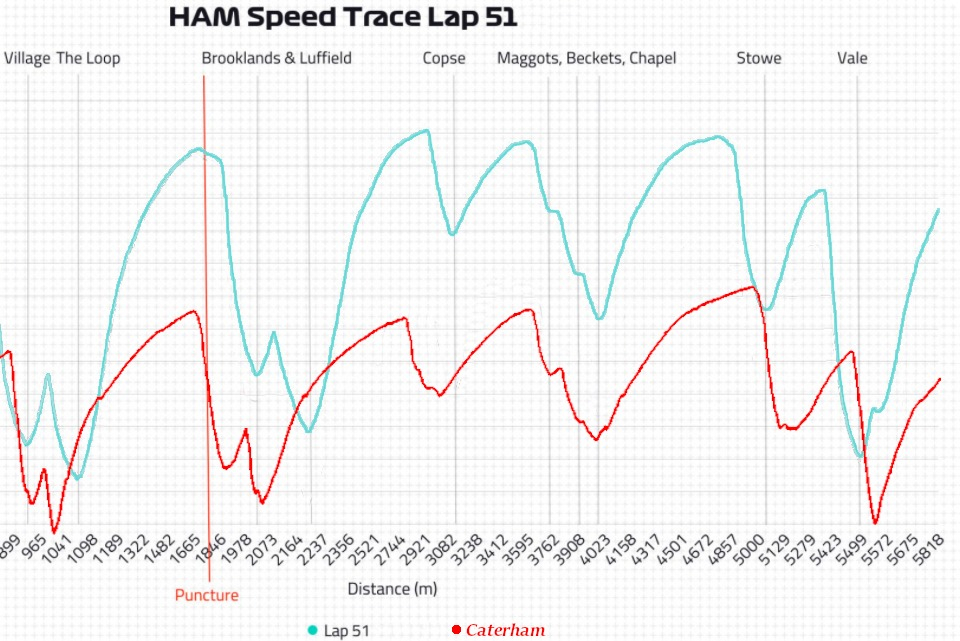
The speed traces show similar relative accelerations and decelerations so, despite the faster overall car speed, the braking zones for the F1 car appear to be similar to the Caterham
If you have the freedom of aerodynamic adjustments for variable downforce levels, then you should expect to offset gains in the corners with losses down the straights or vice-versa, and the key will be to find out how far along the straights you are before the break-even point is achieved.
Clearly a circuit with several long straights will bias a set-up towards lower downforce, because the time gained on the straights will overcome losses through the corners, but a track with shorter straights will not offer the same reward, so you’d benefit from higher corner speeds through increased downforce.
As mentioned earlier, the relative corner and straightline speeds will vary depending on the car being used so, to test that theory to the extreme, we can compare my Caterham 310R lap with one from the 2020 Mercedes W11 Formula 1 car in Lewis Hamilton’s hands. While I work as a Mercedes F1 engineer I am not here to divulge any confidential information, but some data is already in the public domain, so I can overlay the data already available on the official F1 website with my own Caterham data.
Looking at the F1 data in isolation for lap 51 of the 2020 British GP, the first thing to note is that the characteristics of the track are clear and in fact quite similar to the Caterham. The speed traces show similar relative accelerations and decelerations so, despite the faster overall car speed, the braking zones for the F1 car appear to be similar to the Caterham.
Some of the more junior single-seaters often have increased downforce but not such a large increase in power, so it’s common for those to have smaller speed reductions in the high-speed corners and, in some cases, the straights can even join together to make extended WOT zones.
If we overlay both sets of data, then it puts the sheer speed of the Mercedes into perspective. While a Caterham is a fast circuit car at most trackdays, the F1 machine is almost twice as fast across the whole lap. In fact, the only time I can get close to Hamilton is on the last lap (52) of the 2020 British GP, on which – as those who watched it will remember – he suffered a puncture heading into Brooklands.
Even then, with only three functioning Pirellis, the W11 is still faster than the Caterham. Maybe that could be the basis for a handicap race in the future…
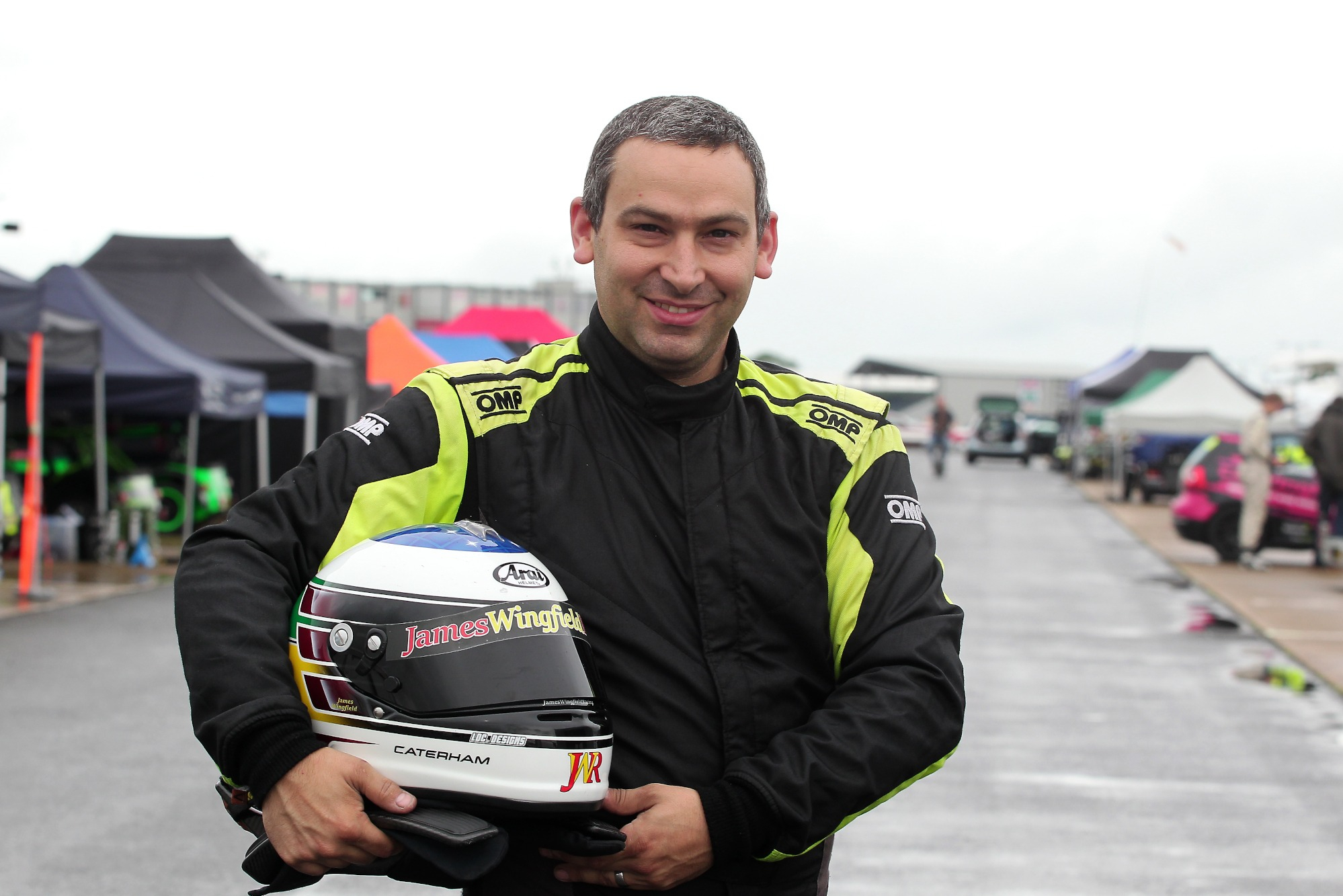
James Wingfield
Photo by: Mick Walker

FIA ratifies key 2027 WRC sporting regulations

Razgatlioglu to miss the rest MotoGP season due to shoulder injury

Barcelona set to host IndyCar race in 2027 under multi-year deal

MotoGP teams told Qatar Grand Prix expected to go ahead in November
Subscribe and access Autosport.com with your ad-blocker.
From Formula 1 to MotoGP we report straight from the paddock because we love our sport, just like you. In order to keep delivering our expert journalism, our website uses advertising. Still, we want to give you the opportunity to enjoy an ad-free and tracker-free website and to continue using your adblocker.


Top Comments