


How the cost cap is putting new pressures on F1's top teams
Formula 1’s budget cap means that even the richest teams now have to juggle what they can afford to spend – to the extent that Mercedes recently had to back out of an important tyre test. MARK GALLAGHER explains how the bean-counters now have to work to the limits of the regulations just like technical directors do
In case you haven’t noticed, Mercedes is counting the pennies.
It first came to our attention during the controversy surrounding George Russell’s collision with Valtteri Bottas at Imola. The fall-out from that included Mercedes engineering director Andy Shovlin admitting the repair costs might have an impact on car development.
“This sort of damage isn’t really in the plan,” Shovlin revealed in the aftermath of the accident. “The bill in terms of carbon work and metalwork will be very extensive from that.”
A month later the team announced it would be withdrawing from a two-day wet-weather test at Paul Ricard, part of Pirelli’s ongoing evaluations of the 18-inch tyres being introduced next season.
“We couldn’t take the costs related to the tyre test,” insists team principal Toto Wolff, “and we wouldn’t have been able to send our mechanics on such a long journey.”
Mercedes is not alone. Along with Ferrari and Red Bull, Mercedes is at the vanguard of a new and daunting task facing every team. The culprit is the budget cap, introduced to much fanfare, then forgotten about while we enjoy the title battle between Lewis Hamilton and Max Verstappen.
It was far from forgotten by the teams, particularly the ‘Big Three’ for whom the budget cap represents a floor to which they must drop. The change is significant.

Max Verstappen, Red Bull Racing RB16B, Valtteri Bottas, Mercedes W12, Carlos Sainz Jr., Ferrari SF21, Lando Norris, McLaren MCL35M, and the rest of the field at the start
Photo by: Jerry Andre / Motorsport Images
“Clearly the introduction of the Financial Regulations has had a major impact,” says Enrico Racca, Scuderia Ferrari’s head of operational governance and cost strategy. “By bringing spending down to a significantly lower level than in the past, even in terms of development and investment, while one must also not forget the economic consequences of the pandemic.
“These two factors combined meant there was a need for an urgent review of the organisation and processes that had already started at the end of 2019 once the first version of the regulations had been approved.”
Since Ferrari’s F1 team is part of Ferrari S.p.A, a company listed on the New York and Milan stock exchanges, it is already familiar with rigorous financial compliance. It has still had to strengthen the team’s financial structure. Racca acknowledges it represents a shift in mindset for Formula 1’s most iconic team.
“Inevitably, it now requires a culture of efficiency and control of the financial figures that, in the past, was probably not such a priority for the Scuderia or for teams of a similar size.”
The purpose of the budget cap, outlined in paragraph three of the Financial Regulations, is clear: “To promote the competitive balance of the championship. To promote the sporting fairness of the championship. To ensure the long-term financial stability and sustainability of the F1 teams.”
The expense of competing in Formula 1 has grown almost exponentially, particularly for those focused on winning races and world championships. While Ferrari’s historical spend is not publicly available, and Red Bull Racing remains a relatively recent arrival, the information relating to Mercedes Benz Grand Prix Ltd makes for interesting reading
The budget cap is overseen by the FIA Cost Cap Administration (CCA) and it requires teams to provide an interim report to it by 30 June each year covering their expenditure between January and April. The annual report covering expenditure to 31 December must then be submitted by 31 March of the following year.
The CCA is appointed by the FIA and, while the teams are focused on fulfilling the reporting requirements, there is equal pressure on the regulator to ensure the information being provided by the teams is policed correctly. Not every F1 team has the same business structure, and while inter-team and related transactions – those involving a parent company or a subsidiary – have to be charged at ‘fair value’, the task facing the CCA is by no means straightforward.
Initially agreed at USD$175m, the cap was chopped back to USD$145m for this year, while a glide path in 2022 and 2023 will reduce it further, to USD$140m and $135m.
The expense of competing in Formula 1 has grown almost exponentially, particularly for those focused on winning races and world championships. While Ferrari’s historical spend is not publicly available, and Red Bull Racing remains a relatively recent arrival, the information relating to Mercedes Benz Grand Prix Ltd makes for interesting reading.

The car of Charles Leclerc, Ferrari SF21, is craned away
Photo by: Glenn Dunbar / Motorsport Images
The accounts for the company, founded as the Tyrrell Racing Organisation on 31 December 1963 by Ken Tyrrell (‘Timber Merchant’) and Nora Tyrrell (‘Married Woman’) show that in 1990 the team competed in F1 with turnover a shade under £10m. By 2000, as BAR-Honda, the company was spending ten times that much.
When Honda decided to pull the plug in 2008, the team was by now showing an annual figure of £170m. While that dipped under Brawn and the initial Mercedes takeover, it soon rebounded, then climbed. The company’s turnover reached a peak of £363m in pre-COVID 2019.
PLUS: Why the demise of F1's hypocritical spending habit is cause for celebration
If you think that going from £10m to £363m in 30 years is down to inflation, consider that in 1990 McLaren spent £22.4m to win the world championship. That equates to £52m today.
F1 has become more expensive for a number of reasons. These include the scale and complexity of the engineering involved, the geographic growth of the world championship, and the way in which increased sponsorship and prize money has heightened investment by the major teams.
The introduction of the budget cap, announced in May last year, played an important part in laying the foundation for the Concorde Agreement which came to fruition during the summer. It was a key objective of Liberty Media’s then-CEO Chase Carey. The impact of the pandemic created additional urgency.
The result is a financial template within which the teams have to operate, the upside being the prospect of a more equitable, competitive championship in which the best-managed teams can be fully profitable. The Financial Regulations, a 48-page document which now sits alongside the Technical and Sporting Regulations on the desks of team principals, chief operating officers and technical directors from Maranello to Milton Keynes, is typically dry but comprehensive.
It has necessitated teams putting in place parallel accounting systems and a financial reporting structure which, when added to the normal statutory accounts, places an additional administrative burden on finance departments. The regulations put specific numbers against F1 team activities in a manner which leaves little room for manoeuvre.

Franz Tost, Team Principal, AlphaTauri, Andreas Seidl, Team Principal, McLaren, and Christian Horner, Team Principal, Red Bull Racing, on the grid
Photo by: Mark Sutton / Motorsport Images
To participate in an individual grand prix is given as a variable cost of USD$1.2m, such that while the USD$145m cap applies to a 21-race championship, this year’s original 23 race schedule meant a cap of USD$147.4m. Should the calendar fall below 21 races teams have to reduce their spend accordingly.
Mercedes’ decision to withdraw from the Pirelli wet-weather test at Paul Ricard came as result of a range of complexities arising from the budget cap. While each day of tyre testing is covered by an exemption of USD$200,000, tyre tests require personnel and use valuable power unit mileage. Exceed the 5000kms power unit mileage allowance and you start racking up additional spend within the cost cap.
The personnel issue means staff are divided into those who fall under the cost cap – race team staff for example – and those who fall outside, such as those working on non-race programmes including ‘Heritage Asset Activities’. This means staff who normally spend at least 90% of their time working on operating recently retired or historic cars.
To help focus minds, the regulations point out that each team’s CEO, chief financial officer, team principal and technical director could be held personally responsible should any reporting information be incomplete, inaccurate or misleading. Major breaches could lead to sanctions which, under the International Sporting Code, might include being banned from F1
Take a member of staff out of the heritage activities and redeploy them in a core F1 activity, whether a test or race, and you have to account for them within the budget cap. The detail of this is such that teams have to prove the portion of an individual’s time split between heritage and core F1 activities, attributing specific costs to each including their social security contributions.
Every activity has to be accounted for, and each scenario addressed. The addition of Sprint Qualifying results in teams being able to claw back USD$150,000 per event. Should you be unfortunate enough to have an accident during Sprint Qualifying, a further USD$100,000 per car is allowable. If the damage is greater than that amount, additional costs can be assessed and agreed with the CCA.
In order to tackle the reporting requirements, every team has had to create a mechanism by which each area of expenditure is accounted for as either Relevant Costs or Excluded Costs.
Excluded Costs, those which lie outside the cap, are often summarised with a few headline items. In reality it is a long and not inconsequential list of unaffected areas, at least for now.
All marketing and driver costs lie outside the cap. So too the top three executive salaries, the heritage activities and any non-F1 activities, such as the provision of engineering services to clients outside F1. All finance, legal and HR costs are excluded, along with employee bonus costs, albeit limited to 20% of an employee’s salary.

Valtteri Bottas, Mercedes, 3rd position, and Lewis Hamilton, Mercedes, 2nd position, congratulate each other in Parc Ferme
Photo by: Zak Mauger / Motorsport Images
Other areas of cost not included in the cap are property costs, the cost of each team’s entry into the world championship, superlicence fees, any sums payable to the Formula One Group, and financial penalties incurred during the season.
Throw in all flight and hotel costs for the race and test team, a million dollars in staff entertainment costs, maternity, paternity and sickness leave, and it serves to underline the specific focus of the cap – the design, development and operation of the cars.
When combined with certain adjustments for items such as inter-team transactions, deferred R&D and capitalisation costs, the Relevant Costs and Excluded Costs comprise the Total Costs of the team’s ‘Reporting Group’. Given the varying structure of teams, the Reporting Group covers what we would all recognise to be the F1 team, together within related businesses which are part of the legal structure of the company.
To help focus minds, the regulations point out that each team’s CEO, chief financial officer, team principal and technical director could be held personally responsible should any reporting information be incomplete, inaccurate or misleading. Major breaches could lead to sanctions which, under the International Sporting Code, might include being banned from F1.
If a team gets it wrong, punishments range from financial wrist-slapping through to a minor sporting penalty such as a deduction of points. In the worst-case scenario, where a team intentionally breaches the cap and is less than cooperative with the regulator, the possibility of suspension or exclusion from the world championship rears its head.
Investigations can be launched by the CCA at any time, and immunity can be granted to an individual who brings a breach of the regulations to its attention. Best not to have a disgruntled employee if you’ve decided to stretch the cap… The CCA can demand access to company information, IT equipment and premises. Breaches can be procedural, such as for a late filing, a Minor Overspend of up to 5%, beyond which a team is guilty of a Material Overspend.
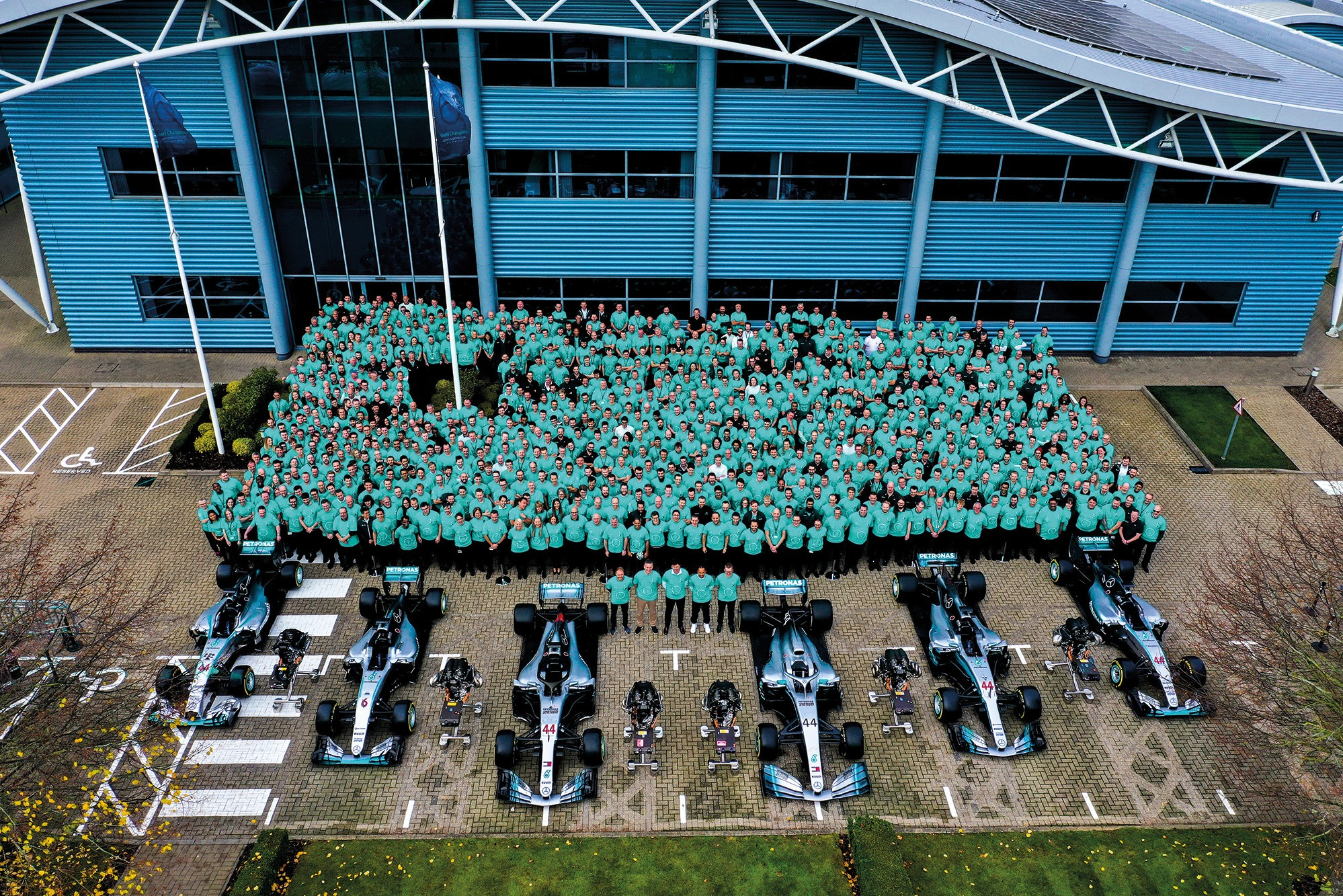
Mercedes F1 team celebrates 2019 F1 world championship titles
Photo by: Mercedes
Should the CCA determine that a breach has occurred it will refer the case to the Cost Cap Adjudication Panel, an independent group of between six and twelve judges elected by the FIA General Assembly. As with every team, the carry-over of 2020 chassis into this year helped enormously in preparing for the cap. The huge financial burden which comes with designing and manufacturing new chassis was alleviated at a stroke.
At Mercedes, Toto Wolff relies on chief operating officer Rob Thomas and chief financial officer Russell Braithwaite to oversee budget cap adherence, with the help of senior executives including chief technical officer James Allison and chief people officer Paul Mills. The team estimates it has taken £50m out of its capped costs, reducing expenditure by roughly one-third. It’s working hard to maintain its capability and supremacy in F1 while completely reinventing the way in which it goes about the business of creating world-class F1 cars.
The efficiency with which a team spends its money has been likened to the fuel-flow regulations, one engineer explaining that in the same way they have to manage a race with a given amount of energy, they now have to find a way to win with a fixed amount of money
In common with other HR bosses, Mills’s role has been to mitigate the need for job losses. This has involved helping the Mercedes leadership to maintain a team which retains the strength in depth to protect its position in F1, grow the Applied Science business and support its customer business in supplying transmissions to Aston Martin and, in 2022, Williams.
Applied Science under Graham Miller represents an opportunity for Mercedes to grow its business in such a way that it retains talent and capability. Thirty staff worked on this year’s America’s Cup yacht racing programme funded by shareholder Sir Jim Ratcliffe’s Ineos Chemicals business. They provided simulation technologies, manufacturing, rig testing and control systems solutions, and attention has already shifted to the 37th America’s Cup when Ineos Team UK will be the Challenger of Record.
Redeployment is the order of the day as teams move staff into activities unaffected by the budget cap or to adjacent parts of the business which may incur only a partial transfer cost. Nevertheless, Mercedes has had to accept a certain number of job losses as a result of adhering to the budget cap. A recent staff consultation process has led to just under 50 people leaving the business.
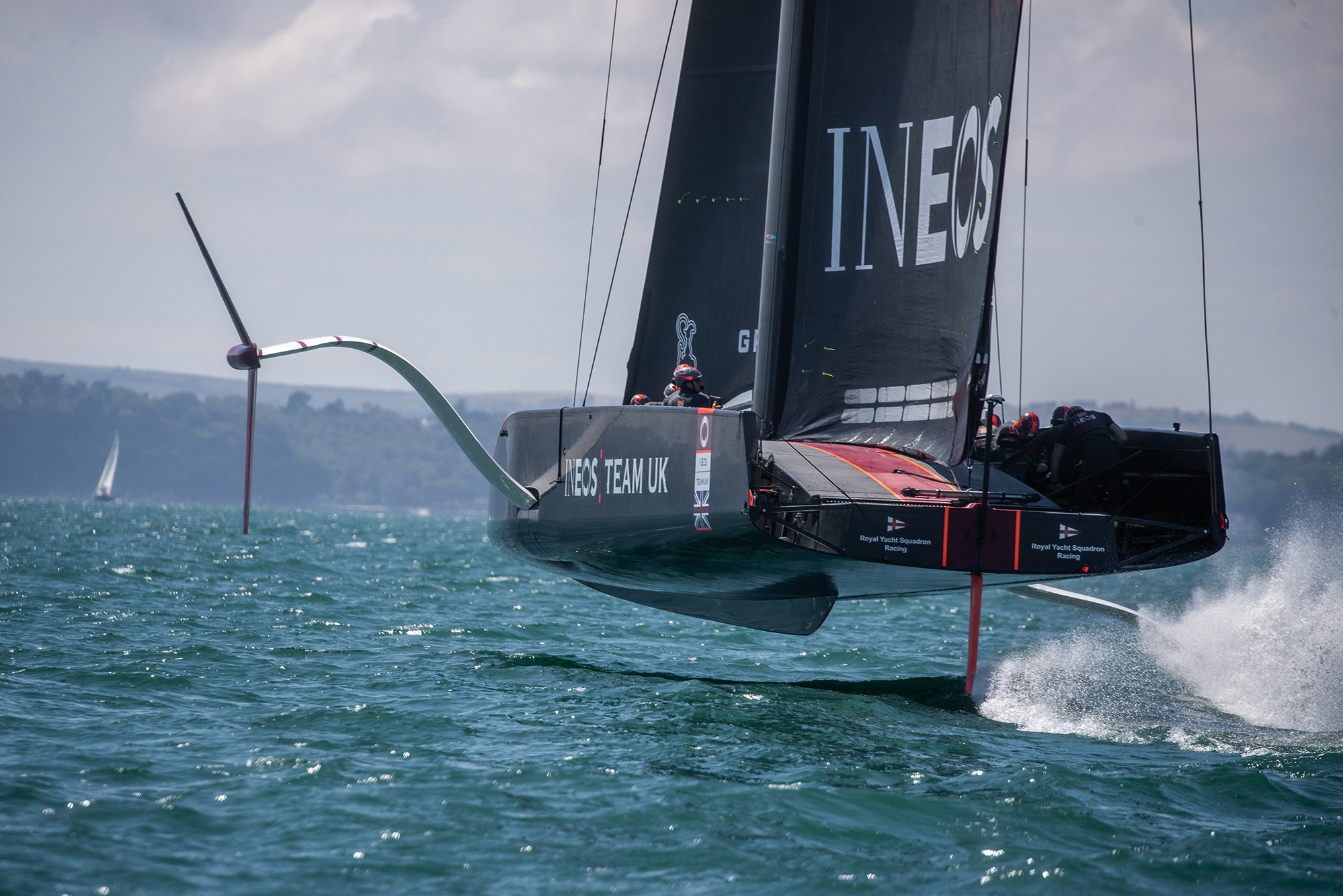
Ineos Team UK, America's Cup team
Photo by: Mercedes
There has not been the tidal wave of job cuts which some observers forecast, but it has been painful for those affected. At Ferrari, Racca points out that the company has a long-standing commitment to its local community, a social responsibility to protect its workforce.
“That is why we wanted to invest in the skills developed within the Scuderia and repurpose them for use in the development of our road cars,” he says, “thus providing a further injection of innovation in that area while at the same time not losing all that valuable know-how.”
Retaining brainpower within the business, while moving staff from F1 to road cars, is a natural step for Ferrari. A tactic which others, such as McLaren, can also make good use of.
The creation of Red Bull’s powertrain division has been another tactically shrewd move, enabling the company to redeploy people and resources into a new business unit which will fulfil the two €15m engine supply deals to its teams from next season.
In precisely the same way that the technical teams under Adrian Newey, James Allison or Ferrari’s Enrico Cardile would normally analyse the technical regulations for opportunities, the same rigour is now being applied to the financial rules.
The efficiency with which a team spends its money has been likened to the fuel-flow regulations, one engineer explaining that in the same way they have to manage a race with a given amount of energy, they now have to find a way to win with a fixed amount of money. With the sliding scale aerodynamic regulations enabling the smaller teams to conduct more windtunnel runs than their more successful rivals, the leading teams have to make each test count.
From Ferrari’s perspective, the budget cap simply adds to the challenge.
“Formula 1 will never become a competition between finance and cost control experts,” says Racca. “If anything, the current extraordinary competition between talented individuals and teams, in terms of driving, organisation and increasingly higher levels of technology will now be taken to another level with the need to be efficient and effective in managing financial resources.”
It is not only new era for Formula 1, but a fresh opportunity for teams to develop yet another area of competitive advantage.

Max Verstappen, Red Bull Racing RB16B, Lewis Hamilton, Mercedes W12, Lando Norris, McLaren MCL35M, Sergio Perez, Red Bull Racing RB16B, Valtteri Bottas, Mercedes W12, and the rest of the field at the start
Photo by: Andy Hone / Motorsport Images

How Ratzenberger beat the odds to realise his cruelly short-lived F1 dream

F1 uncovered: A weekend behind the scenes with a chief mechanic

When McLaren was pipped by Red Bull in a modern F1 classic

The big opportunity Sainz’s Williams switch affords to F1’s latest centurion

Inside the science of F1 fuel

How F1’s plan for rotating races could look in practice

The early decisions that set Sauber’s rookie for success

How F1 media coverage has evolved in line with its subject

MotoGP Australian GP: Marquez wins sprint to seize points lead, Martin crashes

MotoGP Australian GP: Marquez crashes and then takes pole in wet qualifying

What we learned from Friday practice at the 2026 United States GP

Honda rider Marini withdraws from Australian GP due to virus
Subscribe and access Autosport.com with your ad-blocker.
From Formula 1 to MotoGP we report straight from the paddock because we love our sport, just like you. In order to keep delivering our expert journalism, our website uses advertising. Still, we want to give you the opportunity to enjoy an ad-free and tracker-free website and to continue using your adblocker.


Top Comments