


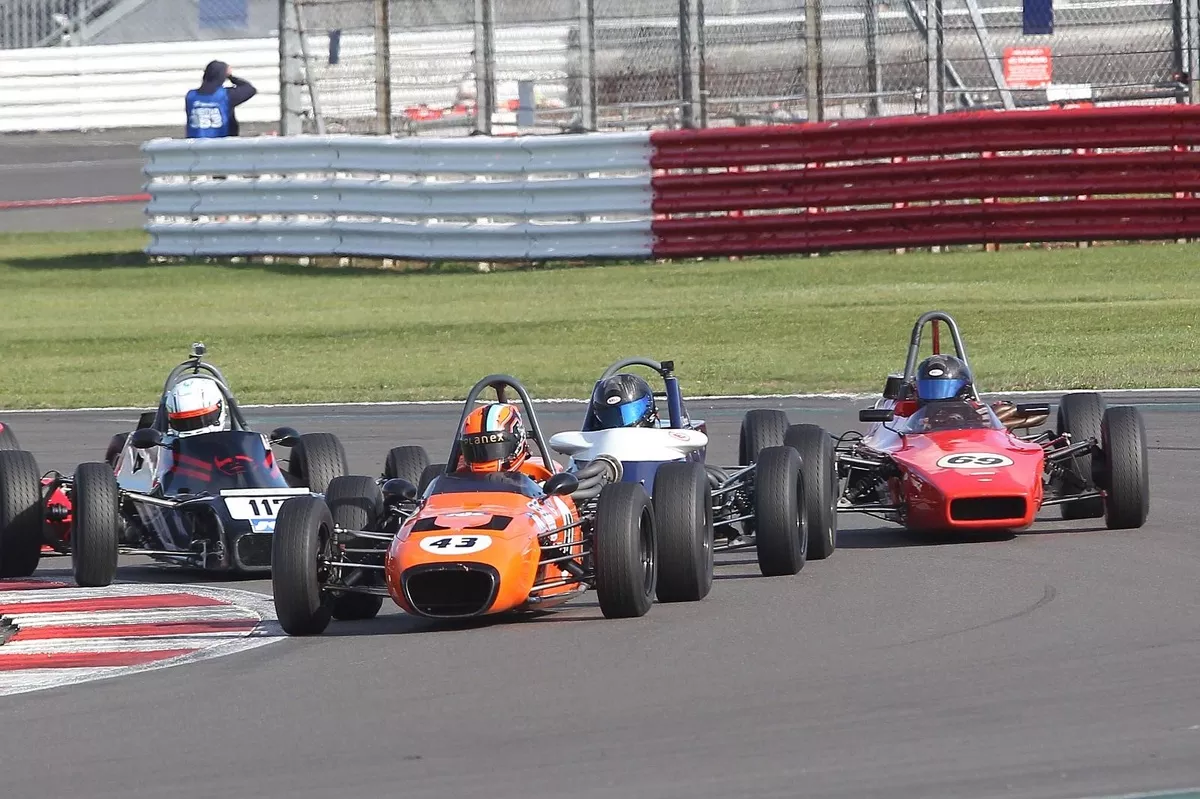

How Brabham's history-making F1 odyssey began
Built on hard-won lessons with home-built specials on the other side of the world, the first incarnation of the Brabham marque was, like its founder, Aussie grit personified. DAMIEN SMITH kicks off a four-part history of the pioneering Formula 1 team with the period spanning 1946-1965
Two ages of Brabham: the first resplendent in green and gold, spawned on a solid backbone of Aussie grit imbued by its tough-nut twin founders; the second marked by the chiselled, strikingly original and ceaselessly ambitious creations of its visionary designer, matched perfectly by the pin-sharp presentation demanded by the softly-spoken force who not only reinvented this team but eventually the whole landscape within which it existed.
Jack Brabham and Ron Tauranac, Gordon Murray and Bernie Ecclestone: starkly different men in just about every respect, yet forever conjoined in a shared ambition to achieve perfection. Brabham was always a broad church and, 30 years after its final grand prix, still shines in its absence as one of the great powerhouses of Formula 1 motor racing.
Less flashy than Team Lotus (and let’s face it, less successful too), Brabham was left trailing in the wake of rival F1 cornerstones Williams and McLaren as the decades rolled by. The numbers leave it joint seventh with Renault in the list of race-winning constructors, on 35 grand prix victories, plus 120 podiums and 40 pole positions.
Long outlasting Cooper from which it took such inspiration and learning, Brabham withered before Tyrrell but ran for longer at the sharp end. Yet the numbers and truncated timeline that halted so abruptly in 1992 only tell a sliver of the story. It’s the way Brabham went about F1, the way it won, and then eventually lost, that matters today. Then there’s the drivers: Brabham himself, Dan Gurney, Denny Hulme, Jacky Ickx, Jochen Rindt, Carlos Reutemann, Carlos Pace, Niki Lauda, John Watson, Nelson Piquet, Riccardo Patrese, Elio de Angelis, Martin Brundle, Damon Hill… all and many more contributed to a tapestry rich in F1 folklore.
Brabham was formed under its trading name Motor Racing Developments Ltd in 1961, in the wake of its founder’s historic twin consecutive world championships with Cooper in 1959-60. But to truly understand the foundations of the team and company, and where it came from, we must travel further back to the immediate post-war years when a tenacious young bloke was learning the hard-knock lessons that would one day chisel him into the finest, most successful F1 driver/engineer ever to grace a grid.

Brabham made his F1 debut in the 1955 British GP with a Cooper T40 Bristol
Photo by: Motorsport Images
Born in Sydney in 1926, Jack Brabham left school at 15 to work in a garage and study engineering in the evenings. In 1944, amidst a war that still had plenty of horrors in store for the Pacific rim, he signed up with the Royal Australian Air Force. Naturally, Jack wanted to fly, but the RAAF already had plenty of pilots, so he settled for ground crew life working mainly on twin-engined Bristol Beaufighters.
Demobbed in 1946, Brabham set up his own motor repair business in Sydney and found himself drawn into the grit and thunder of midget ‘speedcar’ racing, run on ¼-mile cinder oval tracks. It would be the making of him, once he’d got used to the spray of dirt in his face.
The scent of competition drew the young engineer to Australia’s hillclimb scene and among the home-built specials Jack found a natural, if equally taciturn, kindred spirit. Their first conversations in hillclimb paddocks were likely short and to the point, but Jack Brabham and Ron Tauranac formed a bond that would eventually change their lives and the shape of a far-distant F1 still in its nascent throes of existence on the other side of the world. But not yet. For Brabham, there was still a decade of adventure to grab.
Those early years in Britain were marked by disappointment and frustration. A Maserati 250F should have been a great buy for 1956, but turned into a disaster
Success on the hills, first in his midget and then in a JAP-engined Cooper (if you believe in destiny, it was right there from the start) led Jack to progress on to the circuits. In 1953 he bought a 2-litre, six-cylinder Cooper Bristol which, thanks to some brazen commercial support splashed along its nose, became known as The REDeX Special – and young Brabham tore up the Australian scene, proving a match for exotica imported from Europe.
The Australian racing authority, CAMS, took a dim view of such gauche advertising and ordered Brabham to remove the stickers that only mimicked what was found on rasping roadsters at the Indy 500. So Jack stuck tape over the offending letters – only for it to ‘accidentally’ blow off at racing speed. Paying for his racing was half the battle. Why should this be an elite sport for gentlemen of significant means?
With hindsight, he’d later realise The REDeX Special would have thrived on the British tracks and was far better than the early machinery he’d lumber himself with once he made the journey. Brabham’s eyes were first opened to what must have seemed an unlikely campaign 10,000 miles from home when he finished sixth at the 1954 New Zealand Grand Prix.
Finding a home-from-home on that trip in a garage owned by a chap called McLaren – and whose likeable son Bruce was full of a youthful vim for racing – Brabham met bona fide international racers Tony Gaze, Peter Whitehead, Ken Wharton and Reg Parnell. A year later, back in NZ, a conversation with Dick Jeffrey, manager of Dunlop’s racing division, and Dean Delamont, competitions manager of the RAC, proved pivotal.

Brabham campaigned a Maserati 250F in 1956, but the combination wasn't a success
Photo by: Motorsport Images
That year, 1955, Jack kissed goodbye to his wife Betty and young son Geoffrey and set sail for Britain. The REDeX was sold to Stan Jones, father of the other future Aussie F1 champion, Alan. That was Jack’s first mistake. The second was buying what turned out to be a dog of a Cooper-Alta from Peter Whitehead. Still, Jack had arrived at the epicentre of motor racing.
Those early years in Britain were marked by disappointment and frustration. A Maserati 250F should have been a great buy for 1956, but turned into a disaster. But with the blessing of his new friend John Cooper, Jack built himself a 2-litre, six-cylinder Cooper Bristol on a Bobtail sportscar chassis and made his F1 world championship debut at Aintree in 1955. As Stirling Moss pipped Juan Manuel Fangio in a Mercedes 1-2, no one, not least Brabham himself, could have predicted the Aussie with the firm-set jaw and cockpit crouch of a dirt-track racer would hit the top of the motor racing world in four short years.
The breakthrough came in 1957 when he signed for Cooper as a works driver. In John he’d found another kindred spirit – even if Old Man Charlie’s penny-pinching could grate a little – and now Jack’s dirt-under-the-nails nous born on the cinder tracks back home contributed to the rise of an unlikely F1 force. Jack Brabham was always more than just a racing driver – and design help from his pal back home didn’t hurt either. Tauranac’s quiet and distant influence on Cooper’s success should not go unheralded.
It wasn’t all plain sailing to the top, of course. Roy Salvadori was the one to suggest an enlarged Coventry Climax engine would make the funny little rear-engined Cooper F2 cars effective on the tighter circuits – namely Monaco. Privateer patron Rob Walker funded a 1.9-litre engine and Brabham set out to qualify – only for the brakes to lock on the way into Casino Square. He hit a telegraph pole that narrowly missed him when it came down on his engine cowling.
But with the still-healthy engine fitted to Les Leston’s car, Brabham shone in the race and ran third – until a fuel pump mounting failure led to him spluttering out. Doughty Jack got out and pushed (not for the last time) to claim sixth amid a rapturous reception. That put the Brabham name, and Cooper’s, properly on the F1 map.
Jack always relished the experience he gained that season, sharing the track with the maestro Fangio and sampling Rouen, the Nurburgring and fearsome 17-mile Pescara. He was running in the top six when he ran out of fuel on the last lap at the great Italian road circuit, but as luck would have it rolled to a stop at a filling station. The enthusiastic owner topped him up with enough juice to make it home, seventh. It’s F1, but not as we know it.
By 1958, settled in a Dorking rental with Betty and Geoffrey, Brabham was really finding his groove, as was Cooper. The key was John and that ‘flash ’arry’ at Lotus, Colin Chapman, convincing Wally Hassan, chief engineer at Coventry Climax, and his boss Leonard Lee to ‘stretch’ their FPF engine to 2.2-litres. There was also what turned out to be a hugely significant, often overlooked, change in the F1 regulations that opened the doors to the funny little British cars changing the face of grand prix racing forever.

Allied with John Cooper, Brabham began to find his groove
Photo by: Motorsport Images
Race distances were slashed from 310 miles (500km) to 186 miles (300km) and a ban was introduced on alcohol fuel brews in favour of 130-octane AvGas aviation gasoline. Now F1 cars needed less fuel and had better economy, meaning they could be smaller and lighter. Within the space of a year the glorious 250F would be a dinosaur.
While Stirling Moss and Rob Walker stole the limelight in Argentina by claiming Cooper’s first win – and the first for a car being pushed rather than pulled – Brabham and the works pressed on with ever increasing potential. By 1959, Jack had settled his family and opened a garage business in Chessington.
Powered by the new 2.5-litre Climax he won the Monaco GP (despite scorching pedals burning his feet) and conquered Aintree four years on from his first British GP, winning cleverly by changing his driving style to keep his worn tyres alive (just). From understeer he induced oversteer by chucking the little Cooper into the corners speedway-style. Yes, the dirt track days never left him.
It was Cooper at its zenith – and that was the trouble. Brabham knew it would never get better than this, and thoughts had started to stir
Then at season’s end, once more he got out to push to become world champion at Sebring, as the little lad from the NZ garage – by now his Cooper team-mate – zoomed past to become F1’s then-youngest race winner. Bruce McLaren’s own journey to F1 notability was also gathering a head of steam.
If 1959 had been a proper scrap, Brabham narrowly seeing off the great Moss and stylish Tony Brooks, 1960 was a walkover. But only because Jack recognised a gathering threat, galvanised Cooper into a devastatingly effective response and (literally) engineered his path to that second consecutive world title.
The trigger was an early-season trip to Argentina where Innes Ireland in the boxy, box-fresh Lotus 18 gave the new champions a serious fright. On the flight back Brabham convinced John Cooper they had to go low – or go home. Designer Owen Maddock needed convincing when it came to change, but his T53 – better known as the Lowline – swept through the European season.
Moss conquered Monaco, stealing another breakthrough first, this time for Lotus. But Brabham hit back at Zandvoort. Then came tragic Spa, where Moss and works Lotus driver Mike Taylor were severely injured in separate accidents, then the promising Chris Bristow and Alan Stacey were killed in the race. Winner Brabham had little to celebrate.

Victory at Zandvoort was the first of five in a row for Brabham in 1960 as he swept to the title in his Cooper T51 Climax
Photo by: Motorsport Images
But racing rolls on, as it always does. Five consecutive victories gave Jack a barely contested title, in Moss’s absence. It was Cooper at its zenith – and that was the trouble. Brabham knew it would never get better than this, and thoughts had started to stir.
Doubts accelerated during 1961 when the British teams found themselves briefly derailed by the new 1.5-litre engine regulations. Ferrari bit a shark-sized hole in the revolution with its proven V6 fitted to the twin-nostril 156. Increasingly frustrated, Brabham called on his old friend Tauranac to emigrate and join him in Surrey. Together they formed MRD, but wisely chose to name the cars Brabhams when journalist Jabby Crombac quietly pointed out what the initials suggested in French. Merde? That might have been a hard sell on the continent. And sales were what it was all about in the beginning.
It’s important to remember MRD/Brabham was formed primarily as a builder of production racing cars, taking on Cooper at its own game – to the Old Man’s consternation – and offering a far more robust alternative to Lotus. Tauranac always did prefer solid spaceframe structures over Chapman’s aviation-inspired monocoques, and so did many racing drivers, both amateur and professional, in the early 1960s.
First Formula Junior, then Formula 3 and Formula 2 offered successful, lucrative and valued arenas for the new Brabhams. But at the pinnacle the new team took time to find its feet, as Brabham quickly found himself written off by some as a ‘has-been’ while Jim Clark, John Surtees and Graham Hill hit their stride.
Brabham signed off for Cooper at the end of 1961, then started 1962, first in an MRD-run Lotus 21, then a Lotus 24 (which he hated). Soon his partner’s comfortable BT3 – B for Brabham, T for Tauranac – was fully cooked. It handled a treat in first tests at Brands Hatch, but the Nurburgring debut told what would become a familiar story.
The Climax V8 ran its bearings on its first lap (Jack never did like that engine), a spare was built up for qualifying while the race engine was repaired in Cologne, rushed back and fitted overnight – only for throttle linkage trouble to end the BT3’s race. For all Brabham’s hard-earned reputation for stoic racing cars on the production market, the early F1s were surprisingly brittle. Still, a fourth place next time out at Watkins Glen was a landmark: first world championship points for an F1 driver racing a car carrying his own name.
Signing Dan Gurney, formerly of Ferrari and Porsche, for 1963 was a statement of intent. The Californian was considered by Clark as his closest rival on pace, and inspired huge respect in his new boss too. Across three seasons, Gurney was the perfect muse for Brabham to hone Tauranac’s increasingly stylish F1 creations.

While establishing himself as a constructor, Brabham's signing of Dan Gurney was a coup
Photo by: David Phipps
Yet somehow over three seasons Gurney won just two world championship grands prix for Brabham – although that was two more than the boss. Remarkably, in the wake of his five on the trot in 1960, and while he scored big wins such as the 1964 Aintree 200 and International Trophy at Silverstone, Jack didn’t win a single points-scoring GP through the five-year 1.5-litre era.
Had he stayed, Gurney would likely have won the world championship for Brabham in the reset season. Instead, the boss – at 40 – was about to defy the has-been jibes
Gurney’s highlight was his French GP win in 1964. He should have won at Spa, dominating until he pitted for fuel with a couple of laps left – only to find bizarrely there was none available. But retribution followed at Rouen when Clark, who had inherited an unlikely win in Belgium, holed a piston in his Lotus. Gurney picked up the pieces to score Brabham’s first world championship GP victory, and at season’s end he added a second when a split oil line lost Clark not only the Mexican GP but also a second title.
PLUS: How “abysmal” reliability blunted Brabham’s first winner
But after a frustrating 1965, in which Gurney often drove beautifully without ultimate reward, Dan broke the news that he was leaving to take a leaf and build and race his own cars. His Eagle was ready to take flight as F1 returned to power with 3-litre engines in 1966.
Bad timing on Dan’s part: had he stayed, Gurney would likely have won the world championship for Brabham in the reset season. Instead, the boss – at 40 – was about to defy the has-been jibes. The team in green and gold was ready to hit its sweet spot.

Gurney's victory at Reims in 1964 aboard the Brabham BT7 was the bright spot of a brief spell with the team that promised much but delivered fairly little
Photo by: David Phipps

How Ratzenberger beat the odds to realise his cruelly short-lived F1 dream

F1 uncovered: A weekend behind the scenes with a chief mechanic

When McLaren was pipped by Red Bull in a modern F1 classic

The big opportunity Sainz’s Williams switch affords to F1’s latest centurion

Inside the science of F1 fuel

How F1’s plan for rotating races could look in practice

The early decisions that set Sauber’s rookie for success

How F1 media coverage has evolved in line with its subject

What Verstappen knew about Red Bull’s big upgrade when he signed his new F1 deal

Colapinto urges fans to stop online abuse: “You’re not helping me or my future”
Evans given a hero's homecoming after WRC title triumph

How an unspectacular showing in a kart race is such good reason to celebrate
Subscribe and access Autosport.com with your ad-blocker.
From Formula 1 to MotoGP we report straight from the paddock because we love our sport, just like you. In order to keep delivering our expert journalism, our website uses advertising. Still, we want to give you the opportunity to enjoy an ad-free and tracker-free website and to continue using your adblocker.


Top Comments