


Can Aston Martin dig itself out of the hole – and how quickly?
Blighted by performance and reliability issues in F1 testing, the team is yet to understand the first car designed under Adrian Newey’s technical regime – let alone optimise it for speed

So dire is the predicament in which the Aston Martin Formula 1 team finds itself, many readers contemplating the words above will be tempted to cite Betteridge’s law of headlines (if it ends in a question mark, the answer is probably ‘no’) and move on.
Great things were expected of the AMR26, the first car to be created under the aegis of famed engineer Adrian Newey. But it arrived late for the Barcelona ‘shakedown week’ and the Bahrain test was perhaps even more painful, coming to a ragged and inconsequential termination on the final day with Lance Stroll completing just six untimed laps before the shutters came down and the team announced, with an inaudible ‘ahem’ on its media WhatsApp group, “we have completed our programme for today”.
That much was, indeed, obvious.
Aston chalked up just 206 laps in the first Bahrain test and 128 in the second. To put that in context, McLaren, Williams and Ferrari all completed over 400 laps in the first test – and in the second, Aston Martin trailed in mileage to such a degree that even Cadillac, the next-worst in terms of laps done, managed 266.
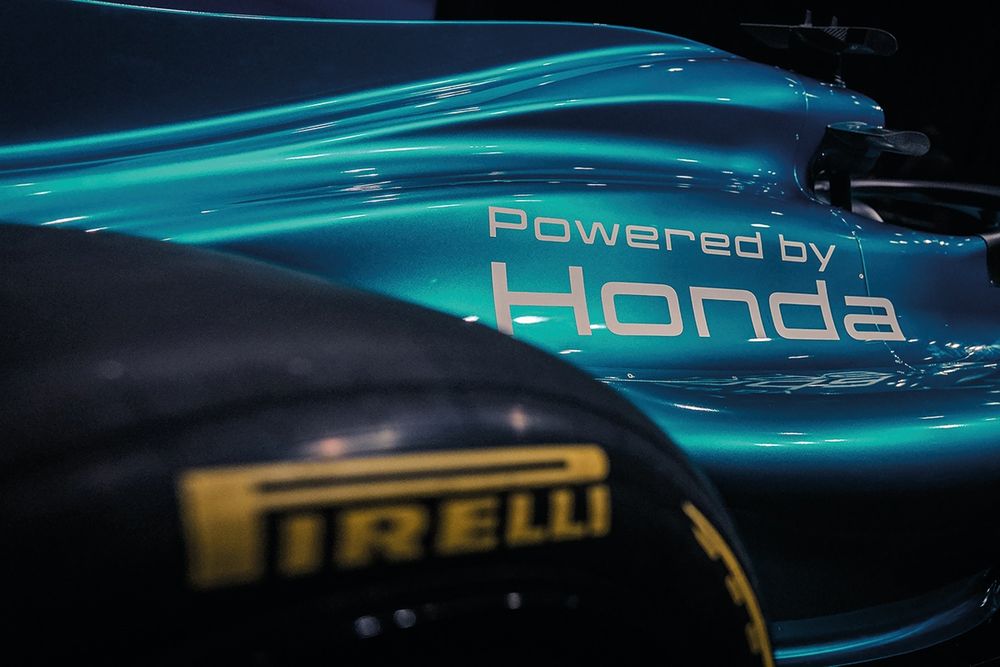
Almost as rarely seen in the wild as the notoriously elusive Pallas’s cat, when the AMR26 did emerge from the garage it was disconcertingly slow. It’s understood that during the F1 Commission meeting in Bahrain last week, Newey revealed to other delegates that the Honda power unit’s energy-recovery capacity is well below that of its rivals – such that it is struggling to reach even the lower recovery cap of 250kW, which has been introduced to mitigate incidences of ‘super-clipping’ at many circuits, let alone the higher 350kW limit at those tracks deemed energy rich.
Drivers Fernando Alonso and Stroll have also reported problems with the new gearbox, an in-house design for the first time in many years, having bought them in from McLaren and then Mercedes since the team’s days as Force India in the late 2000s. This is no small task because seamless-shift gearboxes require intricately engineered control systems, since during the shifting process the gearbox is in effect in two gears simultaneously.
Word is that the communication between engine and gearbox isn’t always harmonious, which could also be a factor of the adoption of a new single ECU across the grid. Several teams have alluded to facing an unexpectedly steep learning curve with the McLaren Applied TAG-510, which is necessarily more complex than its predecessor given the additional control demands of active aerodynamics and engine power modes.

Fernando Alonso, Aston Martin Racing
Photo by: Guido De Bortoli / LAT Images via Getty Images
Some of these issues are more immediately fixable than others, but the optimisation process requires track time which Aston Martin hasn’t been able to enjoy.
“We cannot forget that for us it's the very first time we are building the gearbox in the history of the team, the very first time,” said Alonso (not entirely factually correctly, since it did build its own ’boxes in a previous incarnation).
“So I don't know, it is a challenge and we need to get better, we need to have more info. The very first time, as I said, we build the gearbox, we build the differential, the clutch, this kind of thing.
“So when we run there and maybe some of the downshifts are a little bit harsh or whatever, we come back, we change a couple of settings, we test again. We used to have a Mercedes engine and gearbox with all the settings done for us, now it's all new so I think it's needed the time that we are having now to improve this.”
The problem for Aston Martin is that it is now very late in the day for the power unit and gearbox to be taking their baby steps, because this complicates the process of understanding the car itself.
Historically, cars signed off by Newey in years of regulatory change – the 1998 McLaren MP4/13 and the Red Bull RB5 and RB18 of 2009 and 2022 - have been super-competitive. But serious work on the AMR26 started relatively late, since Newey only took up his post last March; he himself has admitted the first models only entered the windtunnel in April, four months later than most rivals.

1998 Australian GP
Newey has also framed the car’s conceptual genesis in terms of having solutions already forming in his head, and on the drawing board at his home, before he arrived at the team. But in his own autobiography he revealed that when he joined McLaren in mid-1997 with a similar sheaf of ideas, they initially performed less well in the tunnel than the designs already being evaluated by McLaren’s existing aero team.
Add to this more discombobulation through the design phase – Enrico Cardile arriving as chief technical officer in July, and Newey ousting CEO and team principal Andy Cowell in November – and perhaps it’s less surprising that the AMR26 hasn’t arrived fully formed. Newey has described it as "one of the more extreme interpretations" of this year's new rules, but the effectiveness of this interpretation is yet to be seen.
During those vanishingly rare sightings during testing, the car was obviously slow through corners and not especially stable. Both drivers often looked as if they were just about hanging on. Given the immature state of the power unit and gearbox, it’s difficult to decode what proportion of the car’s issues lie in those departments – but without proper and sustained running at a reasonable pace, the team will struggle to gain the understanding it needs.
Alonso spoke of finding “up to eight tenths” per lap just by changing one or two parameters – this, in response to being questioned about Stroll’s assertion that the car is four seconds off the pace. If Alonso’s response was supposed to sound reassuring, it would have offered little succour to the Aston Martin engineers who would have been hoping to be close enough to the ultimate pace to be shaving off tenths here and there by now, not chasing bigger chunks.
Little wonder that whenever team owner Lawrence Stroll was seen in Bahrain he had the look, in the words of PG Wodehouse, of one who has gone looking for the leak in life’s gas pipe with a lighted candle.
Much now hangs on the pace at which Honda can catch up on recovery capacity. It’s understood that the energy store is one of the key problem areas, hence the early end to the final test because there was only one spare left.
Honda Power Unit Launch
While there are constraints on development, there are mechanisms enabling struggling manufacturers to catch up on performance and reliability grounds. What Stroll Sr will be wondering is whether the timescale of his ambitions matches that of Honda’s development capacity.
He could also be forgiven for wondering how it came to this. The official rationale for Honda’s difficulties is that this is a new project, the engineers associated with the previous championship-winning partnership with Red Bull having been dispersed through the company when Honda briefly decided to quit F1.
But Red Bull’s own in-house powertrain project has had to take shape over a similar timescale to Honda’s new arrangement with Aston Martin, and it seems to be less troubled. Granted it has been able to poach staff from other manufacturers whereas Honda’s approach is to ‘blood’ the most promising graduates, but Stroll would have hoped for something a little more complete than a work-experience exercise.
As with Honda’s return to F1 with McLaren just over a decade ago, until the power unit is competitive it will be difficult to measure the true performance of the car, and how to improve it. Both Aston Martin and Honda have the talent available to create a championship-winning package – and during the previous hybrid era Honda demonstrated the willingness to throw whatever resource was necessary at the project to succeed eventually.
But ‘eventually’, as evinced by the revolving door of senior personnel in the Aston Martin ‘technology campus’, is not a word in Lawrence Stroll’s lexicon…


Why Norris doesn’t buy Russell’s driving style theory

How Antonelli is proving unbeatable, even when he's beaten

F1 Spanish GP live commentary and updates - Lap by lap of how Antonelli won

What the drivers think of the "crazy" Madrid F1 circuit

Why new Madrid F1 circuit will be a "challenging" test of cars and engines

What Jacques Villeneueve really learned from Gilles: “I can do this, you can’t”

Why Monza remains F1's eternal test of team bonds

Hamilton says Ferrari has left it "too late" to back him in F1 title fight

Ferrari not yet switching focus to 2027 F1 car

The verdict on the WRC Rally Chile tyre solution

Top five roles on Motorsport Jobs this week

Quartararo explains why Yamaha relationship has strained ahead of Honda move
Subscribe and access Autosport.com with your ad-blocker.
From Formula 1 to MotoGP we report straight from the paddock because we love our sport, just like you. In order to keep delivering our expert journalism, our website uses advertising. Still, we want to give you the opportunity to enjoy an ad-free and tracker-free website and to continue using your adblocker.


Top Comments