


How Ferrari and Audi could decide Verstappen's F1 future
Max Verstappen's loathing of Formula 1's new technical format is no secret. He's said that proposed changes for 2027 could persuade him to stay rather than quit – but now it appears this may not happen after all. Is it time for the manufacturers to set aside self-interest for the common good?

Some agreements are more agreed than others, it seems. A case in point is the "agreement in principle" announced by the FIA between the Miami and Canadian Grands Prix to shift the balance of engine power output from 2027 onwards.
On paper the idea of raising the combustion engine output by 50 kilowatts, and dropping the electrical motor's contribution by the corresponding amount, seems simple. But the detail is much more complex, with far-reaching implications, and it has revealed clear fault lines between the stakeholders.
It would appear the announcement was, at the very least, premature. Those two nouns in the phrase ‘agreement in principle' were burdened with a veritably Sisyphean task.
Indeed, more than one senior engineer Autosport consulted described their surprise at receiving the FIA proclamation, wondering if the ‘agreement' had been reached in a meeting they had inexplicably missed.
The 50kW migration would take the power output ratio from the present near-50/50 split between the internal combustion engine (ICE) and the electrical motor to around 60/40. Although it can be accomplished with the present hardware, albeit through modifications, the detailed processes required to make it work – such as increasing the fuel-flow rate – have wider implications for the chassis and its packaging.
The tawdry spectre of manufacturer politics, and the inveterate self-interest of the teams in guarding competitive advantage, now threaten to scupper the not-so-agreed-agreement. And this, in turn, impacts the future of one of Formula 1's prize assets – Max Verstappen, who has made no secret of his contempt for what he calls an "anti-racing" technical format.
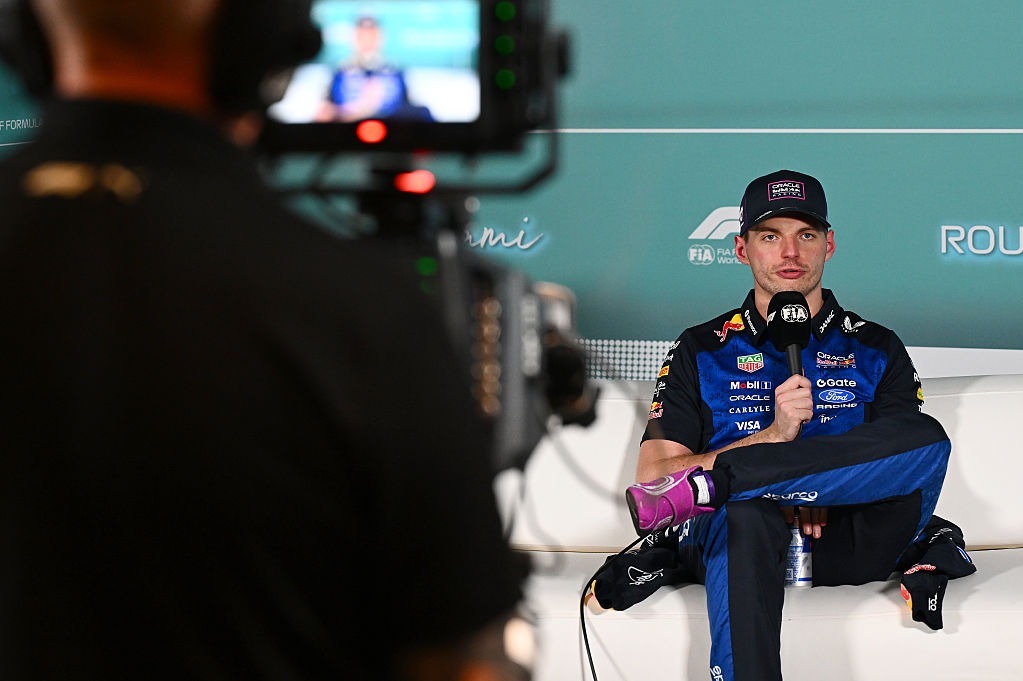
Verstappen has made no secret of his disdain for the current F1 regulations
Photo by: Mark Sutton/Getty Images
"It's definitely heading into a very positive direction," he said in the halcyon days before the illusion of consensus on the 2027 change melted away like April snow – by which I mean the Thursday of the Canadian GP weekend. "It's like the minimum I was hoping for and I think it's really nice that that's what they want to do. That's definitely what I think also the sport needs."
Pressed on the subject of whether the change would be enough to persuade him to stay in F1, he was guarded but encouraging.
"What I said before with the changes, hopefully that will happen next year," he said. "That will already help a lot because I've always said it doesn't matter if I had a good car or not. It's just the product. And I think the product will improve like that [with the proposed changes]. So naturally, I think then the enjoyment will go up as well."
Mercedes and Red Bull/Ford are the only ones currently willing to vote in favour of changing the format for next year, while Ferrari, Audi and Honda are understood to prefer a delay until 2028
Consensus working overtime
But it emerged over the Canada weekend that the necessary majority to enact these changes was not forthcoming. Several teams pushed back against the proposals on the grounds that they wanted to carry-over their chassis to next year for budgetary reasons, so they could not accommodate the larger fuel loads a greater ICE contribution would require.
This is not actually a huge amount, and it's understood one of the compromise solutions on the table was to limit each car to just one lap to the grid in 2027, and shorten the distance of some fuel-critical grands prix slightly – in the order of two or three laps. Currently drivers can and often do exploratory laps after leaving the garage to evaluate track conditions or last-minute set-up tweaks, returning to the pitlane rather than stopping on the grid.

This doesn't address the reservations raised by at least three of the five current engine manufacturers. Mercedes and Red Bull/Ford are the only ones currently willing to vote in favour of changing the format for next year, while Ferrari, Audi and Honda are understood to prefer a delay until 2028.

Audi's position is that it has invested heavily in its F1 programme already and doesn't want to be ambushed by extra costs
Photo by: Andy Hone/ LAT Images via Getty Images
What complicates the picture is that General Motors also has a voice in this matter, as a signatory to the Power Unit Governance Agreement – even though its Cadillac team is using a Ferrari power unit until it develops its own in-house powertrain.
"We support any step that the sport wants to make to get closer to flat-out qualifying and to flat-out racing," said Red Bull team principal Laurent Mekies. "You will find nobody comfortable with changing so late for next year, and that's why we have so many discussions. But certainly, we are happy to step out of that comfort zone for the benefit of the sport and to get something in place for 2027.
"Is there a sense of unanimity? Because it's conversations that put us all out of our comfort zone, it needs quite a few discussions. It's a work in progress, and I have confidence we'll land in the right place."
But the objections of the other manufacturers are rather more implacable than this anodyne pronouncement might indicate. They relate to both money – quelle surprise – and competitive advantage.
Cash questions
To optimise the ICE element for power output and reliability will require an additional R&D spend in an era where engine development and supply is subject to a budget cap. One figure being bandied about is $8million – not a massive sum in F1 terms.
It's understood Audi's objection to the change being brought in for 2027 is that as a start-up engine supplier it has made a substantial investment in the present ruleset, and ‘surprise' additional costs make a difficult narrative to sell to shareholders. It agrees on the principle, as it were, but not on the timeframe.
Costs are also bound up in the dovetailing subject of the FIA's Additional Development and Upgrade Opportunities (ADUO) framework. This is the catch-up mechanism by which manufacturers with underperforming engines are granted breaks in the budget cap, as well as additional dyno time, depending on the shortfall.

Ferrari has effectively been lobbying for ADUO breaks in public, causing on-track rivals and the governing body to chafe
Photo by: Guido De Bortoli / LAT Images via Getty Images
The first of three ‘evaluation windows' for ADUO this season is about to open. The threat here is that work on the 2027 engines has to start very quickly, so there is a potential for teams being handed ADUO breaks now to gain a competitive advantage in 2027 development.

But if the ADUO concept is shelved for this year to prevent that, it bakes in the competitive advantage Mercedes has over the rest of the field. This is understood to be Ferrari's objection – it has been taking every opportunity possible in recent weeks to point out how much of a deficit it has to Mercedes. In Canada, Charles Leclerc went as far as saying the Red Bull/Ford powertrain had more grunt than Ferrari's.
This is a curious approach, and it's understood that there are those within the FIA who are becoming increasingly frustrated by Ferrari's apparent policy of lobbying for ADUO breaks via the media. Given the process is determined by scrupulously measured performance data rather than an audience vote, this is understandable.
"If it stays like this, it's going to be a long year next year, which I don't want. It's just mentally not doable for me" Max Verstappen
For its part, in public Honda has made broadly positive noises about supporting the FIA's direction of travel for the post-2030 technical formula. But it also desperately needs ADUO this season – even though it's the nature of the process that improvement will be incremental rather than instant.
Mercedes and Red Bull/Ford, of course, are not supporting rapid change purely for the good of F1 – one has the benchmark power unit and the other is thought to be close enough not to qualify for ADUO, so the 2027 proposals give them runway for development they would not otherwise have enjoyed. It is entirely accurate to say every manufacturer has an agenda.
Over the Canadian GP weekend, therefore, FIA single-seater director Nikolas Tombazis expended much shoeleather shuttling around the paddock, trying to find some common ground for a reasonably quick settlement. It's understood that under the governance framework, four of the six manufacturers voting in favour would constitute a majority.
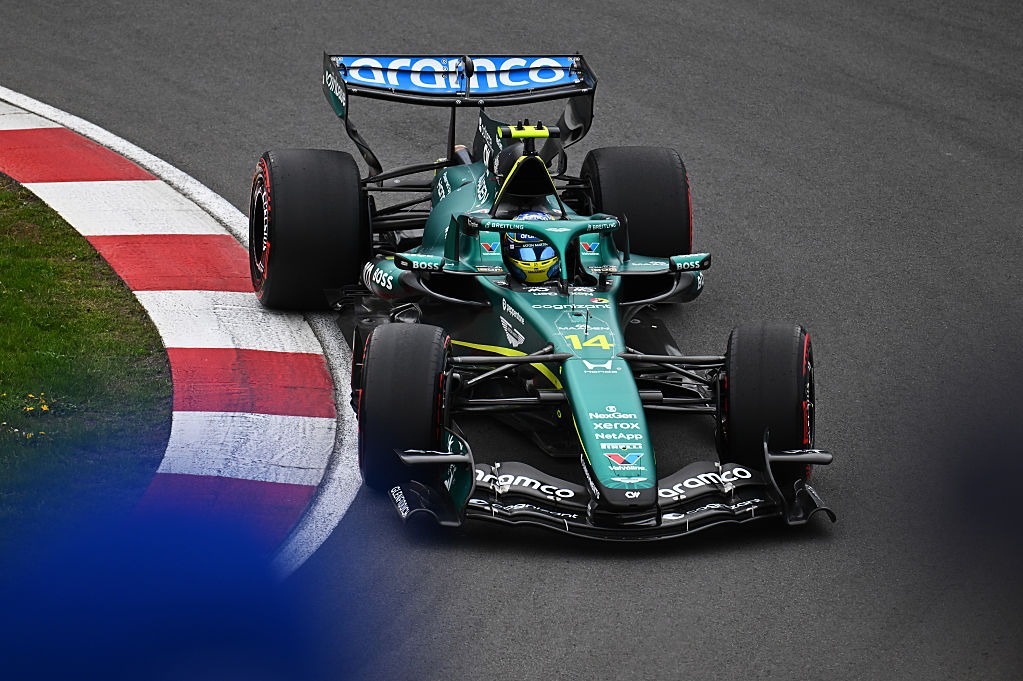
Honda urgently needs the extra resources unlocked by ADUO to rescue its troubled 2026 engine programme
Photo by: Guido De Bortoli/LAT Images
There are many scenarios through which this could be achieved, but all involve some form of compromise – including the dilution of the 60/40 ratio to reduce the cost of adapting the current hardware. The risk there is of failing to meaningfully address the issue of intrusive power management which has proved so contentious with drivers and fans.
"If it stays like this, it's going to be a long year next year, which I don't want," said Verstappen after qualifying in Montreal. "It's just mentally not doable for me to stay like this. Absolutely not. Some people at the moment that maybe have a bit of an advantage will try to be difficult about it, but if the FIA is strong and also from the FOM [Formula One Management] side, they just need to do it."

Unfortunately for Max, the commercial rights holder's influence in these matters is limited to soft power. And while the FIA is responsible for making and enforcing the rules, it cannot push changes through without the necessary majority unless there is a clear safety argument.
What's required is for the manufacturers and their associated teams to take a bigger-picture view, and embrace a broadly positive change rather than trapping F1 in what is commonly acknowledged to be a fundamentally flawed arrangement.
"We're getting used to this formula," said McLaren team principal Andrea Stella. "And while we've made some steps forward with adjustments of the current hardware, and possibly we can make further adjustments for 2026, in my view a change of the hardware is needed.
"The proposal that was put forward by the FIA, which looks at increasing the ICE power through the fuel flow, looks at redistributing the electrical power in harvesting, in deployment, the battery capacity, they were all part of a very important package that will make Formula 1 better.
"And this is a general interest that should prevail over the particular interests, because if we don't have a good sport, if we don't preserve the value of the business, the value of Formula 1, everyone will have a loss."

Can the manufacturers find a consensus that suits all parties?
Photo by: Alastair Staley / LAT Images via Getty Images


'Senior moment' or breakdown of trust? The implications of Hamilton's Singapore GP meltdown

Why Verstappen's dominance left rivals scrabbling for alternatives in Singapore
A "better job" or more engine power? Verstappen's Singapore pole unpicked

FIA reveals "human error" caused latest software glitch in Singapore sprint qualifying

F1 Singapore GP live commentary and updates - Verstappen takes sprint pole

F1 Singapore GP live commentary and updates - Verstappen wins sprint while McLarens collide

F1 Singapore GP live commentary and updates - Verstappen on pole

LIVE: F1 Singapore GP - Verstappen dominates to victory from Leclerc, nightmare for Hamilton

What Verstappen knew about Red Bull’s big upgrade when he signed his new F1 deal

Colapinto urges fans to stop online abuse: “You’re not helping me or my future”

Evans given a hero's homecoming after WRC title triumph

How an unspectacular showing in a kart race is such good reason to celebrate
Subscribe and access Autosport.com with your ad-blocker.
From Formula 1 to MotoGP we report straight from the paddock because we love our sport, just like you. In order to keep delivering our expert journalism, our website uses advertising. Still, we want to give you the opportunity to enjoy an ad-free and tracker-free website and to continue using your adblocker.


Top Comments