
The number-crunching behind the new-look DTM's equalisation drive
Switching to GT3 regulations marked a fresh start for the DTM in 2021, but it has also drawn a line in the sand against other series using similar cars by engaging AVL Racing to develop a bespoke Balance of Performance system. Here’s how it works

It’s no secret that Gerhard Berger isn’t the biggest fan of Balance of Performance, and it was under his stewardship that the DTM axed its own system of performance weights in late 2017. But a top-to-bottom shake-up in the winter has forced Berger to embrace what many consider to be a necessary evil in GT3 racing, as he carves a new future for the championship following an exodus of manufacturers in recent years.
Intriguingly, the DTM is not relying on SRO, the company responsible for determining the BoP for virtually every championship using the same ruleset. Instead, the series has taken its own unique route, partnering with renowned Austrian engineering company AVL Racing for the 2021 season.
The idea is to use AVL’s decades of experience in simulation models and vehicle dynamics to create a level playing field between the five full-time manufacturers in the DTM this year, plus the part-time McLaren entry run by Polish squad JP Motorsport.
Balance of Performance: In defence of sportscar racing's necessary evil
“There was a process of possible partners, some of whom we have [prior] experience with,” says Michael Resl, Director Competition and Technology at DTM’s parent body ITR.
“Due to my previous record at AVL, I knew what the guys are capable of. They never did a BoP approach for a series, but they are very good at making individual cars quick or to model them.
“Obviously we looked at all the other BoP methodologies but relatively quickly it turned out that we would like to do it simulation-and data-based. And to be fair we didn’t look around too much for other people once the decision was made to go [for a] simulation [based approach]. It was more or less a straightforward decision.”
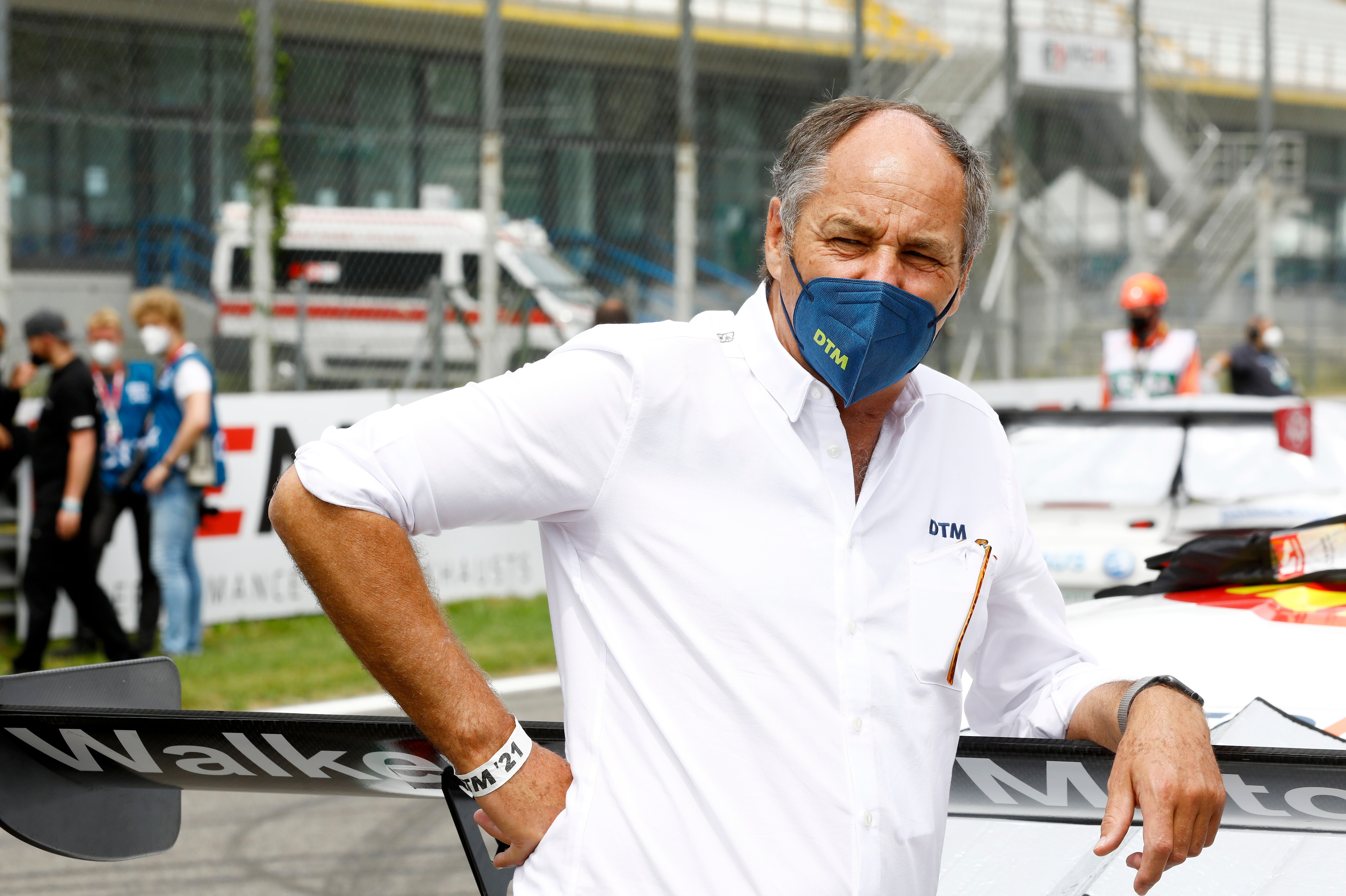
ITR boss Berger has been an outspoken critic of BoP in the past, but has embraced it for the DTM's new era
Photo by: Hoch Zwei / Juergen Tap
The software developed in-house by AVL Racing is light enough to run on a standard desktop or laptop. But by harnessing the power of cloud computing, AVL is able to garner resources equal to 10,000 computer cores. That is enough to simulate 50,000 laps within an hour, allowing it to get a near-perfect indication of the relative performance of different manufacturers.
The first computer-generated models of each car were prepared long before the first pre-season test at Hockenheim in April, based on the information supplied by the ITR and the manufacturers themselves. Once real-world data was available from testing, AVL Racing honed its models further with more precise measurements, helping it finalise the BoP for the opening round of the season at Monza – a track known to be notoriously tricky to balance cars based on different platforms due to its long straights and slow chicanes.
“Here at AVL we have developed our own vehicle dynamics software which is called VSM [Vehicle Simulation Model],” says Michael Peinsitt, Skill Team Leader at AVL Racing. “All the different parameters that describe a car go into the simulation.
"Everything that is required to run a car you will see it in front of you and you can change it. So, you can modify your characteristics, the suspension, spring stiffness and damper characteristics" Michael Peinsitt
“For example, the wheelbase is a parameter that goes into the simulation, drag coefficient, downforce coefficient, torque curve, tyre properties – all those characteristics and how they combine to behave is described with parameters and these parameters need to be fed to the simulation.
“We obtain these parameters mainly through the ITR. So, the ITR and the manufacturers were providing us all kinds of data like the homologation data or different specification sheets. We used all this information to create the baseline model. And of course the software requires the description of the track that the car is driving on.
“When you run the simulation, it is very similar to sitting in front of a telemetry screen. So, when you hit the start button on the simulation, you can see graphs popping up, you can see the speed as the car negotiates the drag, the throttle, the steering, the brakes and the gear. There are literally thousands of channels coming from our simulation.
“Everything that is required to run a car you will see it in front of you and you can change it. So, you can modify your characteristics, the suspension, spring stiffness and damper characteristics. All that can be done and that is obviously done through numbers because we need to characterise that.”

Multiple parameters are considered when trying to balance differing car philosophies
Photo by: Hoch Zwei / Juergen Tap
Cars aren’t the only focal point for AVL Racing, however. It is also required to simulate the real-life behaviour of racing drivers, taking into account how they react to changing track conditions.
“The driver model behaves in a very similar way to a real driver on track,” continues Peinsitt. “Typically, simulation driver models tend to have some characteristics that real drivers do not show.
“One typical example could be that drivers get some understeer going into a corner but nevertheless because the driver model wants to achieve a certain speed exiting the corner, it applies the throttle, which makes the understeer even worse. This is something that the real driver will not do, because they know, ‘If I have understeer and I put the throttle down, I will get more understeer so I’m not going to do it’.
“But these are things our driver models can handle very well. We’ve developed this model over many years and we are getting very good feedback.”
It came as no surprise that some teams chose to conceal their true pace until the first qualifying at Monza, creating a slightly disjointed grid for the DTM’s first race under GT3 regulations. But the series bosses and AVL Racing were quick to react, handing a performance boost to Audi, Ferrari and BMW following a top-four lockout by Mercedes’ fleet of AMG GT3s.
A second round of BoP changes followed on Sunday morning, based on the long-run data gathered from the first race, with both Ferrari and Mercedes handed weight penalties this time.
The proactive approach paid dividends, with all five manufacturers represented inside the top six in second qualifying on Sunday – all separated by less than a quarter of a second. For the DTM and AVL Racing, it was a job well done.
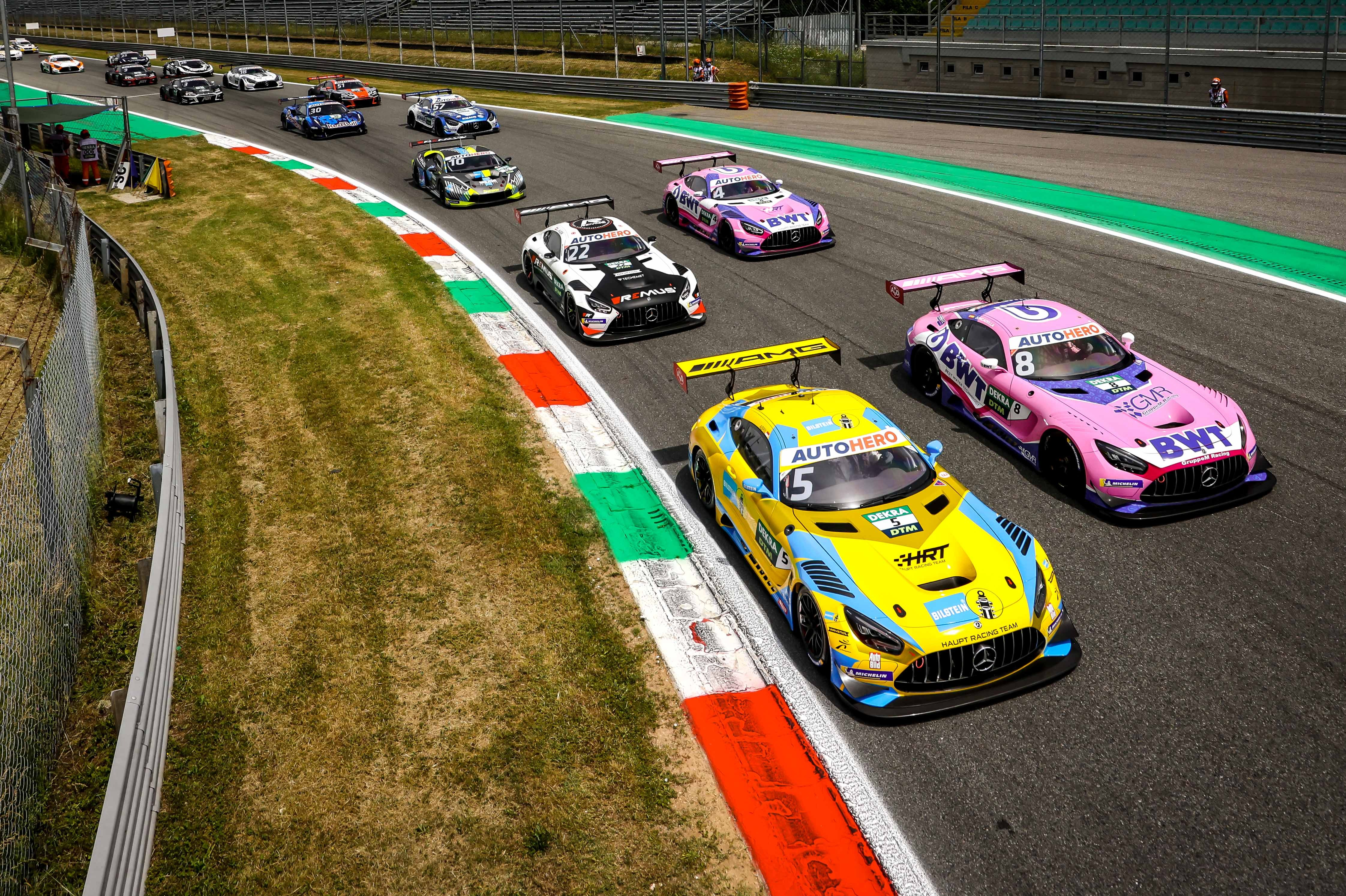
Hasty changes were made after Mercedes dominated qualifying for race one at Monza
Photo by: Gruppe C GmbH
“Before Monza it was clear everybody was doing something to not show the full potential of their cars,” explains Resl. “This can be different driving lines, balloon tyres, fuel amounts, sensors not switched on, transponders not activated, you name it.
“The first time you really see something is qualifying in Monza. As it turns out, some cars had hidden more and some cars had hidden less. So, you adjust to not have one manufacturer given a disadvantage and, in that specific case in qualifying, BMW was not ‘BoPed’ correctly. If we hadn’t changed anything, we would have ruined their race, which is just not fair.
“Then between Saturday evening and Sunday qualifying we did what we learned from race one, we led that into BoP again.”
Under the current regulation, mid-weekend BoP changes are allowed in the opening three rounds of the season before being outlawed for the rest of the year. Both the DTM and AVL Racing have maintained that they’d like to keep the same BoP from Friday to Sunday at each round, as any last-minute changes increase the workload on the teams. At the same time, both have warned that they wouldn’t hesitate to make tweaks should there be an imbalance in the field.
"Before Monza it was clear everybody was doing something to not show the full potential of their cars. This can be different driving lines, balloon tyres, fuel amounts, sensors not switched on, transponders not activated, you name it" Michael Resl
There’s also the new system of success ballast to be considered, with the top three finishers carrying extra weight for the following race. At present, the winner, the second-placed driver and the third-place finisher are hit with 25kg, 18kg, 15kg of extra weight respectively. However, the DTM may decide to alter the weights for the coming rounds.
“There is a review if 25-18-15 are the right numbers with this performance level or BoP level,” says Resl. “So, it will be looked at but there is no decision on if it is going to change.”
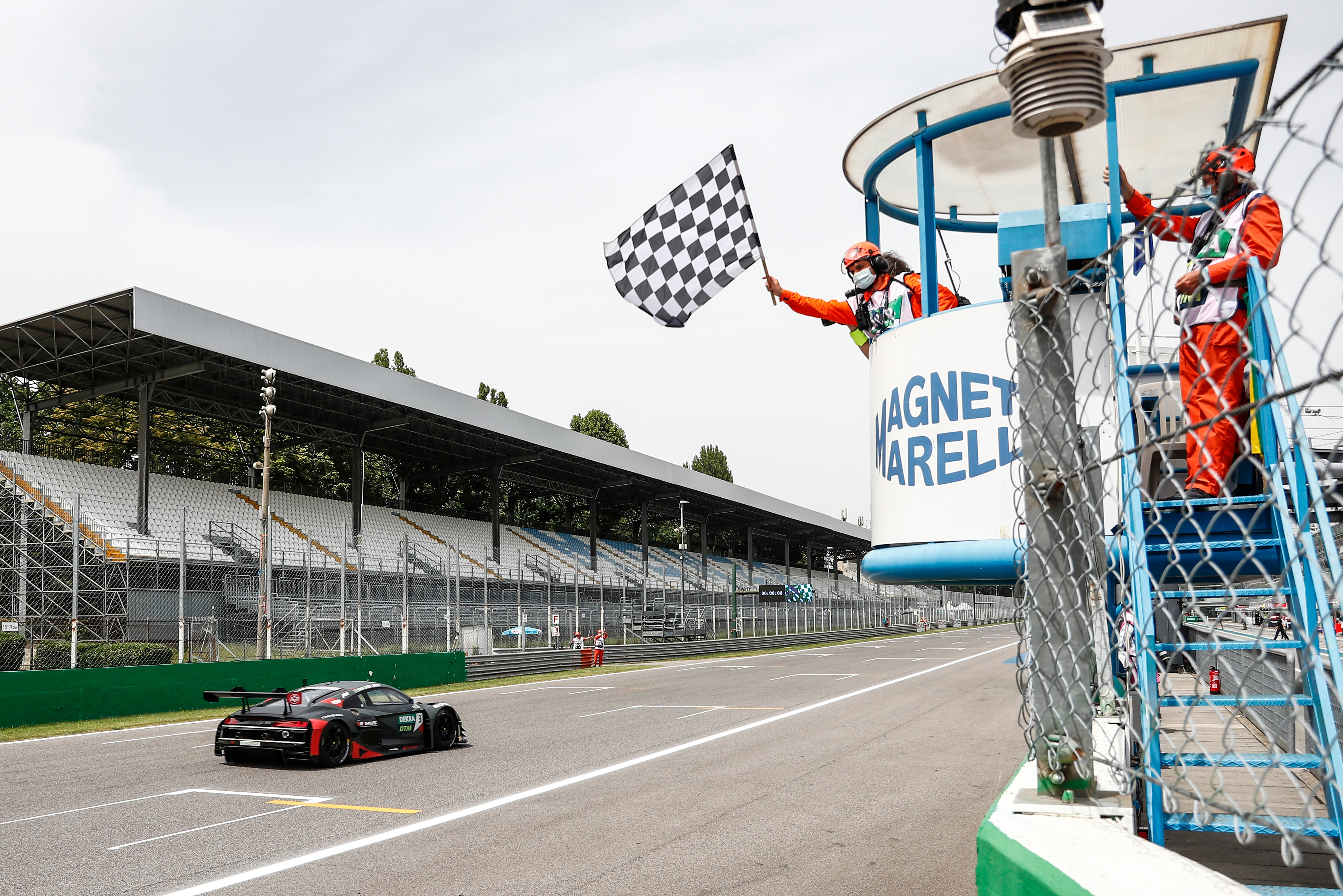
Kelvin van der Linde won race two at Monza from pole for Audi, having qualified only ninth for race one pre-BoP tweaks
Photo by: Hoch Zwei / Juergen Tap
Ever since the DTM floated the idea of moving away from Class 1 cars, it had made clear that it wanted to differentiate itself from other championships based on GT3 regulations. One of the most obvious ways to stand out is sheer performance, and BoP is a cost-friendly means of achieving the goal of being the fastest GT3 series in the world.
However, the lap times at Monza were fractionally slower than the GT World Challenge Europe event at the same venue earlier this year, with a pace difference also notable to last year’s International GT Open round.
Weather is understood to be the main culprit, with the ambient temperature at Monza over 30C when the DTM visited the circuit at the end of June.
However, AVL Racing is convinced that the DTM will indeed be faster than rival GT3 championships at other circuits this year.
“I think if all the different GT3 series are running under very similar weather conditions, with the same weather, with the same humidity, with the same density, then the DTM is probably the fastest GT3 series,” says Peinsitt.
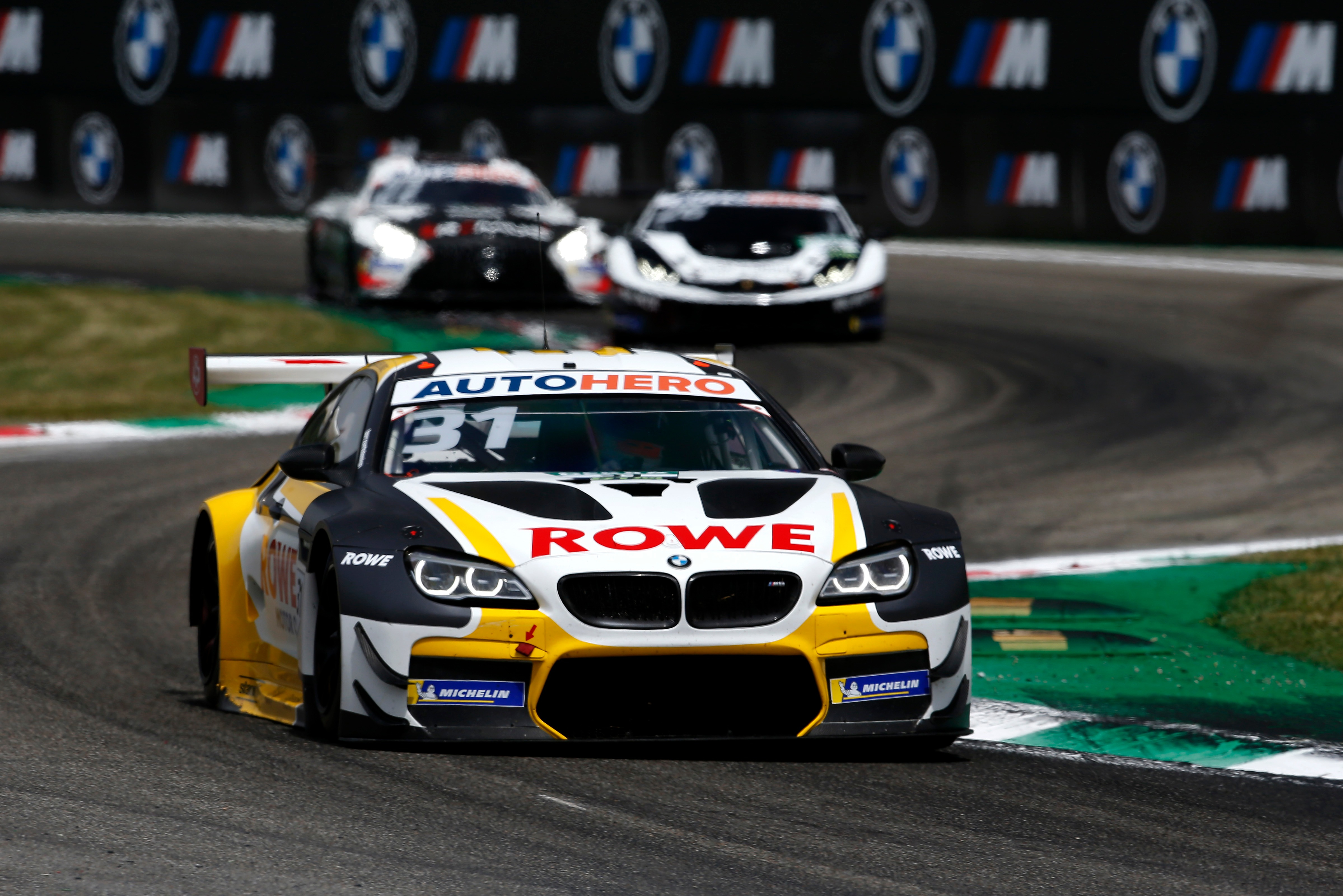
DTM aspires to be the fastest GT3 series in the world, although it missed this mark slightly at Monza
Photo by: Hoch Zwei / Juergen Tap


MotoGP Austrian GP: Acosta finally claims maiden win

The year the legendary Daytona 24 Hours ran to six hours

MotoGP Austrian GP: Martin claims sprint win after Acosta crashes out

Why KTM's Red Bull Ring advantage is looking particularly potent in 2026

FIA confirms ACO WEC deal runs through 2027 after reported contract row

Bezzecchi still confident of MotoGP title glory despite error-prone 2026

Marquez "silencing" theory on 'Aprilia or Ducati tracks' - di Giannantonio

Are Aprilia riders making it too easy for Marquez to win the 2026 MotoGP title?

Acosta's long road to his maiden MotoGP win
MotoGP Austrian GP: Acosta finally claims maiden win

Great debate: Which circuit should host the F1 2026 finale if the calendar has to change?

Live: MotoGP Austrian Grand Prix updates as it happens
Subscribe and access Autosport.com with your ad-blocker.
From Formula 1 to MotoGP we report straight from the paddock because we love our sport, just like you. In order to keep delivering our expert journalism, our website uses advertising. Still, we want to give you the opportunity to enjoy an ad-free and tracker-free website and to continue using your adblocker.


Top Comments