
How Aston Martin Racing scaled new heights in the Prodrive era
The 2021 World Endurance Championship kicks off at Spa this weekend, but for the first time since its 2012 inception there will be no works Aston Martins in the GTE-Pro class. As its new era in Formula 1 begins, Aston leaves behind a legacy of success courtesy of its Prodrive-run factory programme that was a hit from the word go in 2005

One page of A4 paper. That’s all the original deal between Aston Martin and Prodrive stretched to back in 2004. It hardly seemed the stuff of a successful and enduring partnership, but that’s what it has turned out to be.
Six class wins at the Le Mans 24 Hours and nine World Endurance Championship titles are among those successes, and that’s not to mention the 323 racing Astons built over the past 17 and a bit years.
“That contract was written on a single sheet of paper between myself and Uli Bez [CEO at Aston at the time],” recalls Prodrive founder David Richards. “It said, ‘We’ll do this and you’ll do that.’ It was nothing more than that. That’s how it all kicked off.”
As simple as it may sound, the story behind Aston’s return to motorsport for the first time since a single season with the Group C AMR1 in the World Sports-Prototype Championship in 1989 was a drawn-out affair. There had been more than one proclamation from the company about its desire to mount a comeback during the 1990s, and Prodrive had been keen to lead it. It even built a racing DB7 GT concept racer, which was tested by Andy Wallace and none other than Sir Stirling Moss, in the mid-1990s in its efforts to lure the marque back.
“I’ve had Astons for years and am an avid fan,” says Richards. “I used to see them on an annual basis and say, ‘Isn’t it about time you went racing?’”
The turning point in the tale was the arrival of Bez as Aston CEO in the summer of 2000. He made his ambitions clear to take the marque back into motorsport to his new head of product development, Jeremy Main, when he moved over from the parent company in 2002.
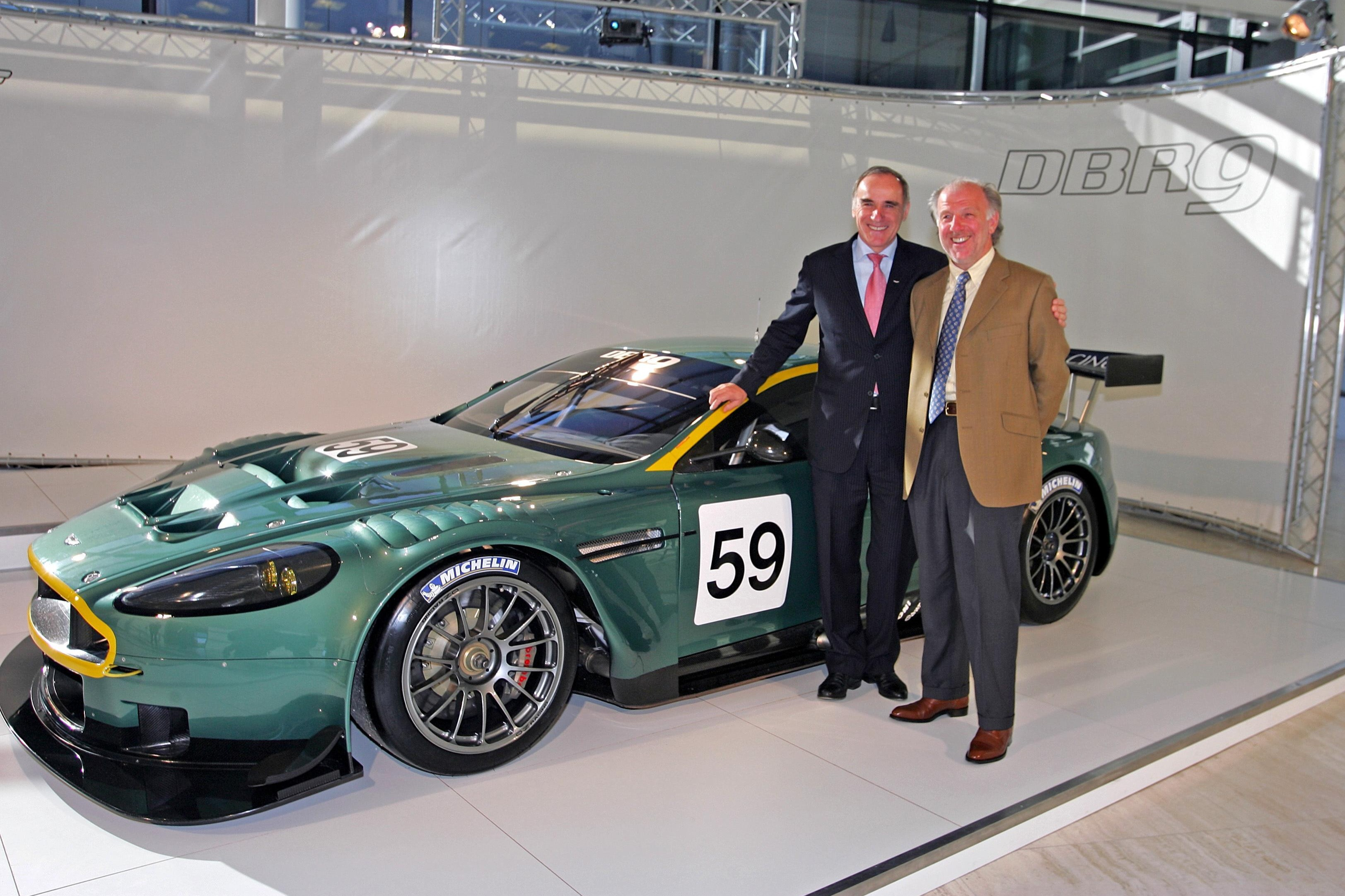
Ulrich Bez, David Richards 2004
Photo by: Motorsport Images
“When I interviewed with Uli Bez, motorsport was part of the discussion,” recalls Main. “He asked me if I wanted to be responsible for it. I thought it was an absolute natural for Aston Martin to be involved in motorsport. It was about connecting the new cars that were coming with motorsport and our racing heritage.”
Bez had already brought in Graham Humphrys, lead designer on the 1999 Le Mans-winning BMW V12 LMR, as chief engineer of motorsport. The Brit actually schemed a couple of cars – a twin-turbo Vanquish for the GT class and a mid-engined supercar for the higher GTS category – before Main went searching for a partner who could not only design and build a racing DB9, but fund the development too.
Prodrive was only one of a number of organisations in the mix. Main had discussions with ORECA in France and Ray Mallock Limited. Prodrive, which had already proved its credentials with the Ferrari 550 Maranello GTS, got the nod for reasons that Main won’t divulge.
"We set up a course that wasn’t just up and down the runways – we used some of the taxiways as well – that replicated within a gnat’s whisker the speed profile of Le Mans" George Howard-Chappell
There were a couple of other players in the story. One was wealthy Swiss race and rally driver Frederic Dor. He’d competed with the Prodrive Allstars rally team and bought a GT1 racing version of the Ferrari 550 developed by Italtecnica and dubbed the Millenio. He wasn’t sure about the car, and took it to Prodrive to see if it could be improved. The message that came back was that it would be better off starting again.
That was the origin of the entirely private Ferrari project. Prodrive bought a 550 road car out of the small ads in a Sunday newspaper and turned it into what became known as the 550 GTS. Dor would go on to have a hand in the Aston project. He funded development and the initial race programme of the DBR9 fifty-fifty with Prodrive.
The final player was, bizarrely, Ferrari boss Luca di Montezemolo. A deal was in the mix for Prodrive’s 550 to become a factory-sanctioned race car, but he vetoed the idea of a ‘British Ferrari’.
“He said, ‘We’re not going to have Ferraris built in Banbury thank you very much’,” recalls Richards. “That kind of threw us into the arms of Aston Martin.”

David Richards, George Howard-Chappell 2005 Sebring 12 Hours
Photo by: Motorsport Images
Aston 2-2 Chevrolet
The Aston factory squad went up against Chevrolet four times at Le Mans in the renamed GT1 category from 2005. It ended up as a 2-2 score draw between the DBR9 and the Corvette C6.R, but George Howard-Chappell, team principal and engineering boss of the AMR squad, reckons it could have been different. Aston was in the mix to take class honours all four years.
The DBR9 had taken a debut victory at the Sebring 12 Hours in March 2005. Howard-Chappell insists that the new car was “fully competitive”, but the truth is that the two Chevys were ahead by a lap when they ran into trouble either side of the halfway mark. That left the way clear for Darren Turner, David Brabham and Stephane Ortelli to take the victory in fourth place overall for the British manufacturer.
Aston made it two in a row at Silverstone in May at the opening round of the FIA GT Championship, which fittingly was for the Royal Automobile Club’s historic and majestic Tourist Trophy. It was at the TT, then at Goodwood, that Aston had sealed World Sportscar Championship honours with the DBR1 in dramatic style against Ferrari and Porsche back in 1959.
The DBR9 was a well-tested machine before reaching Le Mans. The class winner at Sebring had completed another 11 and a half hours at the Florida circuit immediately after the race before the clutch let go. AMR had also simulated Le Mans loadings on a course laid out at the Elvington airfield in Yorkshire.
“We set up a course that wasn’t just up and down the runways – we used some of the taxiways as well – that replicated within a gnat’s whisker the speed profile of Le Mans,” remembers Howard-Chappell. “We ran for four days solid, dusk 'til dawn, and spoiled it for everyone else. Some stricter noise regulations were put in place afterwards.”
Aston took the fight to Corvette Racing on the DBR9’s Le Mans debut, and was leading with five hours to go when GT1 pole winner Tomas Enge brought the car he shared with Pedro Lamy and Peter Kox into the pits for splitter repairs. Only in the penultimate hour, when the two Astons hit problems within minutes of each other, did the AMR challenge finally fade.

Enge, Kox, Lamy Aston Martin DBR9 Le Mans 24 Hours 2005
Photo by: Motorsport Images
A year later, and Enge was on pole again, though the challenge of the DBR9 he shared with Darren Turner and Andrea Piccini was over almost before it had begun. Turner got a late call to come into the pits in the opening hour and clattered over the kerbs. A broken oil line cost the car six laps. But the sister entry of Lamy, Stephane Ortelli and Stephane Sarrazin was leading with three hours to go when the clutch failed.
“We really felt that we could have won either of those years – or both,” recalls Howard-Chappell. “That first year we’d won Sebring, won the TT and were nearly 20 hours into Le Mans and were leading again. We were thinking, ‘Bloody hell, this is going to some kind of dream debut season.’ Then it all went wrong.”
"[Frentzen] was probably a few tenths off our regular drivers in the dry, but he completely murdered them in the wet. That car probably should have won in 2008" George Howard-Chappell
It all went right for AMR in 2007-08. In the first of those years, the two factory DBR9s dominated on a rare off weekend for Corvette Racing at Le Mans. Turner, Brabham and Rickard Rydell claimed class honours, but the accolades could easily have gone to the sister car shared by Enge, Kox and Johnny Herbert. The two cars were looking evenly matched – though out of synch on pitstops – on Sunday morning when Herbert lost concentration and tripped through the gravel in the Porsche Curves, damaging the splitter.
AMR came out on top again in 2008, this time with its cars liveried in Gulf Oil’s famous blue and orange. It was a closer run thing, however. Turner, Brabham and Antonio Garcia prevailed by less than a lap from the best of the Chevys. Again either of the Astons could have won. The sister car ended five laps down in fourth position in class with Heinz-Harald Frentzen, Karl Wendlinger and Piccini, after losing time with what turned out to be an unnecessary alternator change after the last-named had spun in the Dunlop Curve.
Howard-Chappell describes Frentzen’s pace in the wet that year as one of the highlights of the Aston GT1 years: “His ability in the rain was unbelievable, simply staggering. He told us that he thought he could do better than the traction control, so he turned it off. He was probably a few tenths off our regular drivers in the dry, but he completely murdered them in the wet. That car probably should have won in 2008.”
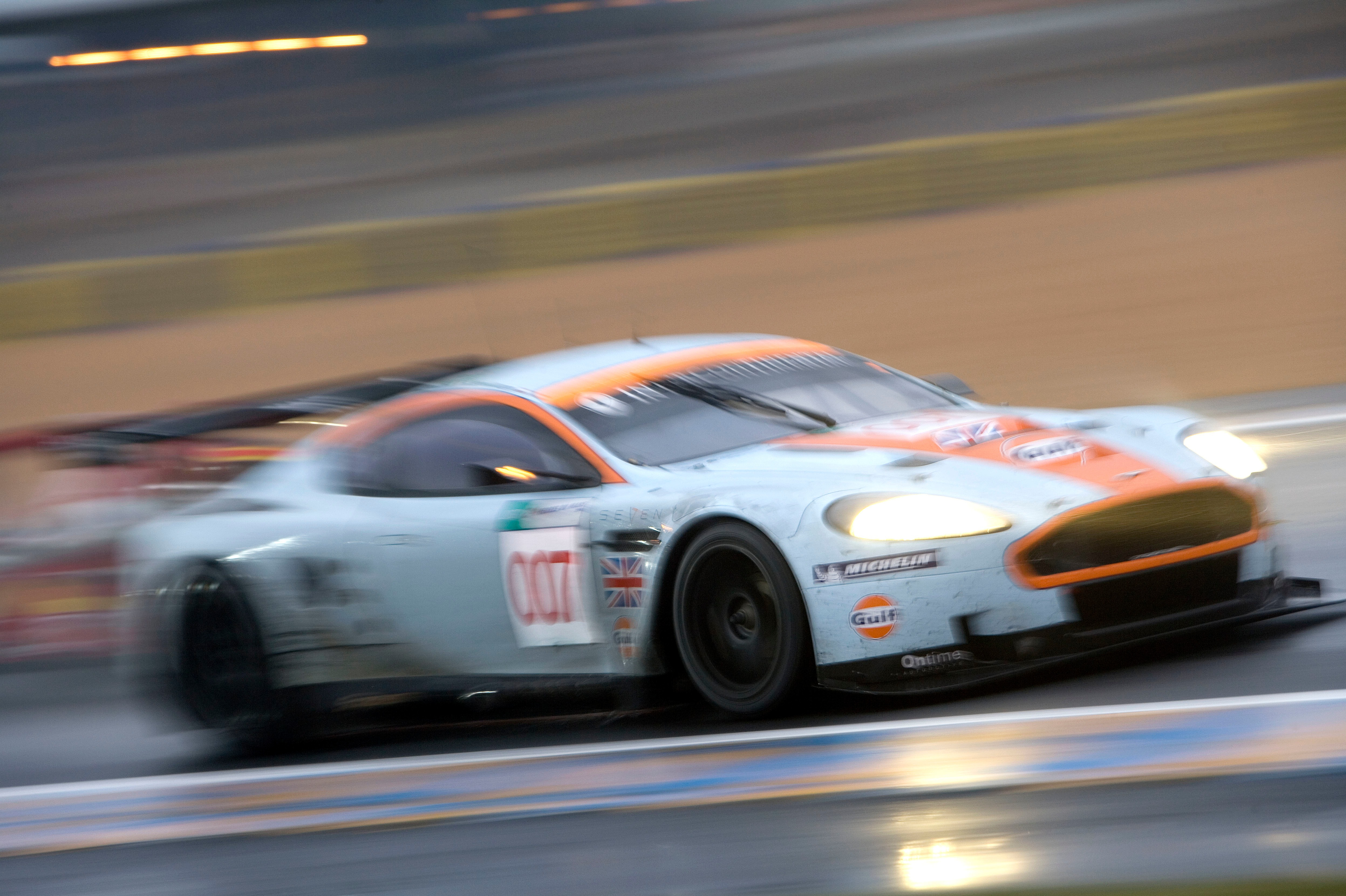
Frentzen, Wendlinger, Piccini Aston Martin DBR9 Le Mans 24 Hours 2008
Photo by: Motorsport Images
Move to the big time
The two AMR-Ones managed six racing laps between them at Le Mans in 2011, and the best of them had been 20 seconds off the pace in qualifying. AMR’s foray into the prototype arena will probably be judged by history on the disastrous and short-lived career of a car designed and built in-house at Prodrive. That’s probably unfair.
There were happier and more successful times for AMR over the course of the LMP1 programme. It won the Le Mans Series in 2009 with one of the Gulf-liveried Aston-engined Lolas clothed in its own svelte bodywork, champions Enge, Stefan Mucke and Jan Charouz never finishing off the podium across the five races. It claimed fourth at Le Mans the same year as the first petrol-powered car across the line. And one of the Lola-Astons was running as high as third during the night.
Perhaps that was the problem. The Lola-Aston, or Aston Martin DBR1/2 as AMR liked to call the car with a nod to its 1959 Le Mans winner, punched above its weight. A new car and engine were required for the next generation of rules coming into force for 2011, and Prodrive, buoyed by its successes, decided to do both itself. Not only that, but it went super-aggressive, coming up with a radical aero concept that required a powerplant at the diametric opposite of the DBR9’s monster V12.
“Ego took over,” reckons Richards. Howard-Chappell doesn’t quite go that far. He suggests that the team was “maybe overly ambitious, overly confident”.
Time and money, or rather a lack of those two precious ingredients, did for the AMR-One, reckons Howard-Chappell: “When we decided to do our own chassis and engine we had a decent amount of time. But don’t forget the project wasn’t confirmed until September [2010] and we’d gone further and further down that road.
“On the engine particularly, we asked ourselves, ‘Do we go out and source something else or do we carry on with what we are late on?’ We stupidly carried on with an engine that was behind schedule.”
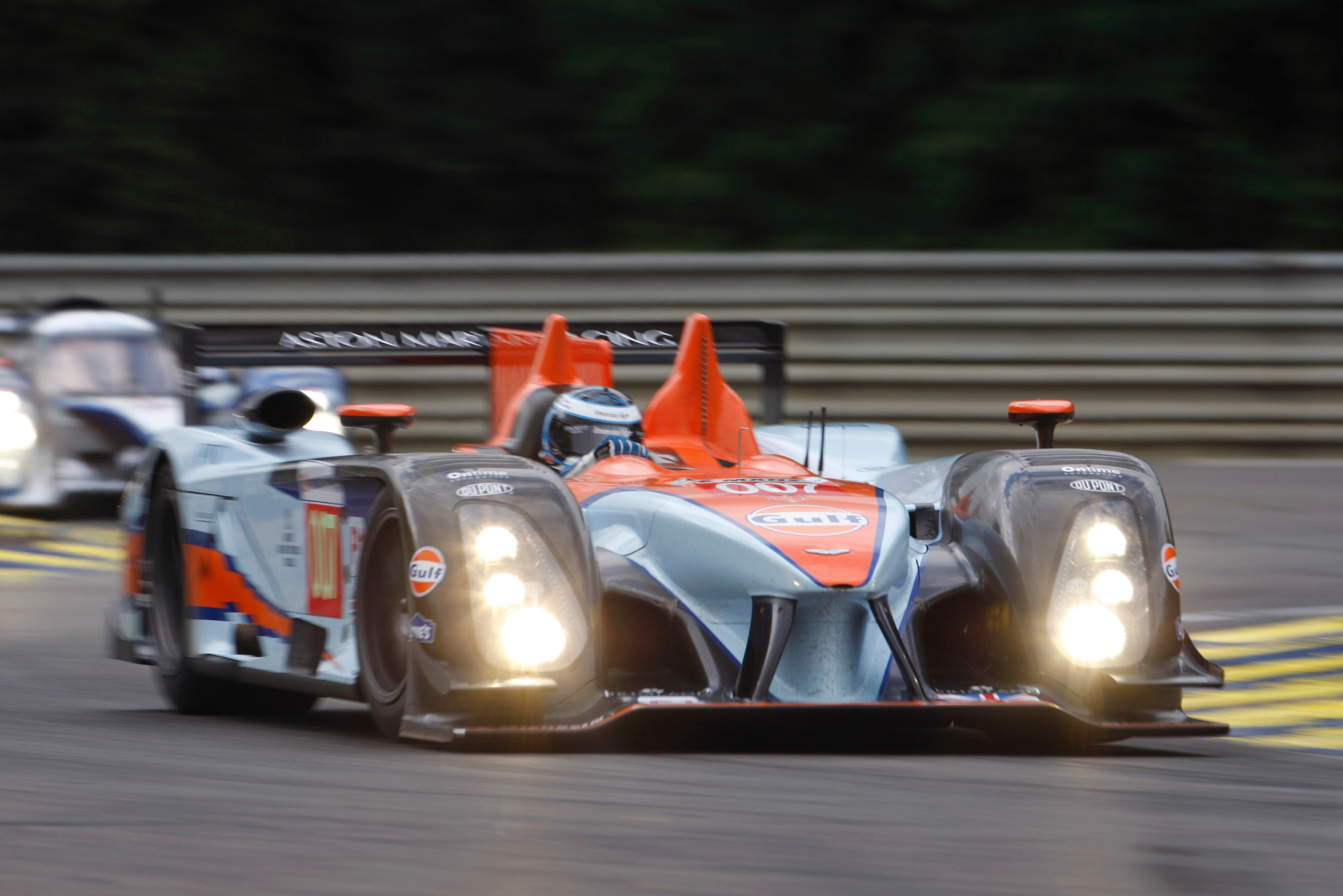
Turner, Mucke, Klien Aston Martin AMR One Le Mans 24 Hours 2011
Photo by: Motorsport Images
The open-top AMR-One incorporated giant through-ducts in the name of drag reduction, which called for a tiny in-line turbo engine. Prodrive’s engine department opted for a straight-six direct injection, its first-ever ground-up design.
“The engine we ended up with was a Swiss watch, a beautiful little thing, but we needed it to work immediately – and it didn’t,” recalls Howard-Chappell. “We didn’t have the money to get it right in the time we had.”
AMR-One never even came close to making the Sebring 12 Hours in March, did some very public testing at the Le Mans Series opener at Paul Ricard with a solo car, and then managed just 15 laps at the Le Mans test day in April. Things didn’t get much better in race week.
"We could see the thing was cracking and was going to fail after eight or nine hours. The problem was what we came up with completely screwed the torsional vibration behaviour of the engine and broke the cam chain" George Howard-Chappell
The team knew the engines wouldn’t last deep into the race, so it opted to re-engineer one of the engine pulleys, switching from aluminium to steel. The new components were made in Banbury and flown to Le Mans, only making it onto the cars after the morning warm-up.
“We could see the thing was cracking and was going to fail after eight or nine hours,” says Howard-Chappell. “The problem was what we came up with completely screwed the torsional vibration behaviour of the engine and broke the cam chain.”
The AMR-One didn’t race again, or at least not as an Aston Martin. The car’s monocoque ended up as the basis of the Nissan DeltaWing experimental racer and the short-lived Pescarolo 03 LMP1. But AMR returned to the ALMS, where a customer car in the hands of the Muscle Milk CytoSport team was already racing. The DBR1-2 ended up with five wins in North America in 2011.
The shame is that those and the LMS victories have been largely forgotten against the failures of AMR-One.

Enge, Mucke, Charouz Aston Martin Lola 2009 Le Mans Series Silverstone
Photo by: Motorsport Images
A new focus on GT racing
AMR’s top brass looked up at the screens after qualifying. The Vantage GTEs were nailed to bottom of the GTE Pro times, and by some margin. The two Astons were 10s off the pace in the cold and damp conditions – snowy even – at the Silverstone WEC series opener in 2016. There were suddenly doubts about the decision to swap from Michelin to Dunlop tyres for the new campaign.
“I was there in the pits with DR to my left and John Gaw to my right and asking, ‘Have we made the right decision?’” recalls Dan Sayers, AMR’s technical director from 2014 until the end of 2019. “It was a big one, something we had made collectively, but you had to question it when you were so far off.”
AMR ended up winning the grandly named World Endurance Cup for GT Drivers with Nicki Thiim and Marco Sorensen that year ahead of factory opposition from Ferrari and Ford, as well as Porsche with works-supported machinery. It was followed by a first GTE Pro Le Mans victory the following season. The decision to switch tyre manufacturer undoubtedly paid off.
AMR had refocused on GT racing after the AMR-One debacle in the reborn WEC, and more specifically what was now known as GTE. GT1 had died a death by that time. It gave the Vantage GT2, which had been racing on and off since 2008, a quick makeover for 2012 prior to the development of a new GTE contender around the same base vehicle for the following season.
The new car was a winner from the get-go, and might have taken the GTE Pro title in 2013. Turner and Mucke just led the points going into the Bahrain finale, while Aston did the same in the manufacturers’ standings. The AMR stalwarts probably wouldn’t have taken the drivers’ crown, but the silverware for marques was within reach when sand ingress resulted in both Vantages retiring. There were also near-misses at Le Mans, including 2013, the year that Allan Simonsen tragically lost his life in his GTE Am-class Aston early in the race.
AMR made the move away from Michelin to breathe new life into the ageing Vantage, which had undergone an aero refresh to bring it in line with the new rules introduced for 2016. It was looking for what Gaw called “a differentiator”.

Marco Sorensen, Nicki Thiim 2016 Bahrain WEC
Photo by: Motorsport Images
“It was fairly clear in our minds that at least at conventional tracks we were going to struggle against the new breed of cars,” says Sayers. “We wanted something that would set us apart from everyone else on the Michelin. With Dunlop we got a dedicated partner who could focus all their attention on us.”
Aston’s championship bid came good in the summer as the development programme with Dunlop bore fruit. A mid-season run of podiums, climaxing with victory at Austin followed by a second win of the season at the Bahrain finale, gave the Danes the title.
After a late switch back to Michelins, the gen2 Vantage won twice, but only in the rain. In 2019-20, after some proper tyre development, the car was a competitive proposition in all conditions
“The championship in 2016 was massive, partly because of how close we’d come in 2013 and also because of where we started that year,” recalls Sayers. “Dunlop did some good work over the season. To win it in Bahrain was special after what had happened three years before. Le Mans was similar because we’d been knocking on the door for so long, but a bit more dramatic.”
That’s a reference to Jonny Adam taking the lead from one of the Chevrolet Corvette C7.Rs at the Ford Chicane at the end of the penultimate lap in the 2017 edition of the 24 Hours.
The ageing first-generation Vantage was superseded by a new car for the 2018-19 WEC superseason that straddled two calendar years. After a late switch back to Michelins, the gen2 Vantage won twice, but only in the rain. The following season, after some proper tyre development, the car was a competitive proposition in all conditions.
PLUS: Why Aston Martin is ready to win Le Mans again
Thiim and Sorensen reprised their 2016 title win, Aston took the marque’s crown, and Maxime Martin, Alex Lynn and Harry Tincknell claimed GTE Pro honours at Le Mans, while TF Sport won GTE Am with its Vantage.
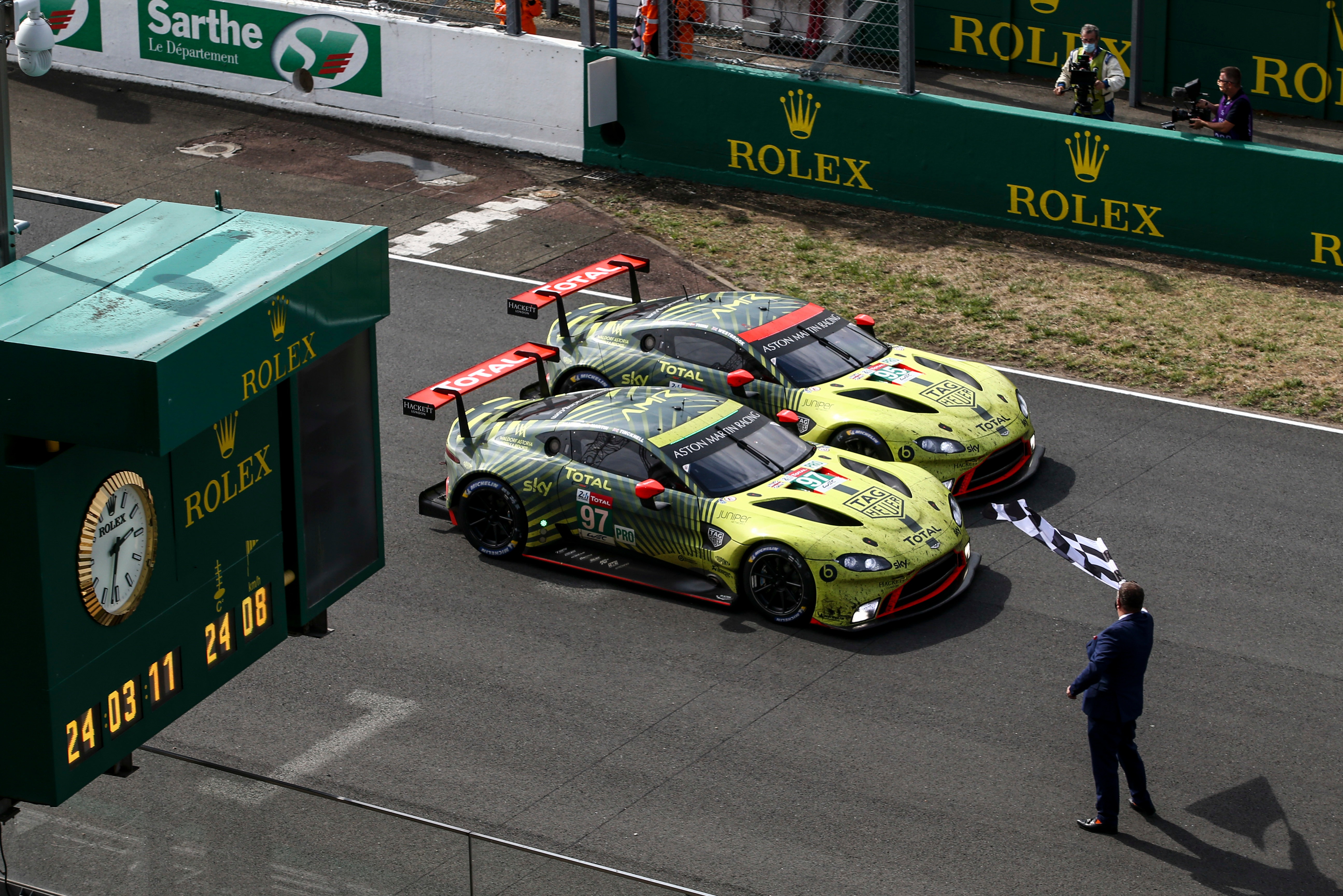
Lynn, Martin, Tincknell Aston Martin Vantage GTE Le Mans 24 Hours 2020
Photo by: Motorsport Images
The two that got away
Aston Martin has been successful in GT3 and GT4 in recent years too – Adam has taken a record four British GT titles in Aston machinery, for example – but there are a couple of holes in its bulging CV since 2005.
It has failed to win either of the 24-hour classics at Spa or the Nurburgring. There have, however, been a few near-misses along the way. Most notable was the one at Spa in 2006.
The customer Phoenix Racing DBR9 driven by Piccini, Marcel Fassler, Jean-Denis Deletraz and Stephane Lemeret dominated the race. There was a delay in the night with a seatbelt issue and an engine glitch that increased fuel consumption, but it still looked odds on to triumph ahead of the best of the Vitaphone Maserati MC12s until the closing stages.
Eric van de Poele closed down Piccini in light drizzle, buzzed past and then pulled away. The Aston driver had nothing for him.
“He was like three or four seconds a lap faster, and at the time I thought it was me,” recalls Piccini. “Years later, I understood why. He was on Pirellis and I was on Michelins, and four years later at the Spa 1000Km I was on Pirellis [driving a Racing Box LMP2 Lola] in the same kind of conditions and I was passing LMP1 Audis. I thought, ‘Bloody hell, know I know why I lost victory in the 24 Hours.’”
There’s a promise that the factory team will be back, perhaps not with a full WEC programme, but possibly in those two big races that are still missing from the Aston Martin Racing CV
Aston Martin took its best ever finish at the Nurburgring 24 Hours in 2018 with fourth position for the V12 Vantage GT3 shared by Turner, Martin, Thiim and Sorensen. It might have been different but for a late-race stoppage just as AMR’s fuel strategy was about to come good, and some splitter damage.
“That was our best chance at the ’Ring,” says Sayers, who had overseen the design of the V12 Vantage ahead of its release in 2012. “It was difficult to say how it was going to turn out, and it certainly didn’t help that we were running wounded at the end.”
The AMR endurance story is far from over, the withdrawal of the factory-run squad from the GTE Pro ranks of the WEC or not. There is a renewed focus on Aston’s customers, and a promise that the factory team will be back, perhaps not with a full WEC programme, but possibly in those two big races that are still missing from the Aston Martin Racing CV.

Fassler, Piccini, Deletraz, Lemeret Phoenix Aston Martin DBR9 Spa 24 Hours 2006
Photo by: Motorsport Images


How Ford is "hitting milestones" in preparation for WEC Hypercar assault

How Porsche Penske finally broke its Petit Le Mans duck

Why there’s no perfect solution to the WEC safety car conundrum

How an “informed gamble” enabled Toyota to beat Alpine in the Fuji 6 Hours

The hope for Lola’s comeback and what it could mean

Why Lola has got big ideas for its future

The debate on whether WEC prioritised 'entertainment' over 'sport' in Austin

Shwartzman to make WEC return with Peugeot

DTM Hockenheim: Engel wins race 2 as Preining secures championship

Verstappen jokes about coded messages as Red Bull phases in Lambiase’s successor

BTCC Brands Hatch: Cammish handed victory after Collard penalty

Why Verstappen's dominance left rivals scrabbling for alternatives in Singapore
Subscribe and access Autosport.com with your ad-blocker.
From Formula 1 to MotoGP we report straight from the paddock because we love our sport, just like you. In order to keep delivering our expert journalism, our website uses advertising. Still, we want to give you the opportunity to enjoy an ad-free and tracker-free website and to continue using your adblocker.


Top Comments