
Sleight of hand: the Le Mans 24 Hours Review
Faced with new competition, Audi used some of the oldest tricks in the book to once again stamp their authority on the Le Mans 24 Hours. Glenn Freeman explains how the R10 came out on top
,/p>
Only Audi knew just what they were capable of ahead of this year's Le Mans 24 Hours, and the German squad will have taken a great deal of satisfaction from fooling a lot of people in France on Sunday.
This was billed as Audi's big test, as they finally had a full factory opponent to take on. Despite all of the hype surrounding Peugeot's return to Le Mans, it was the German national anthem that rang out after the race, as Frank Biela, Emanuele Pirro and Marco Werner repeated their victory from one year ago.
But while Audi's dominance in the race left a lot of people shocked, it would be unfair to include Peugeot in that group. The French team had made it clear that they would be happy to just finish the race this year, and it was only their impressive performances in the pre-race test and qualifying that led people to expect more of them.
Sebastien Bourdais had set a blistering pace in the test two weeks before the race, and after Stephane Sarrazin came out on top in a qualifying duel with Allan McNish, a lot of people were gearing up for a classic Le Mans battle.
But it was not to be. As Bourdais put it, Audi had "kept their cards close to their chest" during practice and qualifying. As Pirro had pointed out before the race: "If you are fastest in the test, you get the headlines for two weeks. If you are fastest in qualifying, you get them for a couple of days. We prefer to get them for winning the race."
The weather
 LNT Panoz Esperante running in the wet qualifying © LAT
|
The days leading up to the race had been dominated by conversations about the weather. Short rain showers had been soaking the track on a regular basis, and when spots of rain fell during the warm-up lap, everybody was prepared for chaos.
All of the teams were convinced that the weather was going to decide the outcome of the race, and the weather had certainly played its part in qualifying.
The majority of running on Wednesday and Thursday had been rain-affected, which had led to the battle for pole taking place in the run up to midnight on the first day - not usually the ideal time for a pole lap.
Throughout the week before the race, there were showers almost every hour, yet on Saturday morning the team's weather forecasters began pushing back their predictions for the big downpour.
Some sprinkles of rain made the first few hours of the race hectic, but the weather was not the huge factor it was expected to be throughout the event.
The rain did settle in for good eventually, but all the deluge in hour 22 did was create doubts over how the race would finish.
As the organisers tried desperately to avoid using the safety car, the class leaders watched on nervously as their cars tip-toed around. Emanuele Pirro even decided to make a sign with the words "Safety Car?" on it, and promptly stood in front of a TV camera.
It was clear that something needed to be done, as the GT cars began passing the prototypes, and the amount of standing water became a serious safety hazard.
Eventually the race was neutralised, and as the rain continued to pour the race seemed set to finish behind the safety car. But the ACO were having none of that, and their race was going to finish under green flag conditions, whether the drivers liked it or not.
Werner, in the leading Audi, wasn't about to play the game though. As the field was set loose for a handful of laps at the end, he let them go. Audi had already seen two of their cars crash out, and a third would have been totally unacceptable.
"It wasn't car racing, it was boat racing," Werner said afterwards. "It was really dangerous, and I was just happy to bring it home."
David Brabham, who was desperately trying to hang on to his car to take the victory that Aston Martin so desired, counted himself lucky that he had a one lap advantage over his nearest challenger.
"I was very conscious that a win was in my hands, and it was mine to lose as well," he said. "But we had a big enough gap not to worry too much."
 Frank Biela leads the Peugeot 908 of Sebastien Bourdais, Pedro Lamy, and Stephane Sarrazin © XPB/LAT
|
LMP1
Audi had every right to be more confident than they had let on, because within the first hour of the race they had shoved the Peugeots out of the podium places. It was already clear to those watching that this wasn't going to be the close fight that many were predicting.
Even the Peugeot drivers had been tricked into believing that they could be a genuine match for the silver cars. As each driver came in after his first stint in the car, he admitted to being surprised by Audi's speed, especially at the end of the straights.
"They can just drive around us on the straights," said Nicolas Minassian. "We are faster than them everywhere else, but we can't hold them off."
It was the speed of one Audi in particular that was leaving everyone reeling though. Dindo Capello assumed the lead from Bourdais as the Frenchman scrambled across the kerbs at the first chicane on lap one, and the Italian then set about clearing off into the distance.
Allan McNish and Tom Kristensen did their bit to ensure that the No.2 R10 eased away from the field, and after 16 hours the car was two laps ahead of everyone, including the eventual winner.
McNish has endured awful luck at Le Mans in recent years, and it seemed that this year he was finally going to add to his 1998 victory, and take his first win for Audi. But the misfortune was set to strike yet again.
Capello was minding his own business on an out lap from the pits at around 7:30am on Sunday when he lost the left rear wheel from his car at Indianapolis, one of the fastest corners on the track. The car was destroyed, and had been any other corner he might have got away with less damage.
McNish summed up the performance of the No.2 car perfectly: "We did everything right," he said. "As a crew, we were by far the best out there."
While the No.1 car immediately assumed the lead, things still weren't looking great for Audi on Sunday morning. They had brought three cars to the race to deal with the two Peugeots, and with six hours to go they had one left, while both French cars were still giving chase.
Audi's don't usually have problems reaching the finish at Le Mans, and this weekend proved that the only way to break one of the German cars appeared to involve aiming it at a wall.
Mike Rockenfeller crashed the No.3 car early in the race as he pushed too hard too early, while the leading car had run faultlessly until the wheel fell off. The No.1 car then kept going, and going, and going, meaning that the Audi mechanics spent very little time working on any of their cars. There were no major mechanical dramas, as we have come to expect from a team as well-drilled as Audi.
But Peugeot were expecting problems, and even they were surprised by how far they got into the race before the dramas really started to hit. While they didn't have the pace to match Audi, they took a lot of satisfaction from getting their cars to cover more distance than they managed in any of their tests during the past six months.
 Jacques Villeneuve at work in the Peugeot 908 © XPB/LAT
|
Eventually the problems arose, and an issue with the engine robbed Jacques Villeneuve of a podium finish on his debut in the race.
The Canadian had to work hard to get himself up to a reasonable pace, but as his lap times improved, the Le Mans bug really began to bite. He may not have added to his Formula One and Indycar achievements just yet, but he is keen to come back next year.
"This is a race that you have to come back to until you win it," he said. "You have to do one of these races anyway before you understand what it is all about, so I want to do it again."
So despite a troubled final few hours, Peugeot did not leave Le Mans with egg on their face like those who predicted that they would win. The scenes on the pit wall as Sebastien Bourdais brought one of the 908s across the finish line showed genuine joy.
The French crowd had more to cheer though, as one of Henri Pescarolo's cars made it on to the podium. While the privateer team had no chance of competing with the diesel-powered cars, the No.16 Pescarolo kept plugging away, and it was constantly snapping at the heels of the leaders every time one of them was delayed.
It was a fitting reward for the team's efforts, and it will feel like a victory for Pescarolo, who believes that his petrol-powered cars should be able to race in a separate class to the diesels anyway.
While the French were able to cheer home their underdogs, so were the huge amount of British fans in the crowd on Sunday afternoon. After so many near misses, and battles with unreliable cars, Martin Short's Rollcentre Racing outfit brought home their customer Pescarolo in a remarkable fourth place.
GT1
Prodrive boss David Richards was determined to see his Aston Martins take GT1 honours this year, rather than complete a hat trick of winning the "21 hours of Le Mans" as he has put it for the past two years.
The speed of the DBR9 has never been in doubt, but in 2005 and 2006 the green cars have hit trouble in the final few hours, and handed victories to the reliable Corvettes.
There was to be no repeat this year, as every Aston Martin reached the finish, and the factory Corvette team actually suffered a retirement.
There would be no repeat victory for the No.64 car, which Oliver Gavin was sharing with Olivier Beretta and Max Papis. A Corvette retirement is rare in itself, but it looks even more shocking as only one other GT1 car failed to make the finish.
The GT1 battle was almost hyped up as much as the battle for overall victory, and few were predicting a repeat of the recent Prodrive vs Corvette scraps. There were more Aston Martins in the field, and French outfit Oreca were viewed as a dark horse with their Saleens.
 Prodrive Aston Martin DBR9 leads the Corvette C6.Rs © LAT
|
The field was full of cars that were genuinely potential winners, but experience paid off, and the battle for honours was being fought out between the Prodrive Aston Martins and the sole remaining works Corvette.
For the majority of the race both works Aston Martins were running together at the front of the field, while Ron Fellows, Jan Magnussen and Johnny O'Connell tried desperately to stay on the lead lap.
Just as Prodrive's nerves would have been starting to get the better of them, one of their cars repeated the tricks of the past two years and dropped out of contention.
Johnny Herbert damaged the front splitter of the car by running through a gravel trap, and Tomas Enge then spun while trying to snatch third place from Christophe Bouchut.
It was all very familiar, except for the fact that everything was still going right for one Prodrive car this year. Darren Turner, Rickard Rydell and David Brabham often didn't look as spectacular as some of their rivals, yet they were usually the fastest men in their class.
Of the other teams that had been expected to shine, Oreca's challenge never quite materialised, and the team admitted that they had been too cautious during the tricky weather conditions in the early stages of the race.
Larbre Competition had taken pole position with one of their Aston Martins, but the team had made it clear before the race that they were going to base their strategy around helping the Prodrive cars win the race. As it turned out, they didn't exactly have to give way to the works cars, because the No.007 and No.009 machines were simply faster.
LMP2
Le Mans has often described as a sprint race rather than a test of endurance in recent years, but if proof of its demands on equipment was needed, it could be found in the LMP2 class.
There is nothing new about the LMP2 race becoming a battle of attrition, but even by the usual standards of the class, the 2007 race was remarkable.
Just two LMP2 cars were running at the finish, and the class-winning Binnie Motorsports Lola only reappeared with less than 10 minutes to go, while their sole challenger cruised around 17 laps adrift.
 Thomas Erdos in the RML Lola-AER © XPB/LAT
|
That challenger was the car that had been the class of the field on pure speed throughout the event; the No.33 Barazi Epsilon Zytek. The 2007 Zytek is a good car, and the line-up Adrian Fernandez, Robbie Kerr and Haruki Kurosawa was strong as well.
Despite being the only car that was able to mix it with the LMP1 cars in the early stages, the Zytek joined the rest of its rivals in making far too many trips to the garage. It was running at the end, but their 17 lap deficit to the leaders meant that even after the Binnie car spent much of the final hour in the pits.
Fernandez was not too unhappy though, as he was treating this year's race as a recce for 2008, when is hoping to be back next year with the Lola-Acura project that he runs in the ALMS.
There was to be no hat-trick for the RML team, despite the best efforts of Mike Newton and Thomas Erdos. The pair were forced to tackle the majority of the race without the luxury of a third driver, after Andy Wallace was unfit to get back in the car when he crashed at the Porsche Curves.
The team had come back from all sorts of problems to win the class in 2005, and when they rolled the repaired MG Lola out of their garage in the middle of the race, it had the potential to be the beginning of something special. Unfortunately it was not to be, and engine failure was one setback that even they couldn't fight back from.
The Binnie team had played safe in the closing stages by bringing the car in for "maintenance", but their final visit to the pits was far less routine. The heavy rain had caused electrical glitches for several of the cars, and the Lola only reappeared in the race during the final 10 minutes.
GT2
Last year it was a shock to see Porsche defeated in GT2, but with the strength of the Ferraris this year, it was almost a shock to see a Porsche win the class that the manufacturer has dominated for so long.
Risi Competizione appeared to be making the GT2 class their own for the first half of the race, as they stayed out of trouble while the majority of cars had dramas. The line-up of Mika Salo, Jaime Melo and Johnny Mowlem combined with a Ferrari 430 was always going to be a contender, and the team were the class of the field throughout most of the race.
But even the race leaders could not stay out of trouble throughout the race, and things started to go wrong when Jaime Melo ran wide on oil at Indianapolis and damaged the car's radiator.
The Ferrari would eventually retire 17 hours in to the race, when more effects from Melo's off reared their heads.
British team Scuderia Ecosse were on course to back their pole position up with a win as they moved into the lead, but a broken driveshaft meant that their lead, and involvement in the race, would not last much longer.
The Imsa Performance car of Patrick Long, Richard Lietz and Raymond Narac encountered the least problems, and the team proved just how crucial that aspect of endurance racing can still be, even if the races are treated like sprints in these modern times.

F1 2019 game includes official driver transfers for first time

F1 testing: Toro Rosso's Albon on top, Mercedes starts to show pace

F1 testing: Raikkonen sets fastest lap so far, tops third morning

F1 testing: Leclerc ensures Ferrari fastest again on second morning

F1 testing: Ferrari and Sebastian Vettel dominate first morning
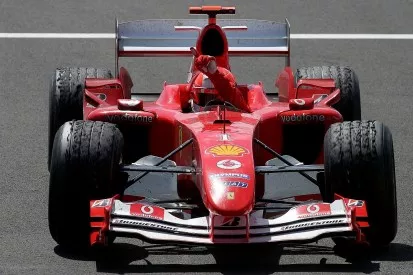
Michael Schumacher's top 10 F1 victories

F1 offers hints at grid penalty alternatives in new survey to fans
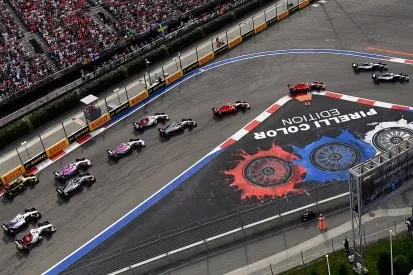
Autosport readers' final F1 2018 driver ratings ranking revealed
Why McLaren considers Norris-Piastri Singapore clash so “serious”

What Max Verstappen will change after Red Bull’s poor F1 starts in Malaysia and Singapore

A "better job" or more engine power? Verstappen's Singapore pole unpicked

What we learned from the 2026 F1 Singapore GP sprint race and qualifying
Subscribe and access Autosport.com with your ad-blocker.
From Formula 1 to MotoGP we report straight from the paddock because we love our sport, just like you. In order to keep delivering our expert journalism, our website uses advertising. Still, we want to give you the opportunity to enjoy an ad-free and tracker-free website and to continue using your adblocker.


Top Comments