


The toe-in-water origins of Lotus’s groundbreaking F1 journey
In the first part of our history of Lotus, DAMIEN SMITH recalls how Formula 1 wasn’t an immediate priority for team founder Colin Chapman – but once he got a taste for it he just couldn’t stop…
For a man who initially had little interest in Lotus pursuing a future in Formula 1, you could say Colin Chapman made quite an impression on grand prix racing. Britain’s answer to Enzo Ferrari? Absolutely – for better and for worse. Half a century ago, BRM was considered the British equivalent to those “bloody red cars”, largely because it also built the engines that powered its chassis (albeit much less effectively most of the time).
But with hindsight it was always Lotus which deserved that mantle, given the scope, influence and style of its striking road car output, its range of racing sports cars and single-seaters, and predominantly its rate of phenomenal success in F1, the highlights of which were achieved in the span of just two decades of rapid technological and commercial revolution. Even now, Chapman’s Lotus is still equal fourth with Mercedes on constructors’ world championships won (seven), fifth on grand prix wins (79) and it carried five of F1’s greatest drivers to six world titles – Jim Clark (twice), Graham Hill, Jochen Rindt, Emerson Fittipaldi and Mario Andretti.
The influence, charisma and genius of the man at the tiller was the driving force behind it all. Team Lotus – the real Team Lotus – survived its founder by a dozen years, then fell off the Formula 1 grid a full 27 seasons ago. And yet no matter how poorly served the name has been treated in the decades since, Lotus will always be ingrained in the fabric of F1 – because of Anthony Colin Bruce Chapman.
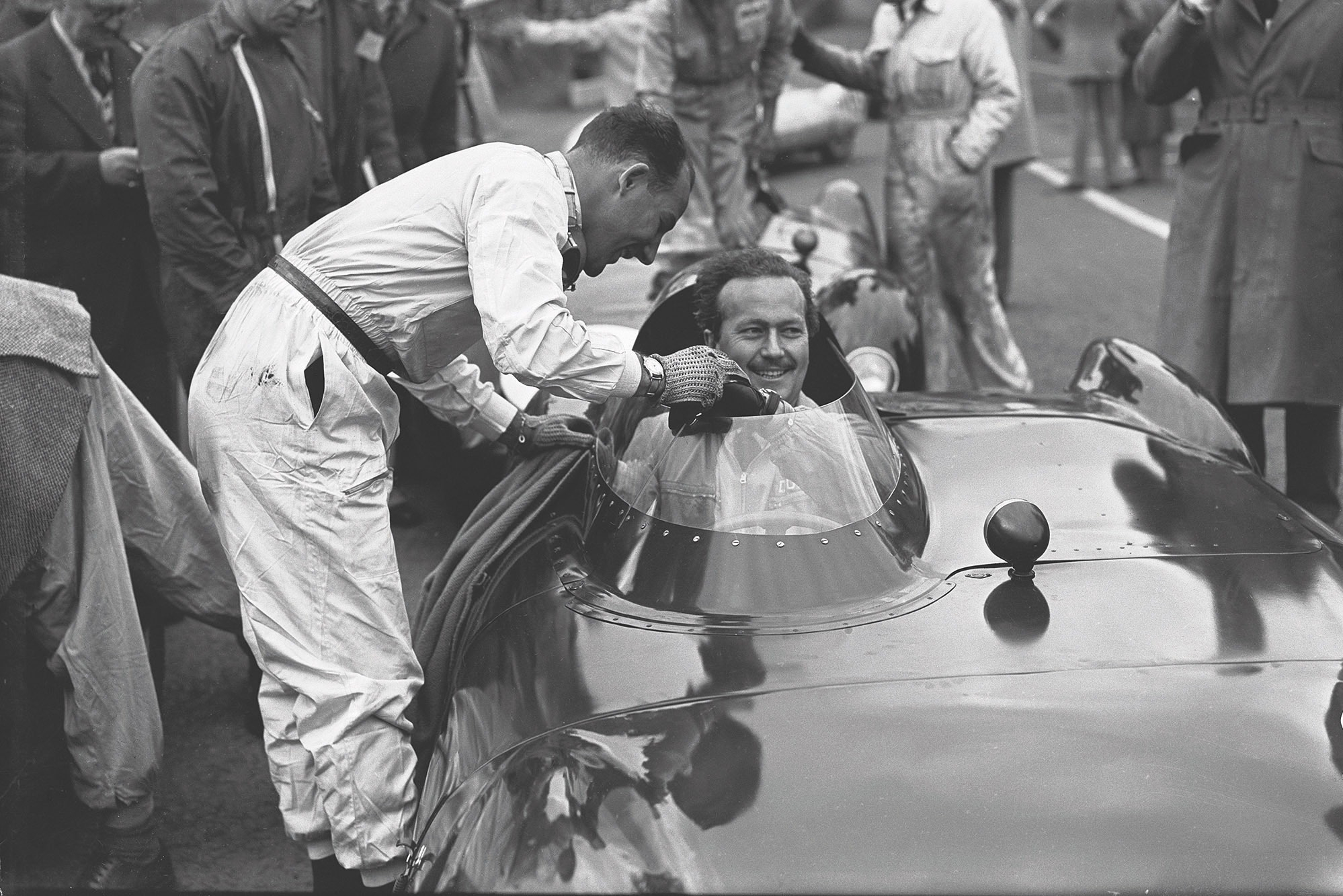
Colin Chapman (seen here with Stirling Moss) was a capable racing driver
Photo by: GP Racing
He was born on 9 May 1928, the son of Stan Chapman, who ran the Station Hotel in Hornsey, North London, where Colin founded Lotus in 1952. He’d qualified as a civil engineer at University College London, having also learned to fly during his time as a student, and briefly served in the RAF. That passion for aircraft would heavily colour his ethos on car design. Wife Hazel, whom Colin met at a dance in 1944, put up the £25 he needed to establish Lotus, which was soon creating a stir on the new breed of British race tracks with a series of specials and light-weight sports racers. It didn’t hurt that the boss was a handy pedaller himself and would likely have made the F1 grade, had he been so inclined.
It was Cliff Allison rather than 29-year-old mechanic-turned-driver Hill who first put Lotus on the F1 map. In that 1958 season the quiet Cumbrian scored a fine fourth at Spa and starred at the Nürburgring in a patched-up car Graham Hill had crashed in practice
Instead, his fierce ambition drove him towards ground-breaking design and engineering. Before Lotus backed into the grand prix arena, Chapman’s already well-regarded expertise on multi-tubular spaceframe chassis and suspension design had led industrialist Tony Vandervell to commission him to take a fresh look at his Vanwall grand prix cars, which in harness with aerodynamicist Frank Costin’s teardrop-shaped body clinched the inaugural F1 constructors’ title in 1958. He was also consulted by BRM designer Peter Berthon for the P25 that turned British Racing Motors from national embarrassment to grand prix winner in 1959. But by this time Chapman had his own designs on F1 success, even if he needed a shove or two to get going.
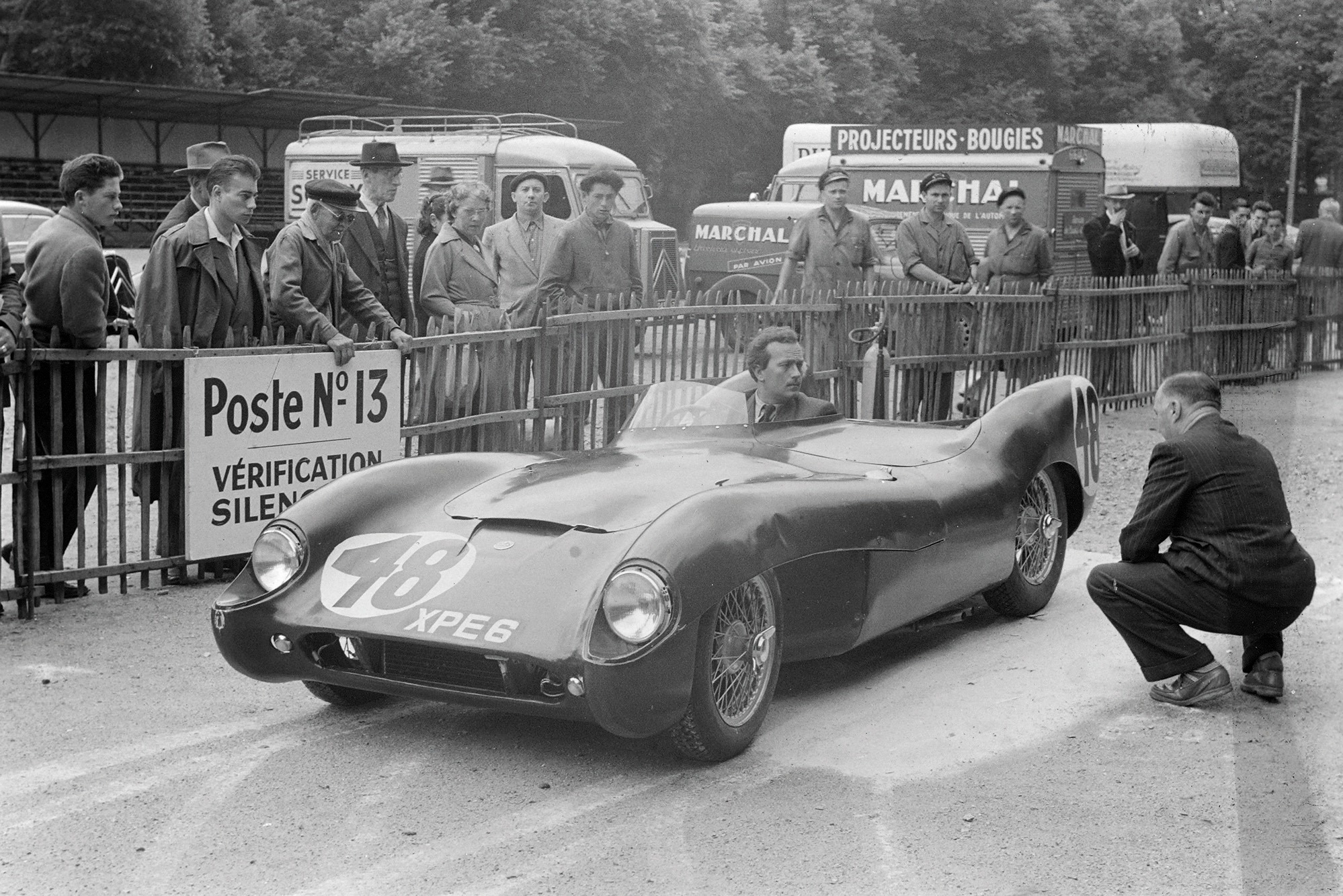
Chapman contested the 1955 Le Mans 24 Hours in one of his Lotus Elevens
Photo by: GP Racing
The flyweight Lotus 12, unveiled behind the Station Hotel in October 1956, was little more than a potential bit of good business for the new 1.5-litre Formula 2 that was to be launched in 1957. Created in collaboration with John Lambert and Mike Costin – Frank’s brother and the future ‘Cos’ of Cosworth – the Type 12 had a dry weight of just 620lb and was powered by a front-mounted 141bhp Coventry-Climax FPF four-cylinder – for a potent power-to-weight ratio of 451bhp per ton. It featured Girling disc brakes, double wishbone front suspension, magnesium-alloy ‘wobbly web’ wheels, and a prop-shaft dropped as low as possible to keep the centre of gravity down. Then to transmit its power was a five-speed motorcycle-style sequential gearbox, but with a ‘migratory’ change (in other words, the shifter moved as you changed up rather than flicking back to a central position). Mike Costin dubbed it the ‘queerbox’ (’50s context, people).
In short, the hallmarks of future Lotus glory – light-weight innovation born from original thinking – was in place from the start. Puff hard enough and the type 12 looked like it might blow away.
A restricted 1957 F2 campaign made little impression, as Cooper in the UK and Ferrari and Porsche on the continent made the running. That Lotus Achilles’ Heel of niggling unreliability was established early too. Gearbox troubles, half-shafts that knotted themselves and worrying chassis cracks in the thin-gauge tubing left Graham Hill, Cliff Allison, Keith Hall and Eltham off-licence owner Dennis Taylor, in the first customer car, with little to show for their efforts.
But Chapman was learning and also displayed another canny attribute that would stick: a great instinct for who to hire to make Lotus better. University of London graduate Keith Duckworth – later the ‘worth’ of Cosworth – came on board in 1957 and quickly made a difference on gearbox reliability. Still, there was little yet to suggest Lotus was about to become a grand prix powerhouse, especially as Chapman had other seeds to sow. Production of his pretty two-seater type 14 coupe, better known as the Elite, was of greater priority. But pressure from his racing drivers, plus the increasing might of Coventry Climax and its over-sized F2 engines in grand prix racing, pushed Chapman to dip a toe.
At Silverstone’s International Trophy on 3 May 1958 Hill drove a prototype 1960cc Lotus 12 ‘F1’ to eighth place, while Allison was first F2 car home in sixth. The first world championship start came next, at Monaco, where Allison again managed sixth despite having to get out and push, then repeated the result at Zandvoort for the Dutch GP, with Climax’s bigger 2207cc unit. There was no going back now.

Cliff Allison claimed the first notable results for Lotus in F1, sixth in the 1958 Monaco and Dutch GPs then fourth in Belgium
Photo by: GP Racing
It was Allison rather than 29-year-old mechanic-turned-driver Hill who first put Lotus on the F1 map. In that 1958 season the quiet Cumbrian scored a fine fourth at Spa and starred at the Nürburgring in a patched-up car Hill had crashed in practice. From the back of the grid Allison could have finished second had his radiator not sprung a leak, but then was lucky to escape injury when he wrote off his new type 16 in a practice crash at Oporto. Still, he took the start in a Centro Sud Maserati 250F and the teams shared the start money. Different world. Such were Cliff’s performances that world champion Mike Hawthorn, who would die in a road accident early in 1959, recommended him to Ferrari for the next season. It could have been the opening knockings of a great F1 career, only for two serious accidents in consecutive years – the second in a customer Lotus – to push Allison into early retirement.
Allison’s departure for Ferrari in 1959 thrust Graham Hill and a Scot called Ireland to centre stage, as Lotus pressed on with its ‘mini Vanwall’. The wider and stiffer type 16 broke cover mid-1958 and was a fair step on from the rudimentary 12, but it was still an F2 car adapted for F1. Like its bigger Vanwall ‘brother’ which was carrying Stirling Moss, Tony Brooks and Stuart Lewis-Evans to constructors’ glory up front, the 16 matched a Chapman frame to a svelte Frank Costin body clothed in a Williams & Pritchard shell made from the lightest 22-gauge aluminium sheet. Good results for the 16 were scarce that first season, but Hill ended his string of DNFs with a sixth at Monza. Now he was motoring – wasn’t he? Well, not exactly.
Elite production had properly kicked in and a move in October 1959 to a new factory in Delamare Road, Cheshunt showed intent. Time to take a proper crack at F1 and knock Cooper from its perch
The 1959 season again offered slim pickings – in fact Graham didn’t score a single point. Hill and Chapman were much alike in manner and get-up-and-go ambition, the spiv-like ’tache neatly trimmed under each nose completing the similarities. But perhaps they were too alike. Tension always festered between these two and, miffed by the 16’s failures, Hill quit for BRM. He’d be back seven years later after a torrent had flowed under bridges for both.
American Pete Lovely at first lined up alongside Hill in 1959. But after the International Trophy he arrived in Monaco to find his car had not: the transporter broke down. A disenchanted Lovely went home. He’d finally drive a Lotus in a world championship grand prix 10 years later, when he finished seventh in Canada in a self-entered type 49B…
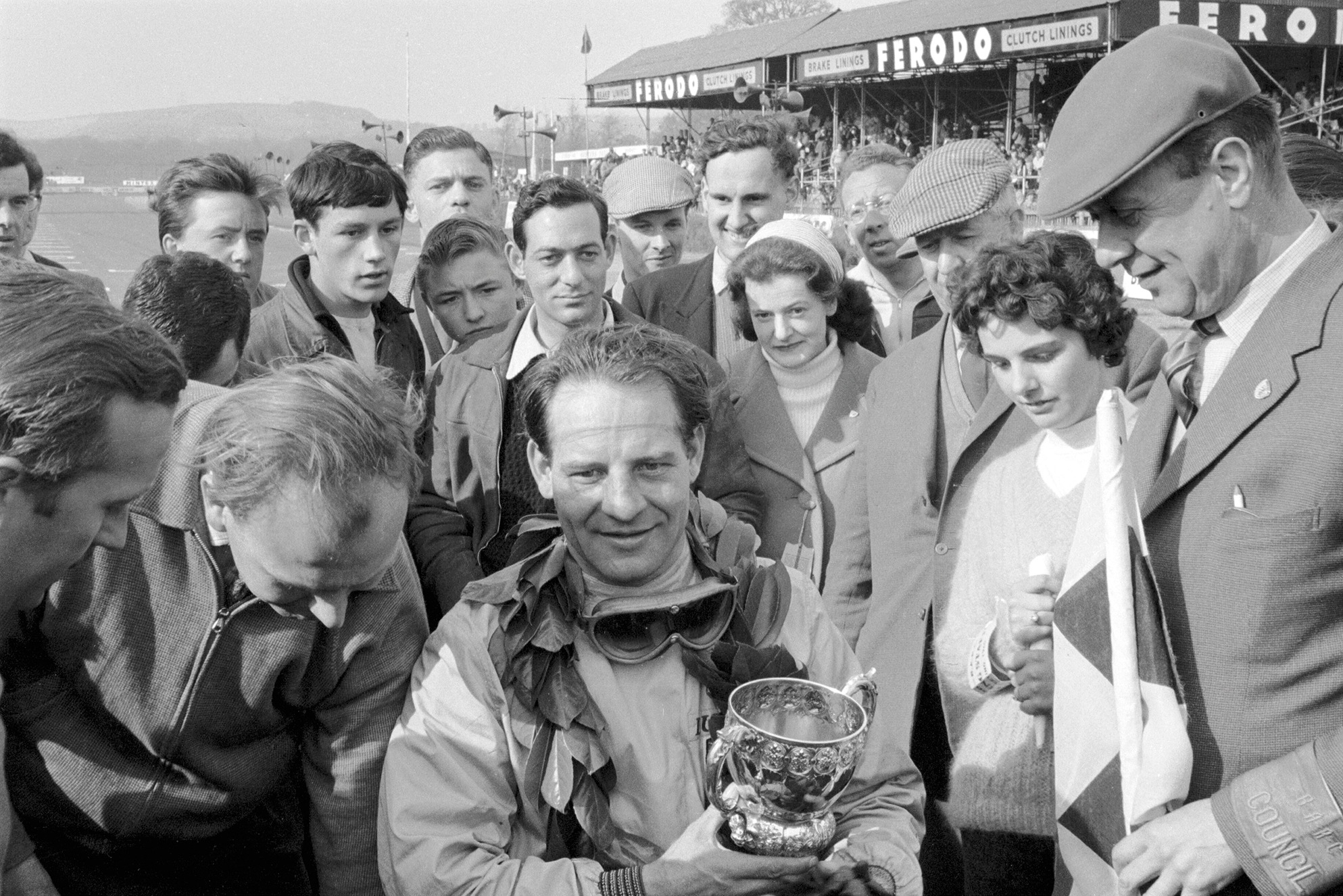
Innes Ireland claimed Lotus's first F1 victory in the non-championship Glover Trophy at Goodwood in April 1960
Photo by: GP Racing
In Lovely’s place stepped up larger-than-life Innes Ireland. Fourth on his grand prix debut at Zandvoort boded well, but then in an F2 race at Rouen Innes lost his brakes, hit a bank at about 100mph, launched through some tree tops and down a 60ft ravine. He escaped down a tree with his car stuck on its nose, engine still ticking over.
Like Hill, Ireland experienced a string of alarming failures. At AVUS, the Climax in his 16 dropped on to the road… then on the grid at Lisbon he noticed his front wheels were at odd angles. Never mind: nothing a spot of welding on the grid couldn’t fix. More welding was required at Monza, where the use of the lethally bumpy banking led to multiple cracks in the 16’s frame. In the race, he sensed something was wrong: the chassis was breaking in two. But with Hill off to BRM, Innes was still game – especially with the promise of what was to come. Elite production had properly kicked in and a move in October 1959 to a new factory in Delamare Road, Cheshunt showed intent. Time to take a proper crack at F1 and knock Cooper from its perch.
Chapman always said the 1960 type 18 was his first true F1 car, although the boxy design served as a production Formula Junior and F2 as well. Ace draughtsman Len Terry had been recruited and quickly improved the rigidity of the 16, and those lessons – plus the constant stream of Chapman experimentation that pock-marked those first two F1 seasons – all went into the 18. Fully clothed in Williams & Pritchard glass fibre, the car mimicked the world title-winning Coopers in pitching its Coventry-Climax from the nose to behind the driver’s shoulders, but that was where the comparison ended. When its tightly fitting skin is removed, the huge 22-gallon fuel tank positioned over the driver’s legs startles modern eyes (and probably period peepers too). But with a second 9.5-gallon tank wrapped behind the driver, the whole fuel load was stored within the wheelbase to stabilise handling and weight distribution. The 18 moved the game on and the penny quickly dropped for everyone.
The new car made its debut in Junior guise at the 1959 Boxing Day meet at Brands Hatch, before an aluminium-bodied prototype F1 headed for Argentina – where Ireland would carry Lotus to the lead of a GP for the first time, before inevitable gremlins set in. He finished sixth with a shattered brake disc and only one wheel steering properly, but the point had been made in more ways than one. On the flight home, John Cooper and Jack Brabham plotted a direct response to the new threat from Cheshunt: the T53, forever after known as the Lowline.

The Lotus 18, which Chapman said was his first proper F1 car, was a game-changer for the team
Photo by: GP Racing
Back in England, Ireland scored a first F2 win for Lotus at Oulton Park, then 16 days later caused a sensation at Goodwood which confirmed Cooper’s worst fears: Innes defeated, of all people, Stirling Moss not once, but twice, in both F2 and F1. At least it gave the world’s most famous racing driver a good look at the little Lotus from the best possible vantage point – and he immediately told his friend and team patron Rob Walker to place an order, with a heavy heart. Stirling liked ‘old man’ Charlie Cooper and his son John, and remained wary of ‘Flash ’Arry’ Chapman. But with fuel sponsor clashes blocking his path to a Cooper Lowline, Stirling knew he needed an 18 to end his world championship hoodoo. Coopers were more comfortable to drive, he’d say – but the knife-edge, fragile Lotus was faster.
For Lotus this bright and shiny start to the new decade was about to be swamped in gloom. Brabham hit back at Zandvoort, before F1 arrived at the horror story that was Spa 1960
Ireland rubbed it in with victory at the International Trophy, but Moss and Walker had their 18 all ready to go for Monaco. Finished in the Scots whisky heir’s smart blue with white stripe, it would be Stirling’s 18 which would beat the works cars to the punch, claiming a remarkable straight-out-of-the-box first world championship grand prix victory for the marque, at the most famous race of them all. But for Lotus this bright and shiny start to the new decade was about to be swamped in gloom. Brabham hit back at Zandvoort, before F1 arrived at the horror story that was Spa 1960.

Alan Stacey (right, with Chapman, Innes Ireland and Jim Clark) was one of the casualties of Spa 1960
Photo by: GP Racing
First, a lost wheel caused by hub failure sent Moss into a high-speed crash in practice, leaving him with broken legs, pelvis and back – and another title chance lost. Almost simultaneously Mike Taylor was severely injured when he crashed the Argentine aluminium car into trees when the steering-column weld failed. In the race worse was to follow. Young works driver Alan Stacey, a remarkable character who made it to F1 with an artificial lower right leg, perished in another 18 – although this time through no fault of his car. It’s thought he hit a bird. And then promising Chris Bristow died in another grizzly accident, driving a Yeoman Credit Cooper. As Brabham scored a joyless victory, the F1 novice who finished fifth in just his second GP blanched in abject shock. Jim Clark was always brilliant at Spa, but no wonder he always hated the place.
In the wake of the Belgian tragedies, Brabham and Cooper swept to second consecutive world titles. But the momentum was shifting to Lotus. Joining ‘handy’ Scottish sheep farmer Clark was another somewhat better-known F1 newcomer.
It beggars belief today, but as John Surtees embarked on his four-wheeled racing career he dovetailed this new pursuit with sixth and seventh world motorcycle crowns (350cc and 500cc), and the first motor race for cars he saw was the one he was driving in, when his Ken Tyrrell-run Cooper Formula Junior was narrowly beaten by Clark’s Lotus at Goodwood. Razor-edged Chapman was quick off the mark to sign him, and at the British GP – just his second F1 world championship start – Surtees finished second. He then led at Oporto, until he was caught out by the street track’s tramlines… A new F1 star was born.
Now with both Clark and Surtees on his books, Chapman revelled in an embarrassment of riches – but with a characteristic lack of consideration for Ireland, who won his third non-championship F1 race of the season at Snetterton. That Goodwood double must have seemed a distant memory by season’s end when Moss, who had somehow returned to race in Portugal just eight weeks after Spa, beat him at Riverside for the US GP (yes, Rob Walker claimed Lotus’s second grand prix win as well as its first). Nose out of joint, Innes fell out with Surtees, a sensitive soul who resolved the dispute by walking out on Chapman.
John would acknowledge in hindsight it was naive. Then again, Surtees had no way of knowing that in the early throes of his first season he’d just stepped away from the best F1 car advantage he’d ever experience (even if the thing was too bloody fragile).
But could John really have continued as Chapman’s muse? No way. Both were too prickly, too head-strong to have co-existed in the same space for long. Instead, the boss’s beam fell directly on the relatively placid, almost super-naturally talented Clark. It was the relationship that would define a decade.
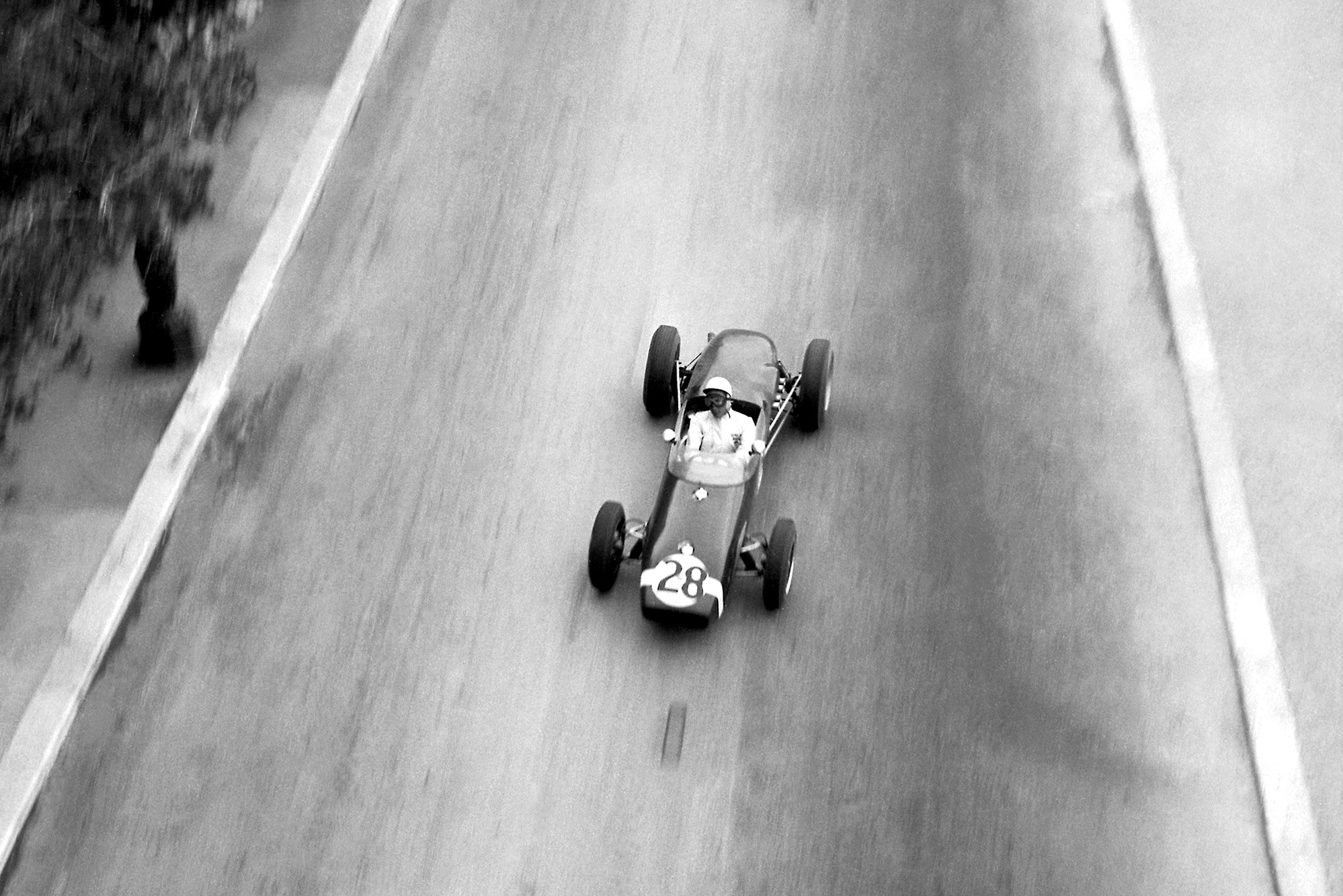
Stirling Moss took the first world championship F1 victory for Lotus at Monaco, in a privately entered 18
Photo by: GP Racing

How Ratzenberger beat the odds to realise his cruelly short-lived F1 dream

F1 uncovered: A weekend behind the scenes with a chief mechanic

When McLaren was pipped by Red Bull in a modern F1 classic

The big opportunity Sainz’s Williams switch affords to F1’s latest centurion

Inside the science of F1 fuel

How F1’s plan for rotating races could look in practice

The early decisions that set Sauber’s rookie for success

How F1 media coverage has evolved in line with its subject

Acosta's long road to his maiden MotoGP win

MotoGP Austrian GP: Acosta finally claims maiden win

Great debate: Which circuit should host the F1 2026 finale if the calendar has to change?

Live: MotoGP Austrian Grand Prix updates as it happens
Subscribe and access Autosport.com with your ad-blocker.
From Formula 1 to MotoGP we report straight from the paddock because we love our sport, just like you. In order to keep delivering our expert journalism, our website uses advertising. Still, we want to give you the opportunity to enjoy an ad-free and tracker-free website and to continue using your adblocker.


Top Comments