


The themes to watch for the rest of F1 2026
As F1’s summer break comes to an end, we pick out the key plots to follow over the next four months and beyond

Mercedes getting its house in order
At the half-way point of the season, Kimi Antonelli leads Lewis Hamilton by 219 points to 169 in the drivers’ championship, while Mercedes remains in charge of the constructors’ standings with 379 to Ferrari’s 307. And yet there is a palpable sense that the team that appeared to kick off this season from a position of dominance has been losing its iron grip on the competition.
Both Antonelli and team-mate George Russell have lost high points-paying positions to engine failures – Russell while leading in Canada, Antonelli while running second at Barcelona. The team believed it had identified the cause of both these and separate-but-related issues that had affected Merc customers McLaren and Williams. It rolled out a ‘fix’ in the form of a new battery architecture and control electronics from the Austrian Grand Prix weekend, along with a host of reliability-related changes within the power units themselves.
On the chassis side, Mercedes has only introduced one major performance step, with a substantial aerodynamic package at Montreal in May. At the same time it has annoyed Ferrari by openly questioning how the Maranello team has been able to apply more frequent update packages while remaining within the budget cap.
So, Mercedes has to navigate some challenging scenarios in the remaining months, including how hard to push on aero upgrades as the time comes to pivot towards next season, and how to manage the internal competition between its drivers. Antonelli has the upper hand so far in terms of how he is able to drive to optimise electrical deployment of the power unit. But questions remain over how much of the pace deficit between him and Russell is down to Russell’s driving technique, and how much is a consequence of software.
The heavy but invisible hands of engine-management algorithms continue to be a hot topic, especially after a software glitch scuppered Russell’s Hungarian GP. But penalties could also exert an influence on the championship battle: Antonelli is now on his fourth new engine, Russell on his third…
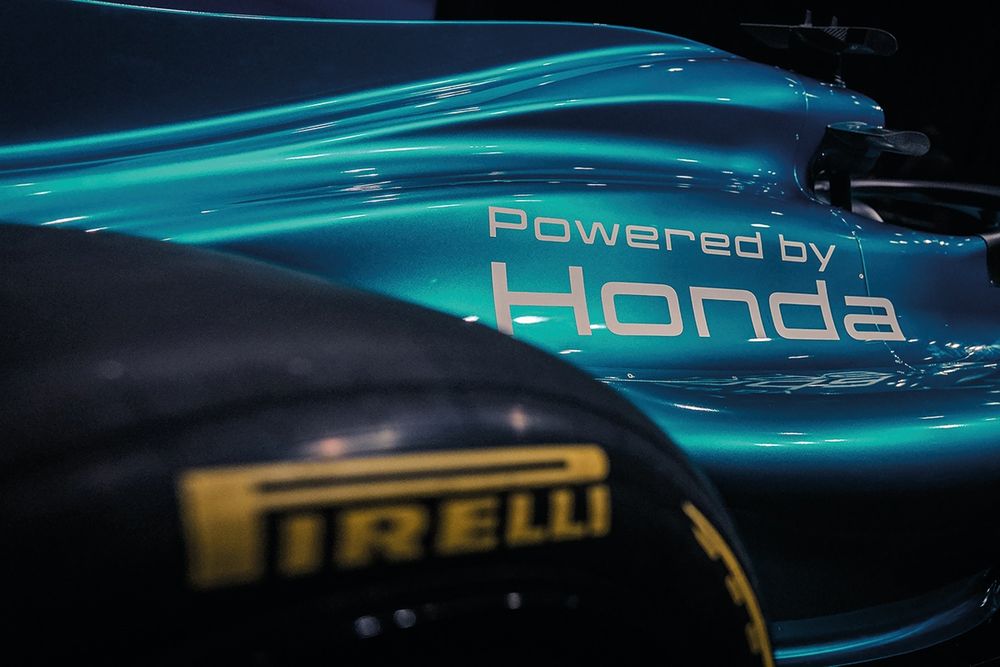
After Aston Martin's chassis upgrade in Hungary, it is Honda's turn for an update in the Netherlands
Crunch time for Aston Martin and Honda
At the last round before the summer break, the beleaguered Aston Martin team finally unveiled the long-awaited revamp of its troubled AMR26 chassis. A Honda engine upgrade is due for introduction at the forthcoming Dutch GP.
Much has been riding on this. Both chassis and power unit have fallen well short of expectations, particularly those of team owner Lawrence Stroll, who has been pursuing a money-no-object approach to recruitment in recent years. The prospect of a car with the authorial hand of Adrian Newey upon it, combined with Honda power, was mouth-watering given that this combination delivered four consecutive world championships with Max Verstappen.
But the car was late to the pre-season Barcelona shakedown in January and barely completed a handful of laps without breaking down. Unreliability and lack of speed has been a persistent theme since then. Autosport understands that a furious Stroll was all for wielding the axe (again) on his technical team after the season opener in Australia, and was only mollified by the assurance that a nose-to-tail revision of the car would improve it.
Make no mistake, Aston Martin’s performance trajectory over the second half of this season will determine the immediate future of many people drawing a salary at the team’s Silverstone campus. There was an immediate uplift in Hungary, but moving from the back of the grid to the lower midfield isn’t going to float Stroll’s boat. In the coming races it needs to demonstrate that it can optimise the new package and avoid making the same mistakes in future.
Honda’s issues stem from an underpowered and unreliable internal combustion engine, and a hybrid system compromised by a fragile battery and the electrical motor’s unusual location in the chassis, ahead of the engine (a choice made at the request of Newey’s team, for aerodynamic packaging reasons). For its own pride it needs to show progress urgently.

Verstappen is signed, sealed, delivered at Red Bull - further moulding the team around him
Photo by: Red Bull Content Pool
Max Verstappen bending Red Bull to his will
Among the more tiresome aspects of this summer’s ‘silly season’ has been the endless speculation over where Max Verstappen might move to, even though in reality his options are starkly limited. It has long been a negotiating tactic of Verstappen’s management team to plant stories in the compliant Dutch media about him potentially exercising performance clauses in his contract to move elsewhere, particularly since Red Bull’s dominance started to slip in 2024. Treat ’em mean, keep ’em keen.
But it’s not clear where Verstappen could go. Not that other teams wouldn’t love to have a multiple world champion of his calibre – it’s just that most of the top ones are broadly satisfied with the drivers they have, as evinced by the length of their contracts. Most of the ‘silly season’ stories published this summer have been driven by the requirement for various outlets to attract attention on social media or drive traffic to their websites.
The most egregious example of this was the narrative linking Verstappen with McLaren, where Lando Norris is understood to be out of contract at the end of next season. Oscar Piastri is contracted until the end of 2028. Nevertheless, there are still those in the F1 paddock so wet behind the ears that they genuinely believe someone having a coffee in someone else’s motorhome – in full public view – constitutes serious contractual negotiations.
Verstappen’s preference is to stay with Red Bull but he and his people feel some complacency has crept in over the past couple of seasons, resulting in a drop in competitiveness. He also remains unimpressed with the current F1 regulations.
It’s understood that ‘Team Max’ is pushing for equity in the team as part of the negotiations for his next contract renewal. Publicly the pressure is on Red Bull to do better.
However, on the eve of the Dutch GP, Red Bull announced Verstappen had re-signed with the team until the end of 2030 - duly ending said speculation. But the details of the deal will be key to hush the same chatter repeating in the future.

“We will not be satisfied until we go back to having a race car that has the pace to win on merit,” said team boss Laurent Mekies ahead of the summer break. Long-term, that’s the only way to keep Verstappen on side.
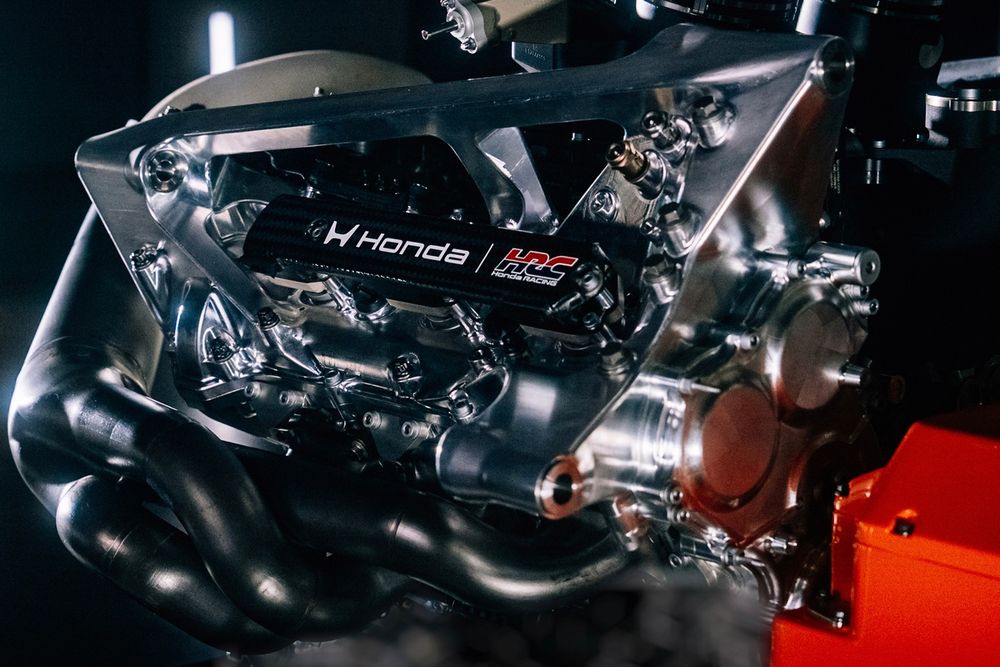
F1's future power unit regulations are the next political hot potato
Photo by: Honda
Next-generation power politics ramping up
Whether Formula 1’s next-generation power units are introduced in 2031, after the current Concorde Agreement expires, or a year earlier, as FIA president Mohammed Ben Sulayem is known to prefer, an agreement on the format is required by the end of this season to allow sufficient development runway. This, however, is pretty much all the stakeholders currently agree on.
It has become abundantly clear that the present formula, where power output is split nearly 50/50 between an electrical motor and the internal combustion engine, is fundamentally misconceived. What F1 and the FIA are trying to do is juggle the process of reversing out of this scenario while pushing for the adoption of a more racing-focused ruleset when the current one expires. This has led to some difficult conversations because F1 still needs the presence and engagement of the road car manufacturers who make the engines and own several teams – but neither the governing body nor the commercial rights holder wants these companies to dictate the format.

The early part of this season was dominated by wrangling over how to ameliorate some of the worst consequences of the new ruleset. In the coming months the stakeholders will be going at it over the next one. Ben Sulayem, for instance, is known to favour naturally aspirated V8s with negligible electrical input. Audi, at the other end of the spectrum, is wedded to turbocharging. It’s going to get messy.

McLaren was back on top just before the summer break - but can it stay there?
Photo by: Sam Bagnall / Sutton Images via Getty Images
McLaren getting back in the game
Victory for Lando Norris in Hungary was a powerful sign of McLaren’s progress after beginning the season with a car that was some way off the works Mercedes. There had been those who felt McLaren’s ascent to dominance from the mid-point of the 2024 season had been a statistical outlier given the pre-eminence of Mercedes and Red Bull-Honda in recent seasons. Granted, Mercedes never got on top of the chassis requirements of the ground-effect era, but its form early this season suggested its days of being beaten by its customers were over.
Through testing and into the season opener, McLaren joined Williams in expressing some disgruntlement over the transparency of communications with Mercedes AMG High Performance Powertrains. It was clear that there was a knowledge gap between the works team and its customers in terms of how to optimise the running of the new power units. But McLaren team principal Andrea Stella is a thoroughly pragmatic man who understands the importance of being inside the tent pissing out, rather than outside the tent pissing in.
McLaren’s Hungary win came on a weekend where the team applied another upgrade centred around a revised floor. The feeling has been that the MCL40 has been lacking efficient downforce compared with the works Mercedes, and isn’t as biddable in slow corners as Ferrari’s SF-26. But now it’s clearly in the ballpark.

More significant still is McLaren’s understanding of how to run the Mercedes power unit. It’s significant that after the Budapest race Stella made a point of publicly thanking Mercedes HPP for its ongoing cooperation. Certainly Norris benefited on his pole position lap from emulating the Mercedes trick of lifting off the throttle shortly before the timing line to bypass the mandatory electrical ramp-down phase.
Norris is 91 points behind Antonelli in the title race. Verstappen’s late-season renaissance last year tells us that such gaps aren’t insurmountable…

Over the closing part of the season each team must weigh up when, and by how much, to switch focus to 2027
Photo by: Sam Bagnall / Sutton Images via Getty Images
The development quandary
To pivot, or not to pivot – that is always the question in F1. In the budget-cap era that point where a team definitively switches development focus from this season to the next has become a much more difficult choice.
When a team identifies baked-in conceptual shortcomings with its car, the logical choice is to abandon it early and focus resource on avoiding that on the next one. Easy enough for the midfielders or those at the tail of the grid – under the more equitable terms of the post-2020 Concorde Agreements, these teams are no longer beggared if they score only a handful of points or none at all.
For the frontrunners there also comes a time to switch off the taps on the current car and preserve their competitive position for the season to come. But if the gaps are narrowing, that decision is less clear-cut.
Mercedes isn’t looking quite as dominant as it was at the start of the season, despite that effective upgrade package applied in Canada. And its drivers are facing the prospect of picking up grid penalties for going beyond the annual quota of power unit components. Ferrari, meanwhile, has been busy applying frequent upgrades to its cars – as well as a power unit update facilitated by the first Additional Development Upgrade Opportunities (ADUO) audit.
Uncertainties therefore remain. Has Ferrari shot its bolt budget-wise? If so, Mercedes doesn’t have to hurry its development strategy.
“We just need to be really strategic about when to bring the upgrades,” said Merc boss Toto Wolff in Hungary. “When do we think they will have the biggest impact on performance, rather than just throwing it in at every grand prix like in the past.”
Some small but potentially significant aerodynamic changes are due for introduction next year, coupled with the more widely publicised tweaks to the power units, which will tilt the distribution of output from nearly 50:50 between the internal combustion engine and electrical motor to 58:42. That adds yet another incentive to get out of 2026 development early.
This article is one of many in the monthly Autosport magazine. For more premium content, take a look at the September 2026 issue and subscribe today.

The second half of the 2026 F1 season is intriguing poised
Photo by: Andy Hone/ LAT Images via Getty Images


How F1 let a golden opportunity slip at Sepang

How the Bahrain GP in Malaysia exposed Red Bull’s hidden resurgence

How Verstappen’s two subtly different laps beat Hamilton in Bahrain GP in Malaysia qualifying

Why Mercedes' upgrade is still a "big question mark"

F1 Bahrain GP in Malaysia: Leclerc leads second practice from Hadjar

LIVE: F1 Bahrain GP in Malaysia updates - FP3

F1 Bahrain GP in Malaysia: Verstappen dominates for pole from Hamilton

LIVE: F1 Bahrain GP in Malaysia - Verstappen wins from Antonelli, Russell DNFs after late engine failure

Six champions crowned, new winners and lap records fall at Castle Combe

How Evans made WRC history in Hollywood blockbuster Sardinia decider

The dire consequence of Russell's Bahrain GP in Malaysia retirement

Whales glide to victory in Equipe Silverstone Super Sprint event
Subscribe and access Autosport.com with your ad-blocker.
From Formula 1 to MotoGP we report straight from the paddock because we love our sport, just like you. In order to keep delivering our expert journalism, our website uses advertising. Still, we want to give you the opportunity to enjoy an ad-free and tracker-free website and to continue using your adblocker.


Top Comments