


F1 needs to stop using half-measures
Formula 1's constant tinkering - and subsequent criticism from stakeholders - does nobody any favours, writes GLENN FREEMAN, who argues that it should either return to its roots or actually embrace change
Fernando Alonso's right: in Formula 1 "we pretend to change".
The significance of so many drivers speaking their minds last week during the final F1 test should not be overlooked. Until now, the majority of the talking and/or criticism has come from other senior figures in the paddock and disgruntled fans.
Yet last week, we had drivers - including world champions - speaking out against the shambolic way the qualifying shake-up has been handled, the new format itself, the potential introduction of the halo cockpit safety device, the increased restrictions on radio traffic for 2016, and the general direction of F1.
Lewis Hamilton battled with himself not to say too much when he spoke to the media at Barcelona; cutting himself off mid-sentence when questioning the radio ban, declining to give "a soundbite" on the halo (before slating the idea on Instagram that night), and very carefully answering a loaded question on if F1 is broken, lacking direction or in rude health.
But no matter how careful he was, responding with "I do agree with the first two things you said" sent out a clear message from F1's reigning world champion.
Of note, in the wake of so much driver criticism of F1 last week, Autosport understands the subject of giving the drivers a say in major decisions was brought up at last week's World Motor Sport Council. The idea met little support, but would some driver representation actually be a way to get some younger blood involved in the decision-making processes?
The counter argument is that drivers would simply be another voice backing the ideas or policies already supported by their own teams, and they would only add to the 'too many cooks' problem that plagues F1's decision-making already. Plus, how many of them would actually want to attend the meetings?

Almost lost in the uproar when the qualifying saga first gained momentum was the reasoning behind it. Far from it simply being the teams deciding that a relatively successful part of the weekend format had to change, the meddling was a result of pressure from race promoters to spice up the show.
This is where F1 has tied itself up in knots. It has spent 30-odd years promoting itself as a form of entertainment, charging event organisers and TV broadcasters ever-increasing fees for the privilege of hosting its spectacle.
That's all fine, and it's made many people very rich over the years, but if you sell yourself as a show, you can't stick your heads in the sand when the people paying through the nose to watch - fans included - decide they are not getting their money's worth.
In that respect, Bernie Ecclestone's desire to do something to "muddle up the grid so the guy that is quickest in qualifying doesn't sit on pole and disappear" makes sense. Ecclestone is, effectively, the man charging the high prices, so he'll be getting it in the neck from disgruntled promoters.
No matter how outraged fans might be by his comments, at least he's stating a clear position. It's the rest of F1 that doesn't know what it wants to do.
In an increasingly cluttered entertainment market - the days of F1 occupying a quarter of the Sunday afternoon TV schedule in the UK as it did when there were just four terrestrial channels are long gone - if you want to be in the mainstream, adapt or perish.
F1 isn't just competing with the hundreds of satellite TV channels that now exist, but it has to fight for its place against 21st century behemoths like Netflix, YouTube and smartphones to grab people's attention.

But tweaking the qualifying format, messing about with tyre compounds and adding DRS are all ideas that pay lip service to the idea of fundamental change. As Alonso describes it, F1 is pretending. It's afraid of going as radical as Ecclestone wants, certainly.
Given the amount of uproar these half-measure changes have created in recent years, there's a very strong argument for F1 in fact going in the other direction and heading back to being what many consider to be a 'pure' sporting contest.
In many ways, this would be better than the current method of tinkering. If you got rid of what some people consider to be 'gimmicks' the overall audience may go down, but F1 would be left with a dedicated, highly-engaged fanbase, and it could become a more appealing platform for manufacturers that are currently put off by the circus-like environment F1 seems to operate in.
Perhaps F1's modern-day place in the world is as a smaller entity, but one closer to its roots?
To some that will sound like bliss, and, even if it did go back to that and more of the races were 'boring', I'd still watch. If you can sit through a season like 2002 and not miss a race you can sit through anything.
Let's face it, plenty of people consider the current F1 product dull, even with the half-hearted attempts of adding variables to mix things up. So maybe it's time to stop chasing the much-valued casual fan and get back to servicing those whose support is unwavering, and ultimately are prepared to buy tickets to fill the grandstands rather than catch a race on TV during some channel-hopping.

There's one big problem with all of that: it's not going to make everyone as rich as they are now.
Even if the teams got the equal distribution of payouts from Formula One Management they crave, if F1 gave up on the 'entertainment' factor they'd be getting bigger pieces of a smaller pie. So perhaps that's why they've tried to mess around with the periphery of the F1 product: hope against hope you can do enough to keep audiences up, but make the changes small enough that F1's identity - and its hardcore fanbase - remains in place.
The most frustrating thing about how these changes are handled is the pussy-footing around the point. Promoters demand change from F1, and after lots of meetings, we end up with a half-baked qualifying change that everyone hopes will mix things up.
Well, if you want to mix things up, why not just get on with it and make it happen? The aim right now seems to be to create a set of circumstances where the chances of a random result are increased. Is that any less artificial then reversing the grid?
What if grids were decided based on reverse championship order, with rookies starting at the back for the season-opener. You might get a car out of position at race two or three if someone quick has a DNF early on, but things will quickly shake out.
At least there would be a method behind that, some consistency for people to follow from race to race, and a relatively fair way of creating the mixed up grid that has apparently become the aim.
Simply put, either make some proper changes and commit to them, or leave F1 alone. Enough of the half-measures.


F1 2019 game includes official driver transfers for first time

F1 testing: Toro Rosso's Albon on top, Mercedes starts to show pace

F1 testing: Raikkonen sets fastest lap so far, tops third morning

F1 testing: Leclerc ensures Ferrari fastest again on second morning

F1 testing: Ferrari and Sebastian Vettel dominate first morning

Michael Schumacher's top 10 F1 victories
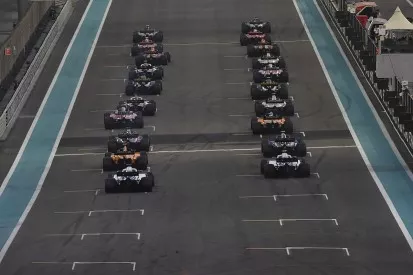
F1 offers hints at grid penalty alternatives in new survey to fans

Autosport readers' final F1 2018 driver ratings ranking revealed

Why the WRC's new BBC broadcast deal matters

MotoGP Austrian Grand Prix: Martin snatches pole position

The Egal has landed – again

Mercedes aims to end pole drought with upcoming Malaysia F1 upgrades
Subscribe and access Autosport.com with your ad-blocker.
From Formula 1 to MotoGP we report straight from the paddock because we love our sport, just like you. In order to keep delivering our expert journalism, our website uses advertising. Still, we want to give you the opportunity to enjoy an ad-free and tracker-free website and to continue using your adblocker.


Top Comments