


Formula 1 technical insight: 2015 Lotus E23
The digital renders released by Lotus of its 2015 E23 Formula 1 car allow us to already make some observations about the new challenger

Every new car this year will be assessed on its nose shape due to the new nose tip rules. Lotus has evolved the 2015-style nose it tested late last year to create a short narrow nose.
This shapes the two mandatory cross sections into the narrowest and highest possible shape to allow the maximum airflow around and under the nose.

Rather than creating a thumb-like tip to the nose, instead there is a step under it, which is similar to Lotus (then Renault) nose cones from 2009-2010.
This should work in co-ordination with the front wing section to create some downforce.
Although further rules for the area around the front end were designed to create a sloping front to the chassis, Lotus appears to have faired this in and created a high flat top to the chassis.
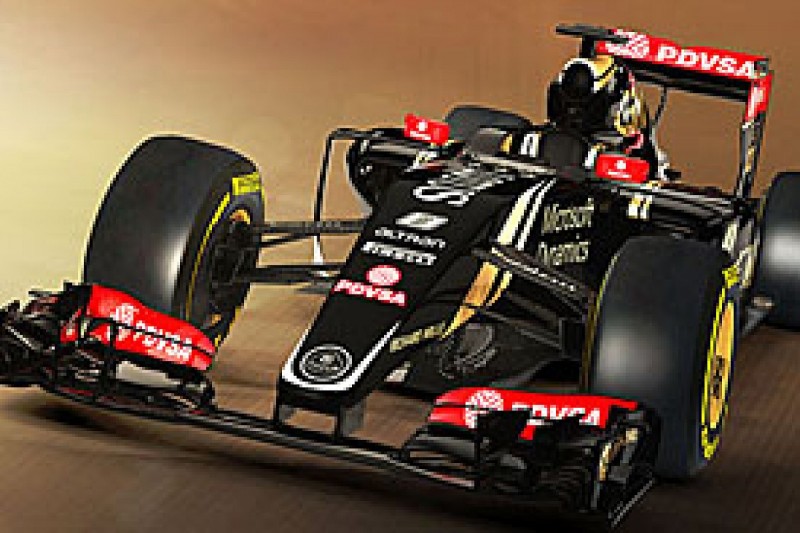
This height is visually exacerbated by the low-mounted front suspension, where the top wishbone and push-rod are not mounted as high as we have seen on the Williams, for example, which could be an effort to create more mechanical grip at the front of the car.
Aside from the novelty of the new nose, it's the roll-hoop inlets that catch the eye: the usual airbox inlet is flanked by two additional inlets.
The bulbous shape of the engine cover behind suggests they are ducts to feed an oil cooler mounted beside the engine, a solution adopted by Toro Rosso last year and planned by Marussia for this year.
Indeed, Lotus had the base plates for these inlets fitted to its car late last year but the inlets were never affixed to them.
Having coolers mounted this way means the sidepods can be smaller, although the bodywork looks bulkier on the new Lotus as it features two large exits in a similar style to McLaren's 2014 car.
Allied to the roll-hoop inlets this creates a narrower sidepod low down, which frees up airflow over the diffuser for more downforce.
Inside this engine cover is the Mercedes power unit, a first for the team, having always had strong links with Renault, dating back to the Benetton days.
Running this power unit already gives the team a huge performance step from 2014, which was a year to forget for the Enstone team.
Share Or Save This Story

The perfect Formula 1 car from 2016

F1's new development war has already begun

F1 teams still pushing with an eye on 2017


The key moments in Renault's F1 history as it bids farewell

What F1 history tells us about three-way title deciders

Was short-lived Lotus 76 simply a lame duck or never given a fair crack of the whip?

Motorsport UK and BRDC unite to develop young British drivers

Tsolov or Lawson? Red Bull and Racing Bulls face a tough decision over 2027 F1 line-up

F1 drivers to take to Lego minicars at British GP

Gresini signs Mir and Holgado on two-year MotoGP deals
Subscribe and access Autosport.com with your ad-blocker.
From Formula 1 to MotoGP we report straight from the paddock because we love our sport, just like you. In order to keep delivering our expert journalism, our website uses advertising. Still, we want to give you the opportunity to enjoy an ad-free and tracker-free website and to continue using your adblocker.


Top Comments