
How the Dolomite became an unlikely Capri-slayer
The Dolomite Sprint was a potent giantkilling weapon during the 1970s in the British Saloon Car Championship, now known as the BTCC. Tin-top legend Andy Rouse explains how it became such a force

This was a time for Britain’s touring car championship to go insular, to move away from the high-cost international regulations of the time towards an indigenous new ruleset. It led to an explosion in the number of manufacturers and car models on the grid, albeit with little in the way of factory representation, and a lot of drivers who were hardly household names.
No, we’re not talking about the switch from Super 2000 to NGTC rules in the early 2010s. We’re harking back, instead, to the rejection of Group 2 regulations in favour of Group 1½ for 1974.
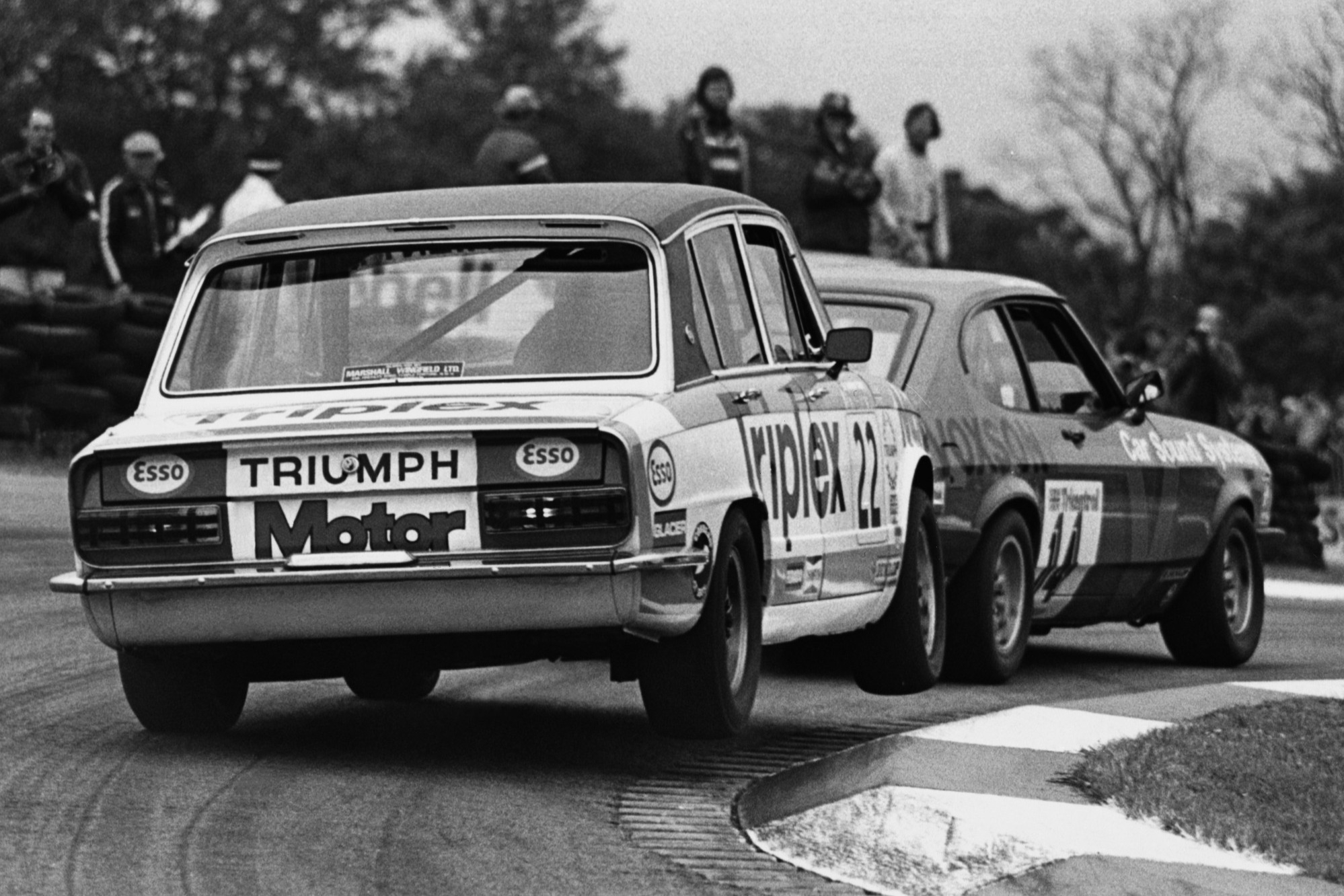
One works team, albeit initially not on an overt basis, was British Leyland’s Broadspeed-run Triumph Dolomite Sprint squad. The Dolomite would go on to be the class of the 2.5-litre division from 1974-78, and in the last two of those years would become a giantkilling multiple overall race winner, humbling the predominantly Ford Capri-based top class. Yet somehow, when the lists of great cars from the history of the BTCC are drawn up, it rarely features.
Broadspeed founder Ralph Broad had done his homework. In the Group 2 era he was charged with running Ford’s effort in the series. The youthful Andy Rouse was not only Broadspeed’s competitions manager, but had won the 1600cc title in 1973 at the wheel of one of the team’s Escorts. Broad was among those charged by governing body the RAC with coming up with a new set of regulations that would make the series more production-based.
According to Martin Thomas – who was known for his ability to write rules, had raced Group 2 Chevrolet Camaros, and was working with preparation ace Bill Shaw – the motive was to prevent the championship becoming too production based, against the backdrop of the Group 1-based Production Saloons category that had been introduced two years earlier by Brands Hatch impresario John Webb.
“Ralph Broad, myself, the RAC and Bill Blydenstein [who ran Vauxhall’s DTV team] actually formulated the rules, because we weren’t going to allow ‘Webby’ to put in production cars as a national series supporting things such as the British Grand Prix,” explains Thomas, who went on to be a class winner in the series in a Shaw-built Dolomite in 1976. “We said, ‘No, come on, it’s an international formula.’ That’s why it was called Group 1½ – the half was between 1 and 2!”

Broad had identified the Dolomite Sprint as a potent weapon and, after meetings with British Leyland MD John Barber, was given a contract in November 1973 to develop the car.
“I remember when we got the Dolomite Sprint for evaluation – it was chosen on the basis that it was the only 16-valve two-litre engine that was available at the time,” recalls Rouse. “I was running the racing workshops at Broadspeed at the time, but when we delved into the ‘Dolly’ a bit further there were quite a few problems that needed to be fixed to make it into a good race car. There was all sorts of trickery that needed to be done.”
In a production-based formula, that’s easier said than done. In an interview with Autosport’s Ian Phillips in October 1974, Broad proudly proclaimed: “I can seriously say, with my hand on my heart, the Dolomite Sprint is the most legal car I have ever built in my life.” He was referring to the car being within the spirit, as well as the letter, of the regulations, and then discussed the suspension format.
"The rear wheelbearings wouldn’t stand more than half a day’s testing before they clapped out, so we hid another bearing down the axle tube, and that took the load off the outside bearing" Andy Rouse
“Obviously you cannot change the suspension, you must retain the same basic form, but when we first went testing we rose-jointed the whole lot to eliminate the flexibility that you get in the rubber bushes used on the standard car,” continued Broad.
“Then we gradually developed all the rubber suspension component parts, trying different stiffness and hardness of rubber. Eventually we were lapping within 0.5 seconds of the time using rose-joints. The regs state quite clearly that you cannot use rose-jointed suspension – it’s illegal, even though some people do.”
Today, when asked about how the handling problems of the standard Dolomite were cured, Rouse lets a very old cat out of the bag: “There were a few rose-joints hidden in the rubber bushes! That fixed that.”
Not just this, but “things like the rear wheelbearings wouldn’t stand more than half a day’s testing before they clapped out, so we hid another bearing down the axle tube, and that took the load off the outside bearing, and it would run OK then”.
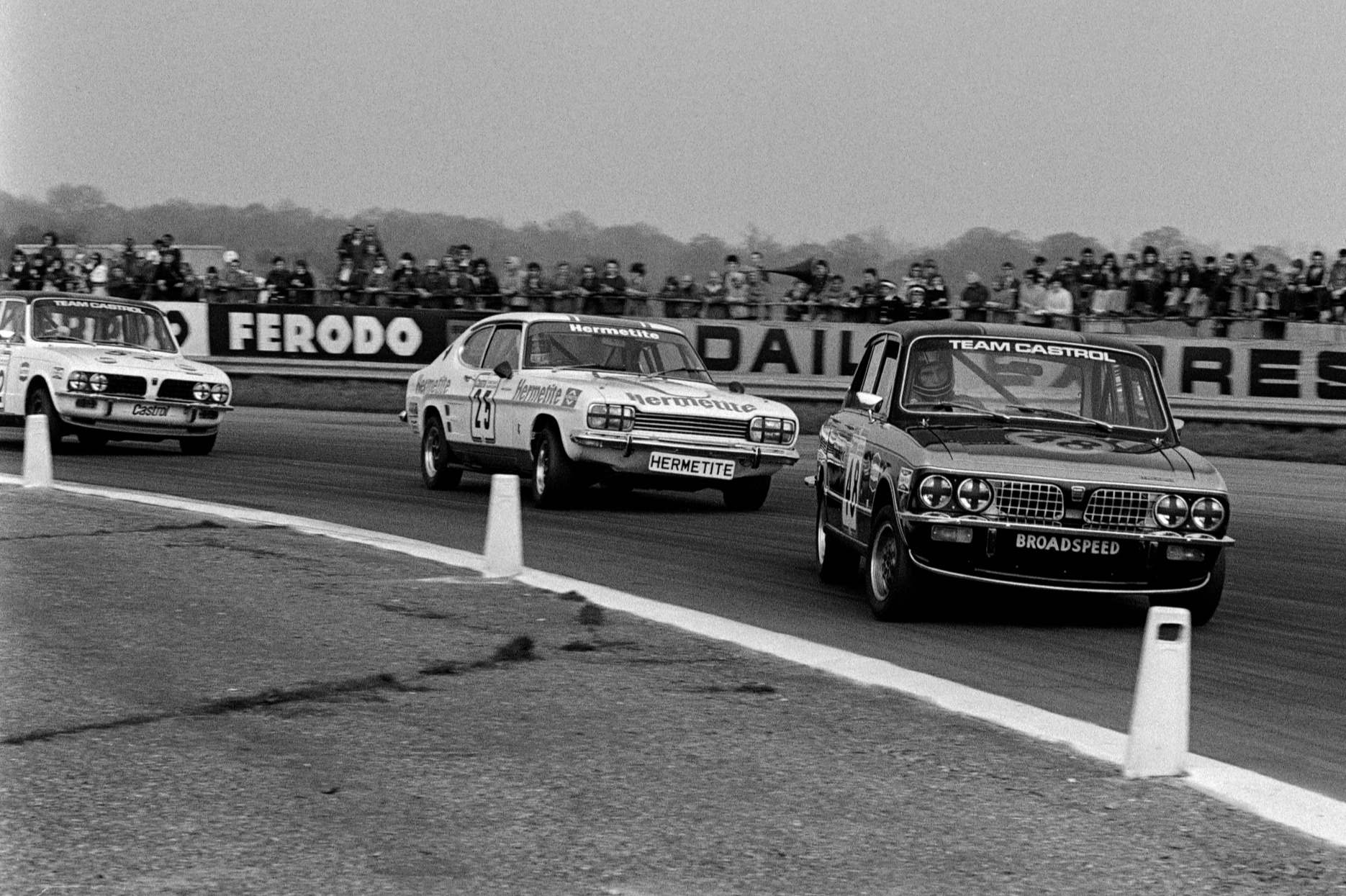
But what Rouse describes as “the best tweak on the car” was its overdrive function, which turned the Dolomite’s gearbox from a four-speeder to five – and six when Rouse and team-mate Tony Dron contested the Spa 24 Hours on the old nine-mile layout.
PLUS: Turkington and Rouse, the BTCC's greatest in conversation
“We rigged it up so you could just flick the dip-beam switch on the left-hand column stalk, so we had like a paddle-shift,” he says. “You just flicked the stalk and it changed gear, so you had first, second, third, overdrive third, which was effectively fourth, and into fourth which was fifth.
“That was a good tweak because you could powerslide it out of the corner and flick the switch, and it would change gear without you lifting off. It was way ahead of its time! On the road car it was on top of the gear knob. But on the dip switch you’d just flick it as your hand went by.”
As beautifully illustrated by the photo above of Rouse at Silverstone’s Copse Corner, the Dolomite rewarded a sideways driving style.
“It was always an oversteering car, because the front roll centre and the rear roll centre were vastly different,” says Rouse. “The rear roll centre was very high, and that suited me well because I’d learned to drive on grass tracks. So I didn’t mind if it oversteered, and that was the quickest way. Other people tried to set it up so it would understeer, but it was never as quick. You just had to learn to drive it and live with its foibles.
“The worst thing about the car was the brakes. It had a small single caliper on the front with a 10-inch solid disc, so we ended up cutting brake pads out of aeroplane brake pads. We used to buy those in, and cut them out to fit in the Dolomite Sprint, and instead of the disc being cast iron it was high-carbon steel, with holes and slots drilled in, so then the brakes would work reasonably well.
“But even so the fact that it had no brakes didn’t handicap me really, because with grass track cars you never used the brakes – you just flicked it sideways and slowed down that way. So again, I didn’t mind the fact that the brakes were a bit iffy. I just drove around the problem.”
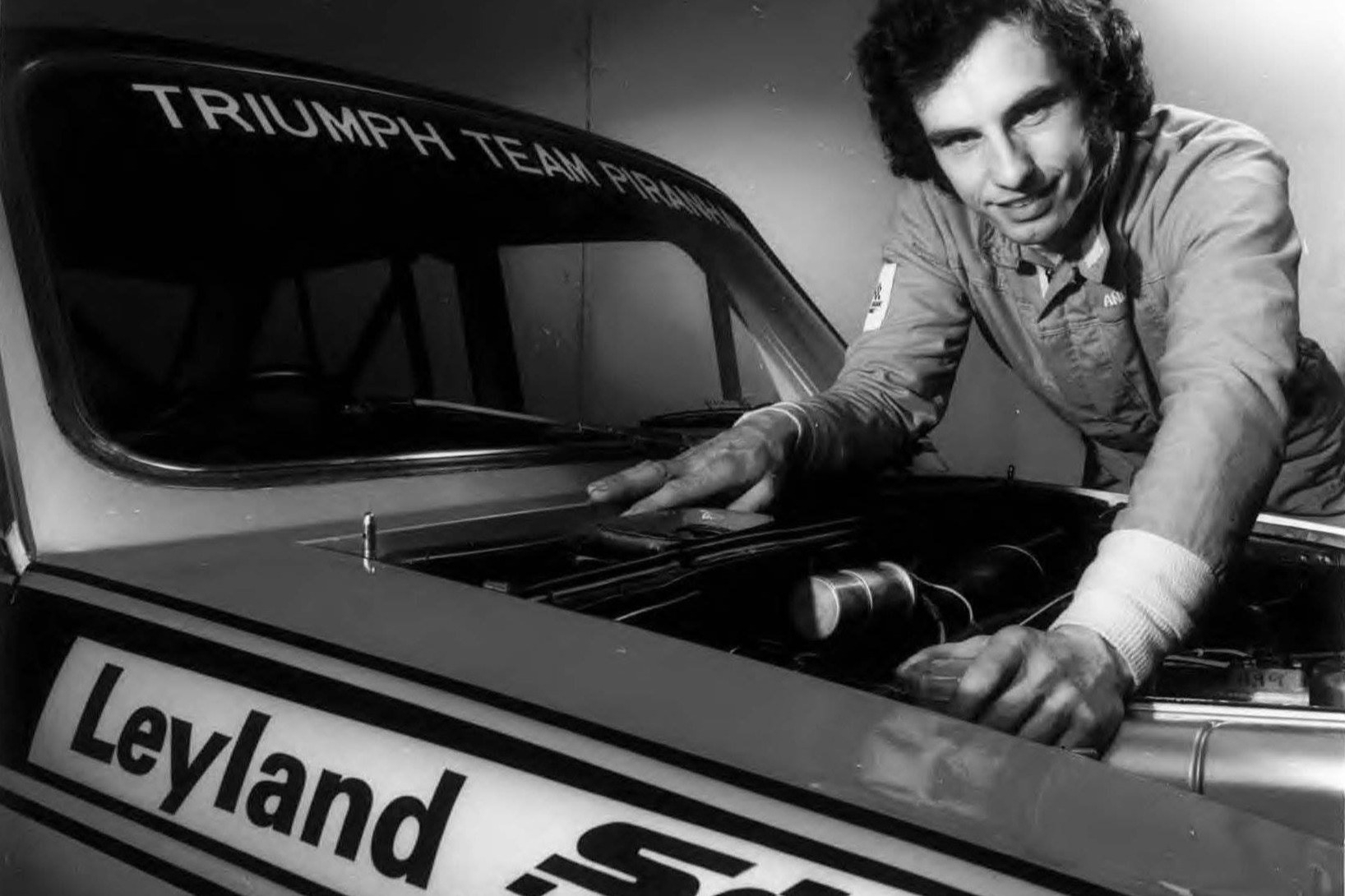
There were teething problems with the overdrive from the very first race at Mallory. BL had a policy of partnering Rouse with a motoring journalist, and Dron, then struggling to break into a role befitting his aspirations as a race driver, got the role for 1974. He lay second to Rouse in that opening round when the overdrive played up and the ’box downshifted, buzzing the revs beyond 10,000 – way above the 8500rpm maximum for 175bhp from the blueprinted engine. Predictably, it exploded.
While Dron remembers the cure to this problem being to set the overdrive switch in a hard-setting gel, Rouse adds that “we probably put springs or something inside it”. It still proved problematical, and Rouse was moved into Dron’s car for the penultimate round at Snetterton when the overdrive failed completely in qualifying.
Dron found that even without overdrive in the Rouse machine, he was catching his team leader when he suffered a puncture. Rouse, with his main class opposition the Mazda RX3 of the spectacular but incident-prone Barrie Williams, went into the final round at Brands Hatch with a chance of his first outright British Saloon Car title. His opposition was Bernard Unett, whose hopes in the 1600cc class had received a boost when a 1.6-litre engine was homologated in place of the original 1500 unit in his Chrysler Avenger GT during the season.
Rouse was battling to get away from Williams when he tried to pass Tom Walkinshaw’s Ford Capri, from the class above, at Druids. But he slid off, hit the barrier, bent the suspension and then spun further down the order. That overall crown would have to wait.
Rouse remembers only “bigger SU carburettors, probably a better exhaust manifold, a few tweaks like that” for the 1975 season, where he notched up not only his third successive class title but also overall glory for the first time. To Dron’s dismay, BL chose another journalist to pilot the sister car: Motor editor Roger Bell, who had raced an Avenger the previous season.
"I was just alongside Brian on the start/finish line where the green flag was. It was a bit of a dicey moment there! Ralph had a word with the stewards so I got away with it without getting a penalty" Andy Rouse
Dron dropped into the small class, in an Alfa Romeo 1600 GT Junior, but that 1600cc division would be dominated by the Toyota Celica GT of Win Percy. So much so that, going into the final round, it would be Rouse versus Percy versus Stuart Graham, whose Chevrolet Camaro had cleaned up in the top class.
The Shaw-run Shellsport team, which had shown occasional strong form with John Hine in its Dolomite since early 1974, had drafted in Australian tin-top ace Brian Muir to replace Hine for the latter stages of the season. Muir defeated Rouse to win their class in the penultimate round at Oulton, meaning Rouse would have to take victory at the Brands finale to defeat Graham and Percy to the crown. Muir qualified on pole, before a discussion between Shaw, Broad and BL.
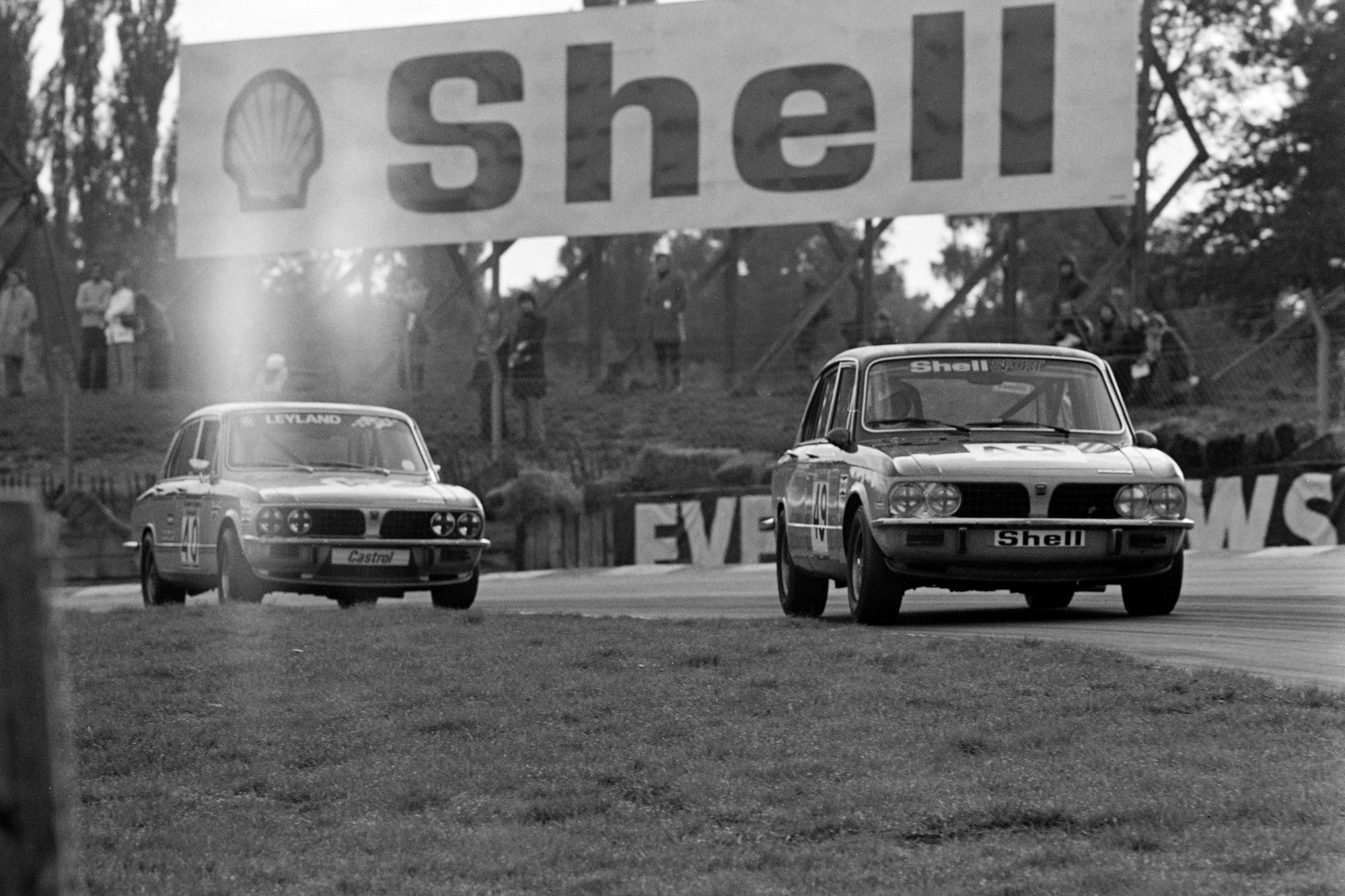
“They wanted to get Triumph to win the championship,” says Rouse. “There was an agreement made between those parties that I would win the race. But Brian raced me hard for all 20 laps, and he was leading on the final lap.”
Unfortunately, South African raceseat magnate Bob Ridgard had spun his Camaro off at Clearways, and the Dolomites were approaching…
“As we came to the last corner of the last lap the yellow flags were out. So I couldn’t pass Brian,” continues Rouse. “He lifted off and I was just alongside him on the start/finish line where the green flag was. It was a bit of a dicey moment there! Ralph had a word with the stewards so I got away with it without getting a penalty.”
With the Camaros having dominated the previous two seasons as far as overall wins were concerned, an upper limit of 3000cc was imposed on the championship for 1976. That meant the Capris would now become numerically dominant in the top class, with the Dolomites and their opponents moving up to Class B. But Rouse had often blown away the Capris in 1975, and surely he now had a chance of outright success.
BL also went the whole hog on declaring the factory presence, having hidden behind Castrol backing in 1974 and Piranha electronic ignition livery in 1975. (Of one Rouse performance at Thruxton in 1975, the late Robert Fearnall wrote in Autosport: “What a superb advert for BL products, if they took the trouble to notice!”)
Now the cars were in full white, red and blue BL livery, and motor dealer and ex-Formula 5000 ace Steve Thompson signed for the second seat. Sure enough, Rouse battled the Capri of Gordon Spice for overall victory in the opening round at Brands, before his throttle pedal broke and jammed under the brake at Hawthorns with four laps remaining. Unsurprisingly, Rouse spun off.
Next time out at Silverstone’s International Trophy meeting, Rouse pursued the Capri of Walkinshaw (now being run by Bill Shaw) for the lead. When Walkinshaw’s halfshaft broke, Rouse took the lead, and he was coasting to victory before he was… coasting to a halt on the final lap.
“I was absolutely livid,” bemoans Rouse. “It ran out of fuel at Stowe. There was some kind of confusion about who’d put fuel in the car and who hadn’t. That was one of our bad days…”
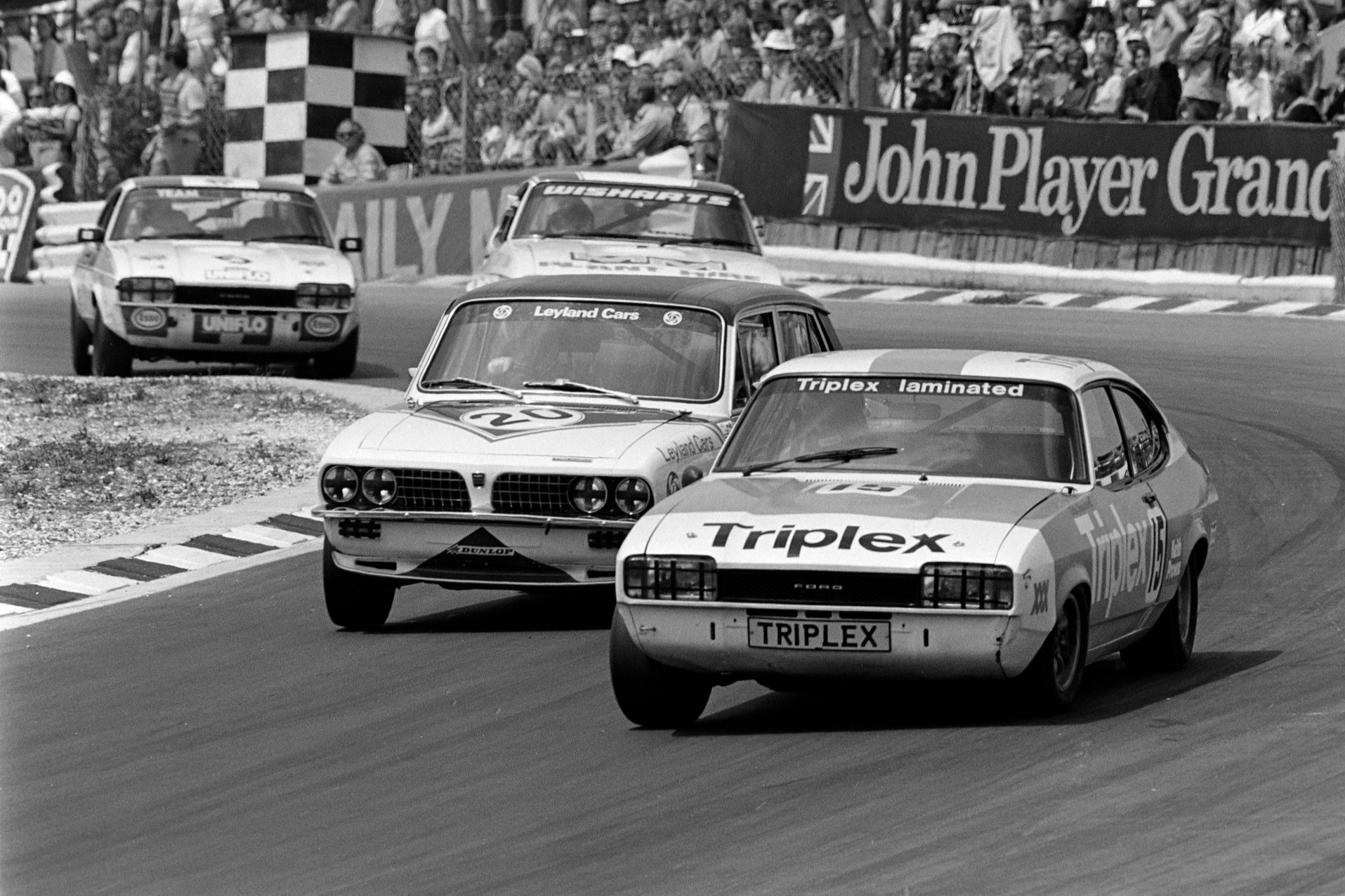
Another battle with Walkinshaw, at the Easter Thruxton meeting, ended when the Dolomite’s cam bucket broke. At the next Thruxton round, he took pole by a second but lost power, allowing Walkinshaw to win and consigning the Triumph to a class-winning second.
Ironically, the closest a Dolomite got to an overall victory against the Capris in 1976 was when Derek Bell was brought in mid-season in place of Thompson. At the British GP support round, most of the leading runners wilted in the heat, including Rouse (overheating clutch and gearbox), and Bell finished just 1.3s adrift of the fading Capri of Vince Woodman.
Rouse battled the Capri of Gordon Spice for overall victory in the opening round at Brands, before his throttle pedal broke and jammed under the brake at Hawthorns with four laps remaining. Unsurprisingly, Rouse spun off
Geoff Lees, then a promising F3 racer, was brought in for a couple of rounds, while Rouse’s season fizzled out. Rather than fighting to beat the Capris, he was now scrapping with his main class opposition: Dave Brodie’s RX3 and Gerry Marshall’s Vauxhall Magnum. When Rouse’s overdrive slipped (it was still causing problems…) at the Brands finale, Marshall took class honours in the race and the title.
PLUS: The greatest club racing characters
While Rouse stepped up to Broadspeed’s ill-fated European Touring Car Jaguar XJ12C project for 1977, Dron returned to the fold to drive the Dolomite in 1977-78, after a season in F3 with the Triumph-engined March.
“It had quite an upgrade for next season, which included Weber carburettors, and I think it had a tubular exhaust manifold, and upgraded front brakes,” says Rouse. “It was generally a much better car. He probably had about 20 or 30 horsepower more.” And Dron delivered.
Once the Broadspeed project ended, Marshall pulled together a deal to field a pair of Triplex-backed Dolomites in 1979 for himself and Rex Greenslade, run by Roger Dowson. But by now the car was left breathless by Walkinshaw’s new baby, the Mazda RX7, and the season was marred by Marshall’s horrific accident at Silverstone.
With the RX7 having cleaned up in 1980-81 in the hands of Percy, Mazda pulled out for 1982 and only a bunch of privateers in outdated machinery were left in the class. Hamish Irvine was one, and he scored three class wins – and the division title – before the introduction of Group A rules for 1983 ended the contemporary lifespan of the Dolomite. It bowed out with 52 class wins to its credit.


Smith becomes latest to top Autosport National Rankings

BTCC newcomer fills final WSR BMW seat for rest of 2026

Kay back to the top of Autosport National Rankings table

Who’s looking good in F2 and F3 ahead of their British Grand Prix support billing

Higginson back to top of the Autoport National Rankings table

Racing Line spot-on for big rise in Autosport National Rankings

The BTCC young guns to watch out for after an Oulton Park breakthrough

How Cammish outshone Sutton and Ingram at Oulton Park to have an outside look at a BTCC title chase

Red Bull parks 'Macarena' rear wing for Belgian GP after Verstappen crashes

Norris given Belgium GP grid penalty as McLaren takes new Mercedes power unit parts

Aston Martin "flat out" on Hungary updates but has concerns over spare parts being ready

Is this the luckiest F1 fan on the planet?
Subscribe and access Autosport.com with your ad-blocker.
From Formula 1 to MotoGP we report straight from the paddock because we love our sport, just like you. In order to keep delivering our expert journalism, our website uses advertising. Still, we want to give you the opportunity to enjoy an ad-free and tracker-free website and to continue using your adblocker.


Top Comments