
The internal focus that made Burns a legendary world rally champion
At the turn of the millennium, WRC was full to the brim with rallying's great and good - and 20 years ago on this day, Richard Burns became England's first world rally champion. Although Burns' natural talent drove him to the top, his steely determination and mental strength was the key attribute behind his title-winning form
So the saying goes, ‘nice guys finish last’. Twenty years ago, one of the World Rally Championship’s nice guys disproved the widely-misjudged theory thanks to internal determination like no other.
On and around the turn of the millennium, the WRC was enjoying one of its most competitive periods between 1999 and 2001. Ford and Peugeot had upped their game in the manufacturer street fight, while Colin McRae, Tommi Makinen, Carlos Sainz and defending champion Marcus Gronholm were among the bulls locking horns in the driving seats.
Today marks the 20th anniversary of the only title win for the quiet assassin taking shots in that mix; the late Richard Burns.
It came at the expense of fellow Brit McRae on a dramatic weekend in Wales - the Ford driver barrel-rolling out of the 2001 title decider after cutting a fast right-hander - but it also came in a season that baffled statisticians. Burns won the title despite picking up the same number of wins as 11th-placed Citroen tarmac specialist Jesus Puras – one – thanks to a sole spectacular triumph over McRae in New Zealand.
Wins were sporadic for Burns, but the manner in which they were achieved came through tactical nous and his notorious want to plan ahead. This was a trait co-driver Robert Reid, the man who knew his inner monologue most of all, could consistently rely on.
“They say that nice guys never win – I think he proved that one wrong,” says Reid.
Burns's CV reads just 10 WRC rally wins from the 101 he contested in top-line machinery between his 1993 RAC Rally appearance for Subaru, fresh off the back of claiming the British title, and the 2003 Rally Spain - his last event before the brain tumour on the eve of 2003's Rally GB that ended his career and finally claimed his life in 2005.

Burns took his first WRC win on the 1998 Safari, but would only take a further nine due to his focus on the end-game
Photo by: Motorsport Images
Burns of course didn't contest a full WRC season until 1998, having previously been a regular in the Asia-Pacific Rally Championship.
Archive: How Richard Burns scaled the WRC mountain
But perhaps the main reason for having 15 fewer wins than McRae, and 20 less than Gronholm, is the long-game mentality that made Burns so special. Consider individual stage wins and the outlook becomes very different.
Stage wins (1999-2001)
Richard Burns – 153
Tommi Makinen – 104
Carlos Sainz - 99
Colin McRae – 95
Marcus Gronholm – 85
Didier Auriol - 47
Gilles Panizzi – 34
Francois Delecour – 33
Juha Kankkunen - 32
Philippe Bugalski – 25
Petter Solberg – 23
Jesus Puras – 22
Harri Rovenpera – 16
Thomas Radstrom – 10
Sebastien Loeb - 4
"Richard’s [battle] was an internal one. The battle was one to be perfect, to do the best job he could, and when he did that, he would be competitive and ultimately have a chance of winning" Robert Reid
His 277 individual stage wins were a telling statistic. A table-topping 153 of those came between 1999 and 2001, while a DNF record of 29.8% compares much more favourably to the 41.1% of an often frustrated McRae, the latter piggybacking Ford’s reliability-shy return during that same period.
For Burns, winning the rally wasn’t everything. Events were long, and so was his game plan towards the more illustrious end product – the world title. In fact, Burns believed that the title could be won without a victory, such was his obsession with consistency.
Reid points to these stats to commemorate the consistent threat that Burns posed to his opposition.
“I think a lot of people saw Richard as not the fastest driver, but when you look at the statistics – in ’99, 2000 and 2001, we had more fastest times than anyone else,” says Reid. “I think that just shows that, in actual fact, he was the fastest driver then and the most consistent.
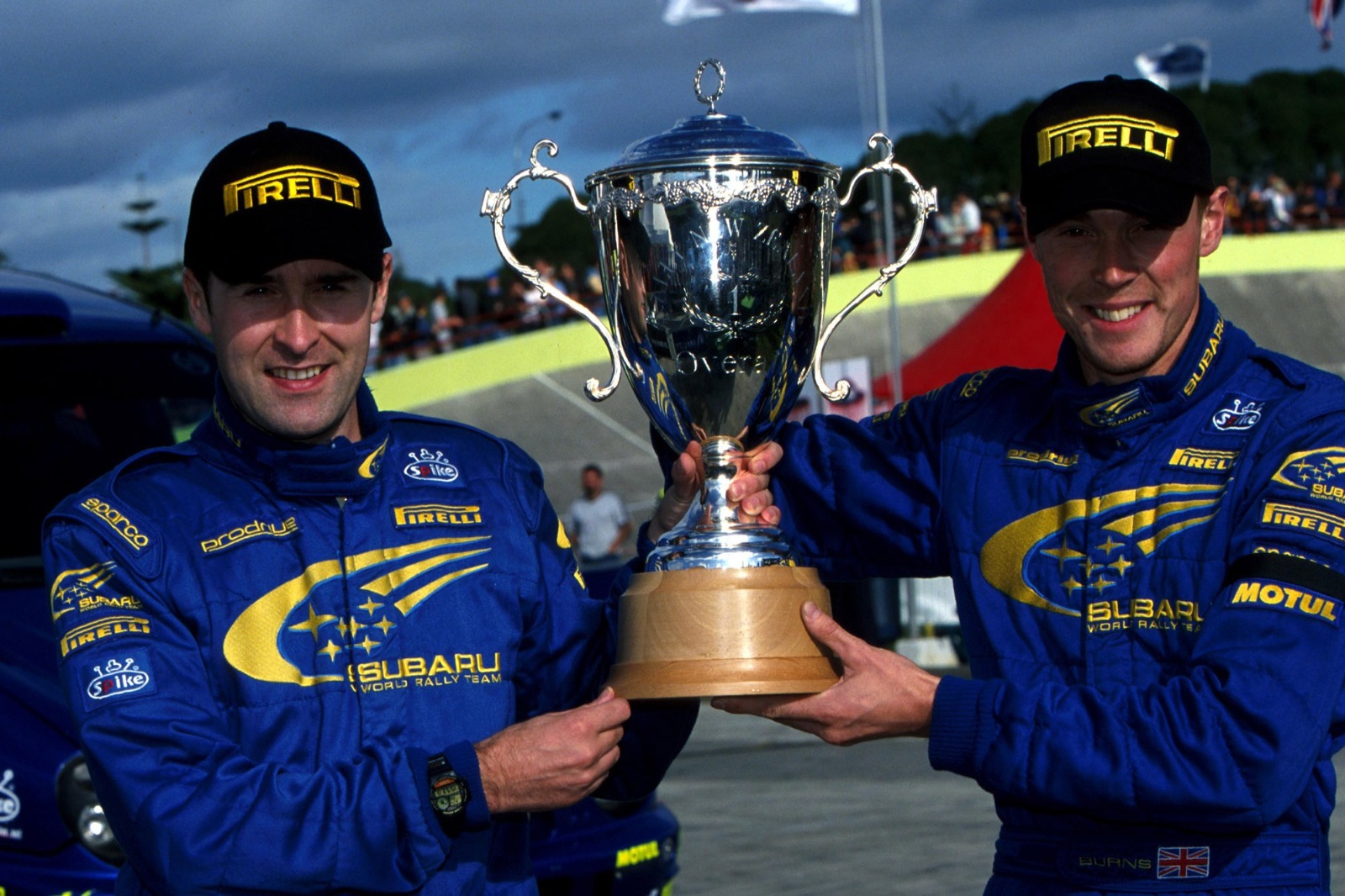
Reid (left) and Burns made a formidable pair
Photo by: Motorsport Images
“I always used to say that if you look at Petter [Solberg], Colin [McRae] and Richard; Petter was all about winning every stage, Colin was all about winning every rally and Richard was about winning championships.”
Reid now works closely with competitors on performance and talent development, and the Scot noticed one stark difference between Burns and his rival. The quiet, yet rapid Englishman did not ooze the spectacular style of his main rival McRae, nor did he cut the same dynamic vigour in front of cameras as Gronholm. What he did have was an internal belief, and a deep determination behind the gentleman’s persona.
“There’s a talent development theory that goes on that says you either have a preference for what they call ‘task focus’ or a preference on ‘ego focus,’” Reid explains. “Ego focus is about beating other people, and task focus is about being the best you can be and striving for always being better.
“I think that people with a strong task focus perhaps come across as not-so-nice guys, because it’s all about beating other people. Their language in interviews, their actions – everything is about beating others.
“Richard’s [battle] was an internal one. The battle was one to be perfect, to do the best job he could, and when he did that, he would be competitive and ultimately have a chance of winning. Resilience is a key attribute of all top drivers. If you’re not mentally strong, then it’s going to be very difficult for you as you can get bullied.”
While their greatest achievement came in Wales 2001, the finest hour for Burns and Reid arguably came two months prior to that in New Zealand. Burns made the canny decision to drop time to avoid running first on the road on day two (rally leader runs first), setting up his only win of that title-clinching campaign. Reid calls it the pair’s greatest win from their time together.
“That was a masterclass in winning the event - it was fast when it needed to be, and tactical when it needed to be”, Reid recalls of their final WRC win, Peugeot success evading them in the following two years leading up to Burns’ ultimately tragic battle.

New Zealand was the only win of Burns' 2001 season and was a tactical masterclass
Photo by: Sutton Images
“In some ways, and this is slightly tongue-in-cheek; Richard was pissed off that he’d won the rally in order to win the championship. He thought, with the changes made to the points system, that it was possible to win the championship without winning a rally.
“At the end of day one in New Zealand, we made a decision to give away 50 seconds so as not to run first on day two. Mentally, you have to be resilient to do that, and it paid off; we were back in the lead after a couple of stages on the second day, and then went on the build enough of a lead to withstand Colin. We had a few niggles in service that night with McRae saying ‘I’ll beat you tomorrow Burnsie’ but we knew 50s was enough, and it was.”
Burns and McRae later held what was dubbed ‘the battle of Britain’ in Wales that November, one of the most well-documented season finales in British motorsport.
"Colin could have a spin on a stage, still be fastest, and be happy. Richard could brake too early three times and be fastest, but be really pissed off with himself" Robert Reid
Leading early on, as expected, McRae had uttered the words “It’s nice to give Richard something to sleep on tonight”. But 14km into the mountainous Rhondda stage, the tables turned, as the Scot’s Ford Focus bounced out of a ditch into a spectacular retirement.
Even before that, mind games were potentially already in Burns and Reid’s favour, this time with the aid of an additional source.
“Richard and I both worked with sports psychologists”, adds Reid, who remembers the events of Rally GB 2001 very clearly. “What was interesting was that Richard’s psychologist was actually there, and I’m sure that had an effect on Colin.
“It was well within our limits we talked about beforehand and [Colin winning stage one] didn’t destabilise us at all. At one point we stopped at the side of the road to speak to the sports psychologist. As McRae drove past, here’s Richard talking to his psychologist. Just the fact we had him there was another mind game.”
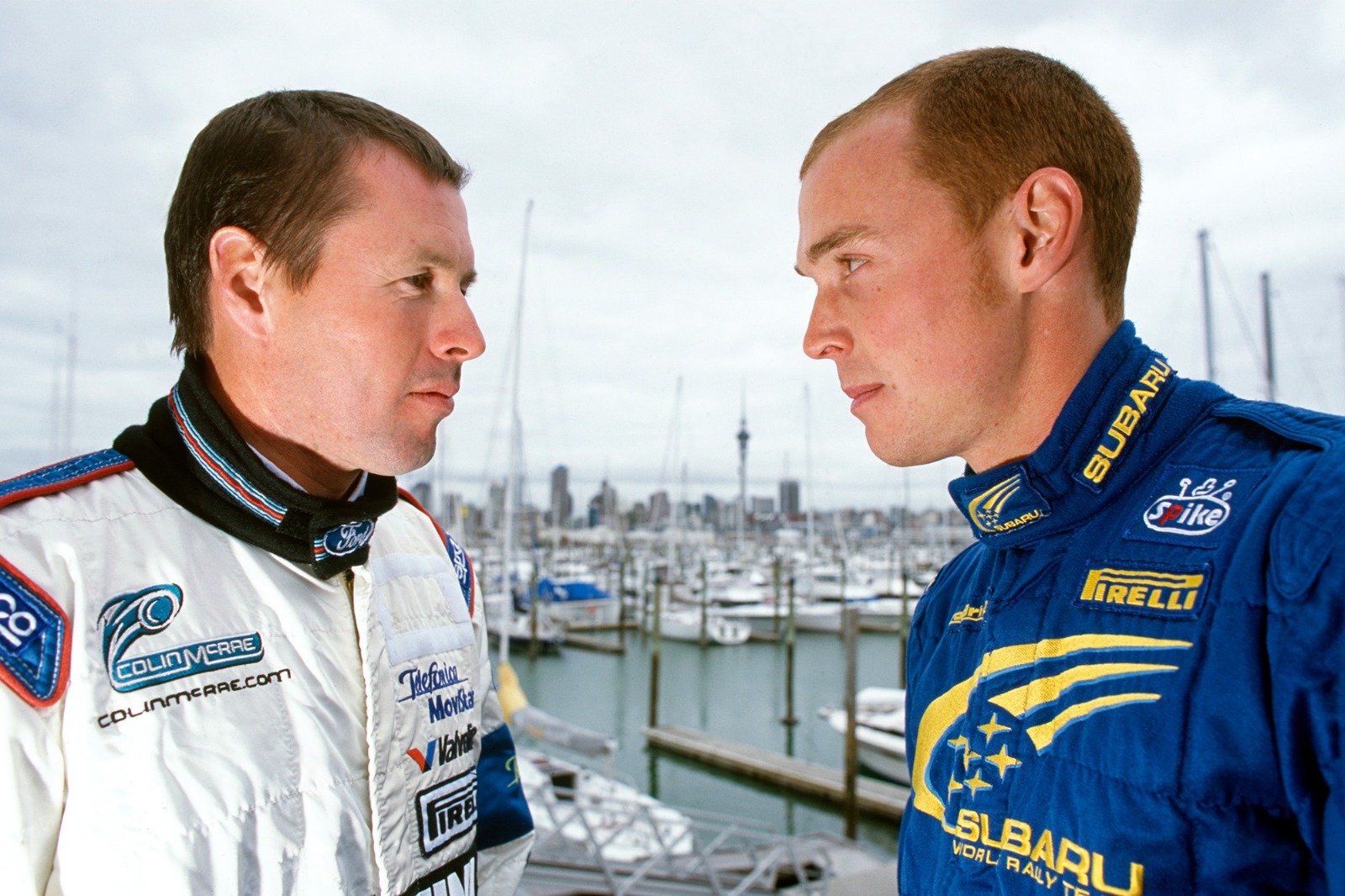
McRae and Burns were great rivals, each pursuing vastly contrasting approaches
Photo by: Motorsport Images
McRae and Gronholm in particular were famed for their all-out approach to begin a rally, the former coining the iconic phrase ‘if in doubt, flat out’.
Similarly, Gronholm’s mind games often began as early as pre-event shakedowns, jumping the start to post a mind-buckling time on occasions - before the ruling to punish this with time deletion was implemented – which was discovered during their time as team-mates at Peugeot in 2002.
“I think Colin and Richard were good examples of the opposite [frame of mind],” says Reid. “Colin could have a spin on a stage, still be fastest, and be happy. Richard could brake too early three times and be fastest, but be really pissed off with himself.”
Burns did it differently. He was his own biggest critic, but he was also among the strongest minds out on a rally stage.
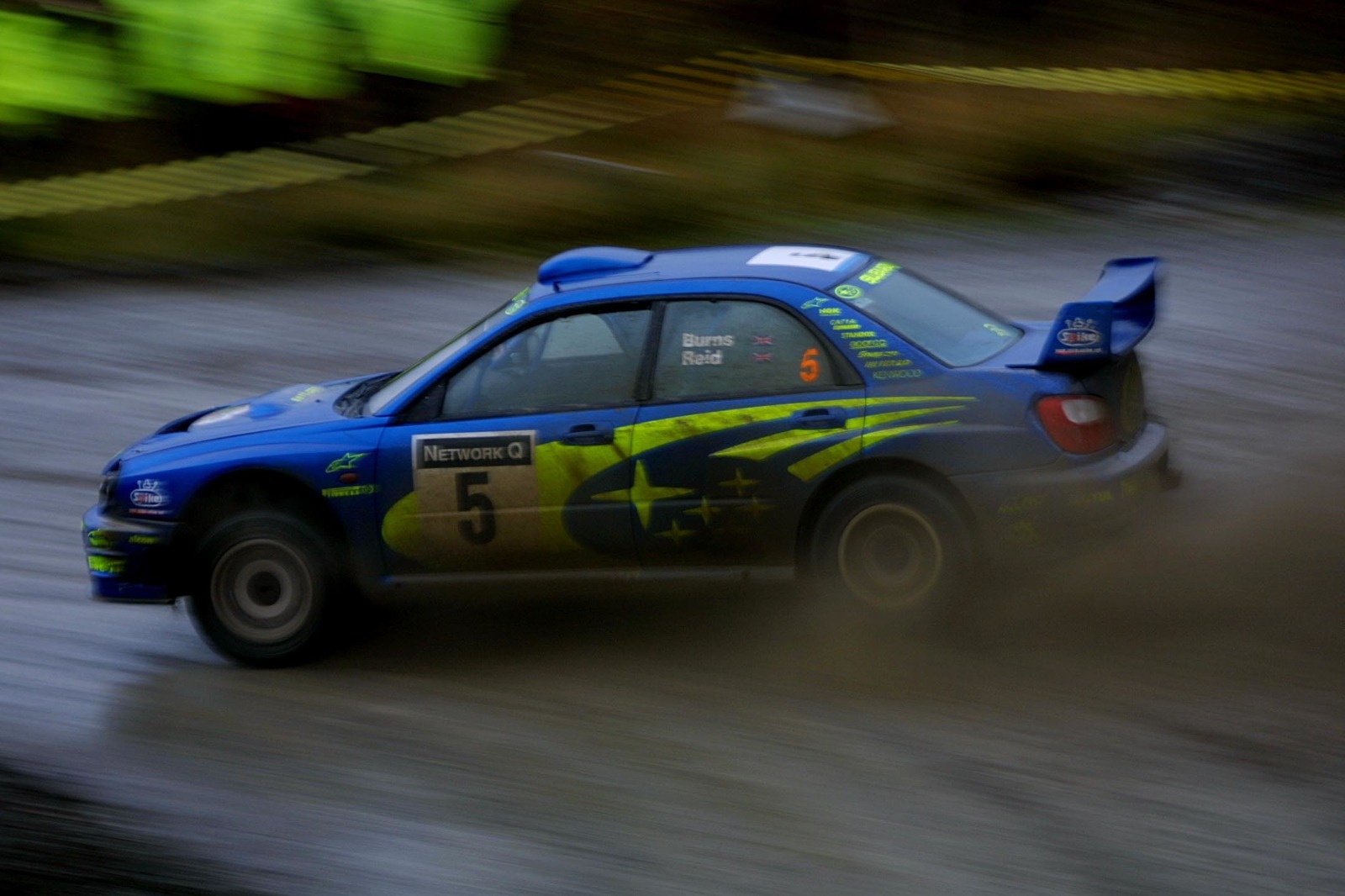
Burns clinched the 2001 title with a mature drive to third in Wales
Photo by: Motorsport Images

Slovakia WTCR: Girolami extends points lead in Munnich Honda one-two

Slovakia WTCR: Audi driver Vervisch wins opener from ninth

Catsburg takes WTCR Slovakia main race pole for BRC Racing

Slovakia WTCR: Catsburg heads Hyundai one-two in first qualifying

Hit or miss? Azerbaijan F1 team-by-team ratings

10 things we've learned from the 2018 Formula 1 season so far

Hit or miss? Bahrain Grand Prix F1 team-by-team ratings

Tom Onslow-Cole at WSR: Second-chance saloon

Bagnaia undergoes successful arm surgery, targets MotoGP return at Silverstone

Why F1's future engine rules offer new opportunities but also new pitfalls

How the new WRC event format at Rally Estonia will work

Bedrin commands GB3's European leg to build sizeable points lead
Subscribe and access Autosport.com with your ad-blocker.
From Formula 1 to MotoGP we report straight from the paddock because we love our sport, just like you. In order to keep delivering our expert journalism, our website uses advertising. Still, we want to give you the opportunity to enjoy an ad-free and tracker-free website and to continue using your adblocker.


Top Comments