
The wingless wonder Peugeot hopes will restore it to Le Mans glory
Peugeot went radical with the initial plan for its Le Mans Hypercar project, and then stuck to its guns. Here’s how things are shaping up a few weeks before the debut of the 9X8 in next month's Monza World Endurance Championship round

Peugeot made a big splash back in July 2021 when it revealed the initial images of the car that will take it back to the pinnacle of sportscar racing for the first time since 2011. And the cynics argued that showing a car without a conventional rear wing was an attempt to achieve just that. It would never race like that, they shouted.
Ten months on, the new 9X8 Le Mans Hypercar that will carry Peugeot’s hopes in the World Endurance Championship has been launched, is close to being homologated, has a date set for its debut in July… and there’s no rear wing.
The definitive 9X8 unveiled at the Algarve circuit near Portimao last month looks pretty similar to last year’s show car. The avant-garde aerodynamic concept remains unchanged, even if there are tweaks that we can see, and presumably others we can’t. The look of the real thing is instantly recognisable from the concept. The full-size mock-up wasn’t some kind of stylistic show car. The bodywork was based on the aero programme of the 9X8 as it stood a few months before July last year.
Peugeot has been telling us all along that the concept works subject to validation on track. It said that before and after it began testing at the start of this year.
“Conceptually, so far so good,” said Olivier Jansonnie, technical director of the 9X8 programme at Peugeot Sport, at Paul Ricard back in February. “If the question is if we have had any issues with the concept, the answer is no. That doesn’t mean there aren’t any issues; we’re just saying that we haven’t found any yet.”
Jansonnie and his team have been able to do away with the need for a rear wing courtesy of a set of regulations that are less prescriptive than anything that has gone before, not just in sportscar racing but in motorsport as a whole. Rather than telling designers what they can and can’t do, they have to hit targets for downforce and drag. Essentially the car has to fit inside an aerodynamic window set out in the rules.

The Peugeot 9X8 does not have a conventional rear wing, instead focusing on the underbody for downforce
Photo by: Peugeot Sport
They have been given more freedom to achieve what are relatively modest targets in comparison with the numbers achieved in LMP1. The giant flat-bottom mandated in LMP1 is a thing of the past, as are the strict rules on the size and height of the rear diffuser.
“We are given a lot of freedom on the floor that wasn’t available in LMP1,” says Jansonnie, “so we have just worked the floor completely differently.”
Another building block of a design sans rear wing are the tyre sizes allowed at the moment. The 9X8 is running the same 14-inch-wide tyres front and rear, one of two routes currently allowed in the regulations. The other, which will dictate the use of the 13.5in fronts and 15in rears supplied by Michelin, will be mandatory for all newly homologated cars from next season.
“The reason [for producing an LMH project] was the freedom of design. It was mandatory for us to have a car that incorporated the Peugeot design code, a car that is easily recognisable" Jean-Merc Finot, Stellantis
“Michelin made it very clear that those tyres would work with a 50:50 weight distribution,” says Jansonnie. “With a weight distribution like that you move your aero balance forward and you can remove your rear wing. The whole thing was making sense. No rear wing, a forward aero and weight distribution and the wide front tyres work together.”
The definitive 9X8 that will join the WEC at the Monza 6 Hours on 10 July is different to the concept of last year. The changes between then and now are largely to bring the car in line with the regulations. The height of the headlights is one example of this. An increase in the size of the dorsal fin running down the engine cover and various kick-ups and flaps around the front and rear wheelarches are also linked to the rules. The fin is several centimetres higher, though significantly smaller than that of the Toyota.
“We have to show that the car is stable in side winds and is not going to take off when there is some yaw in the car,” points out Jansonnie. “Every manufacturer has to demonstrate by simulation that his car is stable. That is what pushed us in the direction of increasing the size of the fin.”
The changes around the wheelarches have been about bringing the design into the aerodynamic window as the aero programme progressed. “Not necessarily a performance development” is how Jansonnie describes them: “It is more about getting the car into the box.”

Peugeot is aiming to repeat the success of its 3.5-litre 905 Group C racer, driven here by Keke Rosberg
Photo by: Motorsport Images
The freedoms allowed by the LMH route are part of the reason why Peugeot Sport made the decision to return to sportscar racing and the Le Mans 24 Hours to try to repeat the successes of the 905 3.5-litre Group C car of 1990-93, then two iterations of the 908 turbodiesel LMP1 of 2007-11 – and why it stuck to that decision after LMDh, the alternative and cheaper LMP2-based route into the WEC, was announced just a couple of months after what has become the 9X8 programme was signed off in November 2019. It did examine changing tack, and admitted so publicly, but all the time was pushing on down its original route.
“The reason was the freedom of design,” says Jean-Marc Finot, motorsport boss of Peugeot Sport and the wider Stellantis group created on the merger of parent company PSA and Fiat Chrysler in early 2021. “It was mandatory for us to have a car that incorporated the Peugeot design code, a car that is easily recognisable [as a Peugeot].”
Just as important, says Finot, was the need for the race car to be some kind of laboratory for future road vehicles, with particular regard to the front-axle hybrid system and its battery developed in partnership with TotalEnergies. The rear-wheel energy retrieval set-up on an LMDh is a spec component, remember.
“LMDh seems easy: you take a car off the shelf and throw in an internal combustion,” he says. “What kind of story can I tell to you, our customers, my board if I say I am very proud of developing an internal combustion engine?”
The sands of sportscar racing have shifted again since Peugeot went public on its decision to stick to the LMH route in September 2020. In the middle of last year, the final piece of the jigsaw in the so-called convergence process was put in place across the WEC and the IMSA SportsCar Championship.
Central to this was the shift of the deployment speed of a four-wheel-drive LMH car’s front-axle hybrid system from the technical regulations into the Balance of Performance. This explains the 190km/h (120mph) figure set for the Toyota in the opening two rounds of this year’s WEC, an increase from last year’s 120km/h (and 150km/h when on grooved rubber). This move is designed to mitigate the advantages of four-wheel drive. Peugeot, like Toyota, isn’t particularly happy about it, but has accepted it for the good of the championship.
“It is what it is,” sighs Jansonnie. “I am not going to tell you we are very happy with this, but it is what we have to live with. We have to assume that we will be paid back by the quality of the championship in the next years.”

Peugeot opted for a Hypercar project to allow for its own development with ERS systems
Photo by: Peugeot Sport
The deployment speed, because it’s part of the BoP, can vary from track to track and, more pertinently, car to car. Jansonnie is expecting a significantly lower figure for the 9X8 than the Toyota GR010 HYBRID, which has switched to 13.5in/15in Michelins for this season, based on simulation data shared by the manufacturers. The simple reason is that the car has less rear grip courtesy of its narrower tyres on that axle.
The deployment speed for the Peugeot will not be made public until a week or so ahead of the Monza event, round four of the six-event 2022 WEC. The French manufacturer filed two entries for the series this year, without ever committing to a firm starting point.
Its decision not to take the 9X8 to Le Mans this year should not be regarded as a delay; instead, a move that would also have involved racing at the Spa WEC round at the start of May would have represented an early debut for the car. Jansonnie points out that when Peugeot made the call in November 2019 to return to top-flight sportscar racing, the WEC looked very different. The series had just started its first season running to a format starting in the late summer or early autumn and climaxing at Le Mans, and the French manufacturer committed to joining at the start of the 2022-23 campaign.
"We will try as hard as we can to race, and racing means being competitive. For how long in the race, we don’t know, but we will try for sure" Olivier Jansonnie
“We had a phase of the project when we really tried to be at Le Mans this year,” he says. “Then we came back to the original plan, and I think we made a good decision.”
Bringing the homologation of the 9X8 forward, he says, would have “compromised the future of the car for the next years”. Once the car is homologated, its specification is frozen for the life-cycle of the LMH formula, which at the moment means the end of 2025. Just five performance upgrades, known as ‘evo jokers’, are permitted in that time and must be signed off by the rulemakers.
But Jansonnie explains that proving the reliability of the 9X8 and building the in-house team that will run the two cars were “the key points” over a test schedule that has so far run to approximately 25 days and 10,000km. Ask him which areas of the cars have proved problematical, and he replies “all of them”, while stressing that testing threw up “no major flaws” with the concept of the car and its 2.6-litre twin-turbo V6 engine.
“There are details that we have had to sort everywhere,” he says. “They are temporary weaknesses; hopefully we can solve this and be ready for Monza.”

Although Monza will be the 9X8's first racing appearance, Peugeot doesn't want to "be spectators"
Photo by: Peugeot Sport
Had Peugeot made the decision to go to Le Mans, the team wouldn’t have been ready, says Jansonnie. It is largely a new operation based at the Stellantis motorsport HQ at Satory on the outskirts of Paris. Relatively few personnel remain from the days of the 908.
“The team wouldn’t have been ready for Le Mans,” he explains, while pointing out that it would only have been a valuable learning process if the cars had gone deep into the race. “You need to compete at a proper level otherwise you are not learning much. If you are running for a couple of hours and you retire, there is no point, you learn nothing.”
Peugeot isn’t making bold claims about what it’s going to achieve over its short WEC campaign this year. But it is saying that it will be doing everything possible to take the challenge to Toyota, Glickenhaus and Alpine.
“Whatever happens we will play hard to try to win; probably we will not but at least we will have tried,” pledges Jansonnie. “We will try as hard as we can to race, and racing means being competitive. For how long in the race, we don’t know, but we will try for sure.”
The team isn’t going to Monza “to be spectators” or to do “an extra test”, Jansonnie adds. He concedes that there is a lot still to learn as it looks ahead to next season and its bid to add to the Le Mans triumphs of the 905 and 908.
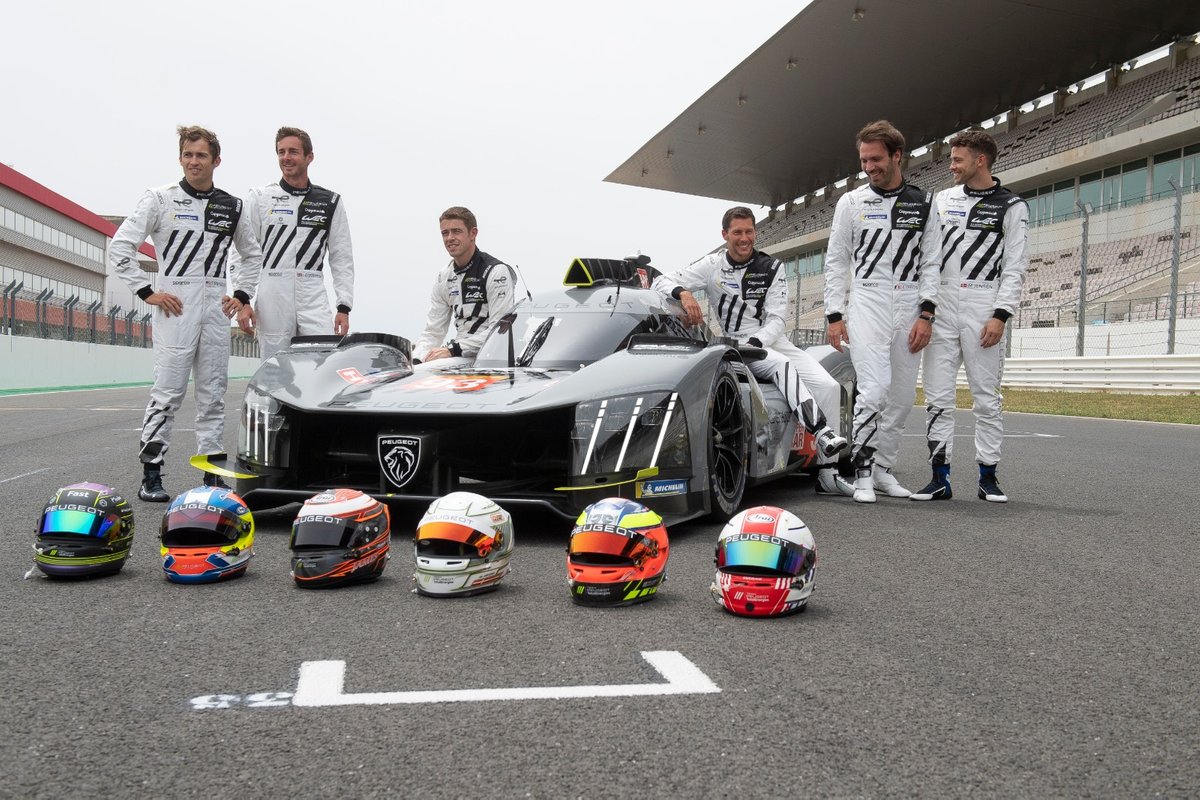
Peugeot has signed a crack squad of drivers to lead development of its 9x8, with (l-r) Gustavo Menezes, James Rossiter, Paul di Resta, Loic Duval, Jean-Eric Vergne and Mikkel Jensen
Photo by: Peugeot Sport


Why Toyota’s 2026 WEC triumphs have put it into the all-time greatest endurance racing team debate

How Toyota destroyed the competition to seal the WEC crowns

When Can-Am made its controversial comeback

WEC Barcelona: Genesis secures maiden series pole from Toyota

How Ford is "hitting milestones" in preparation for WEC Hypercar assault

How Porsche Penske finally broke its Petit Le Mans duck

Why there’s no perfect solution to the WEC safety car conundrum

How an “informed gamble” enabled Toyota to beat Alpine in the Fuji 6 Hours

Five things we learned from MotoGP’s cancelled Australian GP

The two recurring issues that hampered Verstappen and Red Bull again at the US GP

Alonso criticises quality of F1 backmarkers after Albon clash at United States GP

Russell scrambling for answers after "not being quick enough" at US GP
Subscribe and access Autosport.com with your ad-blocker.
From Formula 1 to MotoGP we report straight from the paddock because we love our sport, just like you. In order to keep delivering our expert journalism, our website uses advertising. Still, we want to give you the opportunity to enjoy an ad-free and tracker-free website and to continue using your adblocker.


Top Comments