
The remarkable fixes Toyota used to avert another Le Mans disaster
The 1-2 finish achieved by Toyota at this year's Le Mans 24 Hours was a result that will have surprised few, given its status as pre-event favourite. But the result was anything but straightforward, as worsening fuel pressure concerns required the team's drivers and engineers to pursue "creative fixes" on the fly. Here is the full story of how it reached the end without a lengthy pit visit

Sebastien Buemi had just completed a three-lap stint on Sunday morning at the Le Mans 24 Hours. The fuel-pressure issue by now afflicting both Toyotas was getting ever worse and it looked as though extended pitstops for the two cars would be required, stops that would put them out of contention. Then, his engineer came over the radio and asked him to try something strange. It was the first of two off-the-wall ideas thought up in heat of the battle that enabled the Japanese manufacturer to take a fourth straight victory in the French enduro.
Toyota might have looked to have had a straightforward run to victory at Le Mans back in August, its pair of new GR010 HYBRIDS finishing four and two laps up on third-placed Alpine. But the reality was a long way from that. At 9:00am on Sunday, with seven hours left on the clock, it was far from clear inside the Toyota Gazoo Racing pit that its two cars would make it cleanly through to the chequered flag.
That Toyota completed a 1-2 victory was down to the ability of the Cologne-based TGR Europe organisation to think on its feet and come up what its technical director Pascal Vasselon calls "creative fixes". Turning the engine off and on under braking was the initial ploy, first communicated to Buemi shortly after 9:30am on Sunday, while the second involved a mid-race software rewrite and download.
Together they kept the GR010s out of the garage. It was, says Vasselon, "a very human story" that made Le Mans 2021 the "nicest" of its four wins in the blue riband round of the World Endurance Championship.
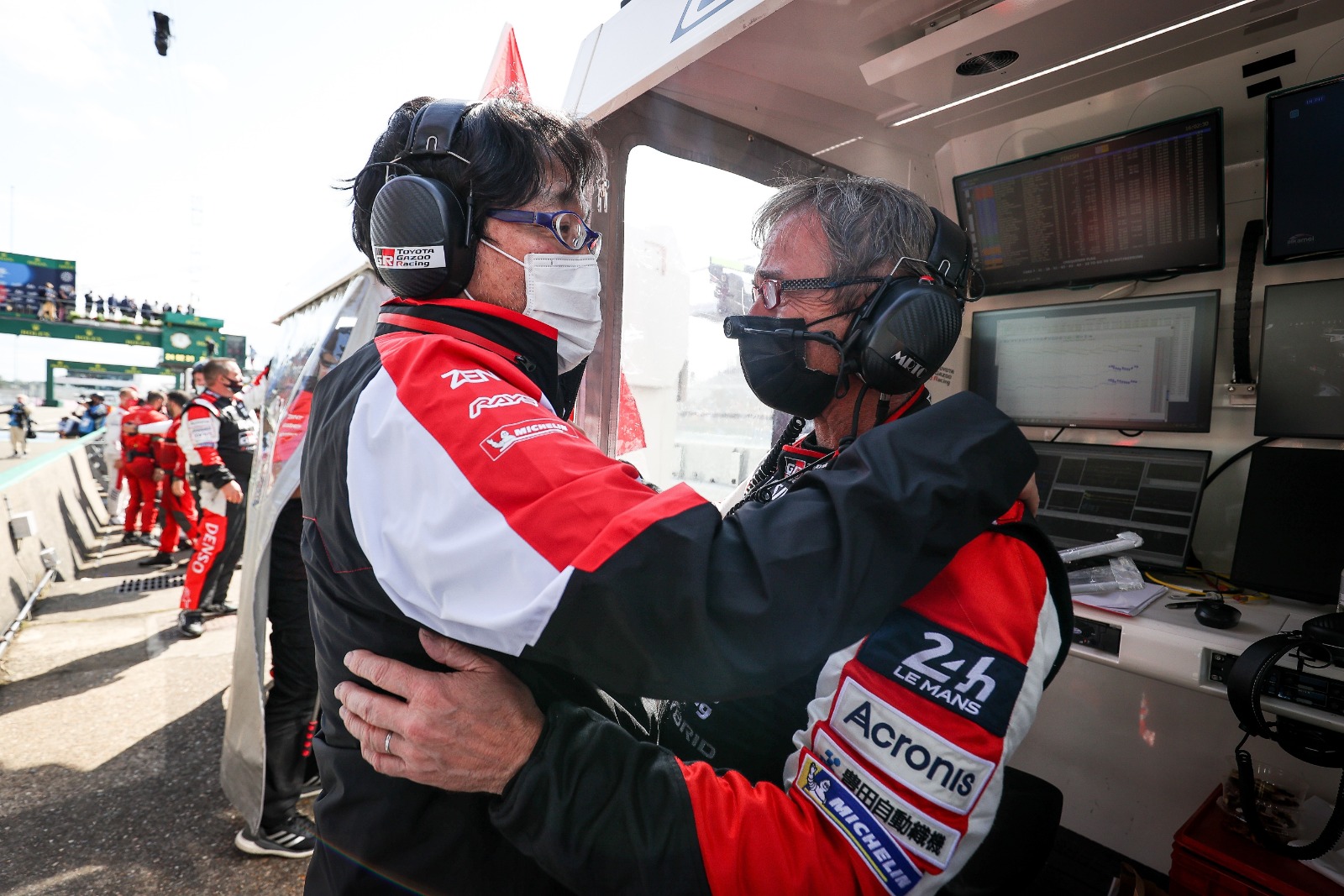
After the stresses of getting the two cars to the finish without a lengthy pit visit, Vasselon (right) regards 2021 as his most cherished Le Mans win
Photo by: TGRE
The problem
Toyota had suffered falling fuel pressure on both its cars at the Monza WEC round in July. The #7 GR010 had been hit in free practice, but #8 shared by Buemi, Kazuki Nakajima and Brendon Hartley was afflicted during the race. Forty-eight minutes were lost changing the fuel collector, which left their Le Mans Hypercar dead last at the finish. Race winners Kaumi Kobayashi, Mike Conway and Jose Maria Lopez had to good fortune that their collector was replaced at leisure between practice sessions.
TGRE found the problem on its return to Germany. The bowsers in which it stored its fuel in the pits, new for this season, had been contaminated with aluminium oxide particles. These were mixing with grease used to lubricate the fuel nozzle connectors to block the filter in the collector at the bottom of the tank.
"A decision to change the collector was a decision to lose the race. We weren't at Le Mans to finish in the top 10, we were only there to win, so it was quite an easy call to say we won't do that, we will run as long as we can" Pascal Vasselon
With the problem identified, Toyota headed to Le Mans believing there would nor could be no repetition. But at 7:19am on Sunday, an electronic systems engineer spotted something on the telemetry fuel pressure trace from the #8 car.
"He was familiar with how the pressure trace looks when this kind of problem happens," explains Vasselon. The experience of Monza meant, he says, that the team "knew what was happening but we did not know why". There was something it was sure about, however: "We knew that this kind of problem never gets better because it is a filter getting progressively clogged by debris."
That much was clear with the increasing regularity with which it had to pit the cars. The #8 entry, on which the problem raised its head about one hour before the sister car, made a series of ever shorter stints. When the pressure was dropping too much, the team had no choice but to bring the car in for fear of it stopping on track.
The stint for Nakajima after the problem was spotted was 10 laps, four less than the 13 the GR010s had been routinely going between stops. Buemi then took over and his stints were seven laps, then five, four and finally three.
"Very quickly we got to the point where we were stopping every three laps," recalls Vasselon. "If you have just half an hour to go, you keep going, but if you have several hours left you understand that will not work."
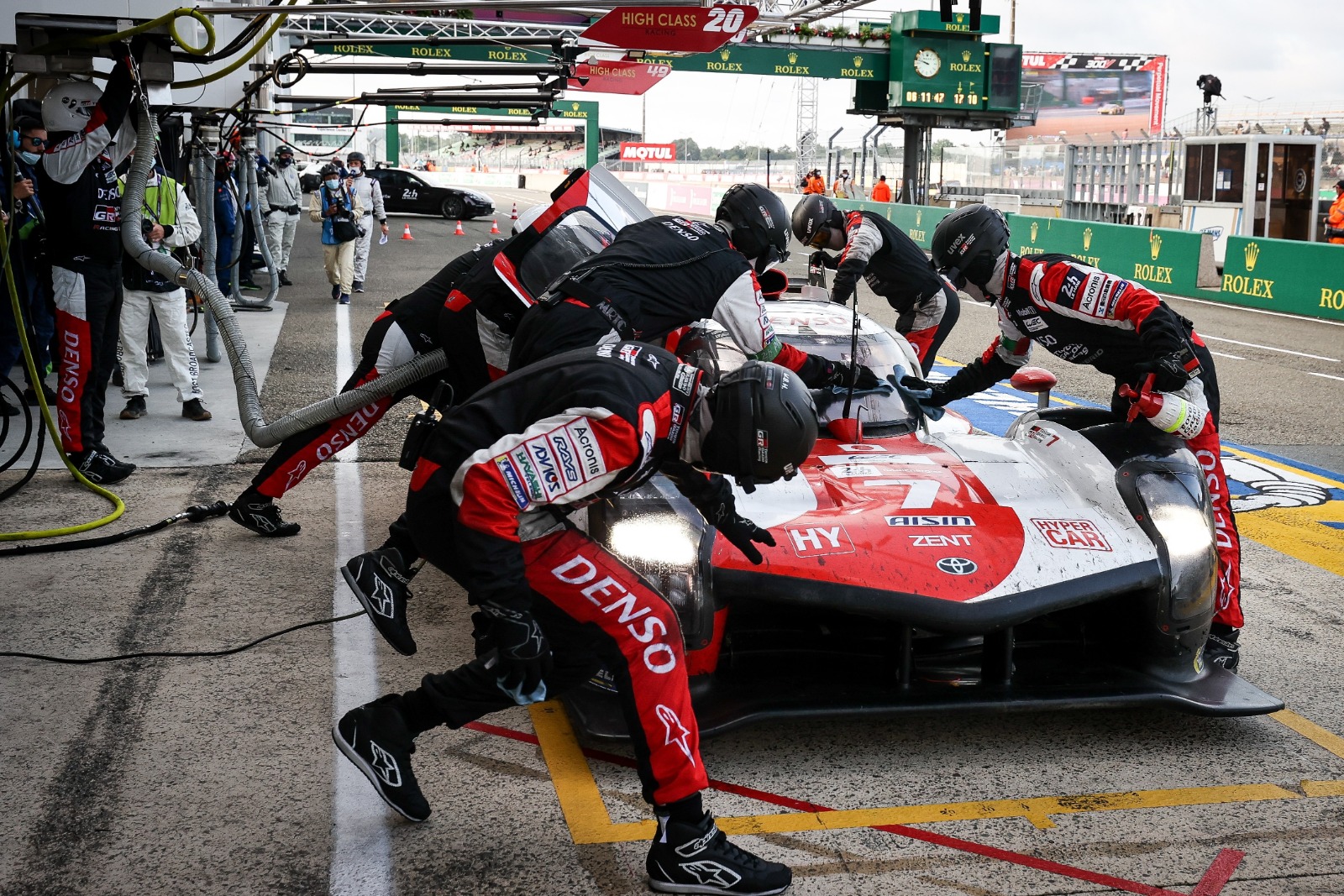
The stint lengths the Toyotas could manage were rapidly decreasing by Sunday morning, causing the team to brainstorm outside the box ideas
Photo by: TGRE
Toyota was facing having to change the collectors inside the fuel tanks on the two cars at the cost of a minimum of 45 minutes.
"You always have voices in this kind of situation to change the collector the sooner the better, but a decision to change the collector was a decision to lose the race," says Vasselon. "We weren't at Le Mans to finish in the top 10, we were only there to win, so it was quite an easy call to say we won't do that, we will run as long as we can."
At the same time, he says, Toyota "kicked off a kind of brainstorming" to try to come up with what he calls "countermeasures".
Fix number one
The increasingly regular pitstops sowed the seed of an idea in the minds of Toyota's engineers.
"One of our first observations was that every time we stopped in the pits, the problem was getting better," explains Vasselon. "We made several hypothesis and one of them was, okay in the pits, what do we do? We are stopping the pump [because in the WEC the engine has to be turned off in the pits]. We thought maybe this stoppage was causing vibration in the liquid column [in the collector] that was unclogging the filter."
The next question, he goes on, was "how can we stop the pump without stopping in the pits?" There was a single answer to that: "You can only stop the fuel pump when you brake."
That explains the strange call to Buemi over the radio. He was told to switch off the pump under braking for the first chicane on the Mulsanne Straight, the longest braking zone on the 8.47-mile Ciruit de la Sarthe. The request, or rather the means of achieving it, was far from straightforward. There's no on-off fuel-pump switch on the GR010. Rather, the driver has to employ one of around 200 so-called driver defaults embedded within the car's electronics systems.
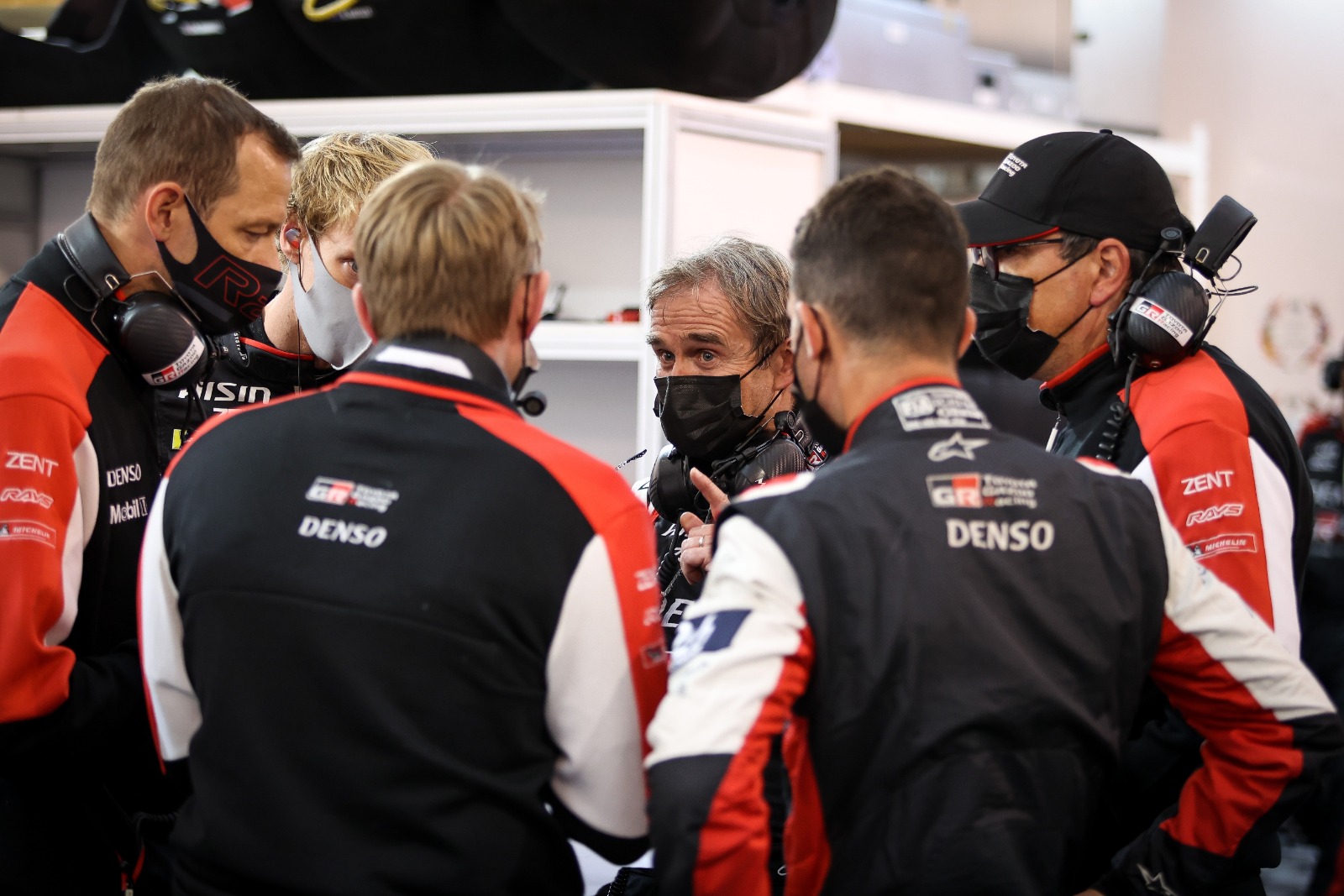
Vasselon holds an impromptu in-race meeting with drivers Hartley and Kobayashi, advisor Alex Wurz and team director Rob Leupen
Photo by: TGRE
This required the driver to activate the steering wheel display and then scroll through to the required command, driver default 7.3. With the prerequisite page on the display, the driver had to press a button to activate the default and stop the pump, then do the same to restart it before getting back on the power. All while braking and going down through the gears from more than 200mph.
"The first time Seb did it perfectly, the second time he was too late to activate it and the engine ran out of fuel, but he was quick enough to get away," says Vasselon, who pointed out that if the delay was too long, the driver would have to bring the car to halt to do a full recycle of the electronics.
"The first few I did were pretty seamless, but then I had a couple where the page switched off: that meant pressing the button only brought the page back and didn't activate the default, so the engine died" Mike Conway
More important than Buemi mastering the complexities of the procedure was that it had the desired affect.
"We saw immediately that when he stopped the pump and reactivated it, the problem was improved," says Vasselon. "It was quite a relief." As, too, was the #8 car's 13-lap stint that followed.
Buemi was also relieved that the fix worked, less so when he learnt how often he'd have to be employing it.
"They said, 'amazing, it works'," he recalls. "I thought good, that's it! Then they asked me to do it again. I said, 'what do you mean?'. They told me we needed to do it every lap!"
Every lap quickly became every corner, or at least the ones with significant braking involved.
The falling fuel pressure wasn't what Vasselon calls "a stable problem". Rather, he says, it "was getting worse" as the filter became ever more clogged as the race progressed.
"We started doing it once per lap," explains Vasselon. "Very quickly that became not enough. Step by step we went to six times per lap."
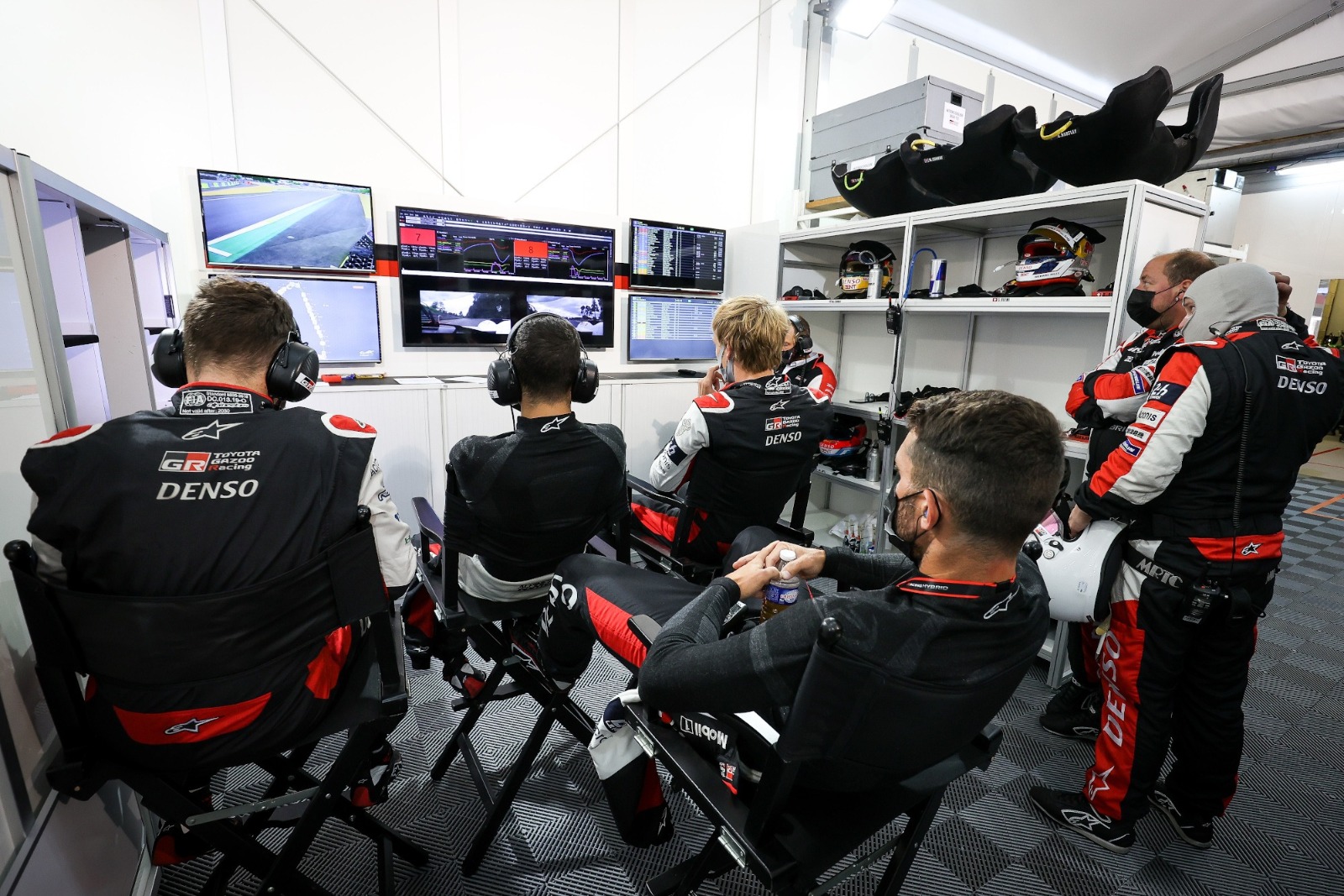
While awaiting their turn, drivers practiced the dd7.3 activation
Photo by: TGRE
That meant employing dd7.3 at both chicanes on the long straight, Mulsanne Corner at its end, into Indianapolis and the Porsche Curves and finally at the Ford Chicane prior to the start-finish straight.
The same fix was quickly adopted on the #7 car out in the lead 45 minutes after #8. Kobayashi was hauled out of the car at 10:15am after a short double and replaced with Lopez, who'd got a full briefing on the dd7.3 procedure in the pits. Conway, meanwhile, had a spare steering wheel in his hands and was practising the routine ready for his return to the car after his Argentinian team-mate's triple.
"I was practising it on a spare steering wheel, trying to get the rhythm, the timing," recalls Conway. "The first few I did were pretty seamless, but then I had a couple where the page switched off: that meant pressing the button only brought the page back and didn't activate the default, so the engine died."
Driver stresses
For Buemi, the increasing employment of dd7.3 was "a mentally draining" exercise.
"I was happy to get out of the car because I was dead," he says. "You're doing all the normal stuff, braking, turning and trying not to touch another car at the same time as looking at the steering wheel and pressing the buttons. The procedure was not complex, but the timing made it difficult."
Once the dd7.3 page had been selected it would stay selected, only the screen on the Toyota goes to sleep after three seconds. In that scenario, the default can not be activated.
"The timing was critical: that made it more energy-consuming," adds Buemi. "But understanding that we might make it with this solution gave us the energy."
Vasselon still finds it incredible that Toyota's six drivers were able to undertake the procedure without making mistakes or losing time: "We were thinking that we would lose seconds per lap, but we didn't - this was quite remarkable."
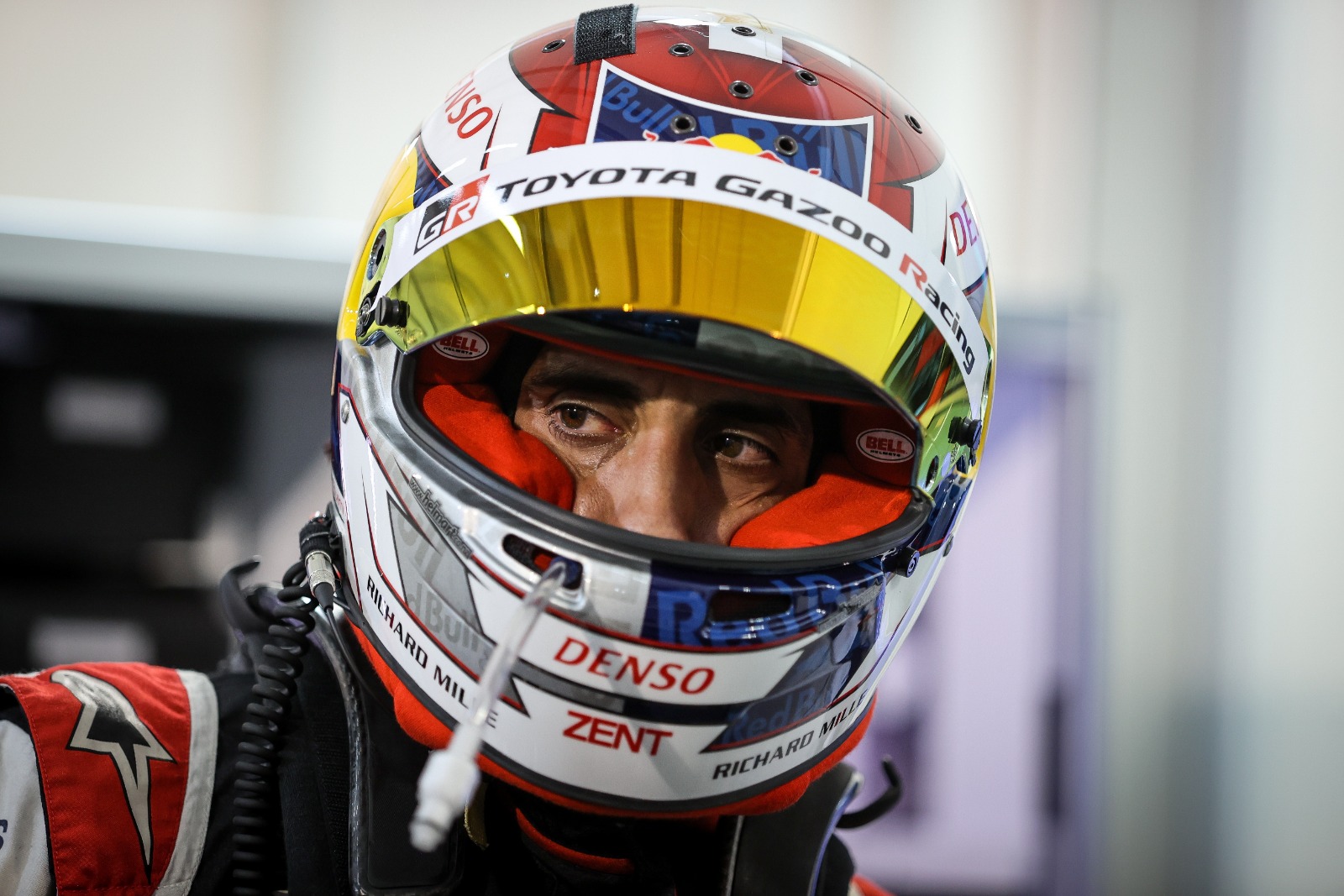
The mental drain of repeatedly timing the dd7.3 activation around the lap took its toll on Buemi
Photo by: TGRE
Fix number two
As debris continued to accumulate in the filter, "stopping the main pump six times per lap became insufficient" on its own after about four and a half hours, recalls Vasselon. Pitstops to change the collector were looming again, he says, but the "brainstorming in the background was continuing."
The lead systems engineer then came up with another idea. The collector containing the main pump is fed by lift pumps in the tank. The Toyota has four of these, two of which are active at any one time. The other two are, in effect, back-ups.
"We found out that the fuel bladder was collapsing every stint when it was emptying as the fuel was used. As it was collapsing the inner walls were rubbing into each other and generating these particles" Pascal Vasselon
"The idea was to employ all four pumps at once to create turbulence in the collector and to increase the pressure around the filter," explains Vasselon. "This was the idea: the problem was that to implement it needed a software change. Our leader of system engineering went to code some software changes and passed it to Cologne to debug and check."
Once the software was signed off, it was downloaded into #8 at approximately 2pm, two hours before the finish, and then into the second car 45 minutes later.
"Immediately we saw the situation was improving," says Vasselon. "It was restoring some pressure."
The twist in the tale
The winning Toyota shared by Kobayashi, Conway and Lopez was able to make the end of the race with these two countermeasures in place. The second-placed #8, which was afflicted first, needed further nursing to see the chequered flag.
Vasselon: "The situation was still degrading in #8. The pressure drop was higher when the driver was asking for more fuel. In the last half hour we told Kazuki to accelerate at half throttle in the most critical corners."
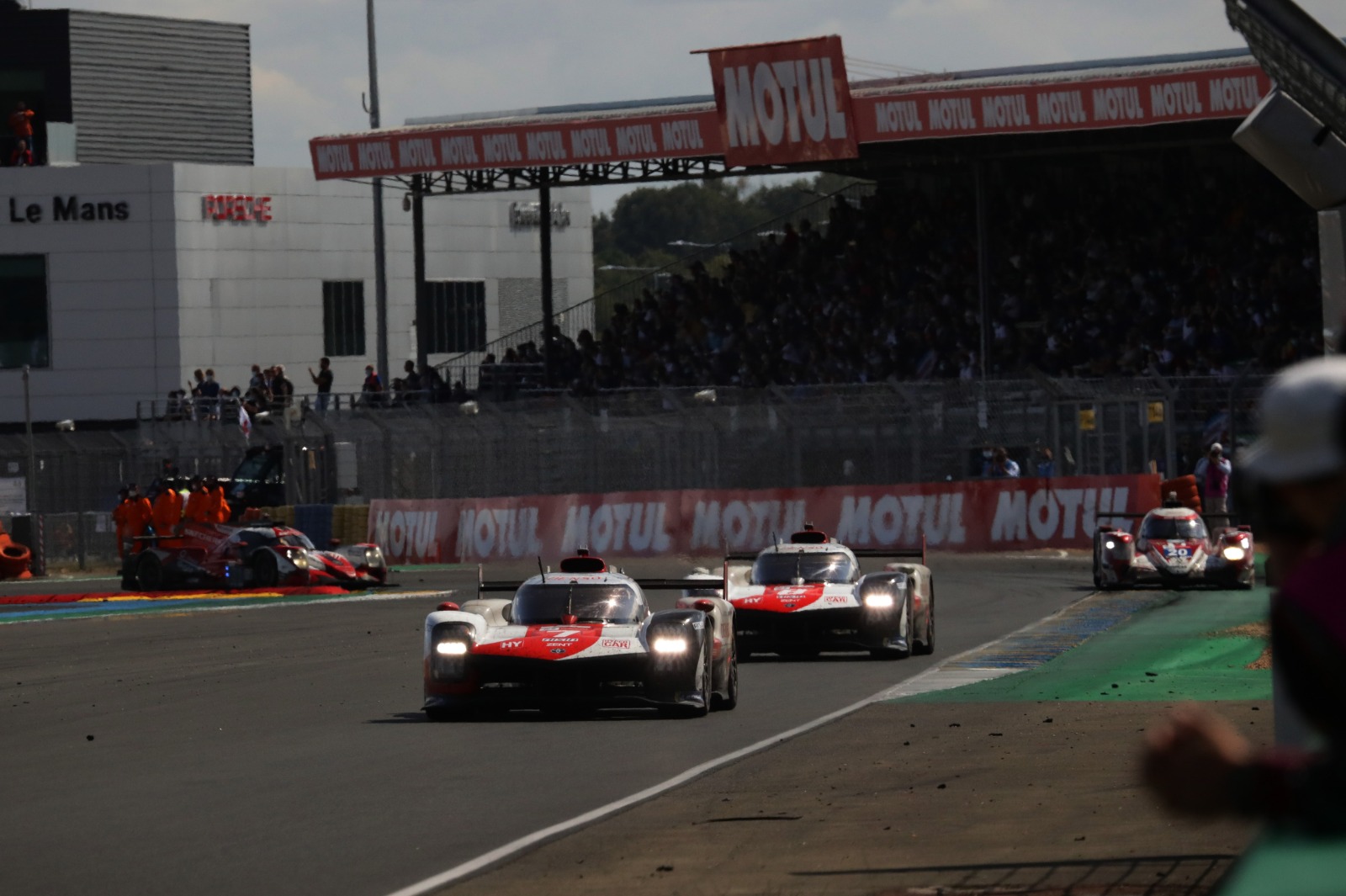
Nakajima was held in the pits late on and followed the sister car across the line to avoid having to do another lap as the situation became critical
Photo by: TGRE
The worsening situation in the second-placed entry explains why Nakajima was briefly held in the pits with just over 10 minutes to go to wait for the other Toyota.
"It might have looked like a decision to have the two cars cross the line together," says Vasselon, "but the main reason was to avoid #8 having to do one more lap."
The cause
Vasselon describes it as a "complex phenomenon" distinct from the Monza problem: "The root cause was different at Le Mans." This time, the grease from the refuelling connectors, which on its own passes through the 10-micron fuel filter, was mixing with polyurethane particles from the bladder inside the fuel cell.
"We found out that the fuel bladder was collapsing every stint when it was emptying as the fuel was used," explains Vasselon. "As it was collapsing the inner walls were rubbing into each other and generating these particles."
The collapsing bladder resulted from what turned out to be an under-specified fuel tank breather: the GR010's fuel system was similar to that on the outgoing TS050 HYBRID LMP1 car. But the rate of fuel usage in the LMH car is much higher because Toyota's new 3.5-litre twin-turbo V6 is both more powerful and less efficient than the old car's 2.4 unit. That was creating a partial vacuum in the tank, causing it to collapse. The breather system has now been modified accordingly.
"Motorsport is about never giving up and team work," says Vasselon. "But at Le Mans this year we went quite extreme with those two mottos".
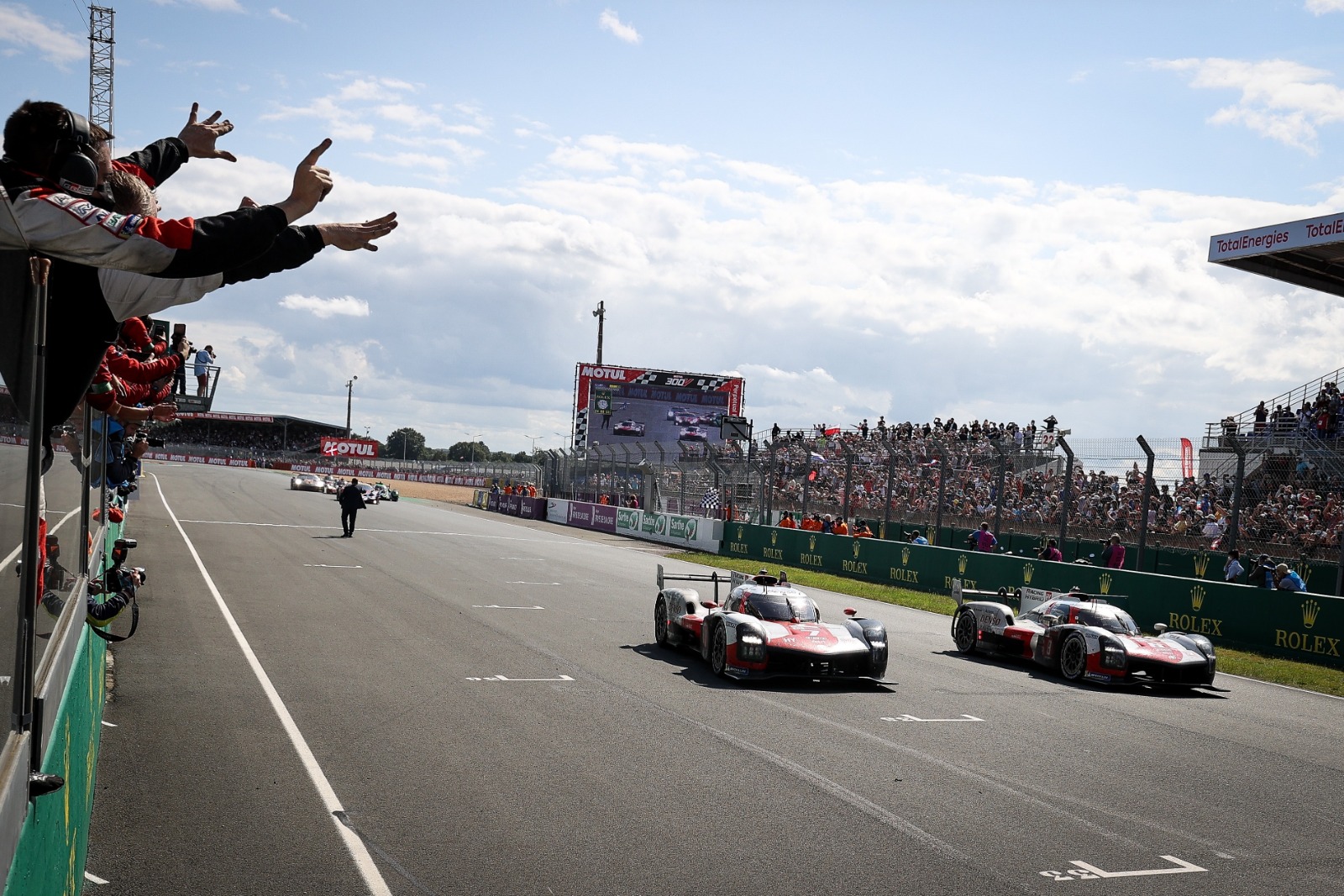
Team 1-2 was richly savoured after their stressful race
Photo by: TGRE


How Ford is "hitting milestones" in preparation for WEC Hypercar assault

How Porsche Penske finally broke its Petit Le Mans duck

Why there’s no perfect solution to the WEC safety car conundrum

How an “informed gamble” enabled Toyota to beat Alpine in the Fuji 6 Hours

The hope for Lola’s comeback and what it could mean

Why Lola has got big ideas for its future

The debate on whether WEC prioritised 'entertainment' over 'sport' in Austin

Shwartzman to make WEC return with Peugeot

Colapinto urges fans to stop online abuse: “You’re not helping me or my future”

Evans given a hero's homecoming after WRC title triumph

How an unspectacular showing in a kart race is such good reason to celebrate

Lights, Camara, action: How Haas picked F1's latest rookie for 2027
Subscribe and access Autosport.com with your ad-blocker.
From Formula 1 to MotoGP we report straight from the paddock because we love our sport, just like you. In order to keep delivering our expert journalism, our website uses advertising. Still, we want to give you the opportunity to enjoy an ad-free and tracker-free website and to continue using your adblocker.


Top Comments