
How Knockhill has developed during 50 years of car racing
A special event last month commemorated half a century of car racing at Knockhill. Here's a look back at how the venue went from very humble beginnings to become an established fixture of UK motorsport
In the early 1970s, Fife farmer Tom Kinnaird had an idea. The landowner and racing enthusiast couldn’t resist the temptation of creating his very own circuit within the natural contours of the Scottish countryside.
Along with friend David Brown, Kinnaird devised an eight-turn track, joining old service roads with a disused colliery railway line to create a circuit that – unbeknown to them – would eventually become one of the most popular and demanding race venues in the UK.
Having officially opened a year prior to bikes only, 1975 marked the eagerly anticipated debut of car racing at the track. Fifty years later, Scottish motorsport icons past and present recently gathered to celebrate half a century of four-wheeled action at Knockhill.
But it is perhaps the lesser-known name of Edward Labinjoh, an Edinburgh car dealer, who holds the most significant role in Knockhill folklore. With victory in the 10-lap Production Saloon race on 18 May 1975, he became the circuit’s first car racing victor.
The first race winner

Labinjoh's Alfa was victorious in the inaugural 1975 car race
Photo by: Jim Moir
“I’d had a reasonable run during that season up until then,” says Labinjoh. “And so, if you’re at the top of the championship, you always have a target on your back. I remember that I was coming to a new circuit, so it was unfamiliar to everyone, and I suppose I was probably more nervous than usual about coming to a new circuit.
“But, within a few laps, I absolutely loved it! Coming down the hill, picking the kerb and the car lifting up, it had so much grip when it came down. I had an Alfa Romeo GTV 2000 that year, so it was a standard car with slightly better tyres than normal. You could make some modifications to allegedly make it faster, but it didn’t really make that much of a difference.
“But, as soon as I drove the track, I loved Knockhill and raced a few more times. The track opened in 1975 and I actually retired the following year, so I didn’t race at Knockhill very long unfortunately.”
The opening up of the circuit to car racing marked a significant moment in Knockhill’s history. Indeed, Kinnaird had managed to attract a certain Chris Amon – then in the twilight of his Formula 1 career – and his Talon Formula 5000 machine to take part in the official opening ceremony, shortly before Labinjoh’s triumph.
Ambition, frustration and rebuilding

Knockhill's ambitious creators targeted high-profile categories
Photo by: Jim Moir
Already, plans were afoot to develop this once barren farmland into an international racing venue capable of hosting grand prix level events. Kinnaird and Brown sold off the land to businessman Denys Dobbie, whose vision included extending the track beyond Clark corner, relocating the pitlane and paddock to the far side and constructing a 200-bed hotel and sports complex complete with a boating lake and equestrian centre.
They were ambitious plans to say the least – and proved financially impossible to carry out. Dobbie’s company went bust and Kinnaird bought the circuit back before eventually securing a permanent buyout from bike racer and business owner Derek Butcher in 1983.
“The money they made in those early years, I’ll never know how much it was, was never invested,” recalls Butcher. “It was just made and kept and the place just got more and more worn out and run down. When I bought it, I knew full well that it was going to be a big task, looking at the work that needed doing.
“I started racing bikes when I was 22 and it was my life, I was absolutely possessed by racing. I was also running a business making burglar and fire alarms and was very successful, over the years we had done over 2000 installations.
“Then, Tom Kinnaird heard that I sold the business and, being a wily old farmer, he rang me one night and said, ‘I think you could run Knockhill and do a good job of it’, and I said, ‘I think you’re right, Tom!’ so it was a very short conversation.
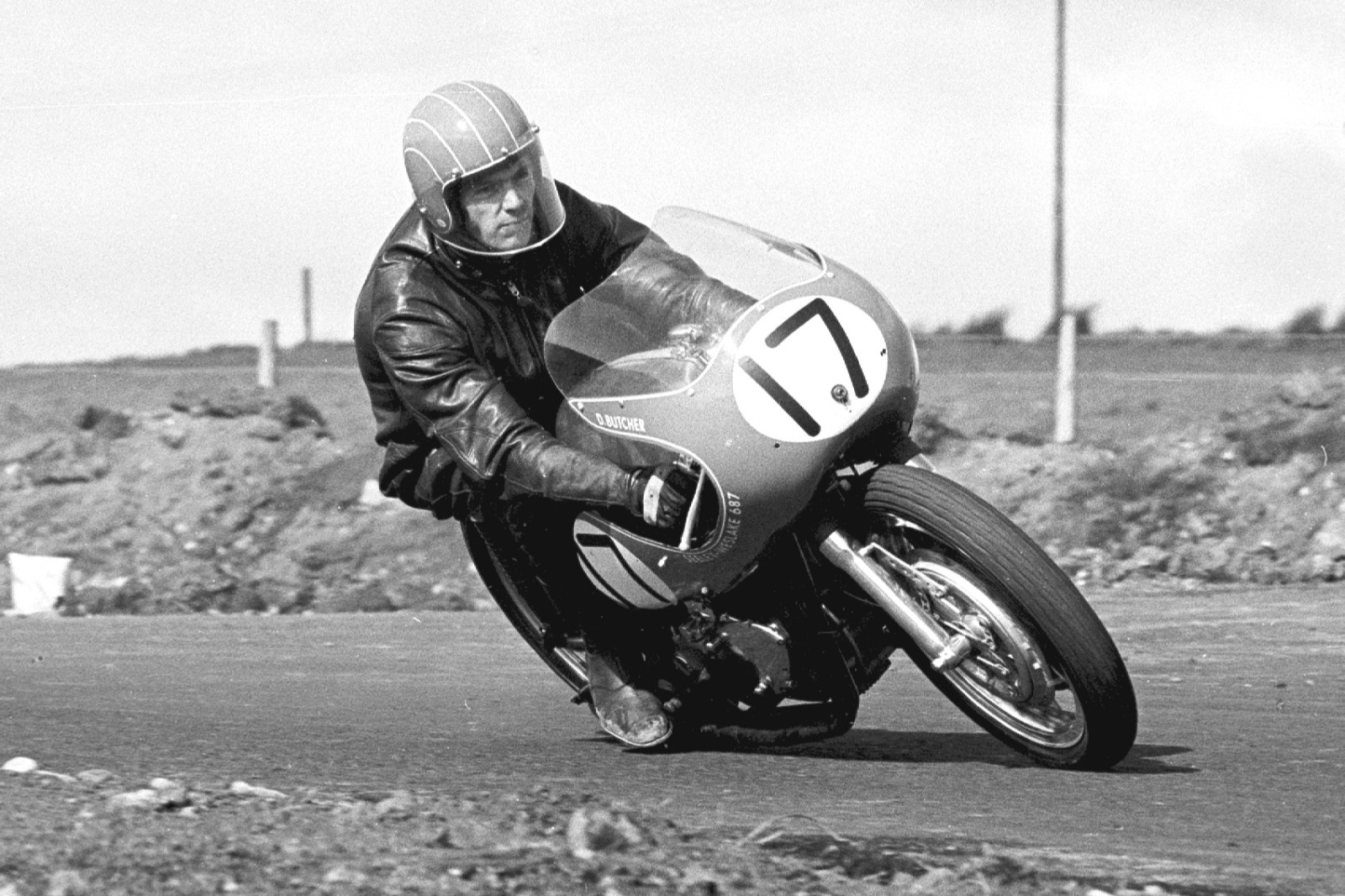
Bike racer Butcher had his hands full when he purchased the circuit
Photo by: Jim Moir
“It was completely new ground for me. It’s a bit like being on the other side of a pub, where you think you can run it better than the landlord but, when you get behind the bar, you have no clue.”
Much of the work undertaken was unseen. From electrical systems to paddock generators and a comprehensive toilet pipe system that feeds into 12 separate septic tanks, developing key facilities was critical to securing the venue’s long-term success.
If Knockhill was to attract top-level national categories such as the British Touring Car Championship and, eventually, British Superbikes, it needed to get its house in order first.
“If I had known what was going to be involved, then I would never have bought it,” Butcher confesses. “It was millions being spent, we were in a lot of debt, but I knew that, with the development work getting done, it would start to make money.
“And that happened when Alan Gow had faith in Knockhill to deliver a touring car round in 1992 – the BTCC really helped revitalise the circuit.”
The BTCC arrives at Knockhill
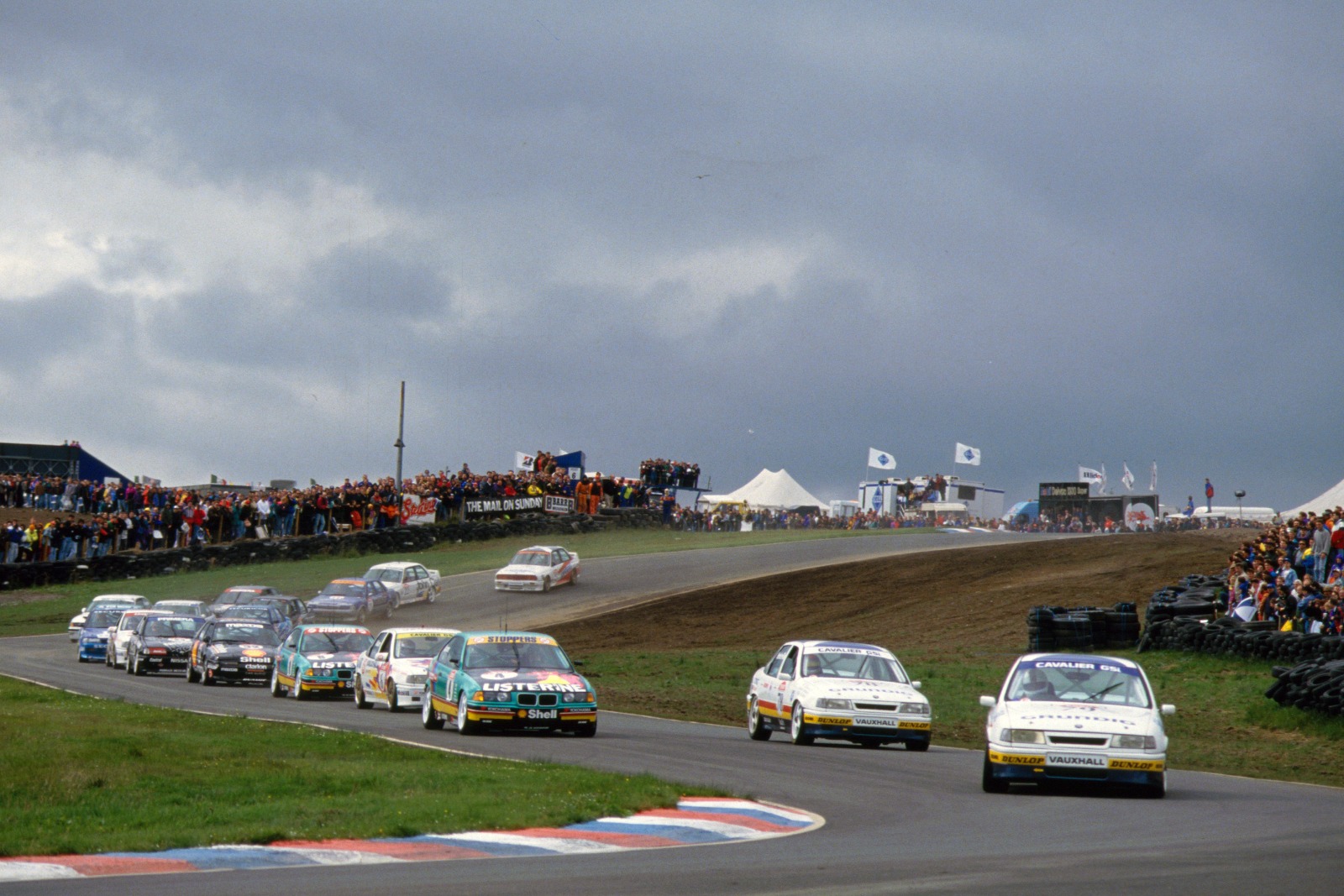
Gaining a BTCC round was a big boost for Knockhill
Photo by: JEP
With the future of the Ingliston circuit on the outskirts of Edinburgh becoming increasingly shaky at the start of the new decade, Knockhill took up the mantle as ‘Scotland’s national motorsport centre’, its popularity enhanced in no small part due to the BTCC’s arrival. For championship chief Gow, the allure of Knockhill was clear.
“For us, Scotland needed to have a round of the BTCC and Derek and his team were so enthusiastic, and bent over backwards to make it happen,” explains Gow. “Once Derek came to us with his vision of applying for a round of the BTCC, we came up to Knockhill to have a look. It didn’t look as good as it does now, but we shared in that vision; we had to be racing north of the border.
“The drivers love the circuit, and I am so glad that we made this decision. I don’t think I’ve ever seen a dull touring car race at Knockhill.”
Vauxhall’s John Cleland flew the flag for Scottish fans in that inaugural visit from the tin-top championship in 1992 as he fought the BMW pairing of Tim Harvey and Steve Soper all the way down to that infamous finale at Silverstone.
But Cleland, who took 17 outright wins in the BTCC and two titles, never truly gelled with the circuit; ironically, Cleland donned Knockhill’s name on his car and helmet throughout his career but only achieved one win at his local track during his lengthy spell in UK motorsport's top flight.
“The very first time I came here, I loved the place and I think the whole team with Derek at the helm have always been very welcoming,” Cleland reflects. “It’s a long way for the touring car teams to come, but they have to remember that we’d do the same, going to Thruxton, Silverstone and Brands Hatch.
“There’s something about this track that I didn’t quite have, I couldn’t get my head around winning here. It was beyond me, and I’ve no idea why.
“I always thought I drove fairly well at the track but there was just something about it that was lacking. I’d go to Brands, Oulton, Donington and win races but I couldn’t do it here!”
Iconic touring car memories
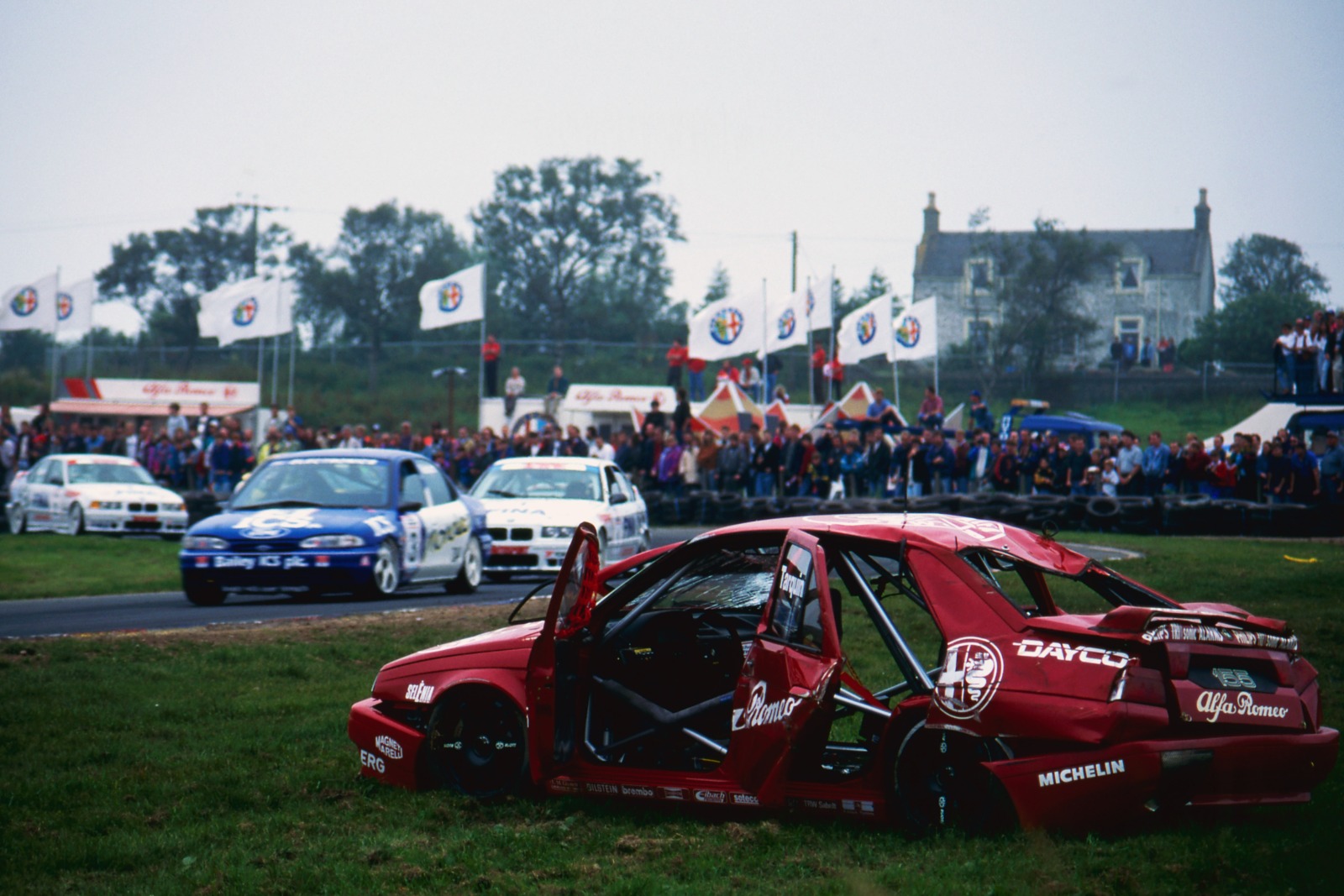
Tarquini's roll was a memorable BTCC moment from Scottish visits
Photo by: JEP
Having long retired from racing, Labinjoh was suddenly back in demand by 1994. Not by Cleland but by, of all people, Gabriele Tarquini. Alfa Romeo had entered the BTCC as a works team that year and, keen to make the most of the trip north, team principal Nini Russo wanted something up his sleeve for his drivers.
“He came to me because I was the first winner at Knockhill, and I sold Alfas, and we had that link,” recounts Labinjoh. “Russo invited me to dinner the night before the touring car weekend and I was chatting to Tarquini and [team-mate Giampiero] Simoni, and I was talking about the joy of those first few corners and catching the kerbs and really pushing the car.
“And, of course, Tarquini got really unlucky with [Alain] Menu when he was on two wheels, and he went flying! He was quite shaken after that, I have to say.”
Watching from the very corner where Tarquini performed his now famous barrel roll was a young Gordon Shedden, who would go on to become BTCC champion three times (in 2012, 2015 and 2016).
Now a seasoned veteran, Shedden owes a lot to Knockhill: having won the Fiesta Zetec Championship in 2000, he became an instructor at the circuit under the tutelage of Ian Forrest and met his future wife Jillian (nee Butcher, daughter of Derek). Knockhill also provided a career reset in both 2005 and 2009.
“The only thing I did in 2005 was a one-off at Knockhill in the VIP car in Porsche Carrera Cup, which Autosport organised,” Shedden explains. “And I had a really good run, finished on the podium and that was the catalyst in ending up in the BTCC with Matt Neal at Dynamics.
“The same thing happened again in 2009, when I hired a SEAT, had a good run again and ended up back at Dynamics and won three titles!”
The modern-day Knockhill
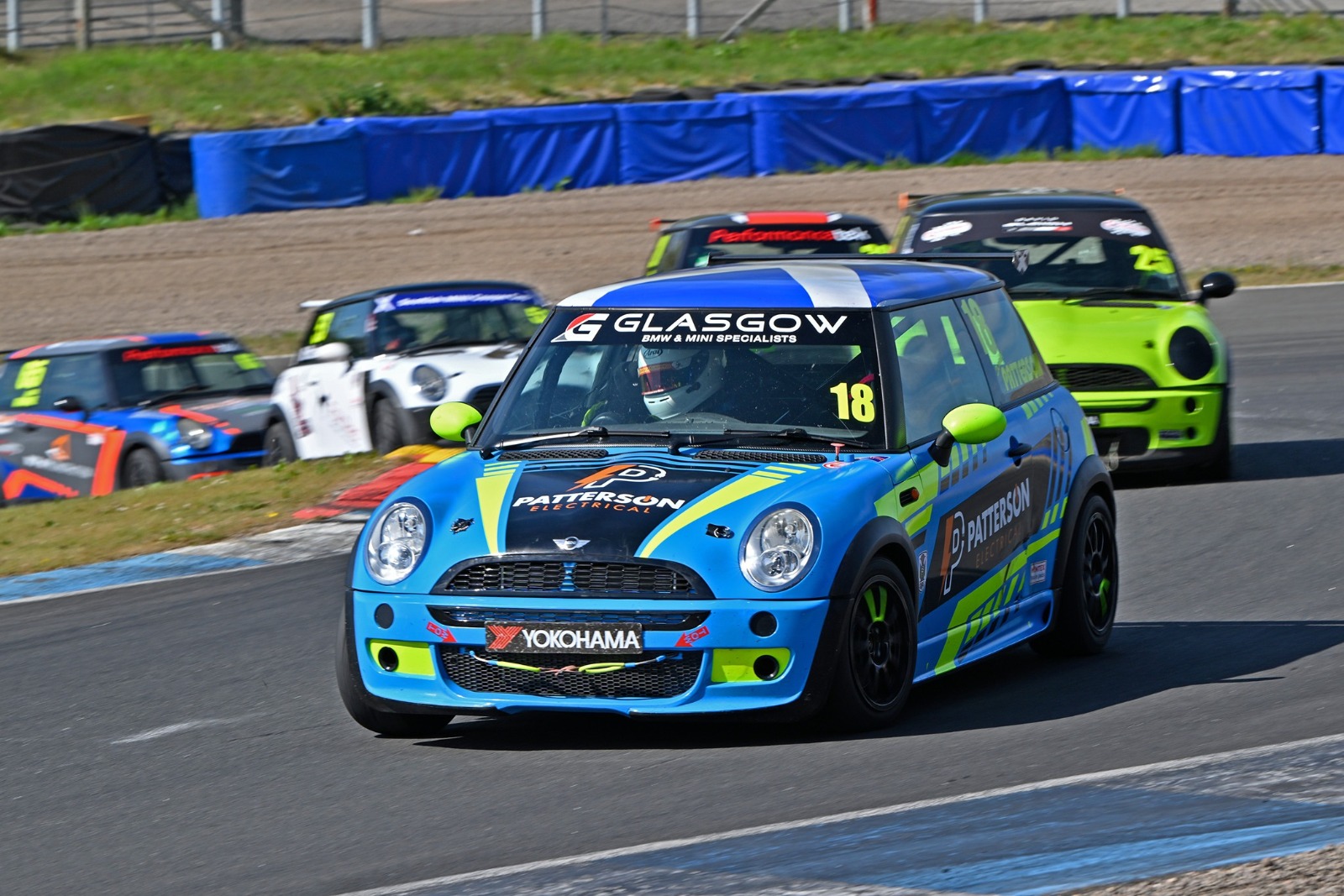
The circuit continues to have a packed calendar of events today
Photo by: Jim Moir
Although the track layout has remained the same since 1974, much has changed around Knockhill over the past 50 years, most notably in terms of safety and infrastructure.
“We’ve resurfaced twice [most recently in 2018] and the last time we did it, it cost just over £300,000,” Butcher says. “We’ve Tarmacked the paddock because Alan told us that the guys with slick tyres could really do with Tarmac in the paddocks, so we did that.
“We’ve spent hundreds of thousands on safety development as well, mainly for bikes, with gravel traps and air barriers around the circuit. Every one of these air pillows is close to £1000 a pop. I think the last time we counted, we had around 160 of the big cushions and around 200 of the small ones.”
Now in charge of day-to-day operations, Derek’s daughter Jillian Shedden is seeing the reward after substantial investment. “The biggest challenge we have now is fitting everything in,” she explains. “Aside from the race weekends, we’ve got a lot of activities, from trackdays, driving experiences to go-karting and the fireworks display. And we’ve only got a set number of weekends, but we’ve done a good job of filling our calendar.
“Our job is about making sure people enjoy their racing and experiences and keep coming back, so building a good product with a good atmosphere is really what we’re all about.”
Key to that experience not only lies with satisfying customers and competitors but also in providing a platform for those looking to get into motorsport in other areas.
Having retired from his day job, Dr Robert Johnston has been one of the circuit’s best-known voices over the past 30 years in the Garry Stagg commentary tower. An amateur racer in his day, Johnston is now able to dedicate his time to the sport he loves, alongside a rotating cast of colleagues such as Radio Le Mans commentator Peter MacKay and the up-and-coming Chris Hosie.
For half a century now, Knockhill has been a staple in UK motorsport and has helped launch the careers of star names such as David Coulthard, Allan McNish, Dario Franchitti, and many others. From assisting national title winners to future world champions, the focus now is to ensure this small plot of land in rural Fife can continue to play a significant part in Scottish racing for another 50 years.
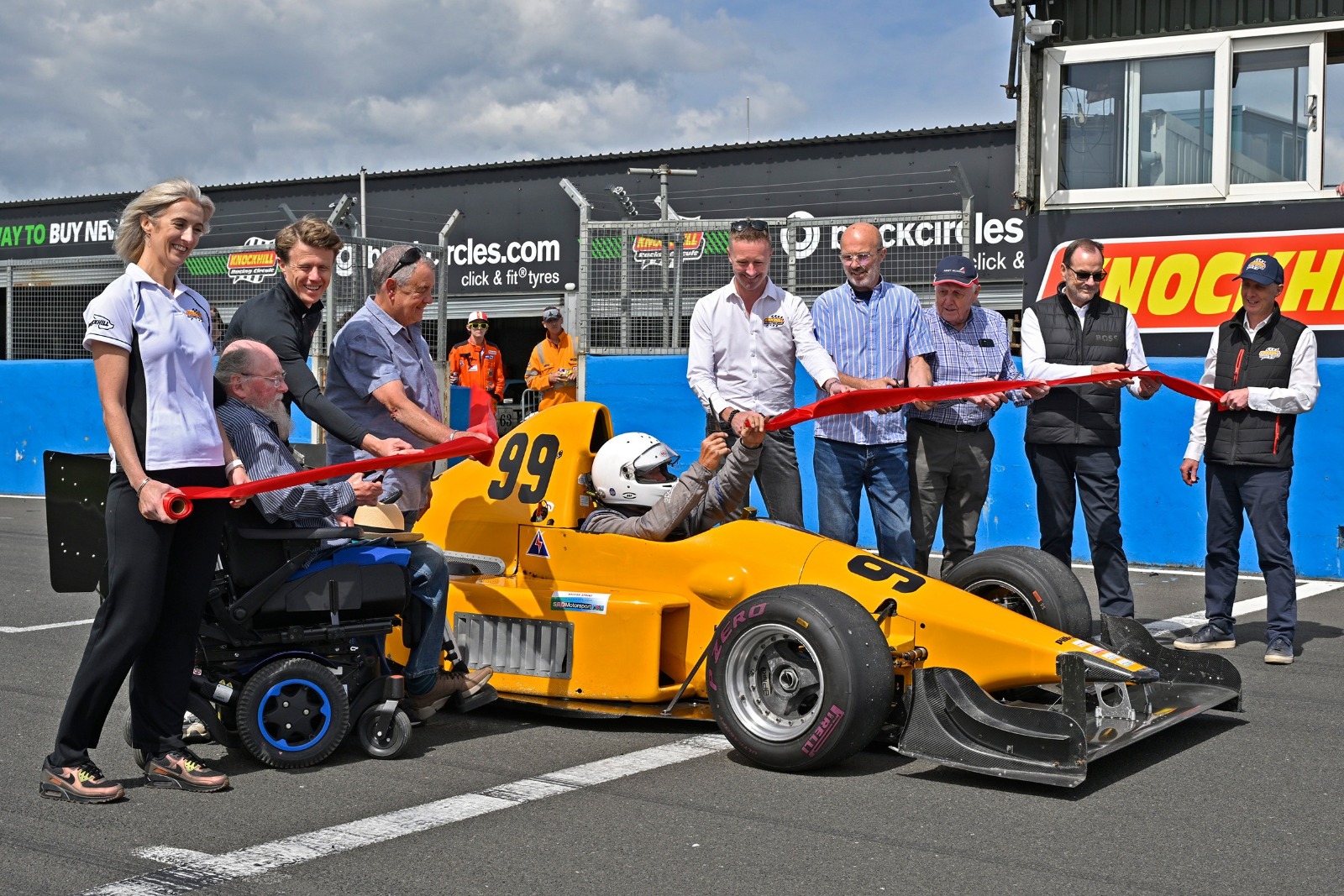
Amon's 1975 opening of the circuit was recreated at special anniversary event last month
Photo by: Jim Moir

Local pair prevail as Knockhill hosts its first-ever night races

McLaughlin edges closer to British F4 title after dramatic Knockhill weekend

Legendary performances as Knockhill celebrates 50 years of car racing

Rossi scores breakthrough GT World Challenge victory at Misano

Ex-F1 race winner Barrichello targets more races after Ferrari comeback win

Vanthoor, Weerts secure GTWCE Sprint title for WRT Audi

GTWCE Sprint Magny-Cours: ASP Mercedes and WRT Audi share wins

How a chance meeting forged a touring car behemoth

Verstappen’s words explained: Why Red Bull’s turnaround is so different this time

When Cadillac will open its F1 engine factory

Mission control: Inside the FIA and F1's latest answer to football's VAR

Marquez accepts that current MotoGP contract could be his last
Subscribe and access Autosport.com with your ad-blocker.
From Formula 1 to MotoGP we report straight from the paddock because we love our sport, just like you. In order to keep delivering our expert journalism, our website uses advertising. Still, we want to give you the opportunity to enjoy an ad-free and tracker-free website and to continue using your adblocker.


Top Comments