
Nigel Roebuck: Fifth Column
"One has come to regard Alonso as a very strange man"
|
In recent days it seems to have been 'open house' on McLaren, and although no charge of any kind has involved Lewis Hamilton, it must have been hard indeed for any rookie driver, even the most impressive in memory, to have been unaffected by the tumultuous events of the recent past. That said, Fernando Alonso has been apparently untouched - and that does take a bit of understanding. For some little time, one watched his behaviour in and around the McLaren motorhome, and thought him an isolated figure, sticking with his little coterie - father, manager, Spanish journalists - and paying no attention to anyone else around him. A strange way to behave, but then one has come increasingly to regard Alonso as a very strange man. There is nothing new in a poor team atmosphere, with the drivers not getting along - one thinks of Alan Jones and Carlos Reutemann at Williams, overwhelmingly of Alain Prost and Ayrton Senna at McLaren - but usually a situation like that is overt. On the last weekend of Gilles Villeneuve's life, I was chatting to him in the Zolder pits at the end of a session, when his Ferrari team-mate, Didier Pironi, drove in. At once Gilles took my arm: "Let's get out of here..." Literally, he did not want to be in the vicinity of Pironi. Alonso is not at war with Hamilton in that sort of way, but it is because of Lewis - because of Lewis's pace - that he has become jaundiced with McLaren, resentful that he, the world champion, is not automatically regarded as the team's number one driver. That's not how they do things at McLaren, where the drivers get equal equipment, there are no team orders (in the Ferrari sense of the word), and over time a natural team leader emerges, by simple virtue of his results. It happened that way with Prost, with Senna, with Hakkinen. A number one driver doesn't need to be nominated: he just is. In David Coulthard's recent autobiography, he speaks of the resentment he long felt at McLaren, the impression he had that Ron Dennis always favoured Hakkinen. There was no suggestion that he, DC, was getting other than equal equipment, more a feeling that, all things being equal, Ron would prefer to see Mika win. And ultimately, Coulthard writes, his boss admitted that such was the case. Dennis did have a special relationship with Hakkinen, not least because he was greatly affected by the accident at Adelaide in 1995, in which Mika almost died. Also, Mika was a better driver. Earlier this year Prost, who won three championships with McLaren, said he had sympathy for the predicament in which Alonso found himself, believing it not unlike the one he had faced in 1988, when Senna came aboard. In fact, the circumstances were a little different. By the time Ayrton arrived, Alain's feet had been under the McLaren table for close on five years, and team and driver had done well indeed by the other. In the mid-'80s Prost was the best driver in F1, and McLaren was very much 'his' team, be his team-mate Niki Lauda, Keke Rosberg or whomever. Then in came Senna, and it was soon clear that, more weekends than not, on pure pace he had the edge. As time went by, Prost felt his situation changing; no longer did the team revolve around him. It wasn't that Alain ever attempted to denigrate his rival's ability or speed. No, it was more of a human thing: for a great racing driver, Prost was always unusually sensitive, and when Senna's standing, in the affections of the team, began overhaul his own, he felt more than a little hurt. Thus, a few months ago, Prost said he felt sorry for Alonso, in a team with a new 'favourite son'. In fact, though, their situations are similar only superficially. Unlike Alain, Fernando had not been firmly established at McLaren - indeed he was the newcomer, and Hamilton, F1 rookie or not, the one with his feet under the table. It was interesting last week to read of Juan Montoya's thoughts on the subject. When he learned that Hamilton was to be Alonso's team-mate, he said, he felt sorry for Fernando. Why? "Because Lewis is like Ron's own child. Ron paid for his whole career, so he would rather see him win..." Perhaps, in the normal course of events, it is true that Dennis would prefer to see Hamilton win, just as one always felt with Hakkinen. Ron does have a long-term investment in Lewis, and has been close to him for 10 years. But the fundamental problem is that Alonso never expected to be threatened by his McLaren team-mate, whomever it should be, and the pace of this rookie has been a sore shock to him. It is only since the World Motor Sport Council hearing the other week, however, that we have learned the true level of froideur which exists between Alonso and Dennis. Not since race day in Hungary, Ron revealed in Paris, had he and his driver exchanged a word. Given what Alonso threatened that morning in Budapest, mind you, one could hardly blame Ron for never wishing to speak to Fernando again. I still find it scarcely believable that a driver, in an attempt to better his own position, could blatantly try to blackmail his own team owner - and I somewhat doubt that the same thought hasn't occurred to other team principals, as some of them consider hiring Alonso in the near future. Had the FIA stewards stayed out of the Alonso/ Hamilton qualifying fracas at the Hungaroring, it would have been a simple matter of Dennis or Martin Whitmarsh sharply advising the two drivers to grow up, but of course - unfathomably, to me - the stewards did get involved, as a result of which Alonso was punished, and Hamilton was not. The next morning came Alonso's failed attempt to intimidate his boss. The irony is that in the weeks since, through this period of extraordinary McLaren upheaval, Alonso's form in the car has crystallised, and he has driven with all the brilliance at his command. We may not admire the man as once we thought we did, but there's no doubting the imperious resilience of the driver. In recent weeks there has been much talk of the curious goings-on in the Formula 1 of today, of practices as old as Job which have suddenly become 'offences'. Discussing the 'Stepneygate' affair at Monza, for example, Jackie Stewart and others pointed out that this sort of thing had gone on since the beginning of time. It was the same with 'team orders'. Another accusation recently laid at Alonso's door was that he had offered the mechanics on his car a financial bonus every time he finished ahead of Hamilton. Imagine! It was made to sound like a heinous crime, one of recent invention. Long ago I interviewed Fangio in London, and the immortal Juan Manuel, while entrancing me with tales of his career, made it clear he did not come up on the down train. At one point he talked about the 1953 Italian Grand Prix, in which his Maserati team-mates were his protege Onofre Marimon and Felice Bonetto. "My car had a terrible vibration all through practice," he said, "and it could not be cured. In every team I drove for, I always made sure of having the mechanics on my side. Very important. Whatever I win, I would tell them, you will get 10 per cent. The night before the race, I again complained of the vibration - and on Sunday it was miraculously cured!" How so? I asked. "I have no idea," Fangio smiled, "but I know Bonetto's teeth fell out during the race..." |

In the magazine: Wheldon the Lionheart

MPH: Mark Hughes on...
MPH: Mark Hughes on...

MPH: Mark Hughes on...

MPH: Mark Hughes on...
MPH: Mark Hughes on...

MPH: Mark Hughes on...

MPH: Mark Hughes on...
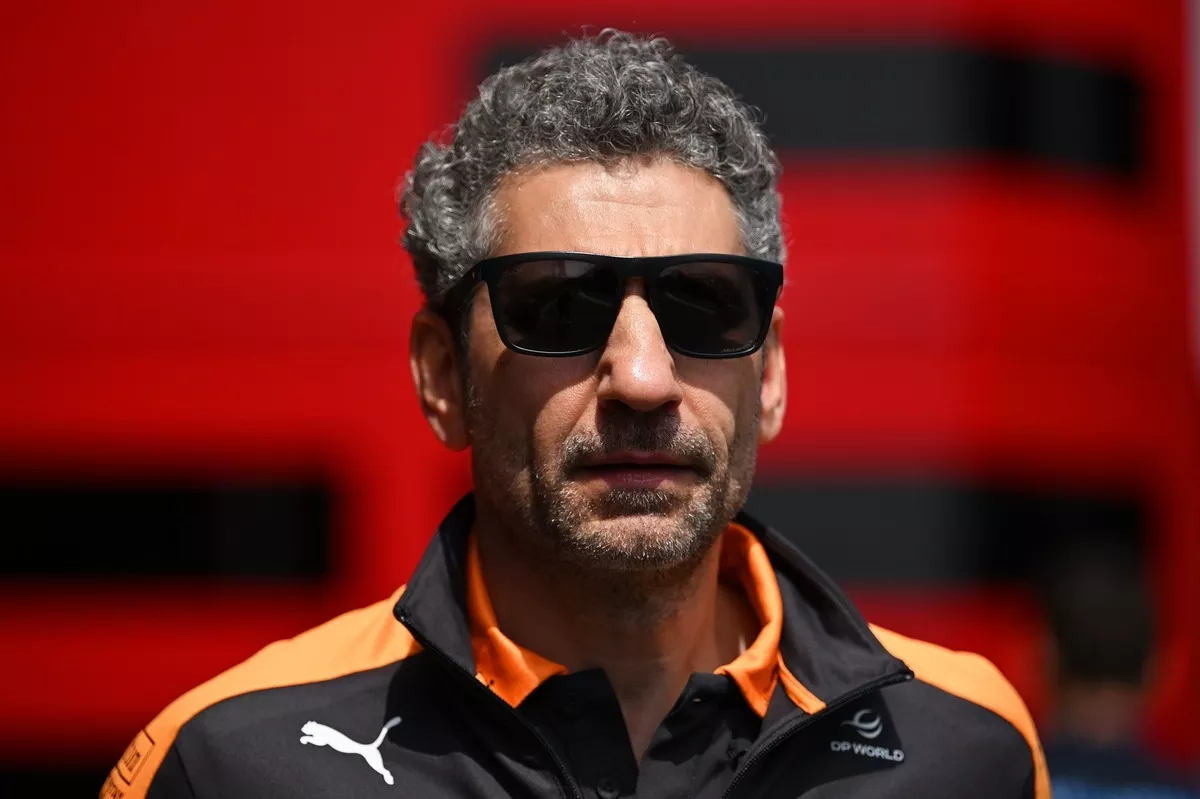
Why McLaren considers Norris-Piastri Singapore clash so “serious”

What Max Verstappen will change after Red Bull’s poor F1 starts in Malaysia and Singapore

A "better job" or more engine power? Verstappen's Singapore pole unpicked

What we learned from the 2026 F1 Singapore GP sprint race and qualifying
Subscribe and access Autosport.com with your ad-blocker.
From Formula 1 to MotoGP we report straight from the paddock because we love our sport, just like you. In order to keep delivering our expert journalism, our website uses advertising. Still, we want to give you the opportunity to enjoy an ad-free and tracker-free website and to continue using your adblocker.


Top Comments