




Why MotoGP's latest Hungarian experiment may not last
After several failed attempts, MotoGP appeared to have finally found a new long-term home in Hungary. But after the first two Balaton races achieved limited success, the future of the grand prix is far from certain

At a time when world championships are increasingly looking to expand their reach in Asia and North America, it was refreshing to see MotoGP add another race in Europe - the heartland of motorsport. Unfortunately, the first two editions of the revived Hungarian Grand Prix fell short of expectations, and there are serious doubts about the future of race.
Balaton Park was always going to be an unusual fit on the MotoGP calendar. Reconfiguring a venue primarily built for track days and corporate events is no easy task. Walking around the track and its access road makes it clear that the facility was never intended for international events of such scale.
Several changes were made to the layout, but they did little to change the DNA of the 4.1km venue. It remained a tight and twisty circuit, with the addition of multiple chicanes only reinforcing its start/stop nature. The fact that it followed Mugello on the calendar in 2026 - arguably the fastest motorcycling circuit in the world - only heightened the contrast.
In essence, there is nothing inherently wrong with a slow and compact track. Jack Miller rightly pointed out that a world championship should feature a wide range of circuits, and Balaton Park certainly offered something different. However, there were still some clear shortcomings, not least the limited opportunities for overtaking.
There was also the safety element, particularly in the sharp opening right-hander. MotoGP riders are already on the limit at the start of races, and a botched resurfacing job made life trickier for riders. Ultimately, only one of the 22 riders got it wrong at Turn 1, but that was enough to trigger a big pile-up on Sunday.
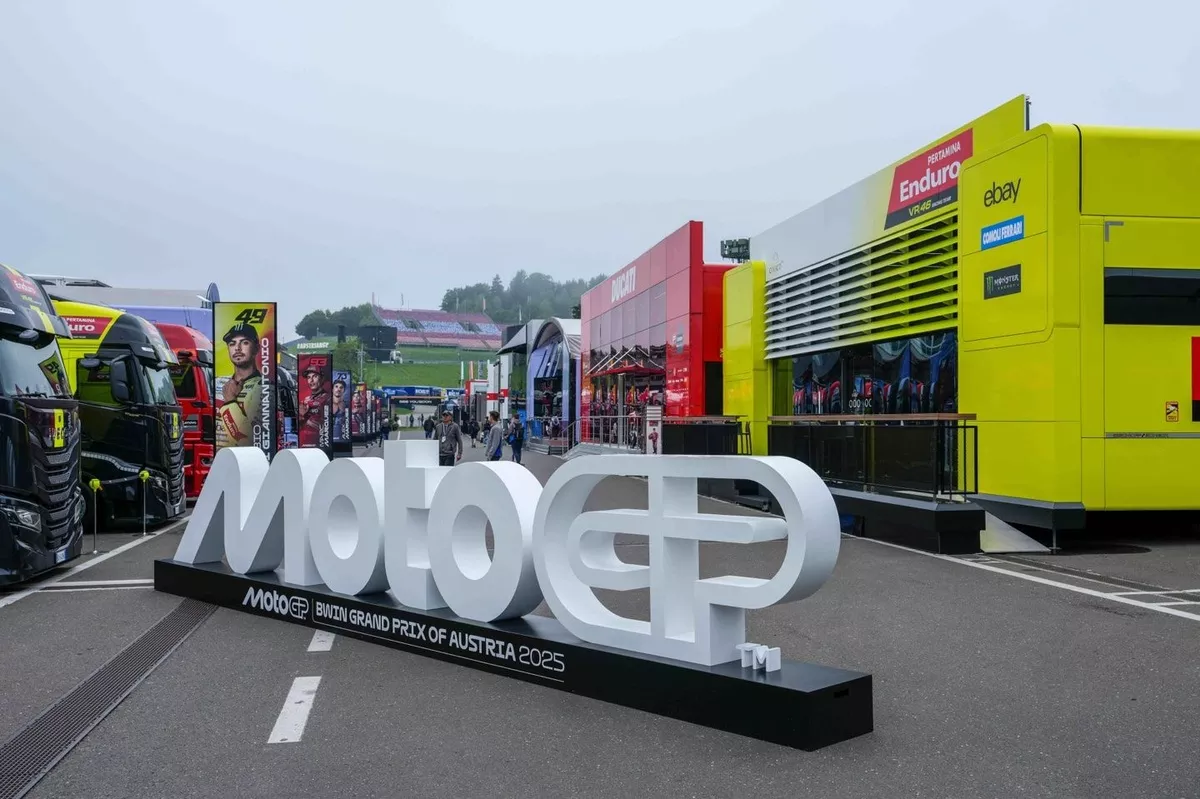
While many riders did not enjoy the on-track experience, they had little reason to complain about the infrastructure at the track. The paddock was modern and spacious, the garages were well equipped and a major hotel was located directly at the venue.

Marquez and Acosta injected life into an otherwise dull Hungarian GP weekend
Photo by: Gold and Goose Photography / Getty Images
Step outside the circuit boundaries, however, and the picture changes completely, as you walk into a completely rural - if scenic - location. Despite its name, Balaton Park is not located directly on the shores of the famous Lake Balaton, and that leaves it in a remote part of the country.
The wider Balaton region is connected by rail and buses, with dedicated shuttles also operating to the track. However, the circuit remains some distance from major cities as well as the main tourist centres around the lake. Compare that with Brno, located on the outskirts of the Czech Republic's second-largest city, and the contrast is obvious.
Accessibility may not have been the only factor, but it was difficult to ignore the number of empty seats visible on race day. The inaugural event in 2025 didn’t see a big turnout, with only 80,000 fans attending the event over the weekend, according to official figures. MotoGP did not share the attendance for this year’s race, but it is expected that they were a lot lower than the already small numbers from last year.
There were paddock rumours about Balaton Park being dropped next year, with the Hungaroring mooted as a potential replacement
The situation was not helped by the fact that tickets went on sale only in April, just two months before the event was due to run. Combine that with limited accommodation options around the circuit, and you could see why there were so many empty seats.
And that takes us to the wider issues affecting the Hungarian GP: politics. Earlier in 2026, Hungary’s long-time prime minister Viktor Orban was voted out of power, with Peter Magyar taking over as the country’s leader. HUMDA, the company that had signed a 10-year deal with MotoGP, was liquidated, with the operator of the Hungaroring track stepping in to promote the race. The change added to the delays in launching ticket sales.
Already on Thursday, there were paddock rumours about Balaton Park being dropped next year, with the Hungaroring mooted as a potential replacement. Whether the Formula 1 venue could be modified for top-level motorcycle racing by 2027 will ultimately depend on money and political will. Add the already announced return of Argentina to the calendar and Hungary’s chances of remaining on the calendar appear slim.

The resurfaced Turn 1 caught out Martin, who triggered a major pile-up at the start
Photo by: Gold and Goose Photography / Getty Images
In many ways, MotoGP’s two-year stint in Balaton Park sums up its entire history in Hungary. It was in 1990 when the 500cc class first visited the Hungaroring, but it was quickly overshadowed by safety concerns, leading to it being dropped from the calendar. A return in 1992 proved equally short-lived.
Since then, multiple efforts were made to bring Hungary back to the calendar, most notably the ill-fated Balatonring project.
There is undoubtedly scope for MotoGP to strengthen its presence in Central Europe, even as Asia remains a key market for the championship. But for now, only a coordinated effort from the series’ new owners and the government can secure Hungary’s future on the calendar.


MotoGP's newest European venue might have a short-lived time on the calendar
Photo by: Gold and Goose Photography / Getty Images


Peugeot promotes test driver Quinn to race seat for 2027 WEC
The numbers behind Ducati becoming a modern MotoGP powerhouse

Le Mans 24 Hours winner Conway to retire at the end of WEC 2026

The contrasting tactics used by Ducati and Aprilia in MotoGP 2026 title fight

Five things we learned from MotoGP Japanese GP after tyre drama

MotoGP Japanese GP: Marquez beats Martin in early duel to close points gap

MotoGP Japanese GP: Martin edges out Marquez to claim back-to-back pole positions

Verstappen to make GT3 return at 2026 GT World Challenge Europe finale

Why "crazy" power unit success is so meaningful for Red Bull - and for F1

McLaren targets Norris’ costly fuel system issue with Singapore F1 power unit fixes

How Ford is "hitting milestones" in preparation for WEC Hypercar assault

Audi F1 drivers reveal biggest engine limitation – and why they’re not worried
Subscribe and access Autosport.com with your ad-blocker.
From Formula 1 to MotoGP we report straight from the paddock because we love our sport, just like you. In order to keep delivering our expert journalism, our website uses advertising. Still, we want to give you the opportunity to enjoy an ad-free and tracker-free website and to continue using your adblocker.


Top Comments