


Top 10 worst follow-ups to title-winning F1 cars
The worst cars produced by F1 teams in title-defending seasons

Autosport Retro
Telling the forgotten stories and unearthing the hidden gems from years gone by.
Many great cars have won a Formula 1 title since the first world championship for drivers in 1950. Some of the teams that produced them went on to win multiple crowns with different designs, but sometimes a great car was followed by a duffer.
Rule changes, the loss of key staff, change of engineer supplier and technical innovation from rivals can contribute to a swift fall from grace. Periods of success last longer these days but, as the major regulation change for 2026 shows, no team can be completely impervious.
For this list, we’ve looked at the least successful cars that followed machines that won a championship; the drivers’, constructors’ or both. Pace, reliability, overall performance, quality of drivers and championship position are among the factors that have been considered.
10. 1954 Ferrari 625 and 553

Ferrari used two different cars during the 1954 F1 season
Photo by: Motorsport Images
- Wins: 3 (2 for 625, 1 for 553)
- Poles: 3 (all 625)
- Position: 2nd in drivers’ championship (Gonzalez)
We’ve got two cars in one entry here as Ferrari hedged its bets at the start of the new 2.5-litre F1 ruleset. They just pip the shortlived Lotus 43, which was at least rapid if unreliable, and the mediocre 2009 Ferrari F60, which finished fourth in the constructors’ table but was closer to the frontrunning pace than any car in this 10.
The Ferrari 500 was one of the most dominant cars in championship history, taking 14 wins and two drivers’ titles during the two-litre era. But neither the bigger-engined version, the 625, nor the 553 ‘Squalo’ could maintain that advantage.
Ferrari lost champion Alberto Ascari to Lancia, and the first two points-paying GPs of 1954 to Juan Manuel Fangio’s new Maserati 250F. And then Mercedes returned, moving the goalposts with its W196.

Jose Froilan Gonzalez defeated Mercedes at the British GP but the 625 was otherwise outgunned by Fangio’s Mercedes. A second victory (with an uprated engine) came at Monaco in 1955 courtesy of Maurice Trintignant only after the much faster Mercedes and Lancia entries struck misfortune.

At least the 625 racked up podiums, though. The 553 struggled to finish on its rare 1954 outings, but Mike Hawthorn did win the Spanish GP finale, ahead of Luigi Musso’s 250F and Fangio’s W196, after Ascari’s rapid D50 retired.
Ferrari’s follow-up to the Vittorio Jano-penned D50, which it inherited from Lancia, also deserves a dishonourable mention. The 801 was a further Ferrari ‘development’ of the D50 and went winless in the 1957 championship after Fangio’s 1956 title success.
9. 2022 Mercedes W13

Mercedes shocked the grid with its no-sidepod design in 2022 and it started a horror four years of ground-effect cars for the German marque
Photo by: Erik Junius
- Wins: 1
- Poles: 1
- Position: 3rd
When you’ve scored eight consecutive constructors’ titles the pressure is on to produce something special. Mercedes tried to do just that with its first car of F1’s second ground-effects era and fell well short.
The idea of the ‘zeropod’ concept was to maximise downforce but the W13 suffered from porpoising. The downforce came on and off as the floor touched the track, thumping the car repeatedly into the ground at high speed.
That meant the W13 had to be run at a compromised ride height, which cut downforce. It was rarely a match for Red Bull or Ferrari during 2022 and Mercedes finished third in the constructors’ table.
The reliable W13 did manage 17 podiums from its 22 races, including a 1-2 led by George Russell at Interlagos, but it was the first F1 car in which Lewis Hamilton didn’t take a victory. Perhaps more importantly, it set Mercedes back; the team never truly recovered during the 2022-25 ground effect era.
8. 1998 Williams FW20
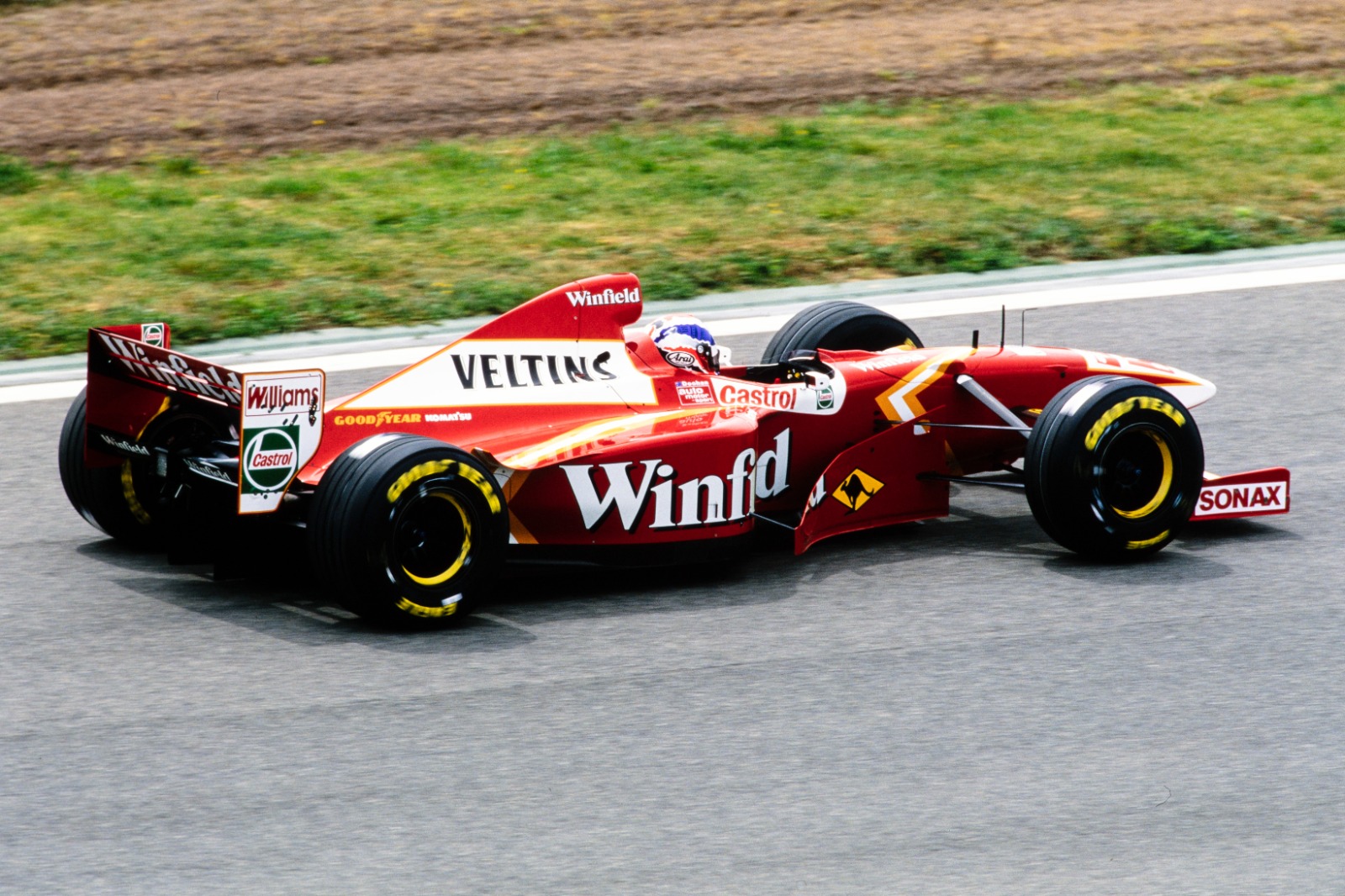
The FW20 marked the start of an ongoing 29-year title-less drought for Williams
Photo by: Gavin Lawrence/LAT Images via Getty Images
- Wins: 0
- Poles: 0
- Position: 3rd
The 1996 Benetton B196 and 2007 Renault R27 could have taken this spot. Like the Williams FW20, both followed double title successes by finishing third in the constructors’ table and going winless. But whereas Benetton and Renault could point to losing their championship-winning drivers, Michael Schumacher and Fernando Alonso respectively, Williams still had Jacques Villeneuve.
What Williams had lost was the design skills of Adrian Newey and factory Renault power, as the French firm pulled out of F1 and left Williams with its Mecachrome-branded V10s, which did not enjoy the same level of development.
There was also a major rule change to contend with, the cars being reduced in width and being forced to run grooved tyres in the dry. The result was that Williams was jumped by both McLaren, now with Newey on board, and Ferrari.
It’s also the degree to which Williams fell that gets the FW20 onto this list. Although Heinz-Harald Frentzen finished third at the Australian GP opener, he was a lap behind the McLarens of Mika Hakkinen and David Coulthard, and Williams never really looked like winning in 1998.
Despite some heroics from Villeneuve, most notably at Hockenheim, the FW20 could only muster three third-place finishes. Williams scored 38 points, a mere 31% of its 1997 total. That’s worse than Benetton in 1996 (50% of its 1995 tally) but marginally better than Renaut in 2007 (25%).
7. 1968 Brabham BT26
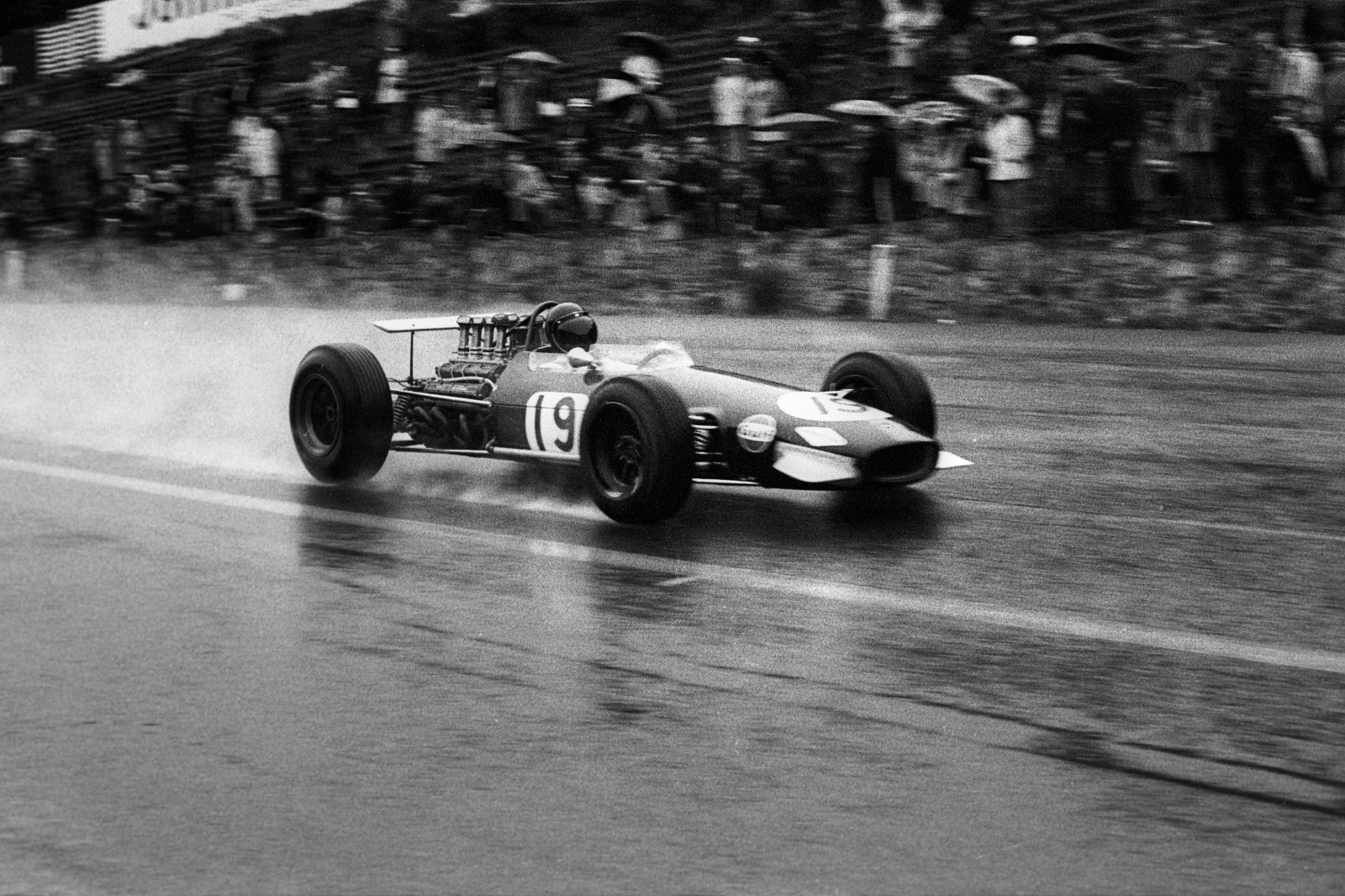
Engine reliability cost Brabham in 1968
Photo by: Paul-Henri Cahier/Getty Images
- Wins: 0
- Poles: 2
- Position: 8th (including points scored by BT24)
Really, this entry is about the Repco RB860 engine. As events in 1969 would prove, the basic BT26 wasn’t a bad car…
Brabham had won two title doubles with the solid but perhaps unspectacular Repco RB740 engine, but the pace of the Cosworth DFV-powered Lotus 49 in 1967 showed the rest of the F1 paddock that everyone else needed to up their game. Brabham’s answer was the double overhead-camshaft Repco RB860, which had four valves per cylinder.
It certainly produced more power and Jochen Rindt demonstrated the pace of the BT26 on several occasions, taking pole at Rouen and Mont-Tremblant. But reliability was woeful, engine issues being the chief (though not only) reason why Rindt and Jack Brabham mustered just one finish each in their total of 19 championship starts in the BT26.
Incredibly, both those came at the tortuous Nurburgring, Rindt finishing third and Brabham fifth in the famously wet German GP that Jackie Stewart’s Matra won by four minutes. Brabham slumped from double title winner to eighth in the constructors’ table (and some of its points were scored by its older cars).
What saves this car from being higher on this list is its record with the DFV in 1969. Jacky Ickx took the BT26A to two victories and second in the drivers’ standings, while Brabham pipped Lotus to runner-up spot in the constructors’ championship. Piers Courage also scored two podiums in the BT26A run by Frank Williams.
6. 1970 Matra MS120

Matra had to defend the 1969 crown without Jackie Stewart behind the wheel
Photo by: Motorsport Images
- Wins: 0
- Poles: 0 (but 1 pole in 1971 and '72)
- Position: 7th
Matra had tasted success with Ken Tyrrell and Stewart in 1968-69, but wanted the reigning world champions to switch from Cosworth DFV power to Matra’s own V12 in 1970. The Brits declined and went their own way, leaving Matra to run the new Gerard Ducarouge/Bernard Boyer MS120 for Jean-Pierre Beltoise and Henri Pescarolo.
The MS120 wasn’t a bad car and would still be capable of scoring poles and podiums as late as 1972 in D form. But it failed to live up to the brilliant MS80, which Stewart had taken to a dominant title in 1969.
Beltoise managed third places at high-speed Spa and Monza, while Pescarolo completed the podium at Monaco in a race made famous by Jack Brabham’s last-corner gaffe that handed victory to Rindt.
The French duo finished ninth and 12th respectively in the drivers’ standings and reigning constructors’ champion Matra fell to seventh in the points. Despite being saddled with the March 701 and then the rapid-but-unreliable Tyrrell 001, Stewart took fifth in the championship. One wonders what Stewart might have achieved in the MS120…
5. 1961 Cooper T55

The 1961 season marked the end of Cooper's short dominant period in F1
Photo by: Motorsport Images
- Wins: 0
- Poles: 0 (1 by T58)
- Position: 4th
Cooper’s time at the top of F1 was brief. It brought the rear-engined revolution with the T51, perfected things nicely with the 1960 T53 that won five consecutive GPs in the hands of Jack Brabham, and then went winless in 1961.
Owen Maddock’s T55 was a tidied-up version of his T53 and it was smaller thanks to the move from 2.5-litre to 1.5-litre regulations. The car made a promising start by finishing 1-2 in the non-championship Aintree 200, but its four-cylinder Coventry Climax FPF engine – pressed into service while the FWMV V8 was prepared – was no match for Ferrari’s V6.
While Ferrari dominated the season, aside from two brilliant Stirling Moss Lotus victories for Rob Walker, Cooper fell to fourth in the constructors’ standings. Often in the midfield, the T55’s best GP result was third at Monza with McLaren at the wheel, while reigning world champion Brabham suffered appalling reliability and ended up 11th in the drivers’ table.
The T58, essentially the same car with the Climax V8 fitted, was quicker and Brabham took pole for the United States GP finale. But it failed to finish the three races it started.
Brabham could see that Cooper wasn’t able - or perhaps willing - to continue pushing to keep pace with rivals, and left to set up his own operation. Having won 13 world championship GPs across 1958-60, Cooper would add just three more before quitting F1 at the end of 1968.
4. 1988 Williams FW12
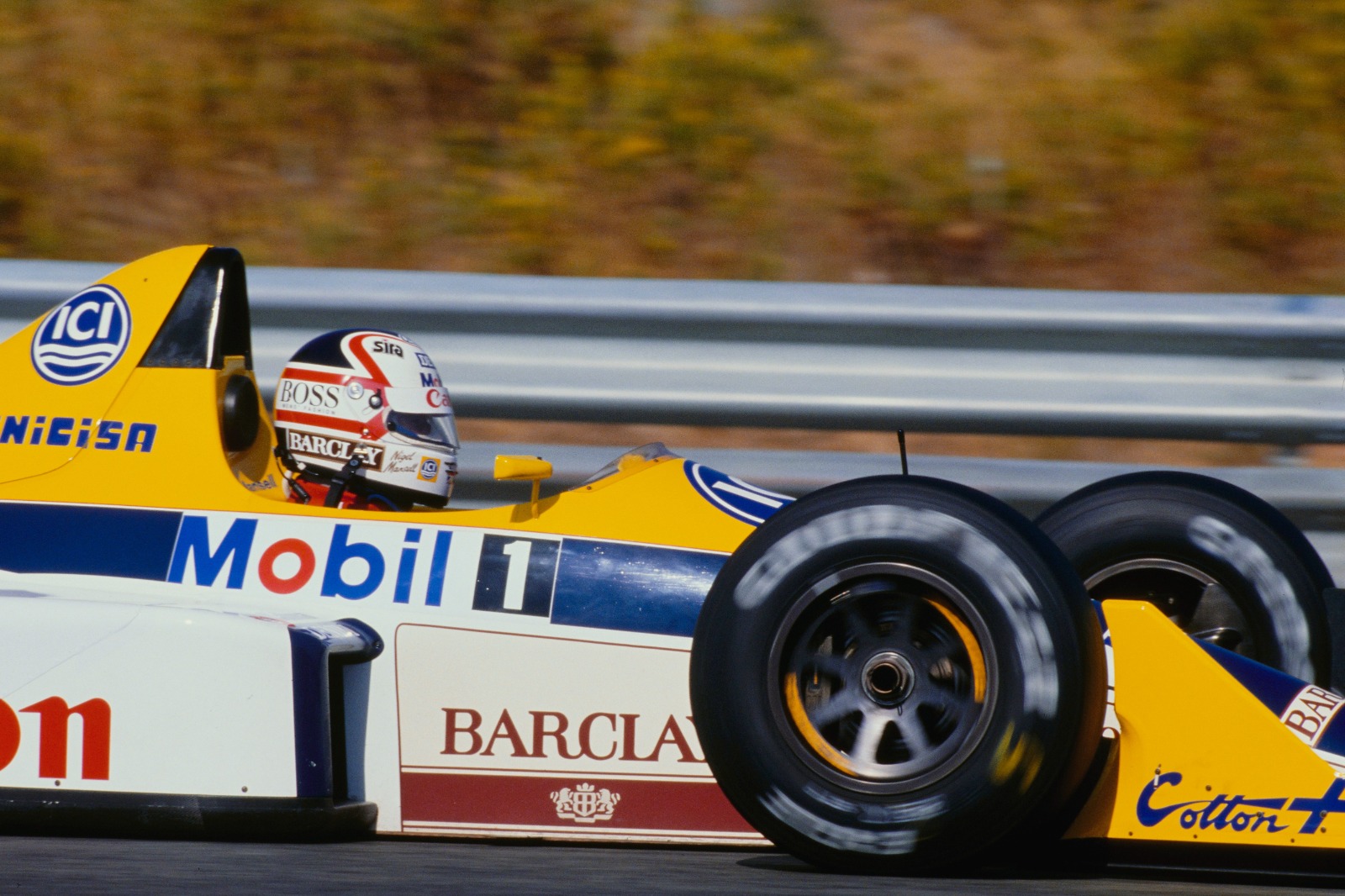
The FW12 is another to have suffered from poor engine reliability, as Williams lost its Honda power unit to McLaren
Photo by: Getty Images
- Wins: 0 (1 in FW12C form)
- Poles: 0 (1 in FW12C form)
- Position: 7th
Engine problems have been key to some of the entries on this list and the FW12 was hurt more than most by its powerplant. That was underlined by the 1989 FW12C, which scored a pole and a victory with Renault power.
Having taken both titles and nine wins from 16 races in 1987, Williams lost its pacesetting Honda turbo engines to McLaren. While McLaren recorded one of the most famous campaigns in F1 history, taking 15 wins from 16 races with Ayrton Senna and Alain Prost, Williams toiled away with Judd’s normally aspirated V8.
The FW12 showed promise but suffered engine reliability problems, plus its active suspension system proved troublesome. Nigel Mansell made the team convert his car back to passive specification ahead of race day at the British GP and rewarded Williams with a charging drive to second in the wet.

On tighter tracks, Mansell could be a thorn in the side of the McLarens, as shown by front-row starts at Rio and the Hungaroring, and his second place at Jerez. But two runner-up spots were Mansell’s only finishes and team-mate Riccardo Patrese was more of a points chaser than podium challenger with the car. The result was Williams falling from topping the table with 137 points to finishing seventh with just 20.
3. 1974 Lotus 76

The 76 is the first of two Lotus cars to make this list
Photo by: LAT Images via Getty Images
- Wins: 0
- Poles: 0
- Position: 4th (including points scored by Lotus 72)
The Lotus 72, which had won five championships and 17 GPs between 1970 and 1973, was always going to be a tough act to follow. Just how good or bad the 76 was is still open to debate but, ultimately, it failed to replace the 72, which was pressed back into service during 1974 and managed three more GP victories.
While Lotus was on its way to the constructors’ title and seven wins in 1973, Lotus boss Colin Chapman decided he needed a tidied-up version and Ralph Bellamy designed the 76.
A biplane rear wing and semi-automatic clutch were novelties that didn’t last long and otherwise the car followed the 72. Drivers Ronnie Peterson and Ickx managed to drive into each other on the car’s debut at the 1974 South African GP, but there was more promise next time out in Spain.
Peterson qualified second and Ickx fifth, and Peterson then led the early stages of a rain-affected GP. However, a combination of overheating caused by unnecessary tape across the coolers and a poor pitstop for slicks ended the Swede’s chances.
The 76 was mothballed after just three GPs, only to reappear at the Nurburgring when it was needed after Peterson crashed his 72 in practice. Peterson finished fourth in the heavily revised 76, taking the only points the model would score.
Peterson preferred the 72 and it would be this car that would see Lotus through to the end of 1975. Like the Lotus 80 (see below!), the 76 was unable to replace its predecessor, but it probably wasn’t quite such a disaster…

2. 1979 Lotus 80
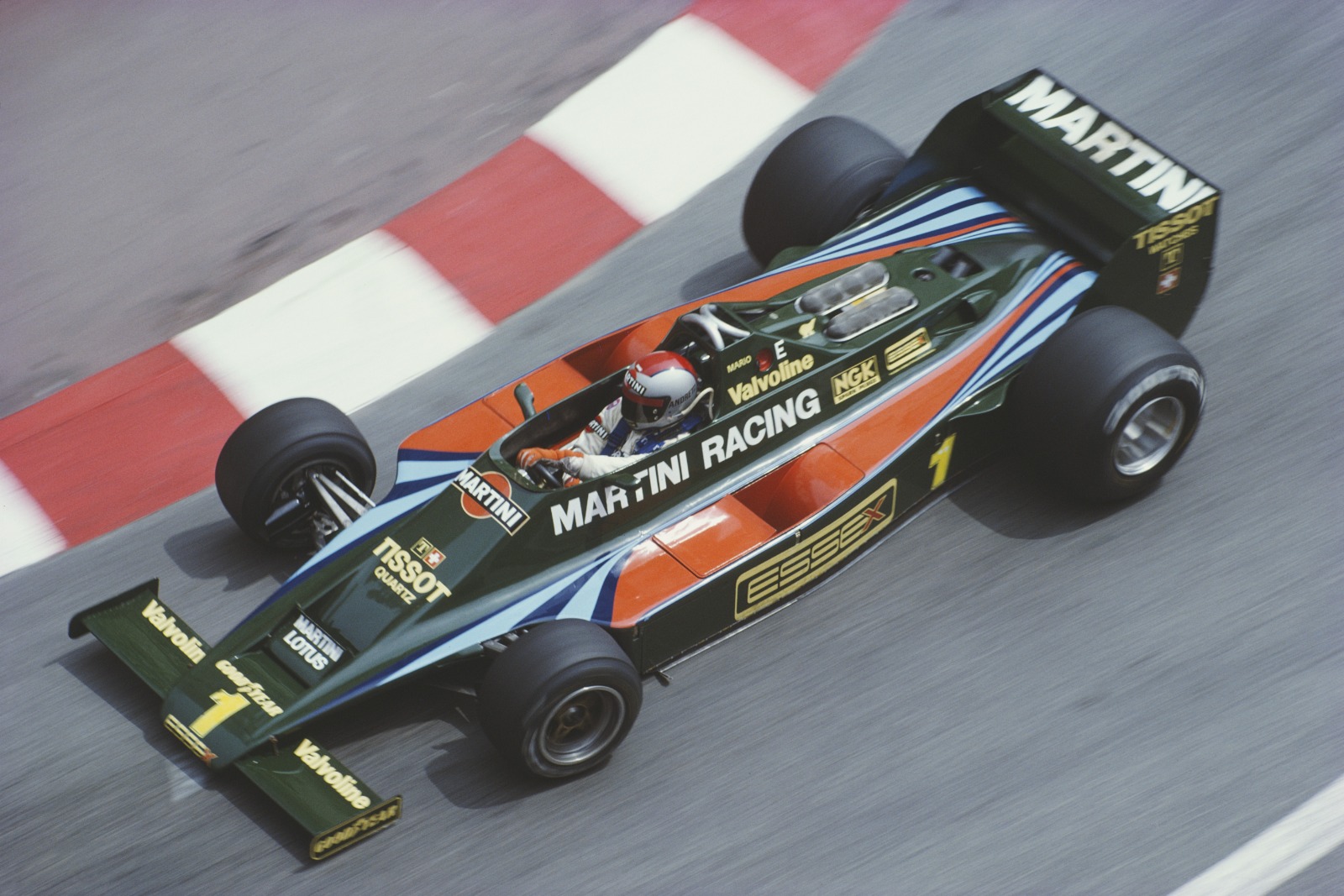
The 2022 machines weren't the only F1 cars to suffer from porpoising
Photo by: Rainer Schlegelmilch/Getty Images
- Wins: 0
- Poles: 0
- Position: 4th (including points scored by Lotus 79)
Things were moving apace during the late-1970s. As well as ground effect aerodynamics that Lotus itself pioneered, Michelin introduced the radial tyre and Renault pointed to the future with turbocharging.
Always one for the next big step forward, Chapman tried to move things on from the title-winning 79 with a full ‘wing’ car. The whole machine was designed to be a ground-effect device, but the car was sensitive to ride height variation and porpoising (many F1 teams preparing for the 2022 return of ground effect probably should have done some history homework!), but the car never really worked.
Reigning champion Mario Andretti managed an encouraging third (albeit behind team-mate Carlos Reutemann in his 79) on the car’s debut at the 1979 Spanish GP, but only made two further starts before the 79 was brought back into service.
Others, most notably Patrick Head at Williams, had focused on perfecting the original ground effect concept, essentially producing tidied-up and stiffer versions of the Lotus 79. Chapman’s squad was therefore left behind and, even with the 79, slipped to fourth in the table.
If fourth doesn’t sound too bad, remember that the Type 80 only scored four of the team’s 39 points and was essentially ‘replaced’ by its predecessor, ensuring a high spot in our top 10.
1. 1980 Ferrari 312T5

1980 was Ferrari's worst season in its F1 history
Photo by: Motorsport Images
- Wins: 0
- Poles: 0
- Position: 10th
From taking a championship double and scoring 113 points to finishing 10th in the constructors’ championship with just eight on the board. Ferrari’s fall in 1980 was almost vertical and the 312T5 was always going to be high on this list.
To be fair to the car, it was a logical development of the 1979 title-winning 312T4. Except the rise of ground effect and turbocharging meant the F1 game was moving on rapidly. The wide 12-cylinder ‘boxer’ engine did not allow full utilisation of ground effect and Ferrari was left behind as Williams and Brabham pushed Lotus’s innovation forward.
Reigning world champion Jody Scheckter struggled and only scored two points. He even failed to qualify at Montreal! But the spirited Gilles Villeneuve hauled Ferrari into the points on four occasions, his fifth places at Monaco and on home ground in Canada being particularly impressive.
Even with Villeneuve, arguably the fastest driver of his era, the 312T5 was nearly 2% off the pace, further away than slowest 2025 team Alpine.
Ferrari knew it had to go down a different path and the turbocharged 126C series would take the team back to the front. Nevertheless, 1980 remains arguably Ferrari’s worst F1 season and was its only winless campaign between 1974 and 1985.


How the M8B became the most dominant car in McLaren’s history

Employing team orders can simply be a matter of common sense

The greatest F1 campaigns with no wins

Top 10 F1 results changed by backmarkers – the passes

Top 10 F1 results changed by backmarkers – the clashes

Stars, cars and highlights from the 2026 Goodwood Revival

The Egal has landed – again

Autosport magazine: Antonelli and a Can-Am celebration

How Toyota destroyed the competition to seal the WEC crowns

McLaren retains Fornaroli as F1 reserve and hands him WEC programme for 2027

How Andrew Jordan realised his teenage rallycross dream

Inside the competition building F1’s future engineering talent
Subscribe and access Autosport.com with your ad-blocker.
From Formula 1 to MotoGP we report straight from the paddock because we love our sport, just like you. In order to keep delivering our expert journalism, our website uses advertising. Still, we want to give you the opportunity to enjoy an ad-free and tracker-free website and to continue using your adblocker.


Top Comments