




Why the 250F is a different kind of F1 legend
It wasn’t a prolific winner and didn’t change the game, but Maserati’s 250F is still regarded as a classic. Seventy years since it first appeared, we look back at its impact on F1

Fifty-six drivers raced it in the world championship and 17 made their debuts in it. Both those figures are nearly twice the numbers of the next-highest car on each list. The Maserati 250F was placid enough to introduce more drivers to Formula 1 than any other car, yet good enough to win a title and last throughout an entire regulations cycle.
But it’s also something of a contradiction. Often cited as one of the greatest grand prix cars, it was neither particularly groundbreaking nor an F1 dominator. Only Juan Manuel Fangio and Stirling Moss won world championship races in it, amassing just eight victories. And it’s probably fair to say that those two 1950s aces would have won in pretty much anything they drove during the period. The 250F is an F1 great for slightly different reasons than most legends.
Its origins help explain why. Initially conceived for customer use, for teams with potentially limited resources, the 250F was simple. It was not as complex as the desmodromic Mercedes W196 or as innovative as Lancia’s powerful D50 V8 with side-mounted fuel tanks. Maserati simply didn’t have the funding to spend what Mercedes splashed out – or what would virtually force Lancia out of existence.
The 250F was largely designed by Gioacchino Colombo – though he left Maserati before the car got into its stride – and Valerio Colotti. The straight-six engine had its origins in the A6GCM F2 car that ended the Ferrari 500’s run in the world championship at the 1953 finale, the Italian GP, thanks to Fangio. The body, which has come to be regarded as the 1950s F1 shape despite its many forms, was crafted by Medardo Fantuzzi.
Brakes were still the traditional drums – British teams were developing discs, but Maserati’s drums were regarded as effective for the time. The chassis frame, rear suspension and gearbox/axle assembly were new for the 250F and represented departures from previous Maserati practice, but the car could not be regarded as one that moved the technical goalposts.
Engineer Giulio Alfieri was head of development and pushed along the 250F’s evolution, which extended its life. There were many body changes during the car’s career, including a closed-wheel streamlined version, experiments with fuel injection and chassis updates.

The 250F was a simple car which didn't particularly move the game on, but enjoyed success over several years
Photo by: LAT Photographic
Maserati’s plan to leave the operation of 250F to privateers did not last long; until just after the Argentinian GP, held in January 1954 at the start of the 2.5-litre era, won by Fangio in his own 250F. Thereafter the works fielded multiple cars until the end of 1957, while myriad customers ran the 250F all the way through to the final year of the 2.5-litre regulations in 1960.
Fangio won the 1954 Belgian GP for the factory before leaving for Mercedes. The Argentinian duly took four more world championship race victories for the Silver Arrows to comfortably take the crown. Maserati had played its part, but there was no doubt that it had been overshadowed by Mercedes’ return. And both had been outpaced at the Spanish GP finale by the splendid Vittorio Jano-designed D50.
To add to Maserati’s factory drama it also lost Moss – who it had hoped to sign to lead its team – when he followed Fangio to Mercedes for 1955. “With Fangio and Moss driving the German cars there was not much hope of anyone else winning important races,” reckoned renowned motorsport journalist Denis Jenkinson.
It was a fine car for drivers to use to join the F1 pack, but to win major races in the 250F you had to be an ace
Moss had begun 1954 as a 250F privateer, famously following Mercedes boss Alfred Neubauer’s recommendation that he should buy a proper GP car to show what he could do. Despite Fangio’s success – and Moss, who insisted on the throttle pedal being on the right instead of the 250F’s usual central position, doing enough to meet Neubauer’s goal – the 250F had many teething issues. Oil frothing due to poor cooling, inadequate pipes and weak de Dion suspension tubing caused reliability problems in the first season, and there were constant detail modifications.
There was usually no difference between the privateer and factory chassis, the performance advantage for the works cars coming from the engines, which gave more power with more revs. Even so, the 250F produced 240bhp at best during 1954, even with the 8100rpm limit afforded to the factory drivers, as opposed to the 7400rpm/220bhp to which customers were limited. That was roughly on a par with the Ferrari outputs of the time, but a little behind the W196 and D50 that were the outstanding designs to appear that season.
Thanks to its good handling characteristics, the Maserati tended to be more competitive on twisty circuits rather than fast ones. “The 250F was a forgiving car and this made it well suited to privateer use,” wrote Andy Hall in his 1990 book Maserati 250F: A technical appraisal. “It was a far more driveable car than either the W196 or the [Ferrari] Squalo. The 250F was an immensely practical racing car rather than a drawing board winner.”
In other words, it was a fine car for drivers to use to join the F1 pack, but to win major races in the 250F you had to be an ace. Fangio and Moss could provide the extra to defeat technically superior machinery, a point underlined by team manager Nello Ugolini offering Moss a place in the works team during 1954 German GP practice.

Moss used customer 250F as a launchpad to get into a works car in 1954
Photo by: LAT Photographic
That event was also tinged with tragedy – Fangio’s protege, upcoming Maserati driver Onofre Marimon, died following a crash during practice. Nevertheless, it was a joy to drive from the start.
“At top level it made my name and above all it was a lovely car to drive,” said Moss in Stirling Moss, my cars, my career, written with Doug Nye. “It steered beautifully, and inclined towards stable oversteer, which one could exploit by balancing it against power and steering in long sustained drifts through corners. It rode well on the normal type of relatively smooth-surfaced course, although its small coil springs and leaf spring rear-end would use up available suspension movement over the bumps at Nurburgring.”
The 1955 championship campaign was winless but the 250F was already proving important for F1. In Profile Publications’ The Maserati 250F Grand Prix Car, Jenkinson wrote: “If nothing else the 250F was the mainstay of the entry lists, there often being seven or eight cars running.” At the British GP, eight of the 25 starters were Maseratis, and at the Italian GP the figures were seven from 22. In neither event did a 250F reach the podium, but its importance is clear.
After being overshadowed at the front, Maserati secured Moss’s services following the withdrawal of Mercedes. He quickly became the main threat to the D50s, now run by Ferrari and led by Fangio.
A five-speed gearbox became standard by 1956 and Moss found that developments had improved the car without sacrificing the handling. Reliability was, in theory, better, but power was still an issue and Moss regarded the 250F as too slow on the straights.
The Briton led the Argentinian opener before engine problems ended his day. He brilliantly beat a ragged Fangio at Monaco, and was running second to the Ferrari team leader in the Belgian GP when a wheel fell off. He took over Cesare Perdisa’s car – not an unusual move for team leaders of the time – and charged to third.
The Maseratis were outclassed at the high-speed Reims circuit for the French GP, but Moss took pole at Silverstone for the British GP, one of 11 250Fs to take the start. Once the initial BRM challenge had (quite literally) gone up in smoke, Moss took command. But he was again thwarted, this time with a broken rear axle.
Moss followed Fangio home at the German GP, which at least kept him in title contention for the Monza finale. By then, fuel injection experiments had been shelved, but chassis changes to reduce frontal area were incorporated into new cars for Moss and Jean Behra in an attempt to address the car’s straightline speed deficit. That was a race Moss won once the rapid D50s had wilted – but only after a helpful push from privateer Luigi Piotti when Moss ran out of fuel thanks to a leak!

Without Fangio and Moss, Maserati went winless in 1955, but the Briton's return in 1956 heralded victory for 250F in Monaco
Photo by: LAT Photographic
Fangio’s second place, having been handed Peter Collins’s car after his own had retired, was enough to beat Moss by three points. Ferrari’s final tally was five wins to Maserati’s two, despite the pace shown by Moss and the consistency – five podiums from seven starts – of team-mate Behra.
“There had been too much disorganised experimentation so that the works team cars were seldom properly prepared in time for the races,” was Jenkinson’s summary of 1956.
This would be rectified for 1957, experiments largely kept outside the main team of cars and drivers, and there was also now a separate workshop for customers. And Fangio returned as Moss left for Vanwall. The result of all this was the 250F’s finest season. For 1957, Maserati significantly lightened the 250F’s chassis and improved the brakes. Power was now in the region of 270bhp.
The 250F had finally taken an F1 crown, but Maserati’s financial position was now precarious and it withdrew from running a factory attack
“The series of modifications made the 250F into quite a remarkable F1 car,” reckoned Maurizio Tabucchi in Maserati: The Grand Prix, Sports and GT cars model by model, 1926-2003. It was a sentiment echoed by Fangio, who told Autosport’s Nigel Roebuck the following about the 1957 car: “That 250F was not very powerful, but beautifully balanced, a lovely car to drive. I felt I could do anything with it.”
And so it proved. Though Moss took pole in a ‘one-off’ for Maserati in the absence of Vanwall from the opening round in Argentina, Fangio led a 250F 1-2-3-4. The reigning champion then won in Monaco and dominated the French GP, which Moss missed.
Moss’s famous British GP drive at Aintree, taking over the injured Tony Brooks’s car to storm through to claim Vanwall’s first world championship victory, was a sign of things to come, but there was still time for the 250F’s finest moment – or perhaps Fangio’s.
After a disastrous mid-race fuel stop took far longer than planned, Fangio smashed the Nurburgring lap record repeatedly to catch the Ferraris of Mike Hawthorn and Collins and take his 24th and final world championship GP victory. The German GP win, which Fangio would call his greatest, secured his fifth crown before Moss took two victories for Vanwall – with Fangio second – in the last two rounds.

Fangio took his last and arguably greatest win aboard the 250F in 1957 German GP
Photo by: Motorsport Images
The 250F had finally taken an F1 crown, but Maserati’s financial position was now precarious and it withdrew from running a factory attack. Normal petrol became the mandated fuel for 1958, so Maserati had to adapt the 250F, which had run a methanol fuel with nitro-methane in 1957. A shorter, lighter ‘piccolo’ model was built – and used by Fangio to finish fourth in his final GP in France – but F1 had moved on.
The increasingly obsolete 250F battled on but there were no more podiums. “The Scuderia Centro Sud carried on to the bitter end with 250F cars and, though they never won anything, they did allow numerous drivers to cut their teeth in grand prix racing, and they always swelled the entry lists,” wrote Jenkinson.
Even as late as 1958, four drivers made their world championship debuts driving 250Fs, including future world champion Phil Hill. Others who had already done so included Jo Bonnier, who would go on to be a GP winner with BRM, and Masten Gregory, who took his Scuderia Centro Sud Maserati to third place first time out at the 1957 Monaco GP. And that doesn’t include Indianapolis 500 winner Troy Ruttman, who had started six points-paying Indy 500 races when he contested the 1958 French GP at the wheel of… a 250F.
The ultimate iteration of the theme, though it didn’t show it at the time, was the Tec-Mec, in which Colotti was instrumental. It was lighter and has proved itself in historic competition, but in period its world championship contribution was restricted to a retirement at the 1959 United States GP in the hands of Fritz d’Orey, another driver who had made his big-time debut in a 250F.
Amazingly, Bob Drake drove one of the 1957 lightweight cars in the final world championship race of the 2.5-litre formula, the 1960 US GP, more than six years after the 250F had first appeared. He finished 13th, seven laps down.
Even today, the 250F remains capable of providing highlights in historic motorsport. At August’s Silverstone Festival, rain gave 74-year-old John Spiers an opportunity to not only lead the front-engined class in the Historic Grand Prix Cars Association’s race for pre-1966 F1 machines, but to defeat much later, rear-engined designs to score an outright victory.
“It is an iconic car and one that means a lot to me,” says Spiers. “The chassis is very forgiving and that’s one of the reasons the car is very competitive in the wet. I was recently reading an interview with Alfieri, who was saying the chassis lacked torsional rigidity, so even in period they were more competitive than normal when it was wet.”
Despite the fact that it spent more of its career not winning than leading the pack, the 250F is still rightfully a legend. Its beautiful balance meant it was accessible for the inexperienced as well as rewarding for the true maestros, and it was the mainstay of F1 grids for much of the period, completing more than 11,000 laps in the world championship, not to mention the many non-points-paying events. It was neither the most successful, nor the ultimate expression of the theme, but the Maserati 250F remains the archetypal front-engined grand prix car.

250F's longevity meant numerous drivers made their F1 debut in the car - including Phil Hill in 1958 French GP
Photo by: LAT Photographic
What could have been the ultimate 250F
Remarkably, given the longevity of the most famous Maserati racer, the 250F could have been competitive even longer. Among the many things tried was a V12…
Giulio Alfieri had been developing a 12-cylinder engine since 1955. “But such a radical change would have required a thoroughly redesigned chassis, something that was considered to be economically unfeasible,” reckoned Maurizio Tabucchi in Maserati: The Grand Prix, Sports and GT cars model by model, 1926-2003.
Maserati’s existence remained precarious even amid on-track success. But a compact 60-degree V12 was tried at the 1957 Italian Grand Prix. This engine produced around 320bhp, but Jean Behra retired at Monza with overheating.
“Without doubt, this remarkable development would have prolonged the 250F’s magnificent career had Maserati, sated by its conquest of the world championship but above all afflicted by chronic financial problems, not decided to withdraw from racing,” added Tabucchi.
Famous motorsport journalist Denis Jenkinson agreed: “Had the factory team been able to continue with the 12-cylinder version then the 250F could have kept up with the opposition.”
As it was, Maserati’s V12 would finally get its F1 chance – in three-litre form – nearly a decade later, in the back of Cooper’s surprisingly effective T81, winning the 1966 Mexican and 1967 South African GPs.

A V12-powered 250F appeared at the 1957 Italian GP, but was not a hit
Photo by: LAT Photographic


How the M8B became the most dominant car in McLaren’s history

Employing team orders can simply be a matter of common sense

The greatest F1 campaigns with no wins

Top 10 F1 results changed by backmarkers – the passes

Top 10 F1 results changed by backmarkers – the clashes

Stars, cars and highlights from the 2026 Goodwood Revival

The Egal has landed – again

Autosport magazine: Antonelli and a Can-Am celebration

How Toyota destroyed the competition to seal the WEC crowns

McLaren retains Fornaroli as F1 reserve and hands him WEC programme for 2027

How Andrew Jordan realised his teenage rallycross dream

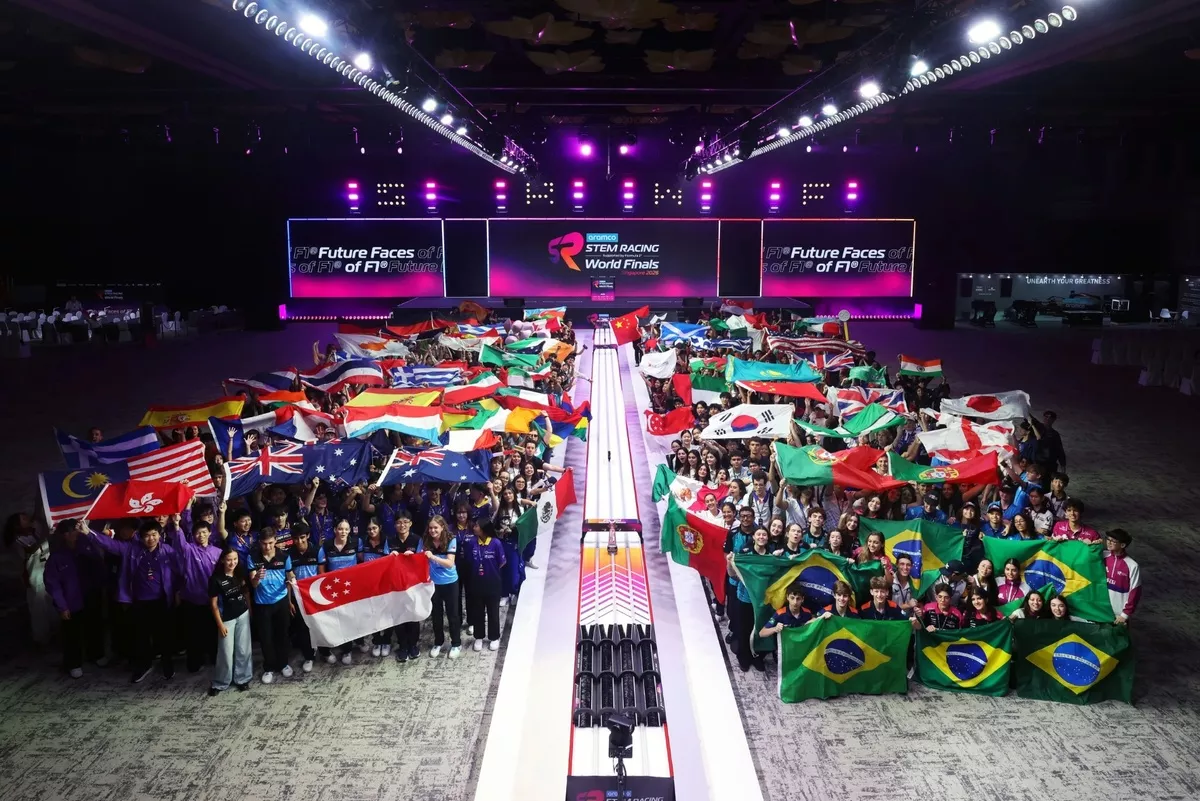
Inside the competition building F1’s future engineering talent
Subscribe and access Autosport.com with your ad-blocker.
From Formula 1 to MotoGP we report straight from the paddock because we love our sport, just like you. In order to keep delivering our expert journalism, our website uses advertising. Still, we want to give you the opportunity to enjoy an ad-free and tracker-free website and to continue using your adblocker.


Top Comments