


Why polarising Mosley’s legacy amounts to far more than tabloid rumour
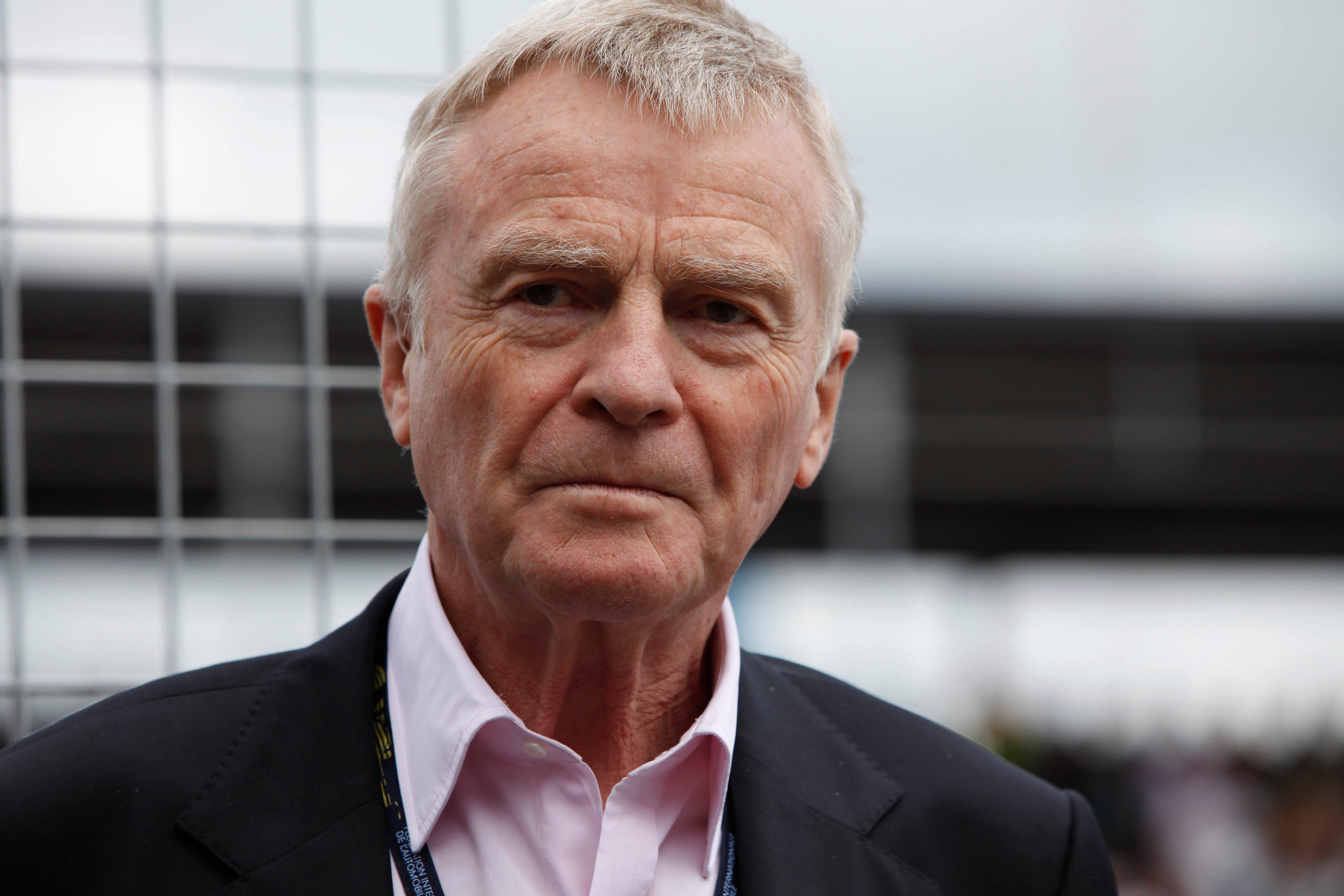
The newspapers, naturally, lingered over Max Mosley’s tainted family history and niche sexual practices. But this is to trivialise the legacy of a big beast of motor racing politics. STUART CODLING weighs the life of a man whose work for safety on both road and track has saved hundreds of thousands of lives, but whose penchant for cruelty remains problematic and polarising
In another life Max Rufus Mosley, who has died aged 81, might have become the UK’s prime minister or attained some similar political grandee status. Educated, urbane and charming, with a brilliantly sharp intellect, he studied physics at Oxford, served in the Territorial Army, and later qualified as a barrister.
A career in politics might have beckoned but did not – could not – eventuate, for above all he was the son of the British Union of Fascists leader Sir Oswald Mosley. His mother Diana, one of the famous Mitford sisters who delighted and scandalised society in the 1930s, had been an open advocate of Adolf Hitler.
Though Mosley’s earliest memories of his parents were of visiting them in Holloway prison, and he would later describe his own early political leanings as “liberal and slightly left”, his surname meant he would never get past a selection committee, let alone the electorate. He had been warned when he joined the Oxford Union that he would be cut to ribbons in debate.
He therefore drifted into motor racing, which began as a hobby and became a vocation. It was an entirely different realm in which his father’s involvement in the BUF and ill-judged postwar dabblings in mainstream politics counted for nothing. As Mosley recounted in his autobiography, “Standing among the other drivers at Goodwood looking at the list of practice times, I heard one say, ‘Max Mosley, he must be a relation of…’ and I waited for the inevitable, only to hear him continue ‘…Alf Mosley, the coach builder from Leicester.’
“I realised here was a whole new world. No one knew about my background and, if anyone did, they wouldn’t care. It was the first time I felt that whatever interest there might be was about me rather than my family. If I could do something in motor racing my antecedents would probably not come into it.”
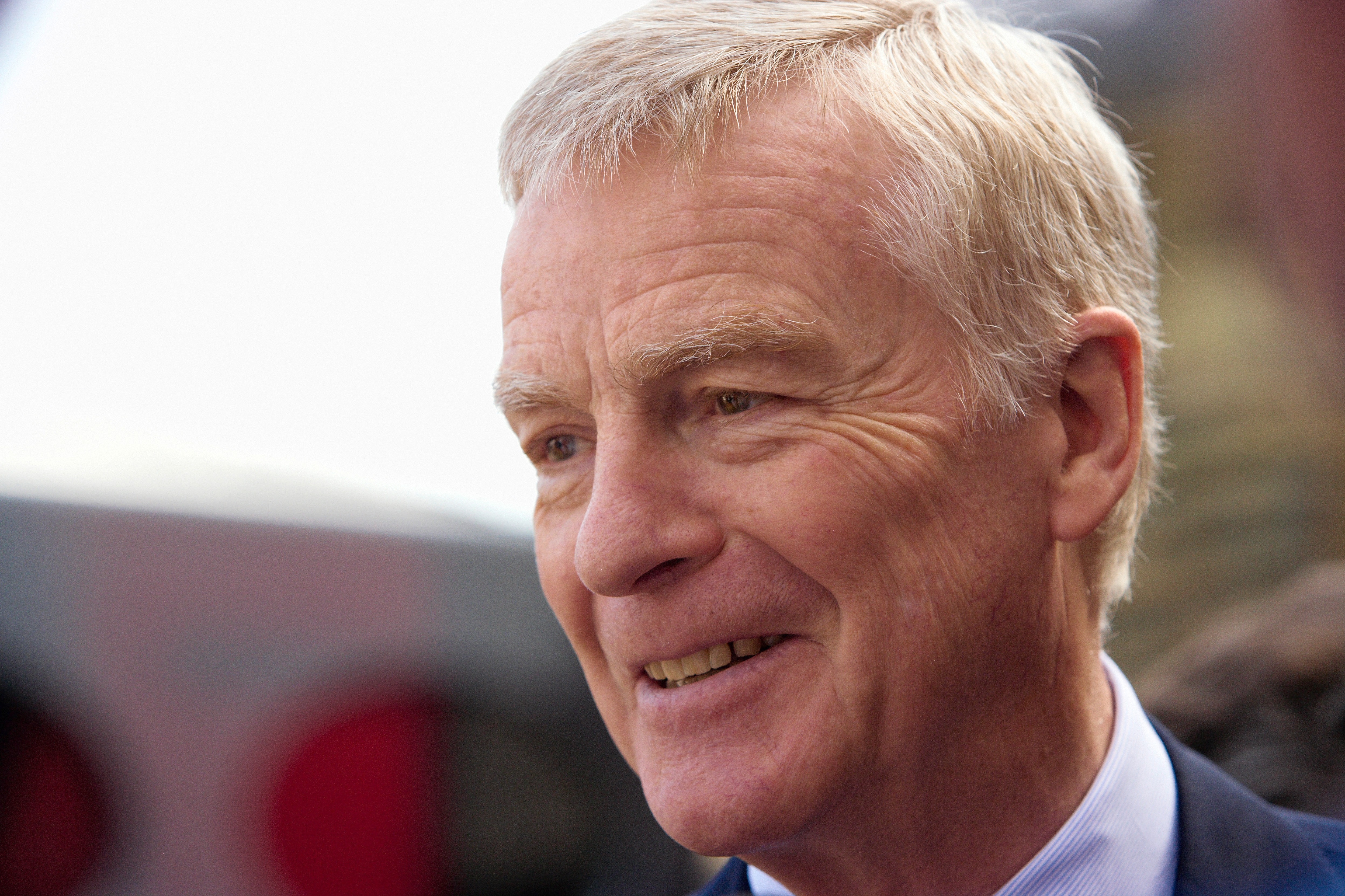
Through the mid-1960s Mosley funded his appetite for racing through his bar work, having gained a pupillage in the chambers of an old acquaintance of his mother, Quintin Hogg (Lord Hailsham until he renounced his peerage in a failed bid to become PM). Renowned for his rebarbative debating technique, Hogg, who had occupied senior briefs as science and education minister and Lord of the Admiralty in successive Conservative cabinets, began practicing law again after the country returned a Labour government in 1964.
Mosley clearly savoured Hogg’s high-minded robustness, describing a vignette in his autobiography: “…[he] delighted me one day when I heard him through the wall shouting into the phone: ‘I’ll give you to the count of three to come to the point: one, two, goodbye!’ I think he was talking to a solicitor…” One can see more than an echo of this aristocratic condescension in the disdainful patrician hauteur which defined Mosley’s tenure as FIA president.
Mosley enjoyed racing but eventually realised his driving skills were unequal to a career at the wheel, having acquired a Brabham BT23C via a racing car dealer by the name of Frank Williams and spun it during his first test. His first International Formula 2 meeting was at Hockenheim in April 1968, the infamous race which claimed the life of Jim Clark. Thereafter, Mosley said, it was difficult to downplay to his wife, Jean, the risks of racing.
In 1969 Mosley quit both the bar and driving to co-found the racing constructor March with designer Robin Herd, manager Alan Rees and engineer Graham Coaker. Each put in £2500 and the company took its name from the combined initials of their surnames. The first March chassis was built in Coaker’s garden shed, humble origins which were enough to put off Jochen Rindt, who elected to stay at Lotus for the 1970 F1 season.
Ecclestone was the clunking fist inside Mosley’s urbane velvet glove, the streetwise mover-and-shaker who wasn’t afraid to thump desks and theatrically walk out on a meeting – leaving Max to lay out a ‘compromise agreement’ which they had actually been seeking all along
Though Rindt would win the drivers’ title – posthumously – the March chassis won two non-championship F1 races as well as that year’s Spanish Grand Prix in the hands of Jackie Stewart (who hated the car). Though Coaker and Rees moved on relatively quickly, March expanded and diversified into other disciplines with Mosley heading up sales – sometimes a little sharply. Sir Patrick Head recalls working on the March 761 acquired by Williams for Patrick Neve to drive in 1977, only to find orange paint underneath suggesting it was the 751 raced by Vittorio Brambilla two seasons earlier…
Wheeler-dealing didn’t satisfy Mosley in the way it thrilled his friend Bernie Ecclestone, but the two formed an effective partnership when Mosley left March at the end of 1977 and immersed himself in politics – racing politics. Over the next two decades the duo would in effect unionise the F1 teams into a collective bargaining force (the Formula One Constructors Association), go to war for control of F1 with the governing body, install Mosley in place of FIA president Jean-Marie Balestre, then hand F1’s commercial rights to Ecclestone on a cheap 100-year lease.
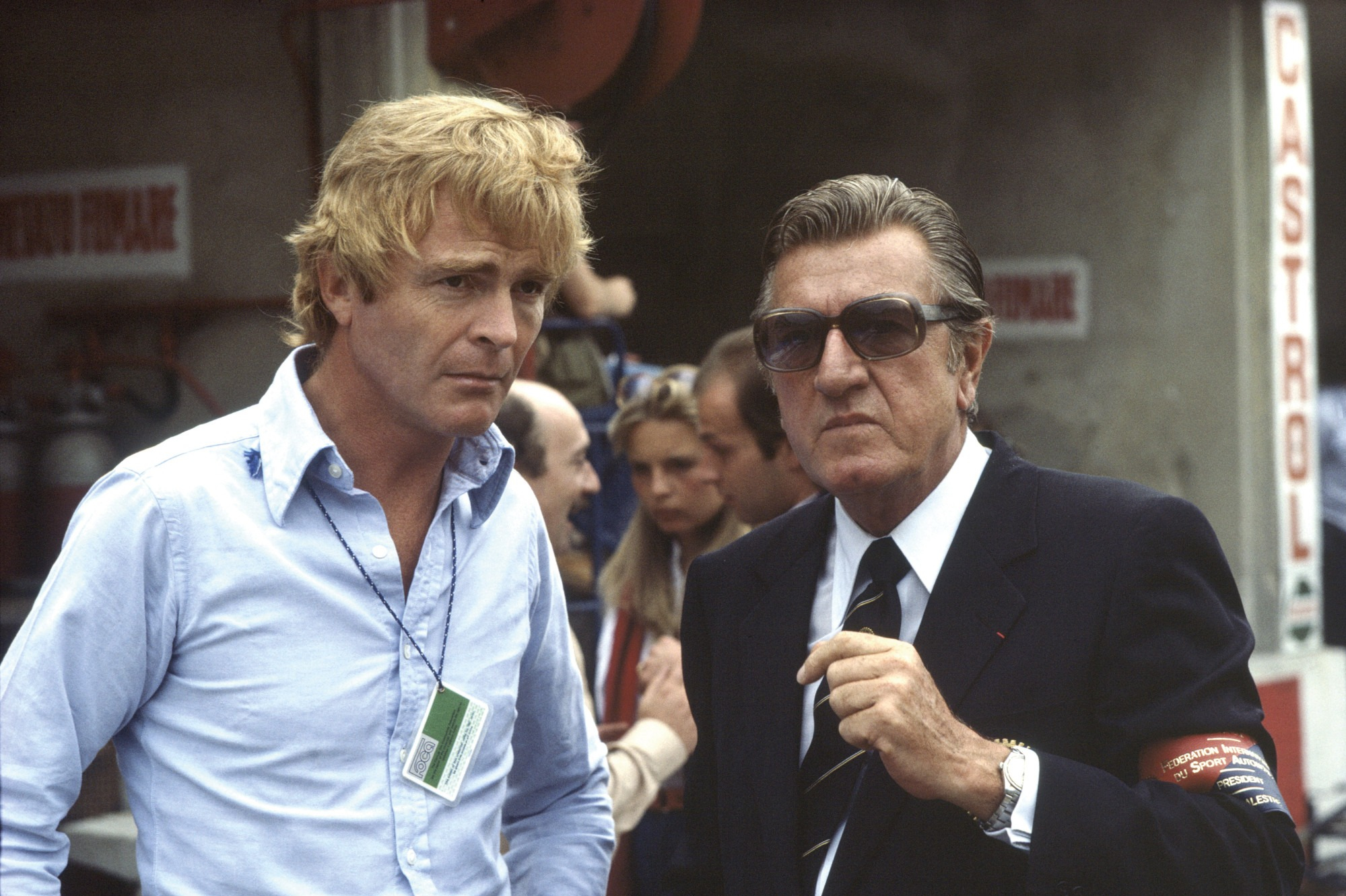
Mosley and Ecclestone played off one another brilliantly in the good-cop-bad-cop act through which they defeated race promoters and the FIA’s sporting committee – whose membership, Mosley felt, was predominantly made up of bumbling, incompetent old buffers. Ecclestone was the clunking fist inside Mosley’s urbane velvet glove, the streetwise mover-and-shaker who wasn’t afraid to thump desks and theatrically walk out on a meeting – leaving Max to lay out a ‘compromise agreement’ which they had actually been seeking all along.
This modus operandi would also become evident in Mosley’s tenure as FIA president after he toppled Balestre. Time and again he would announce extreme measures to tackle a pressing issue and then, when his adversaries (usually the teams and/or manufacturers) pushed back hard, yield graciously and just a little… to the balance of measures he had probably envisioned in the first place.
Adversarial relationships with F1’s participants and other stakeholders would come to define Mosley’s presidency as much as his laudable contributions to safety and cost-cutting. In 1993 he unilaterally declared a ban on so-called ‘driver aids’ including traction control and active suspension. Later he would impose cost-control measures such as long-life engines and gearboxes on a take-it-or-leave-it basis.
Any entity who dared oppose these impositions publicly had to do so with great verbal care, for inevitably any statement would be met with a reply-to-all fax in which Mosley deployed all his intellect and verbal dexterity to heap ordure on the argument and gleefully point out any grammatical howlers or other illiteracies contained within. Millennials would call this brand of patrician humiliation “punching down”.
Mosley’s relationship with F1’s stakeholders never recovered from his decision in 1995 to cast F1’s commercial rights, nominally owned by FOCA, into Ecclestone’s Russian-doll network of companies on a 100-year lease for $360m. This was rightly considered to be chicken feed in the grand scale of F1’s income and team bosses including Williams, Ken Tyrrell and McLaren’s Ron Dennis launched legal action which tied the process up for several years. There were even moves by some of the car manufacturers involved to set up a breakaway championship. Mosley always denied that he was acting in concert with Ecclestone, his old business associate, but others reached a different conclusion.
For all the history of rancour, it must not be forgotten that Mosley’s iron will also steered motor racing through one of its most pressing existential crises and has saved hundreds of thousands of lives on road and track. In the aftermath of the deaths of Roland Ratzenberger and Ayrton Senna at Imola in 1994, public opinion swung rabidly against F1.
Mosley calmly plotted a course which avoided over-reaction while being seen to treat the tragedy with appropriate gravity. By taking a scientific approach rather than heeding those baying from the sidelines, Mosley imposed measures that were broadly effective – and set out a progressive, clear-headed management culture of continuous improvement in which safety was never to be taken for granted.
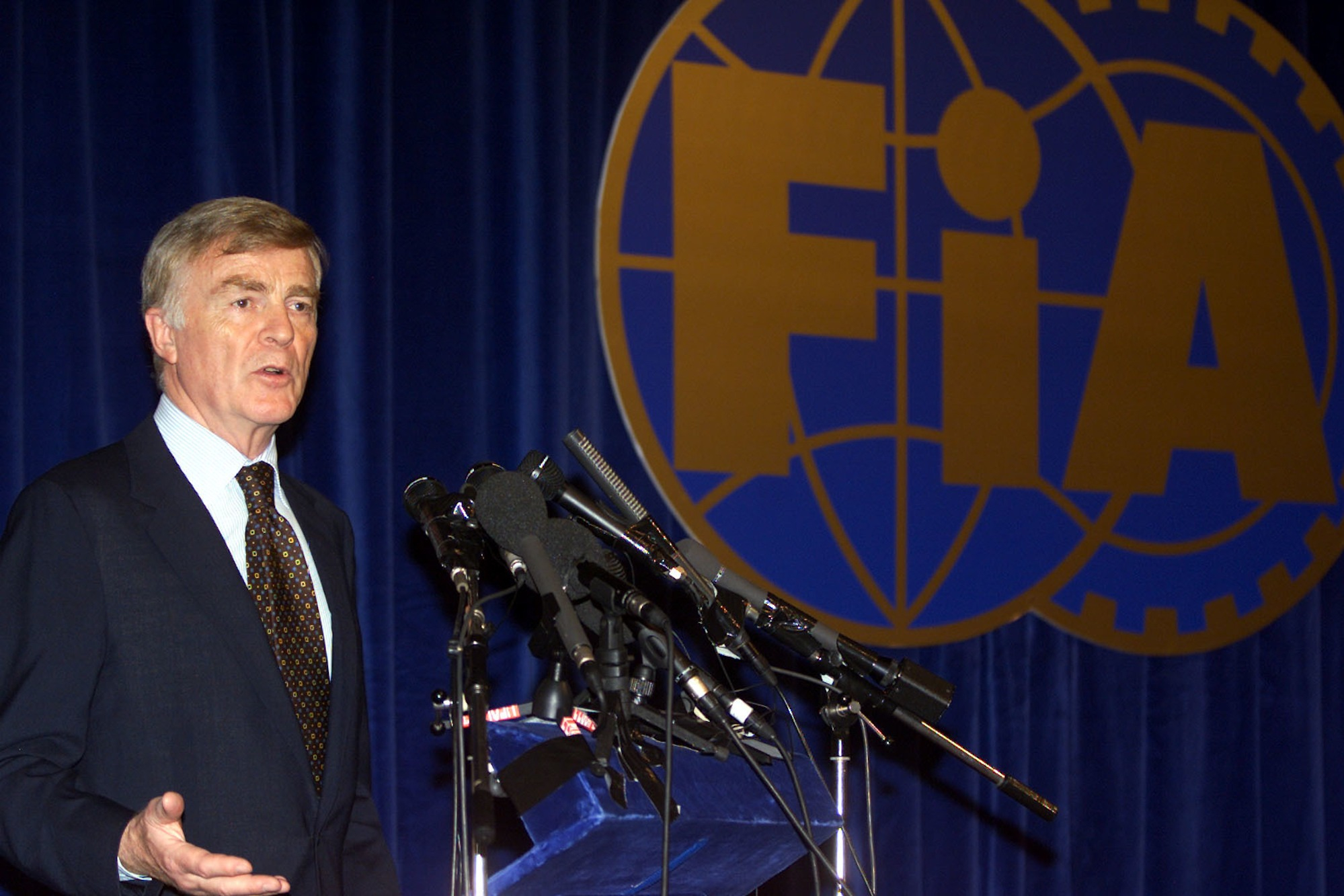
Separately but also under his FIA presidency mandate, Mosley instituted the European New Car Assessment Programme (Euro NCAP), a crash-testing scheme which has prevented many potentially dangerous vehicles from being released for sale. In weighing Mosley’s legacy we must bear in mind that he achieved this against the full weight of lobbying by a powerful and change-averse car industry. Safety now sells cars.
Nevertheless Mosley had a capacity for cruelty which he was often unable or unwilling to moderate, as evinced when the World Motor Sport Council handed down a $100million fine to McLaren after the 2007 ‘Spygate’ affair. Many believed the punishment to be disproportionate and motivated by Mosley’s long-standing enmity towards Dennis.
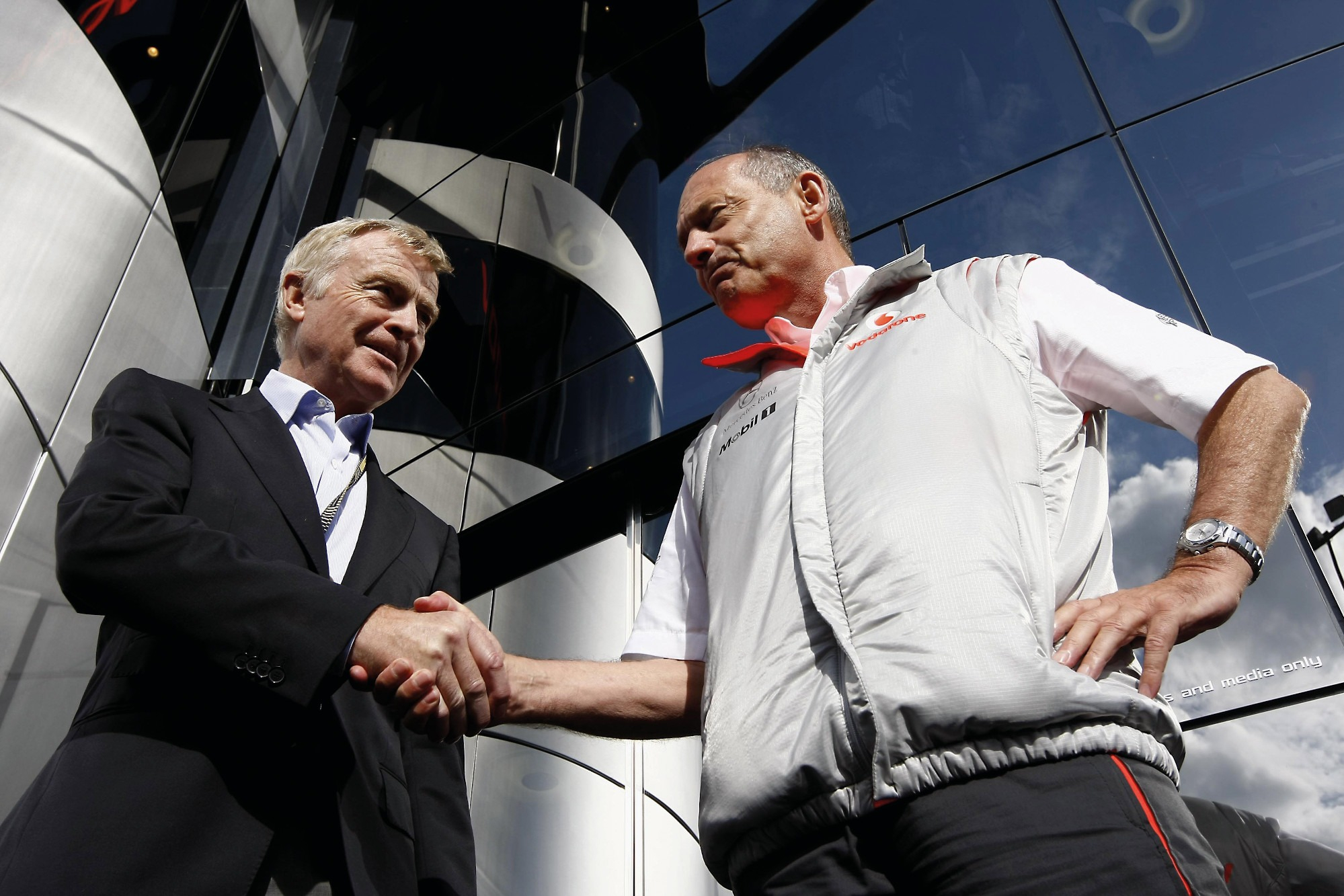
Mosley always denied this, and went so far as to pose for a staged handshake photo-op with Dennis on the steps of the McLaren motorhome at Spa that year – during which he was heard to say to Dennis, sotto voce, while still smiling for the cameras, “Five million for the offence, 95 million for being a c**t.” The passage of time has muddied accounts of this exchange, rendering it almost an urban myth – and Mosley did his own bit to enshrine it thus by ascribing the insult (in a slightly different phrasing) to Ecclestone.
Mosley undertook not to stand for re-election in 2009 and the budget cap – along with the new teams coming in to take advantage of the homologated powertrain concept – died messily
After the News of the World exposed Mosley’s penchant for BDSM role-playing in 2008, his enemies smelled weakness and attempted to pounce. Mosley weathered the initial onslaught but, as the global economic climate worsened, his proposal to solve the problem of by instituting a budget cap and providing a homologated low-cost powertrain put him at loggerheads with the (remaining) manufacturers once again. They viewed the rather hurried tendering process, won by Cosworth and Xtrac, as a stitch-up which would devalue their brands.
The grandee teams and manufacturers banded together in a new union, the Formula One Teams Association, with a clear mandate to force Mosley out. And now Ecclestone refused to stand by his man; following Max’s death, Bernie described this as one of his greatest regrets. Mosley undertook not to stand for re-election in 2009 and the budget cap – along with the new teams coming in to take advantage of the homologated powertrain concept – died messily.
This would not be Mosley’s last battle.
The author John le Carré once described an encounter with News of the World proprietor Rupert Murdoch over dry martinis in which he jokingly asked why an Australian had come to Britain to seek his fortune, rather than the other way around. “Because you’re wood from here up,” came the snarling retort, accompanied by a slicing gesture across the throat to indicate where ‘here’ was located. But in Max Mosley, Murdoch encountered an opponent he could not fell.
Even before he yielded the FIA presidency, Mosley fought the News of the World in court, alleging that its ‘sting’ breached his privacy. He won £60,000 in damages and went on to pursue the newspaper through the courts in other European countries in which it was distributed.
Mosley also supported the creation of the pressure group Hacked Off, and the work of the investigative journalist Nick Davies, whose revelation that the NoW hacked the voicemail of the murdered schoolgirl Millie Dowler led to the Leveson Enquiry into press standards – and the closure of the NoW.
Mosley’s obituary in The Sun, one of Murdoch’s other papers, carried a headline describing him as “son of fascist leader and enemy of free press”. This polarising, endlessly fascinating, occasionally vexing grandee of motorsport was so much more than that.

How Ratzenberger beat the odds to realise his cruelly short-lived F1 dream

F1 uncovered: A weekend behind the scenes with a chief mechanic

When McLaren was pipped by Red Bull in a modern F1 classic

The big opportunity Sainz’s Williams switch affords to F1’s latest centurion

Inside the science of F1 fuel

How F1’s plan for rotating races could look in practice

The early decisions that set Sauber’s rookie for success

How F1 media coverage has evolved in line with its subject

MotoGP riders could get what they want, and fast, if only they would stand together

F1 signs historic 10-year Rwanda deal to host African Grand Prix

Why Mercedes' latest 2026 F1 update is no downgrade

The not-so-obvious chance Leclerc missed to usurp Verstappen
Subscribe and access Autosport.com with your ad-blocker.
From Formula 1 to MotoGP we report straight from the paddock because we love our sport, just like you. In order to keep delivering our expert journalism, our website uses advertising. Still, we want to give you the opportunity to enjoy an ad-free and tracker-free website and to continue using your adblocker.


Top Comments