


Why F1’s pole records could be about to become meaningless
Silverstone will be the first trial of Formula 1's new sprint race format on Saturday, which sets the grid for Sunday's British Grand Prix. But one key decision means the history books will be unnecessarily warped for this and other repeat experiments

Many of Formula 1’s recent ideas and experiments are to be welcomed. The qualifying sprint race, which will be first tried at the 2021 British Grand Prix, is a worthy attempt to spice-up the weekend. But one decision is baffling.
F1 boss Ross Brawn recently revealed that the winner of the sprint race will be officially credited with pole position in the history books.
Qualifying – or practice as it was previously known – has long been the ultimate test of raw speed for car and driver. Low-fuel, all-out attack with no (or few) tyre concerns is when we get to see F1’s sheer performance at its best.
F1 pole means something, and we all know what that something is. A look at the top 10 polesitters in F1 history, either in raw numbers or strike rate, isn’t a bad place to start when talking about the fastest drivers. It’s part of the ammunition in those sorts of debates that are impossible to definitively resolve, but fun to have.
Top 10 F1 polesitters
| Pos | Driver | Pole tally |
| 1 | Lewis Hamilton | 100 |
| 2 | Michael Schumacher | 68 |
| 3 | Ayrton Senna | 65 |
| 4 | Sebastian Vettel | 57 |
| 5 | Jim Clark | 33 |
| 6 | Alain Prost | 33 |
| 7 | Nigel Mansell | 32 |
| 8 | Nico Rosberg | 30 |
| 9 | Juan Manuel Fangio | 29 |
| 10 | Mika Hakkinen | 26 |
Top 10 F1 polesitters by strike rate
| Pos | Driver | Strike Rate |
| 1 | Juan Manuel Fangio | 56.9% |
| 2 | Jim Clark | 45.2% |
| 3 | Alberto Ascari | 43.8% |
| 4 | Ayrton Senna | 40.1% |
| 5 | Lewis Hamilton | 36.4% |
| 6 | Stirling Moss | 23.9% |
| 7 | Michael Schumacher | 22.4% |
| 8 | Sebastian Vettel | 21.4% |
| 9 | Jackie Stewart | 17.2% |
| 10 | Nigel Mansell | 16.8% |
No statistic is perfect, of course, and it can only provide part of a picture. Aside from the obvious point about the competitiveness of a driver’s machinery, some qualifying formats have been less ‘pure’ than others.
Chiefly, the rule requiring cars to qualify on race fuel during the 2000s skewed the statistic because sometimes the true fastest car/driver combination was kept off pole due to others running lighter fuel loads.
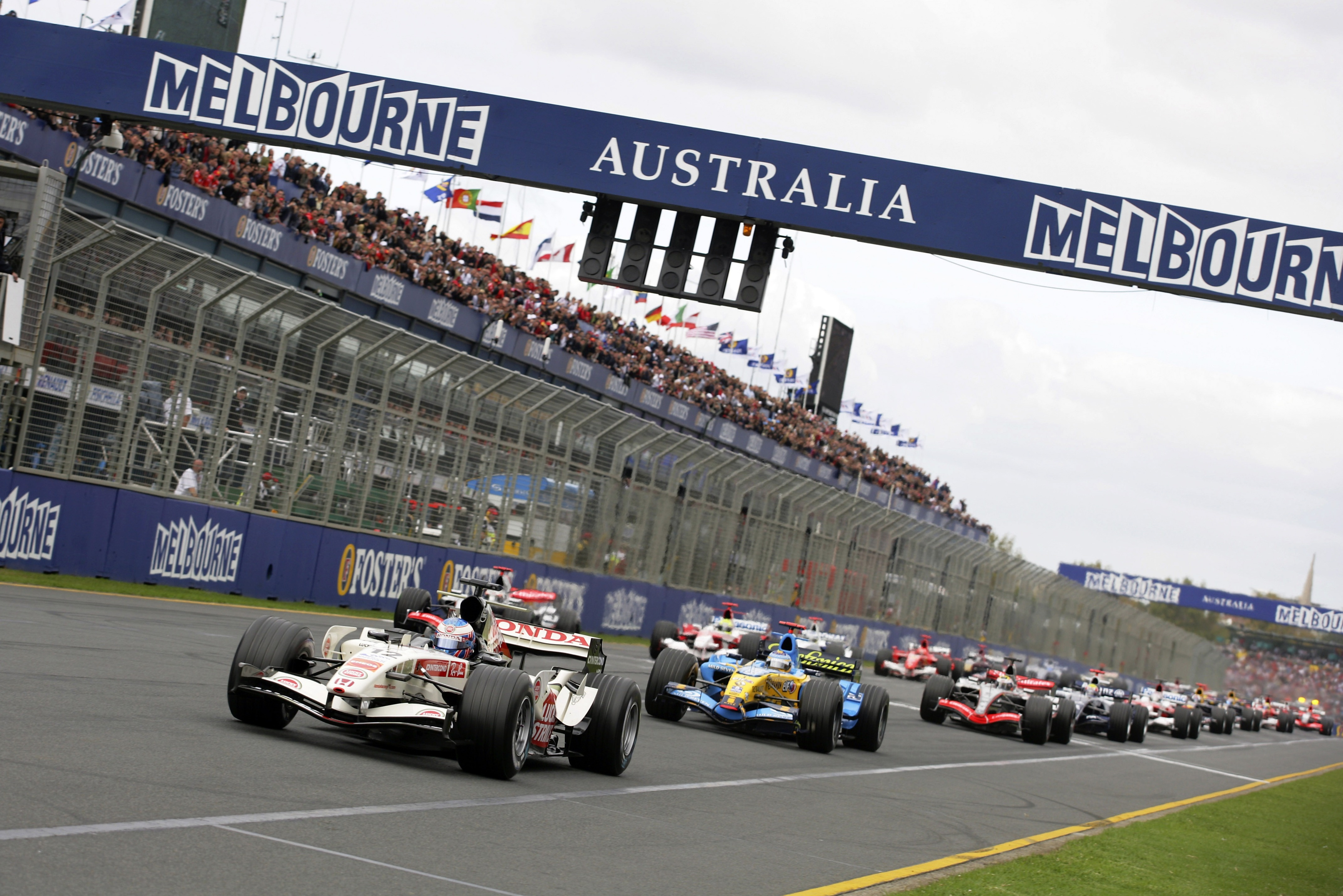
Jenson Button claimed pole for the 2006 Australian GP with a light fuel load in his Honda
Photo by: Motorsport Images
Other anomalies can crop up in the official figures. For example, Michael Schumacher’s tally of 68 does not include his remarkable 2012 Monaco lap. He only lost pole due to a penalty from the preceding Spanish GP – not a technical infringement – so you could make a case for including it when assessing the German’s qualifying performances.
The importance of grid position has also changed over time, becoming more significant as downforce increased and overtaking became more difficult, but across the 1000+ world championship races the pole stat is still one of the most meaningful.
The muddying of the pole position statistics is so unnecessary. There will still be a traditional Friday qualifying, which will set the pole for Saturday’s sprint, so why not just make that count as the official pole?
Career points became almost irrelevant when the points for victory were changed from 10 to 25 in 2010, while the already fraught fastest lap stat has been undermined further by the point awarded for it since 2019.
PLUS: Why F1 must get rid of the point for fastest lap
Wins and poles (and their relative strike rates), though imperfect, are the two most important and meaningful F1 records. And they provide more finesse (and more drivers) than a simple tally of world titles since 1950.
Winning the sprint race will require skills, of course, but it’s not the same thing as being the sheer fastest over one lap, which is what pole should be awarded for.
PLUS: How Hamilton's qualifying record compares to F1's past greats
You could say, ‘So what? It’s only going to upset a few stats geeks.’ But the muddying of the pole position statistics is so unnecessary. There will still be a traditional Friday qualifying, which will set the pole for Saturday’s sprint, so why not just make that count as the official pole?
“After discussions with the FIA, they feel pole position is the guy in front of the grid for the grand prix,” said Brawn.
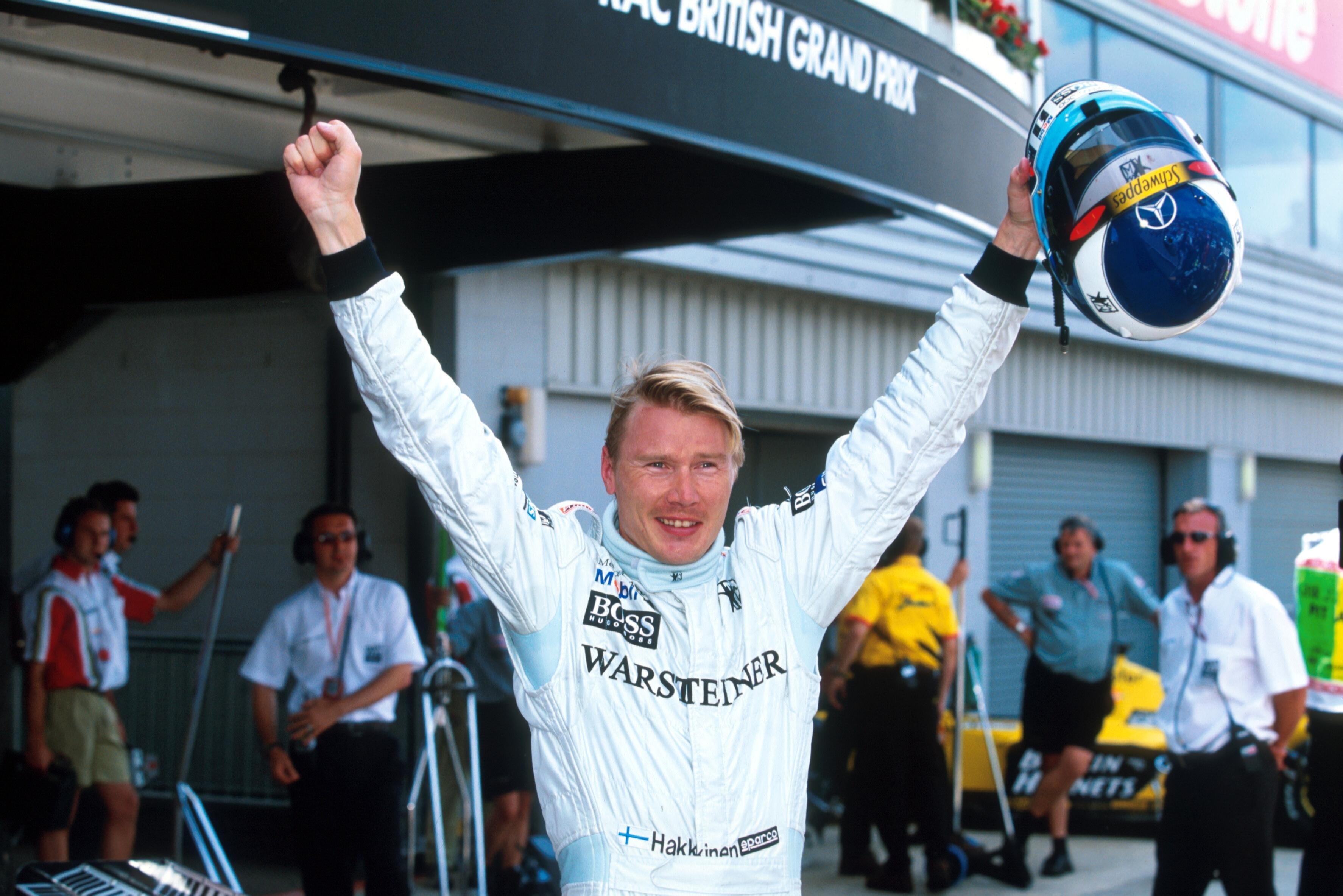
Mika Hakkinen celebrates pole for the 1999 British GP
Photo by: Motorsport Images
That could ‘help’ on two levels – it is easier to understand (the polesitter is the person who started at the front, not necessarily the case if the Friday times are used) and it ties into the FIA’s desire not to allow the sprint race to detract from the GP, classifying it firmly in the ‘qualifying’ part of the weekend.
But it really makes no difference, other than to undermine one of the most traditional GP elements – practice times first set the grid for the 1933 Monaco GP – and history is something F1 has previously agreed is important.
Top 10: The greatest Monaco Grands Prix
If the qualifying sprint race idea doesn’t work, this anomaly will be contained to the three 2021 races. But if it does work as hoped and there are more included in future F1 calendars, then the impact will get bigger and bigger.
There are lots of things to like about F1 at the moment. The championship fight, a willingness to experiment and new rules for 2022 to look forward to. But the point for fastest lap and the undermining of what pole position means are unnecessary collateral damage and need to go.

Max Verstappen, Red Bull Racing RB16B, and Lando Norris, McLaren MCL35M, prepare to lead the field away at the start
Photo by: Mark Sutton / Motorsport Images


Top 10 F1 results changed by backmarkers – the passes

Top 10 F1 results changed by backmarkers – the clashes

Stars, cars and highlights from the 2026 Goodwood Revival

The Egal has landed – again

Autosport magazine: Antonelli and a Can-Am celebration

Top 10 Can-Am drivers

Top 10 Can-Am cars

Top 10 greatest F1 qualifiers

Five things we learned from MotoGP Japanese GP after tyre drama

Honda HRC to get new boss with Watanabe set to retire

What’s behind Marquez becoming so serious

Bahrain Grand Prix in Malaysia Driver Ratings 2026
Subscribe and access Autosport.com with your ad-blocker.
From Formula 1 to MotoGP we report straight from the paddock because we love our sport, just like you. In order to keep delivering our expert journalism, our website uses advertising. Still, we want to give you the opportunity to enjoy an ad-free and tracker-free website and to continue using your adblocker.


Top Comments