


When driver aids have the opposite effect
They're the tools that a driver can rely on to get them out of a fix, but driver aids don't always make their lives easier. As Lewis Hamilton's accidental application of the Mercedes 'magic button' in Baku demonstrates, there can be a downside to driver aids
Max Verstappen’s hattrick of victories in Formula 1 has gone some way to making up for the disappointment of his Baku tyre failure and leaves Mercedes needing a result at Silverstone to turn the tide.
But the points situation could look very different without Lewis Hamilton’s error at the Baku restart, when he accidentally activated the ‘magic’ button on his steering wheel and went straight on at the first corner. The likely 25 points he would have scored for victory would mean he was only seven points behind Verstappen, rather than 32.
Mercedes responded for the French GP by introducing a shroud over the switch to avoid any future incidents. But where deployment of its now-banned Dual-Axis Steering tool proved unproblematic in 2020, the same cannot be said for its brake-bias altering device – which may be a sore point if Hamilton loses the world title by a narrow margin.
It isn’t the first and likely won’t be the last such device that was designed to aid the driver turns out to have the opposite effect.
Back in 1996 at Benetton, we had the bright idea to use a switch-operated solenoid to block the brake pressure when the car was stationary on the grid. This idea came about because the grid at the Nurburgring was on a downward slope and it would give the driver more control to find the clutch bite point and have his right foot solely on the throttle.
In theory, activating it would be a straightforward process. When the driver had arrived at his start position and had full brakes applied, they would press the switch once, then press it again to release the pressure when the five red lights had gone out. That was the theory anyway – but for Gerhard Berger the solenoid was stuck, and he was left motionless on the grid!
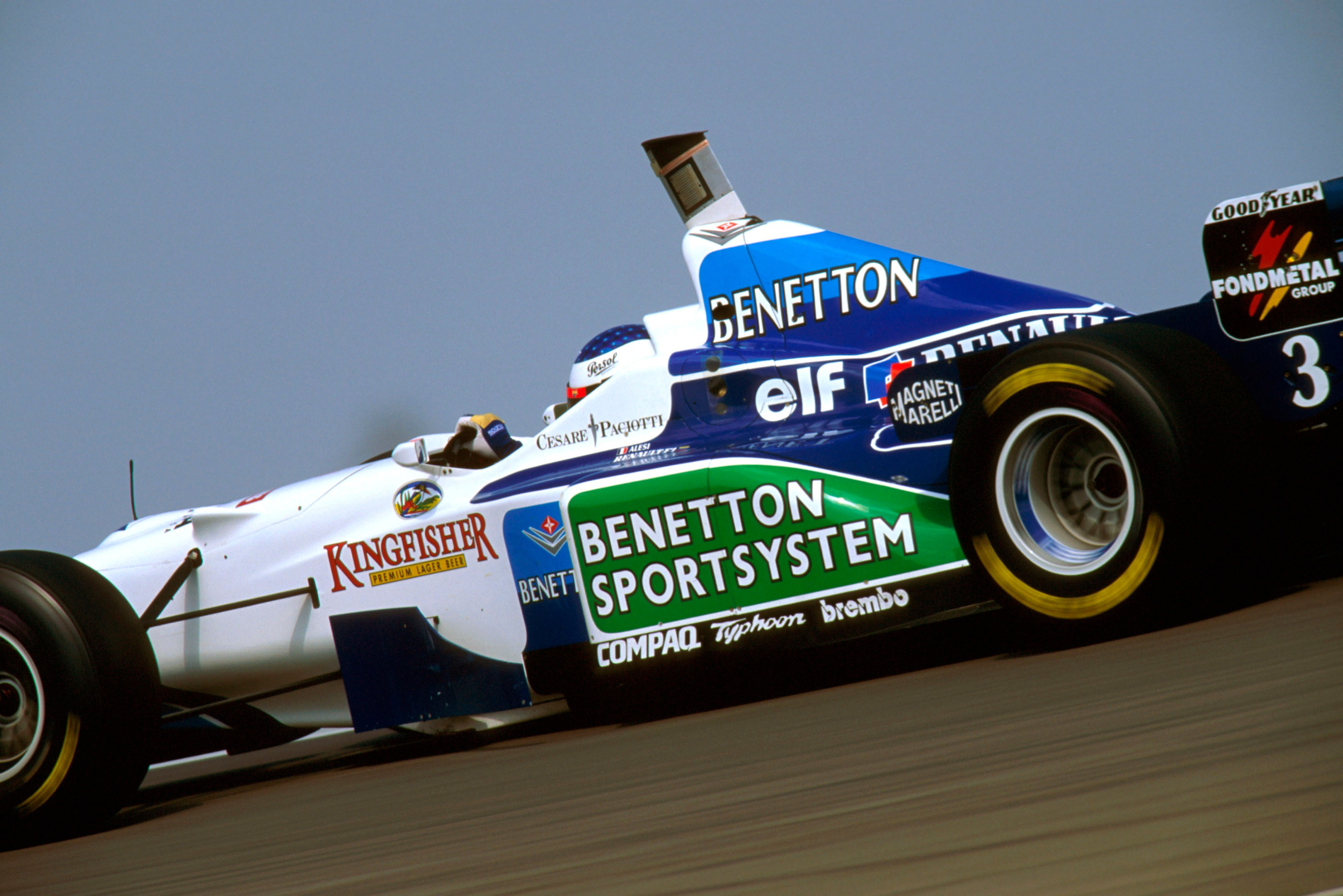
Gerhard Berger suffered a poor start at the 1996 European GP due to Benetton trickery that backfired
Photo by: Motorsport Images
The position of switches on the steering wheel is important, as if they are not shrouded, the driver can inadvertently change the settings – as Hamilton found out in Baku. One example was on the Toyota Supra GT4 car – when the driver was turning the steering wheel, he would sometimes catch the ABS switch (which was rotary) and be wondering why he suddenly had less traction.
Some drivers actually switch the ABS off, as it can be quite intrusive. For example at Donington Park’s Melbourne hairpin, because they are braking so late and going downhill, the ABS will hang on causing understeer which no amount of steering lock will help.
As hydraulics operate at such high pressure – typically around 3000psi – a leak is usually catastrophic and likely to force the car out of the race. Fortunately for Hamilton at the 2019 Canadian Grand Prix, it happened before the start and Mercedes managed to fix it just in time
We had this problem on the BMW M6s I worked on in 2019. The only way to rectify this was for the driver to turn the ABS down, or brake earlier and be off the brakes when turning in. However, this then would leave them exposed for someone who could brake later diving down and taking the inside line.
Another useful driver aid with the potential to cause problems is the adjustable anti-roll bar, which helps to change the understeer/oversteer balance. One of the arms of the anti-roll bar is replaced by a blade that can be rotated using a cable from inside the cockpit. Hamilton was hampered by a rear anti-rollbar failure on his McLaren in the 2012 Korean GP which caused massive graining on his tyres and forced him into an unusual strategy that led to him finishing 10th.
While not strictly a driver aid per se, hydraulics are one of the most important controls on modern day F1 cars and do serve as an aid to steering, gearchanges, clutch, differential and many engine controls.
By increasing or decreasing the hydraulic pressure on the differential for example, the driver can influence the car’s behaviour in slow-to-medium speed corners. If the pressure is too high it will cause the car to understeer, while too low pressure makes the rear-end unstable. This feature is one that the teams will devote a huge amount of attention to in practice.
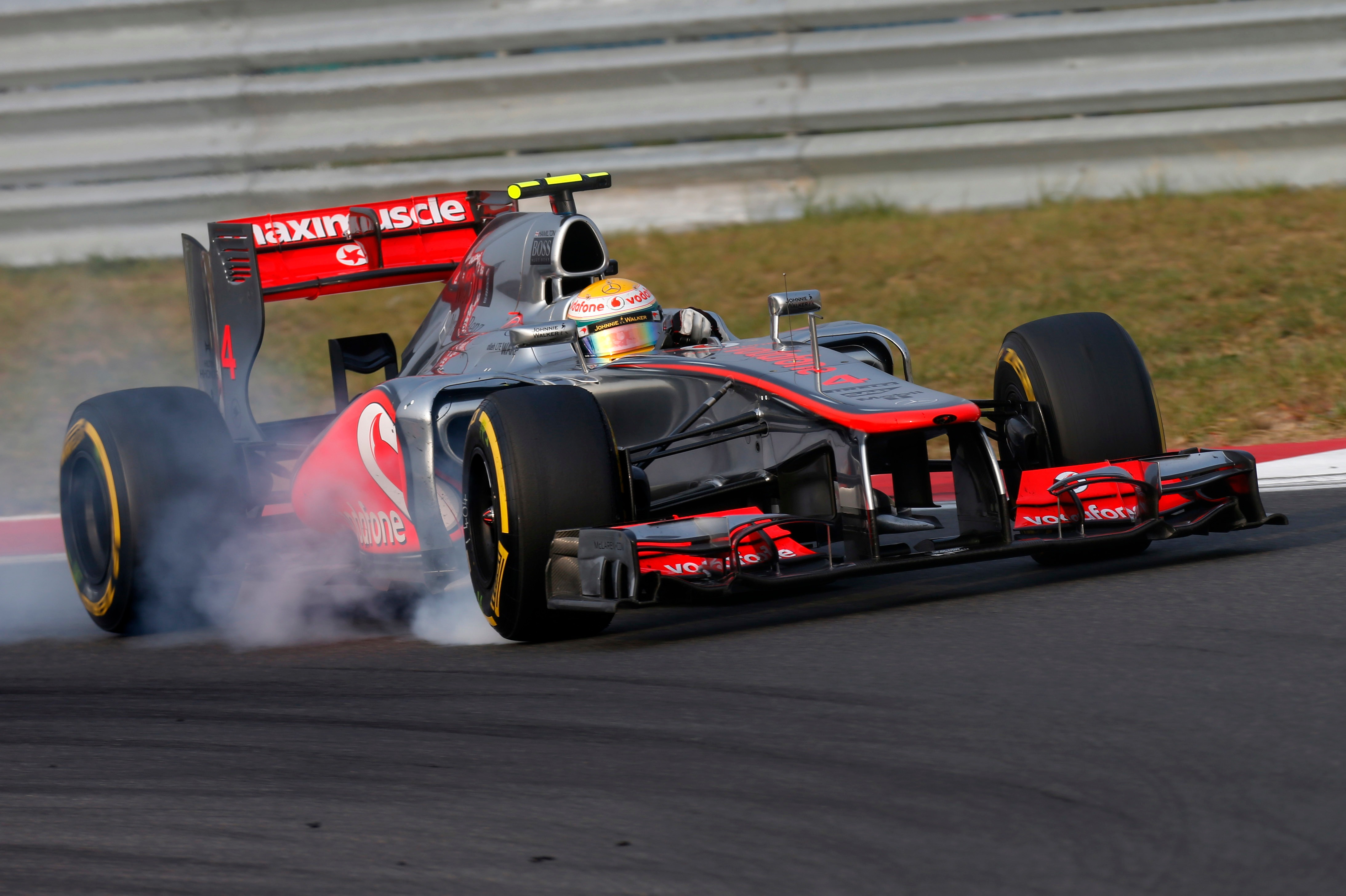
Rear anti-rollbar failure caused Hamilton to fall down the order in 2012 Korean GP
Photo by: Motorsport Images
Steering has also been improved by the introduction of hydraulics, now necessary as downforce has increased so much over the years. It also overcomes the need for steering geometry to be an exact science, as this can sometimes be compromised by where the steering arms on the front upright can be located.
But as hydraulics operate at such high pressure – typically around 3000psi – a leak is usually catastrophic and likely to force the car out of the race. Fortunately for Hamilton at the 2019 Canadian Grand Prix, it happened before the start and Mercedes managed to fix it just in time.
As F1 has become increasingly dominated by control systems, there are many opportunities for things to go wrong, although improved quality control means failures are thankfully rare. In fact, Verstappen’s French GP win was the ninth time every starter was classified since Monza 2005. Before that, only once had every starter been classified, at Zandvoort in 1961.
One of the biggest changes for drivers since the start of my career has been doing away with the manual gear change, removing the need to remove their hands from the steering wheel as paddles on the steering wheel have replaced the gearstick. Inevitably, this feature – started on the Ferrari 640 of 1989, has now found its way onto road cars. Gearbox technology combined with hydraulics and electronics has enabled engineers to fine hone the gearchanges to milliseconds.
Clutch control is another operation that has changed from being foot actioned to the hand, as the pedal has also been replaced by a paddle on the steering wheel. As part of the push for F1 drivers to be in control of all aspects of propulsion of their vehicle, automatic clutches are banned. However due to the development of slick gearchanges, the driver doesn’t need to use the clutch when shifting up or down. The removal of the clutch pedal has meant that the driver can opt to use his left foot to do the braking, speeding up the transition between braking and accelerating.
That’s helpful for drivers saving energy over the course of 24 hours at Le Mans, but Kamui Kobayashi needs no reminding that the hand clutch isn’t foolproof – as the Toyota driver lost the 2017 race in bizarre fashion when he mistook an orange-clad driver’s thumbs up of encouragement for a marshal permitting him to leave the pits. Stopping and starting again burned out the clutch and prolonged Toyota’s wait for another year.
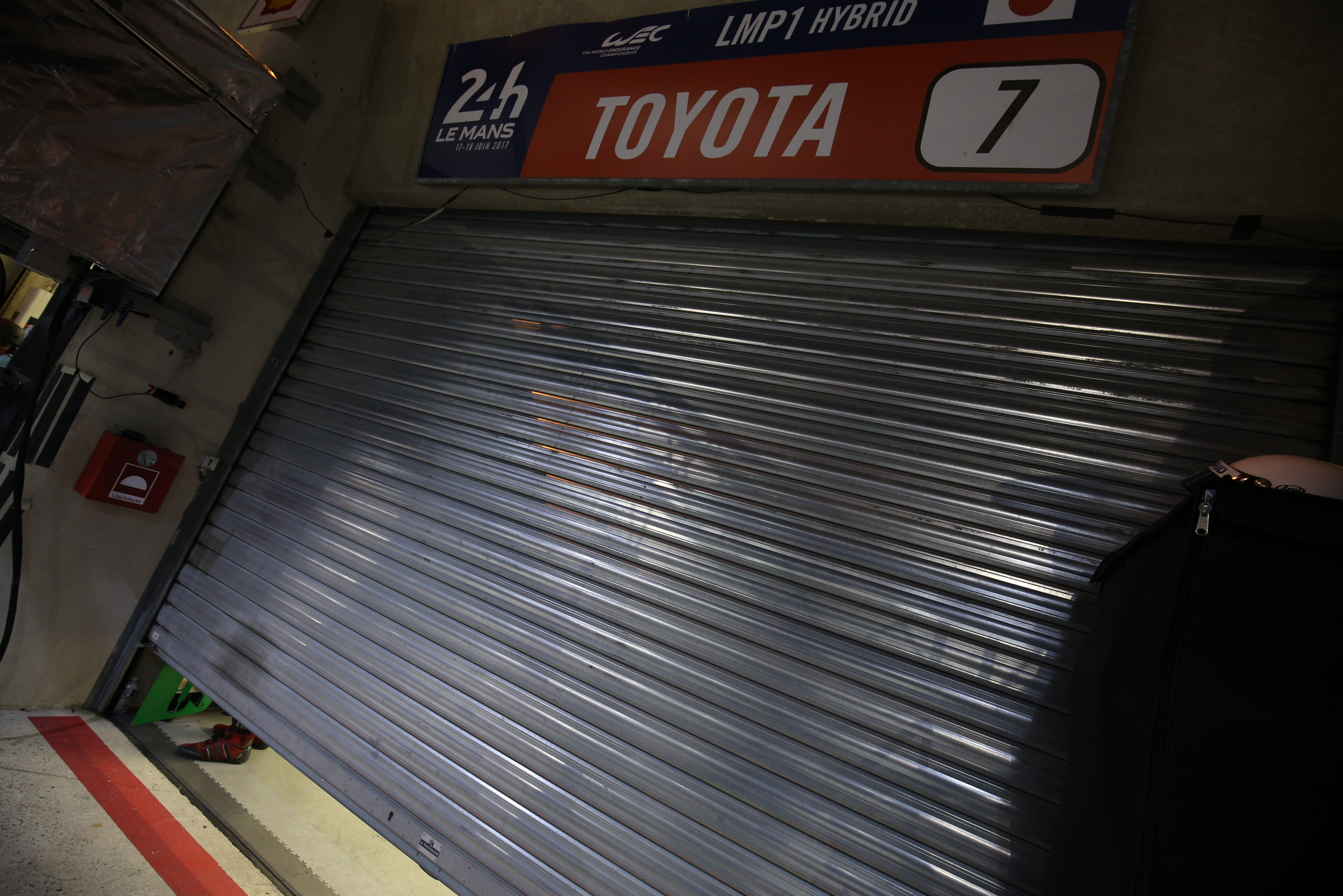
Clutch failure cost Kobayashi and Toyota dear at Le Mans in 2017
Photo by: Motorsport Images

The karting guru who helped Norris and other F1 stars

What teams lose and gain from F1’s testing restrictions

How Silverstone has evolved into a modern classic

The F1 cycles of staying ahead of the opposition

How an engineer survives Le Mans

The history lessons Peugeot should have learned on its return

The past figures F1’s returning drivers will hope not to emulate

How F1 teams and personnel react in pressurised situations

WEC Barcelona: Toyota scores dominant 1-2 to clinch manufacturers’ title

When Can-Am made its controversial comeback

Mercedes explains why its upgrade made its F1 car harder to drive

How levelling the playing field isn’t antithetical to the principles of F1
Subscribe and access Autosport.com with your ad-blocker.
From Formula 1 to MotoGP we report straight from the paddock because we love our sport, just like you. In order to keep delivering our expert journalism, our website uses advertising. Still, we want to give you the opportunity to enjoy an ad-free and tracker-free website and to continue using your adblocker.


Top Comments