


What could drive McLaren to build its own F1 engine
The FIA and F1 want the post-2030 technical formula to open the way to independent engine suppliers – and McLaren could be one of them

McLaren and Mercedes were partners for nearly two decades, winning three Formula 1 drivers’ championships and coming close to grabbing several more. Then, they underwent what Hollywood types would call a “conscious uncoupling”.
In recent years, they’ve rekindled a relationship of sorts, won another drivers’ championship together (and two constructors’ titles), and yet tensions remain between the two.
McLaren was one of several Mercedes customers to voice disgruntlement at the beginning of this season over a perceived ‘knowledge gap’ between the factory team and its clients over how best to run the new power units. And CEO Zak Brown has been a regular critic of Mercedes’ plans to acquire a minority stake in the Alpine F1 team, going as far as writing to the FIA to make his concerns clear.

On Mercedes’ side, it is well known that being beaten by a customer during the later years of the ground-effect era regularly moved team principal and co-owner Toto Wolff to outright fury. There will be those in Merc’s Brackley factory sighing with relief that its position of pre-eminence has been restored this season.
So, there are those in the F1 paddock who believe an opportunity lies in the next engine formula – by which I mean post-2030 rather than modifications to the present one, which has become an ongoing political and technical dog’s dinner. For the FIA and F1, the desired outcome is a format where development is sufficiently affordable for independent suppliers to compete, and the engine manufacturers have less political clout.
Now, this will be a challenging process, and not only because declawing the manufacturers while keeping them engaged will require a supremely deft political dance. At the moment, the power unit regulations are essentially determined by a committee that includes the six manufacturers who are signatories to the Concorde Agreement – including General Motors, even though it is a Ferrari customer for now.
Putative independents therefore have no meaningful voice. Theoretically it is within the FIA’s power to decide what the technical formula is after the present Concorde Agreement expires in 2030, and indeed president Mohammed Ben Sulayem has made it clear he is willing to do so.
But this would be a very aggressive take-it-or-leave-it move that could alienate the commercial rights holder as well as the manufacturers.

F1's future engine rules, both for 2027 and 2030, are the political hot topic right now
Photo by: James Sutton / LAT Images via Getty Images
Of the leading teams, McLaren stands to benefit the most from having its own engine. And, interestingly, Brown didn’t explicitly rule out the possibility when asked about the post-2030 power units during a round-table interview in Monaco this weekend.
“Well, we're not a manufacturer,” he said. “So, we actually don't have a seat at that table as far as the power unit group is concerned.
“So, now we've just got to wait and see what the regulations are. And if we find them interesting, then we'll maybe take a look.
“But until then, you know, you kind of know what we know as far as what the future may hold. So, I think it'd be a distraction at this point to do anything other than focus on where we are today and what we intend to be in the future.
“I think everything that we're hearing from the president, V8, bigger ICE [internal combustion engine], the right fuel, less battery, hybrid, sound. All that sounds good.
“My technical skills don't go far beyond that. But I think that sounds like a great direction to travel.”
"Anytime a new regulation comes out, we'll take a look and see if it's something technically that's interesting. Is it something fiscally that makes sense?"
Zak Brown
For its road car range, McLaren developed its own engines in partnership with Ricardo, the eminent engineering consultancy whose founder, Sir Harry Ricardo, designed the cylinder heads for the fascinating 135-degree supercharged V16 engine in Alfa Romeo’s stillborn pre-war 162 grand prix car.
There is a historical irony here, because it was McLaren’s decision to go into road car manufacture in the Ron Dennis era that caused the initial schism with Mercedes. Dennis had secured the partnership at the end of 1994 after two seasons of desperately casting about for a competitive engine supplier after Honda’s withdrawal in ’92.
Mercedes had made a low-key entry into F1 with Sauber, applying its badge to V10s built by Ilmor in Brixworth. Over the coming years it would step up its involvement to a takeover of that company, renaming it Mercedes-Benz High-Performance Powertrains (HPP). The engines were generally among the most powerful in F1, if not always the most reliable.
When Dennis decided to branch out into road car manufacture – in competition with some if not all of Merc’s model range – Mercedes took advantage of the Brawn team being up for sale in 2009 to become a constructor in its own right. The ending of the McLaren relationship was virtually inevitable from that point.

McLaren's first relationship with Mercedes deteriorated when the Woking-based team ventured into road car production
Photo by: Motorsport Images
In recent years, they have come together again, after another period in which McLaren struggled to secure a competitive power unit deal, but it is very much a customer relationship and the political fault lines are clear. For now, though, McLaren has no viable alternative, hence Brown’s diplomatic language.
“I'm very happy with HPP,” he said. “They've been a great partner. We've won a couple of championships with them.
“Even though everyone said you couldn't win a championship with a customer engine, I think we've proven that you can. I think priority one is to stay with Mercedes.
“I think they've been a great partner until the regulations come out. Anytime a new regulation comes out, we'll take a look and see if it's something technically that's interesting.
“Is it something fiscally that makes sense? We'll go through that process when that happens.
“I think sitting here right now, we're extremely happy with Mercedes and we anticipate continuing with them.”
The future presents both clear opportunities and perils for both parties to this relationship. Much as Mercedes has compelling logistical reasons to supply fewer teams, cutting ties with its most successful customer would not be a good look.
Its brand is still associated with winning the 2025 and 2025 constructors’ titles, even if it didn’t achieve these with its own team. Wolff is prudent enough not to let pride overrule commercial sense.

McLaren is back-to-back world constructors' champions with Mercedes power units
Photo by: Steven Tee / LAT Images via Getty Images
For McLaren, building its own engine would be a technical and commercial risk. Money might be less of an issue as we cruise into the era of teams being billion-dollar franchises, but the challenge of building a competitive power unit depends on the final shape of the post-2030 regulations. The barriers to entry here may end up too high.
There was an apt reminder of this in Monaco last Thursday, when Mika Hakkinen took to the track in an M2B, McLaren’s first F1 car, on the 60th anniversary of the team’s grand prix debut. Mika, you’ll note, did not apply pedal to metal at any point.
In 1966, F1’s ‘return to power’ with three-litre engines, marque founder Bruce McLaren bought a handful of Ford Indy V8s, hoping to downsize them from 4.2 litres. But neither the ministrations of a third-party engineering company nor McLaren’s in-house guru Gary Knutson could make a success of it.
Still, it made a lovely noise. But that didn’t win trophies then, and it won’t do it in 2031.

Hakkinen demos the first McLaren F1 car - a lesson for the modern day team
Photo by: Sam Bagnall / Sutton Images via Getty Images


Why Hamilton’s return to form is not straightforward

'Senior moment' or breakdown of trust? The implications of Hamilton's Singapore GP meltdown

Why Verstappen's dominance left rivals scrabbling for alternatives in Singapore
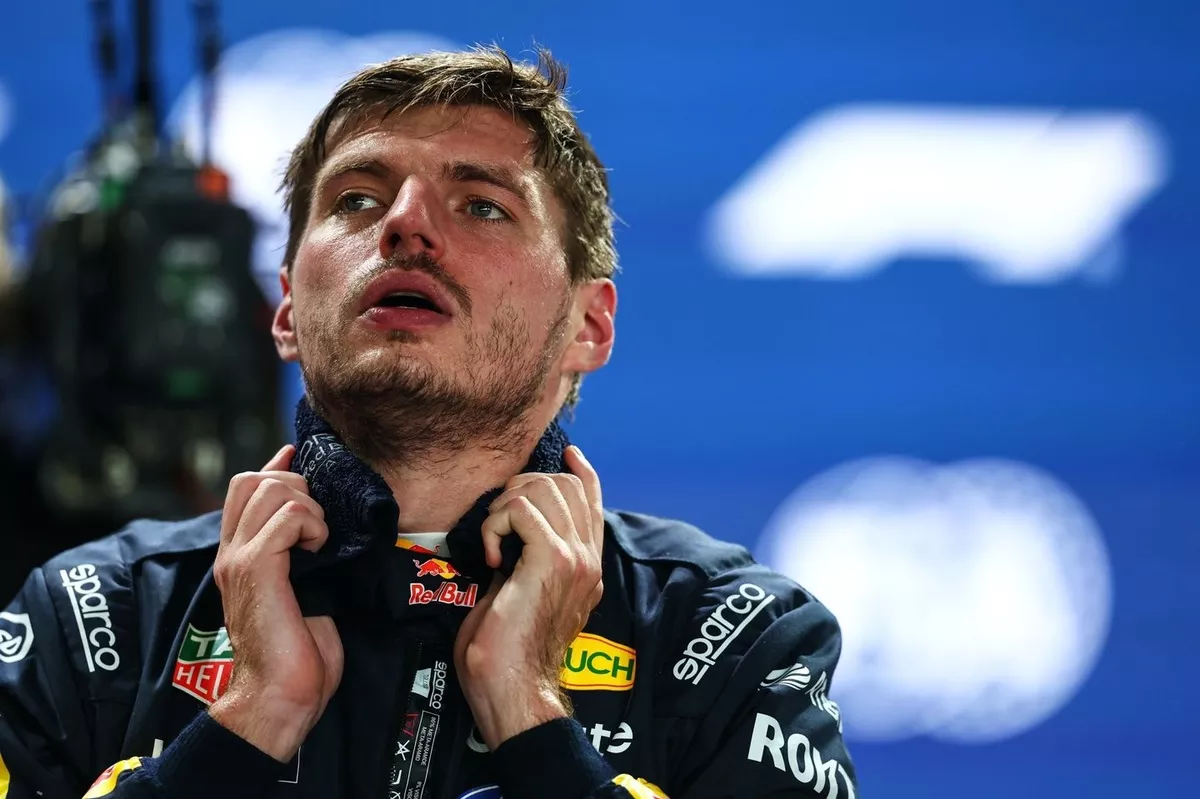
A "better job" or more engine power? Verstappen's Singapore pole unpicked

FIA reveals "human error" caused latest software glitch in Singapore sprint qualifying

F1 Singapore GP live commentary and updates - Verstappen wins sprint while McLarens collide

F1 Singapore GP live commentary and updates - Verstappen on pole

LIVE: F1 Singapore GP - Verstappen dominates to victory from Leclerc, nightmare for Hamilton

How Antonelli will manage the pressure as F1 coronation looms

Verstappen warns COTA bumps are “unacceptable” and “out of control”

Why Colapinto spoke out against abuse targeting his own F1 team

Sainz yet to be "convinced" that F1 2026 will finish in the Middle East
Subscribe and access Autosport.com with your ad-blocker.
From Formula 1 to MotoGP we report straight from the paddock because we love our sport, just like you. In order to keep delivering our expert journalism, our website uses advertising. Still, we want to give you the opportunity to enjoy an ad-free and tracker-free website and to continue using your adblocker.


Top Comments