


Why Tsunoda can become Japan’s greatest F1 talent
While Japan's fever for motor racing is well-documented, the country has yet to produce a Formula 1 superstar – but that could be about to change, says BEN EDWARDS
AlphaTauri’s new recruit, Yuki Tsunoda, has already achieved a new milestone in the list of achievements in Formula 1 by becoming the youngest Japanese driver to date.
Hiroshi Fushida was the first driver from Japan to put his name in the F1 statistics book when he tried to qualify for the Dutch and British Grands Prix of 1975, but his Maki-Ford F101 simply wasn’t competitive enough to make the grade.
So three drivers shared the honour of becoming the first official Japanese grand prix racers at Fuji in the nation’s first world championship event in 1976. While James Hunt battled his way through the rain to earn the title, notable achievements were made by home racers.
Kazuyoshi Hoshino was the first to run in the top three but sadly his privately run Tyrrell 007 lacked enough sets of wet weather tyres and he was forced to withdraw.
PLUS: The driver who should have been Japan's first F1 winner
Masahiro Hasemi claimed a worthwhile statistic when he became the first Japanese driver to set fastest lap on his way to finishing 11th in the locally built Kojima chassis. Noritake Takahara was the best placed of the three home-grown drivers who started, finishing ninth in a Surtees.
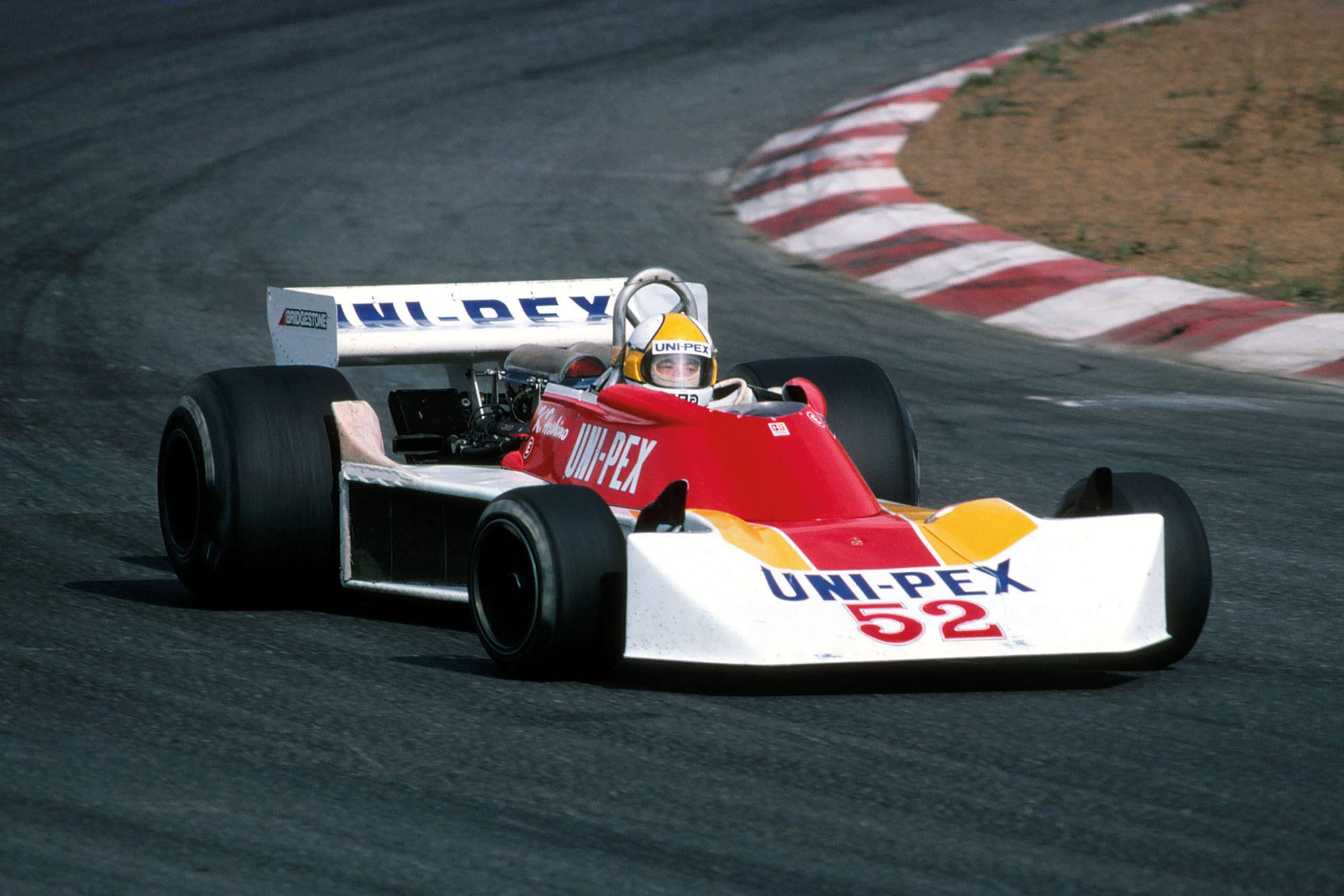
Kazuyoshi Hoshino, 1976 Japanese Grand Prix
Photo by: GP Racing
The subsequent race at Fuji in 1977 featured the first top 10 finish for another newcomer, Kunimitsu Takahashi, but the race also included an incident that stymied the connection between F1 and Japan for nearly a decade.
A few laps into the race, Gilles Villeneuve’s Ferrari ran into the back of Ronnie Peterson’s Tyrrell; the Ferrari was launched into the air and cartwheeled into a zone where people were not supposed to be spectating. While Villeneuve walked away unhurt, two bystanders were killed and several others were injured.
Nakajima’s English was mostly limited to ‘yes; no; good; bad’. In his second grand prix he became the first driver from Japan to score points by classifying sixth at Imola, but ultimately his best finish was fourth
The consequences were complicated; the race disappeared from the calendar and it wasn’t until 1987 that a Japanese driver returned to the fray. Satoru Nakajima became the country’s first full time entrant as he took his seat alongside Ayrton Senna at Lotus-Honda. The Japanese Grand Prix also returned, moving from Fuji to Suzuka, and the drama was shared with fans courtesy of Fuji TV, the nation’s F1 broadcaster to date.
Kazuhito Kawai was Fuji TV’s pitlane reporter back then and is now chief commentator. Unlike many drivers who have struggled with the change in culture, Kaz speaks excellent English…
“I was having dinner with the Lotus mechanics on one occasion,” Kawai recalls, “and I was very quiet while we were eating. Eventually they said ‘Kaz, what are you doing? Are you doing a Nakajima?’”
Nakajima’s English was mostly limited to ‘yes; no; good; bad’. In his second grand prix he became the first driver from Japan to score points by classifying sixth at Imola, but ultimately his best finish was fourth.
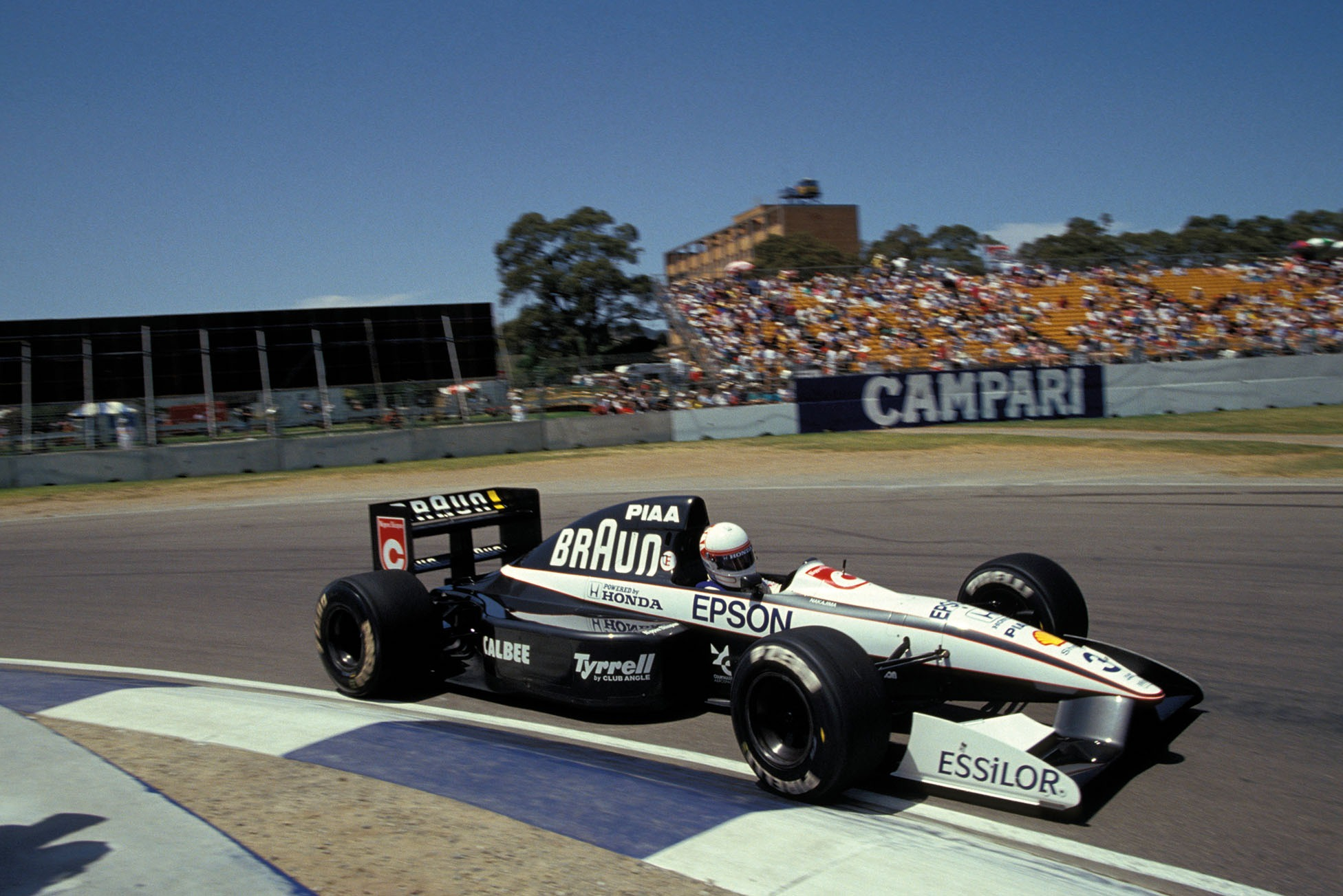
Satoru Nakajima, Tyrrell-Honda 020, Australian Grand Prix 1991
Photo by: GP Racing
Instead, the kudos of a first podium went to Aguri Suzuki who stood in front of his home fans at Suzuka in 1990. Helped by the infamous title-deciding clash between Senna and Alain Prost, it was a special result and only two other drivers from Japan have been able to finish in the top three.
Having beaten team-mate Anthony Davidson to the British Formula 3 title in 2001, Takuma Sato had plenty of language skills when he became an F1 driver the following year. In 2004, at BAR-Honda, he ticked off another key statistic by becoming the first Japanese racer to qualify on the front row, achieved at the European GP, just three weeks before he matched Aguri Suzuki with a podium in the United States. Perhaps that was a predictive moment; after Sato’s F1 career stuttered, he established himself in the US in Indycar and has become a two-time Indy 500 winner.
Kawai feels that while Sato was impressive there was another driver from Japan who demonstrated an even higher level of performance.
“In terms of pure pace, I think Kamui Kobayashi is the best so far – with consistency as well,” Kaz says. “That front row he took in Belgium in 2012 in the Sauber was good; it wasn’t a car that was top of the line. But then Grosjean ruined his race…”
2012 was the second year that Kobayashi had been teamed up with Sergio Perez at Sauber and it was a closely fought contest between them. Perez had learned well from his previous year’s rookie campaign but there was little to choose in the qualifying head-to-head in the first half of the season. Perez gained an edge later in the year with the prospect of a McLaren drive at his fingertips, but Kobayashi fought back, earning a valuable podium at Suzuka and finishing just six points shy of Perez's total.
Yet Kobayashi lost his seat for 2013 and his opportunities in F1 were finished by the end of a fruitless 2014 season with Caterham, while Perez has become a race winner.
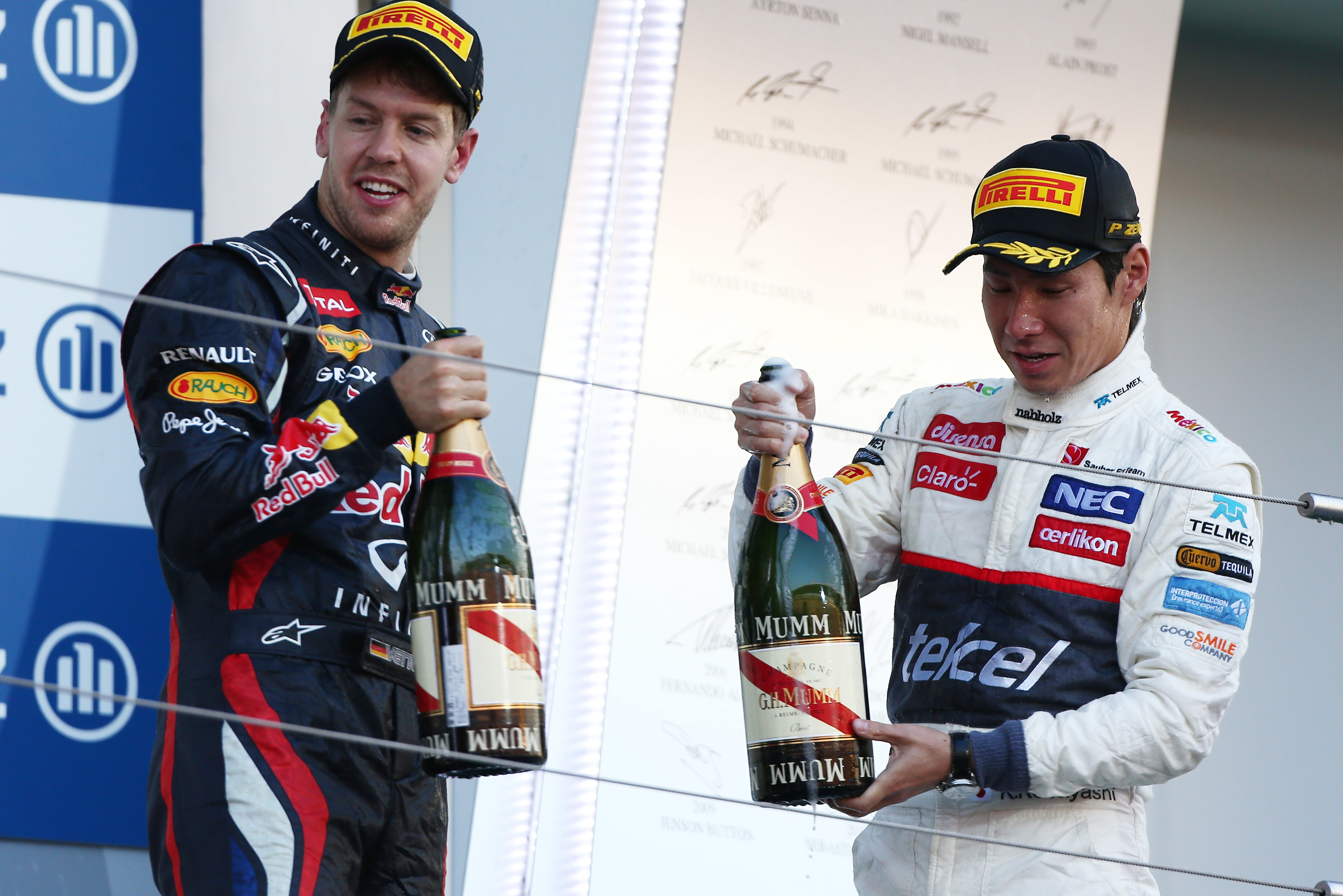
Sebastian Vettel, Kamui Kobayashi on the podium at the 2012 Japanese GP
Photo by: GP Racing
Perez is now part of the title-contending Red Bull outfit, a group that is always keen to develop fresh talent and which has placed Tsunoda at AlphaTauri. From dealing with one Japanese driver on centre stage in his early career, Perez has another pushing from the wings as he seeks glory in his second decade of F1.
Tsunoda is perfectly positioned to build a career capable of achieving new heights. Pole positions, race wins and a title challenge have all proven elusive for his home nation so far, yet he is in a team that teaches and supports rookie drivers and is strongly connected to another that enjoys fighting for overall success.
And at 20, he has plenty of time on his side.
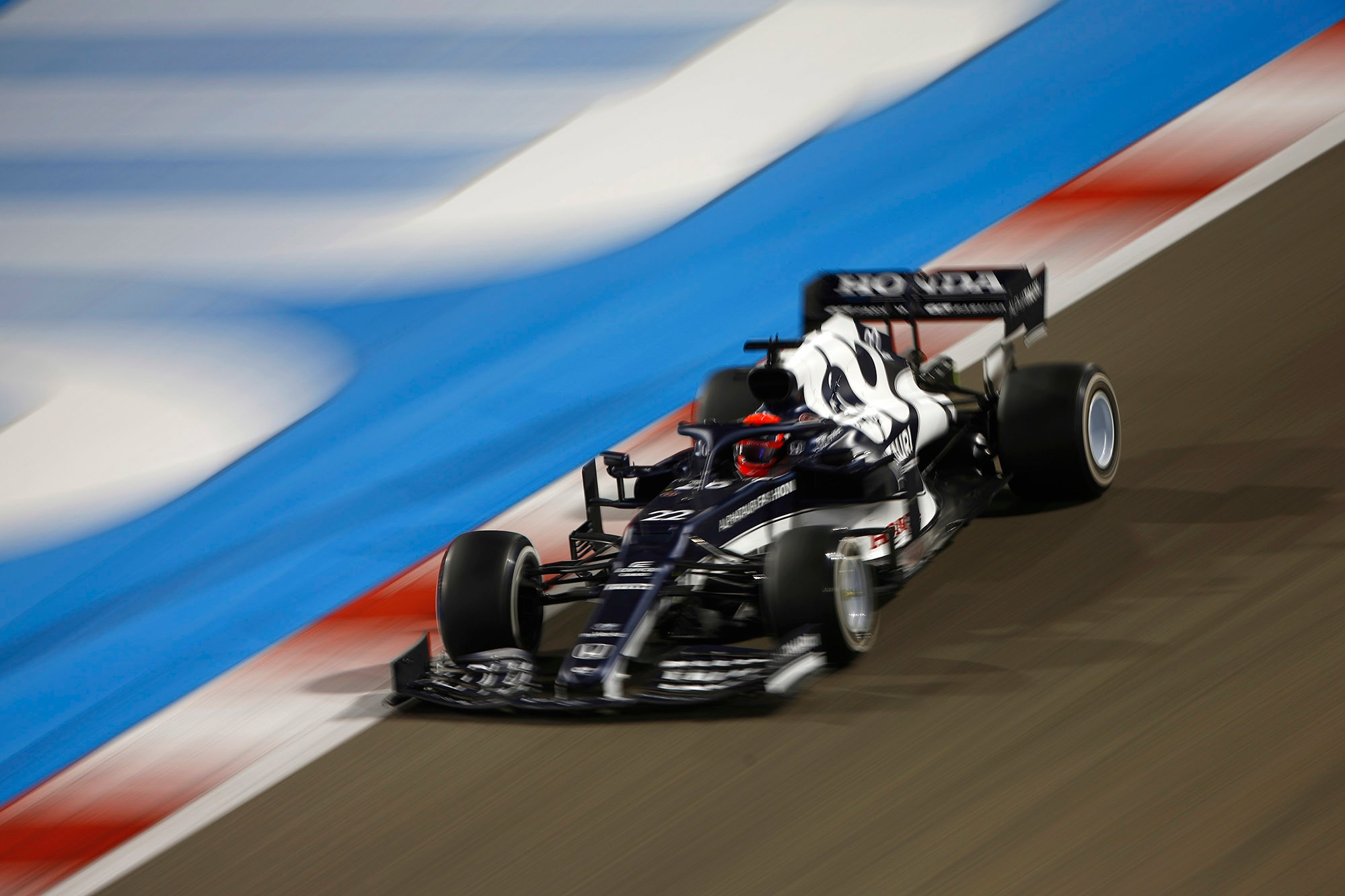
Yuki Tsunoda, AlphaTauri-Honda
Photo by: GP Racing

How Ratzenberger beat the odds to realise his cruelly short-lived F1 dream

F1 uncovered: A weekend behind the scenes with a chief mechanic

When McLaren was pipped by Red Bull in a modern F1 classic

The big opportunity Sainz’s Williams switch affords to F1’s latest centurion

Inside the science of F1 fuel

How F1’s plan for rotating races could look in practice

The early decisions that set Sauber’s rookie for success

How F1 media coverage has evolved in line with its subject

WEC Barcelona: Toyota scores dominant 1-2 to clinch manufacturers’ title

When Can-Am made its controversial comeback

Mercedes explains why its upgrade made its F1 car harder to drive

How levelling the playing field isn’t antithetical to the principles of F1
Subscribe and access Autosport.com with your ad-blocker.
From Formula 1 to MotoGP we report straight from the paddock because we love our sport, just like you. In order to keep delivering our expert journalism, our website uses advertising. Still, we want to give you the opportunity to enjoy an ad-free and tracker-free website and to continue using your adblocker.


Top Comments