


The tactical penalty problem F1 should consider
Grid penalties for changing Formula 1 engines and power unit elements has become part of a team's strategic toolbox, which the rules never intended. PAT SYMONDS considers whether F1 should be looking at an alternative
The subject of grid penalties for the use of more engine components than the regulations allow is a vexed one. Until this past season it had become more of an accepted annoyance than a topic of debate.
At Monza last year the subject was very firmly on the lips of fans and teams alike as an unprecedented 13 cars accumulated between them penalties of 125 grid positions. The magnitude of the problem was compounded by the provisional starting grid not being published until several hours after the qualifying session finished as the FIA debated how, and in what order, so many conflicting penalties should be applied. With three cars nominally penalised by starting at the back of the grid, one could sympathise with the impossibility of applying the letter of the law.
As it happened this very eventuality had been foreseen and a logical system devised by the late Charlie Whiting, the long-serving race director whose untimely death in early 2019 exposed many flaws in the system. While the procedure laid out by Charlie had been communicated to the teams some years ago, it had never been embodied in the regulations and hence wasn’t widely known about or understood.
But why were there so many penalties? Yuki Tsunoda had earned 10 of them as a result of accumulating too many reprimands in a year as well as a further three for failing to slow for yellow flags. The rest of the penalties arose from the use of additional power unit elements over and above the limited number each driver has allocated for the season.
These latter penalties highlight the fact that teams can choose to take a penalty in return for bringing a fresh engine into the pool, the so-called strategic engine change. This is a situation that, while perfectly legal, wasn’t what the regulations envisioned when they were written.
The idea of restricting the number of power unit elements each driver is allowed was a sensible move to reduce costs. I remember back in the days of V10s when we were using at least one engine a day and sometimes one just for the qualifying session. In the late 1990s this led to an engine bill at Benetton of £17m, nearly £35m in today’s terms.
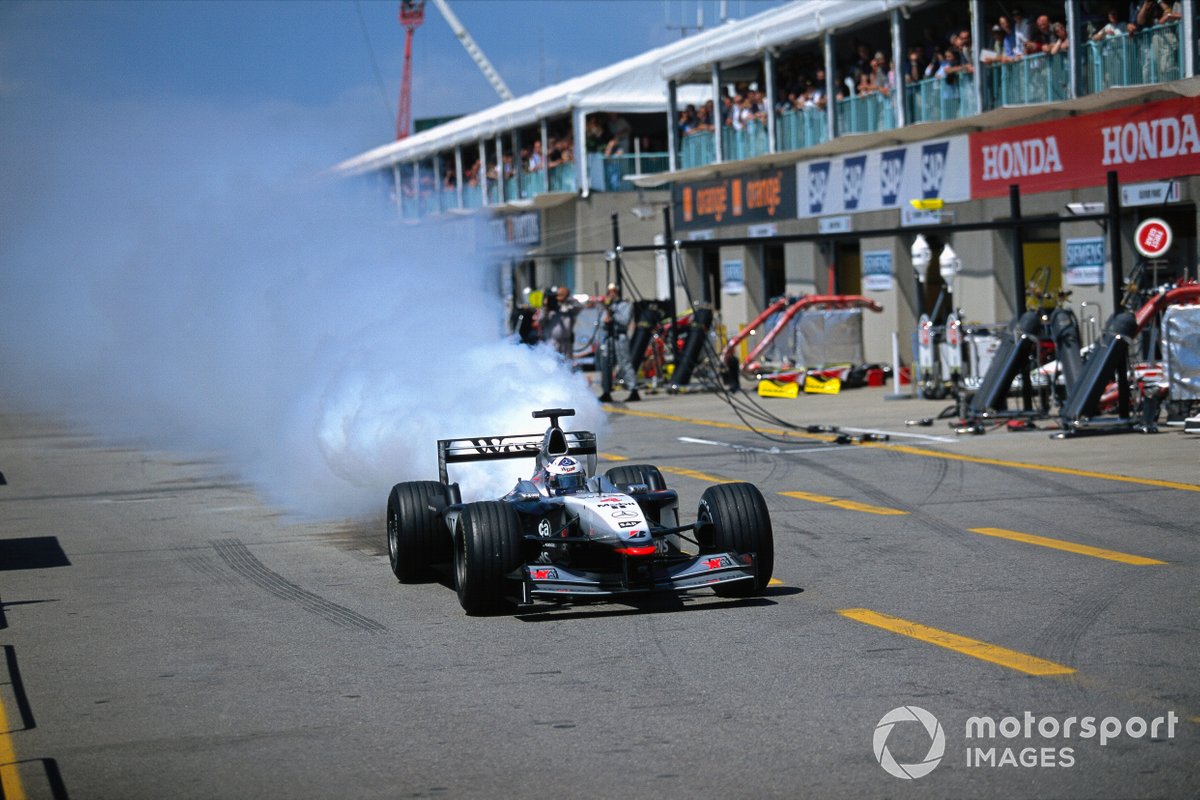
Teams frequently pre-empt the massive detonations of years past by introducing new parts to the engine pools, incurring penalties at strategic junctures
Photo by: Motorsport Images
While the work involved in engineering a high-performance racing engine from one that had to last 300 kilometres to one that now has to last nearly 5,000 kilometres isn’t trivial and comes with significant cost, engine bills for customer teams today are a fraction of what they were then.
The power unit is split into a number of elements: the internal combustion engine itself; the turbocharger; the two motor-generator units (kinetic and heat or MGU-K and MGU-H); the control electronics; the battery or energy store; and each of the components that make up the exhaust system. Each of these elements is restricted in number ranging from two for the battery and control electronics to eight for the exhausts. Use of additional components attracts a penalty of 10 grid positions the first time an offence is committed and five for each subsequent over-usage.
Herein lies some of the illogical thinking. Slowing for a yellow flag is a penalty that attracts a three-place grid drop when replacing an electronic control box can send you back 10 places. Also, in most societies, repeat offenders have their sentence increased not reduced – so what incentive is there, once the initial 10-place penalty has been handed down, not to offend repeatedly?
An in-race penalty may be considered more appropriate. This could range from a drive-through for a first offence and a stop-go with a variable stop time, and no work allowed on the car, for subsequent offences
But we haven’t yet really examined why the strategic engine change appeared to be more common last year. It certainly does appear engine reliability in general was worse in 2022. I think the answer lies in measures that were introduced as a result of the new engine which has been announced for 2026. In order to allow this engine to be developed without an additional parallel development stream having to be funded for the current engine, it was determined that the specification of the 2022 engine would be frozen for the next three seasons.
Now, even in a frozen specification, manufacturers are allowed to modify components for reliability reasons and this leads to an element of gamesmanship. Do you homologate a perfectly reliable, relatively low-performance engine and live with it until 2026 or do you take risks to increase performance at the cost of reliability in the knowledge you should be able to fix the reliability issues over time? Of course, in an intensely competitive sport, you’re more likely to follow the second path.
However, looking at the number of engines used, one can see Ferrari has probably followed this thinking more than Mercedes. Ferrari acquired sixteen penalties in 2022, Mercedes just three.
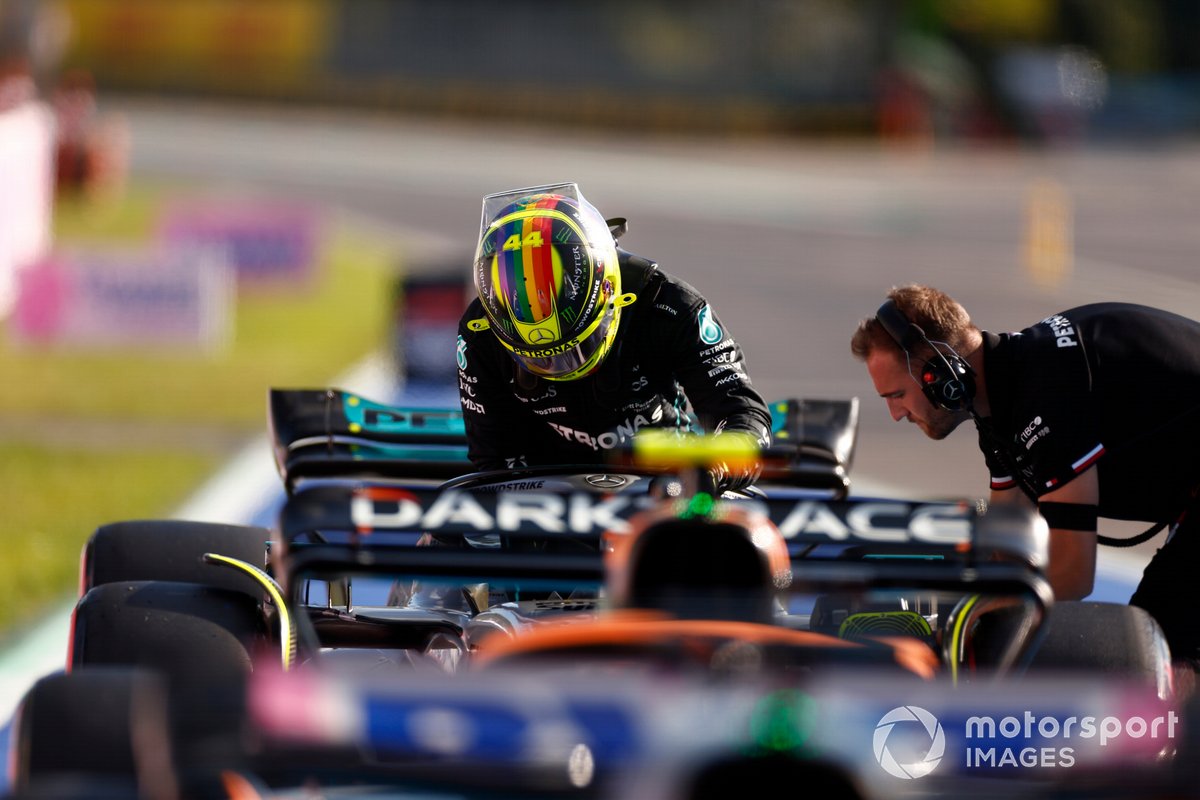
Penalties meant Hamilton started 19th at Monza and came back to fifth, just behind Sainz who had started 18th
Photo by: Steven Tee / Motorsport Images
So is it time to rethink these penalties? F1 has asked fans, through its regular surveys, this question many times and the answer has always come back that grid penalties are the lesser of several evils. Now, however, maybe opinion is changing and an in-race penalty may be considered more appropriate. This could range from a drive-through for a first offence and a stop-go with a variable stop time, and no work allowed on the car, for subsequent offences or more serious disregard of driving standards.
No system is perfect but this would represent much more of a deterrent to strategic engine changes. On occasions it may break up a good battle on track but equally there will be occasions where the climb through the field by a penalised car will add an element of uncertainty.
It will be easier for casual fans to understand and, if the regulations examine the inevitable unintended consequences, may provide for another degree of tactical differentiation. If nothing else, it’s worthy of debate.
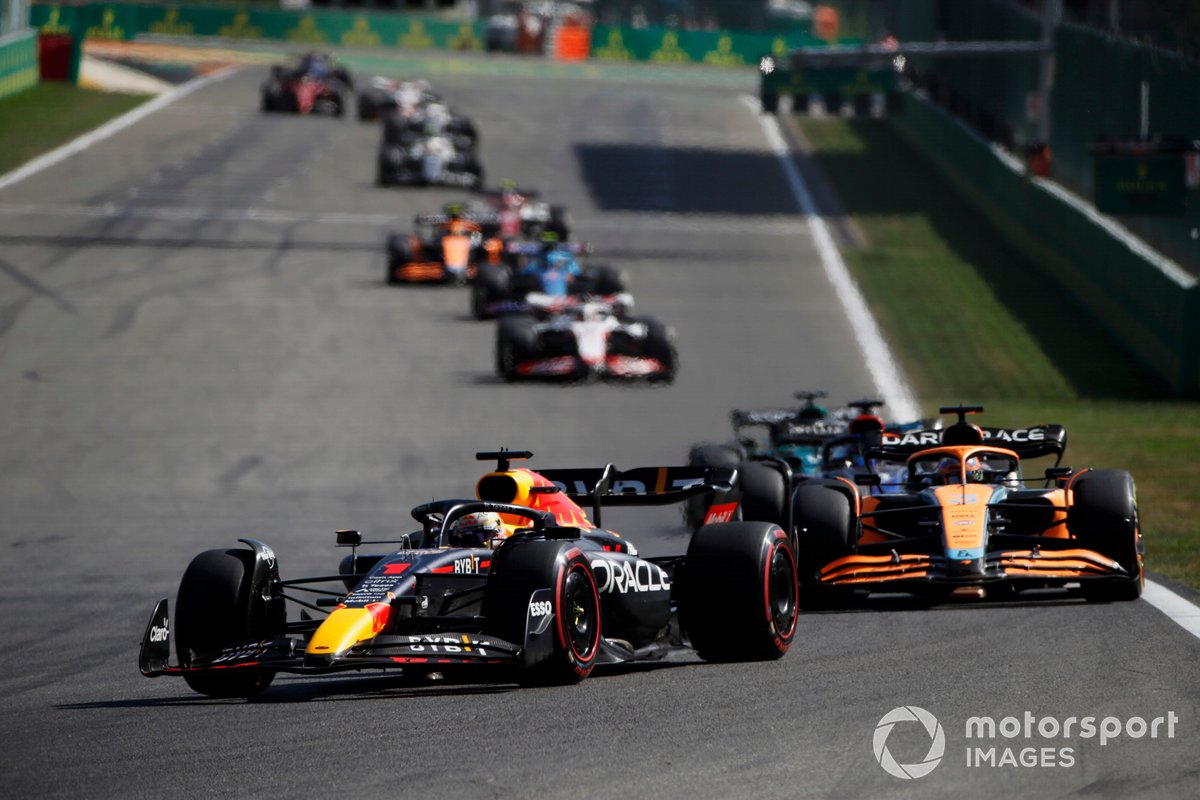
Verstappen took his best win of 2022 at Spa from 14th as one of many drivers to take fresh PU elements
Photo by: Zak Mauger / Motorsport Images

How Ratzenberger beat the odds to realise his cruelly short-lived F1 dream

F1 uncovered: A weekend behind the scenes with a chief mechanic

When McLaren was pipped by Red Bull in a modern F1 classic

The big opportunity Sainz’s Williams switch affords to F1’s latest centurion

Inside the science of F1 fuel

How F1’s plan for rotating races could look in practice

The early decisions that set Sauber’s rookie for success

How F1 media coverage has evolved in line with its subject

A fond farewell to a few BTCC favourites

Five key takeaways from F1's big African Grand Prix reveal in Rwanda

IndyCar driver Harvey announces cancer diagnosis

Why McLaren cannot fix its F1 car handling until 2027
Subscribe and access Autosport.com with your ad-blocker.
From Formula 1 to MotoGP we report straight from the paddock because we love our sport, just like you. In order to keep delivering our expert journalism, our website uses advertising. Still, we want to give you the opportunity to enjoy an ad-free and tracker-free website and to continue using your adblocker.


Top Comments