


The F1 champion who became an Indy king in his second career
Emerson Fittipaldi’s decision to go racing with his brother led to him falling out of F1, but he bloomed again on the IndyCar scene. NIGEL ROEBUCK considers a career of two halves
“People ask me about my career,” said Emerson Fittipaldi, “but, really, I had two completely separate careers. When I retired from Formula 1, in 1980, I thought I was giving up driving for good. By 1984, though, I was on the grid at Indianapolis…”
Fittipaldi’s rise in motor racing was swift. Born in Sao Paulo in 1946, he excelled in local karting events, and by 1969 had moved to England, where he so impressed in Formula Ford, then Formula 3, that by mid-1970 he was invited to join the Lotus Formula 1 squad. At Hockenheim, only his second race, Emerson finished a remarkable fourth in an obsolete 49; for Monza, Emerson was allotted a 72, the car with which Jochen Rindt set course for the world championship.
“On the first day I had a huge accident – I looked in the mirrors, missed my braking point, and when I looked back, there was [Ignazio] Giunti’s Ferrari. I hit the back of it, went over the bank, and into the trees.
“The toughest thing, though, was to tell Colin Chapman what happened – that car was to be Jochen’s the following day. It was brand-new, and they wanted me to bed everything in, but now it was destroyed. I had to be honest, and say that I just screwed up.”
In Saturday’s final session, approaching Parabolica, Rindt’s Lotus 72C suffered a front brake shaft failure, pitched left, and hit a guardrail post at around 150mph. There was no surviving the accident, and for Fittipaldi this was a massive blow: Rindt, as well as his team-mate, was a man he idolised.
“Emotionally, it was devastating. I had breakfast with Jochen that morning at the Hotel de la Ville, and he asked me to drive for his F2 team the following year. A few hours later he was dead, and suddenly I realised how fragile life was – the odds on getting killed were so high back then.”
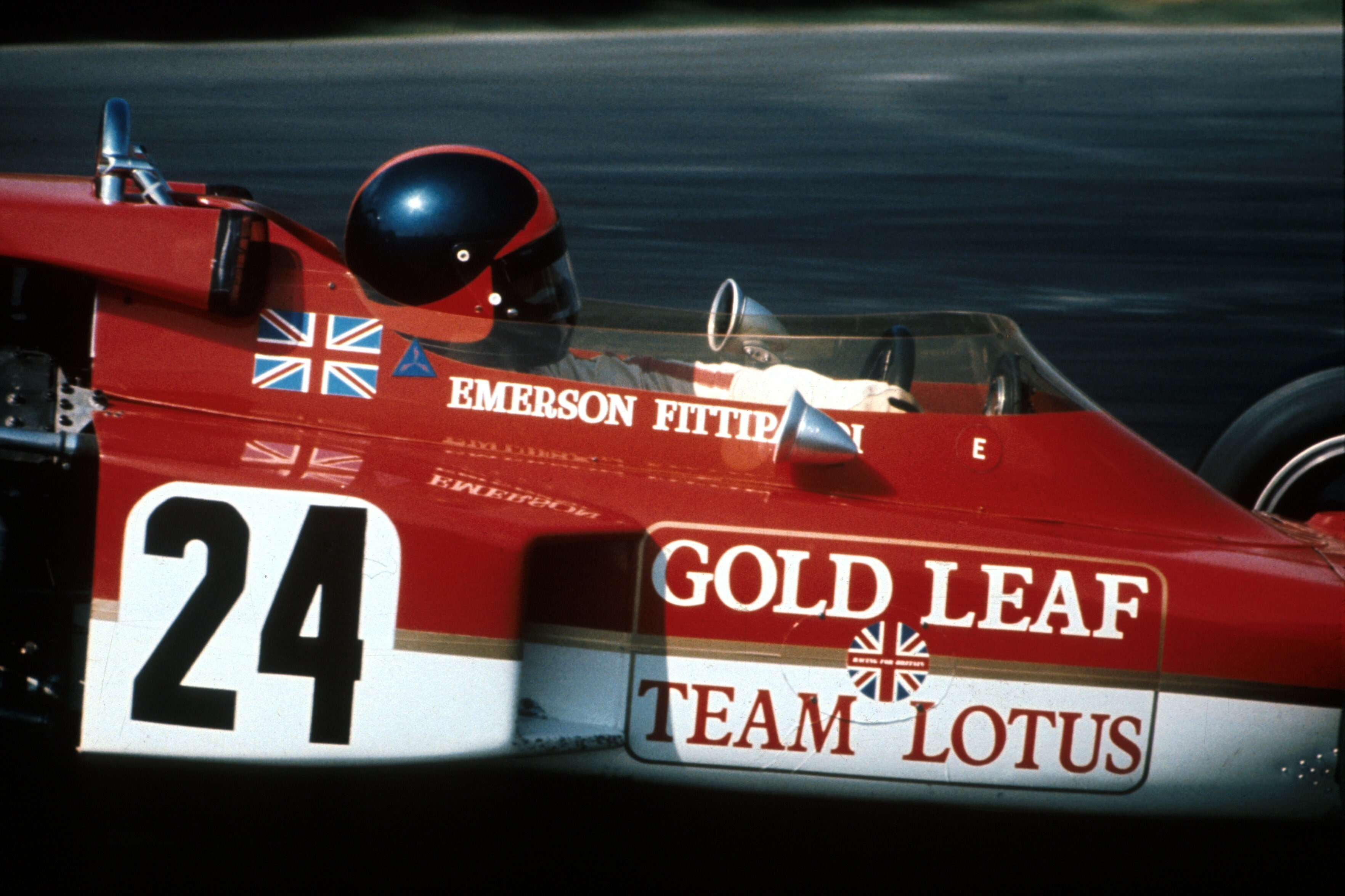
Fittipaldi's F1 win at Watkins Glen in 1970 ensured Ickx could not surpass Rindt's points tally
Photo by: Motorsport Images
The remaining Lotuses were withdrawn from the event, then skipped the trip to Mosport. Next on the schedule was Watkins Glen, and there – after qualifying third, behind Jacky Ickx (on pole) and Jackie Stewart – Fittipaldi won what was only the fourth grand prix of his life.
He freely admitted there was luck involved, but he had driven faultlessly, and the effect on Team Lotus, shattered by the loss of Rindt, was profound. Now a fixture in the team, in 1972 Emerson became world champion, winning five of the 12 GPs along the way.
PLUS: How Chapman's wonder wedge won Fittipaldi's heart
“The best cars I ever drove were the Lotus 72 and the Penske PC18, when I worked with Patrick Racing in 1989. In both cases, I could talk to the car, and the car could talk to me. You almost never get that situation, but when you do, it’s fantastic.
"We underestimated what we had taken on, technically and financially [at Copersucar]. In my last two years in F1, I went to the races only because it was an obligation" Emerson Fittipaldi
“Although I won the championship in 1972, the Lotus 72 was at its best the following year, and I think my best F1 drive was in Argentina – towards the end I had the two Tyrrells ahead of me, [Francois] Cevert leading Stewart. We had a really incredible dice, but Jackie got a slow puncture, and then I eventually got by Francois. On the limit all the race.”
For 1974 Fittipaldi left Lotus for McLaren, where he continued to flourish, winning his second title, then finished second to Niki Lauda the following year.
PLUS: Fittipaldi's prophetic title that justified his McLaren switch
“I enjoyed my two seasons with McLaren – but then made a bad decision. My brother Wilson and I had decided to build our own car, and he drove it in 1975, the first year. I then took over, but we underestimated what we had taken on, technically and financially. In my last two years in F1, I went to the races only because it was an obligation. Not good.”

Emerson Fittipaldi, McLaren M23
Photo by: David Phipps
Fittipaldi Automotive continued for two more years, with Emerson now in a management role, but by the end of 1982 it was all over, and he returned to Brazil. Initially he didn’t miss racing, but in 1984 accepted an invitation to drive a March IMSA car at Miami, and while there met a man – one Pepe Romero – who said he was buying a March Indycar, and would Fittipaldi care to drive it? Thus began his second career.
“I’d loved most of my time in F1, but I found Indycar racing – CART, as it was then – much more relaxed, just what I needed at that point in my life.”
Later in 1984 Emerson joined Patrick Racing, replacing a young Chip Ganassi, who had been seriously hurt at Michigan. At the same track, a year later, Fittipaldi claimed his first Indycar win, and in 1989 his first CART championship.
“Most of all from that year I remember Indianapolis, and a big dice with Al Unser Jr. Towards the end I was leading, but then there was a yellow, and we pitted. There were about 15 laps to go, that’s all – and they completely filled up the car with fuel! Morris Nunn had done all the calculations, and went crazy, but Pat [Patrick] said, ‘I’m the boss!’.
“On the restart it was a nightmare: I saw Junior coming, and couldn’t pull away – I didn’t know I was on full tanks. He passed me quite easily, with four laps to go, and it was a terrible moment – this was the Indianapolis 500!
“We got to lap 199, with one to go, and into Turn 1 we came up on slower cars. Al got held up more than I did, and I came off [Turn] 2 much quicker, towed him down the backstretch, so we were side by side into [Turn] 3. I told myself I wasn’t going to lift, but there was a backmarker ahead, and in the turbulence from his car I lost downforce, and began to slide up the track. Al and I touched, and I was very lucky – he crashed, and I didn’t…”

Fittipaldi survived clash with Unser Jr in 1989 to win his first Indy 500
Photo by: IndyCar Series
Four years later, Fittipaldi found himself in a similar situation. Now driving for Roger Penske, he was leading in the late stages when Nigel Mansell, running third, clouted the wall at Turn 2.
“Earlier in the race,” Emerson remembered, “I ran about 150 miles behind Nigel. It was his first time at Indy, and he was doing unbelievable things, but I wasn’t surprised when he eventually hit the wall. Actually, Ayrton [Senna], who had raced against him so much in F1, had warned me what to expect!
“Mansell was a great driver, but he operated ‘on emergency’ the whole time. He’d go into a corner over the limit, then somehow sort it out. When he hit the wall, there was a yellow – and actually he benefited from it, because his car wasn’t damaged, and it closed the gap! Fortunately, when we came to the restart, I had more experience, and was able to get away.”
"Mansell was a great driver, but he operated ‘on emergency’ the whole time" Emerson Fittipaldi
Fittipaldi’s two worlds, then, and he loved them both, finally retiring in 1996 as his 50th birthday beckoned having suffered a serious accident at Michigan when he impacted the wall rearwards and was nearly paralysed in the impact - surviving in part thanks to his extreme fitness.
“I was so lucky, wasn’t I? I raced against people like Stewart and [Niki] Lauda in F1, and then guys like Michael Andretti, Al Jr, Rick Mears, in Indycar racing. And of course, there was Mario [Andretti] – in both categories, he was incredible.”
As indeed was Emerson.
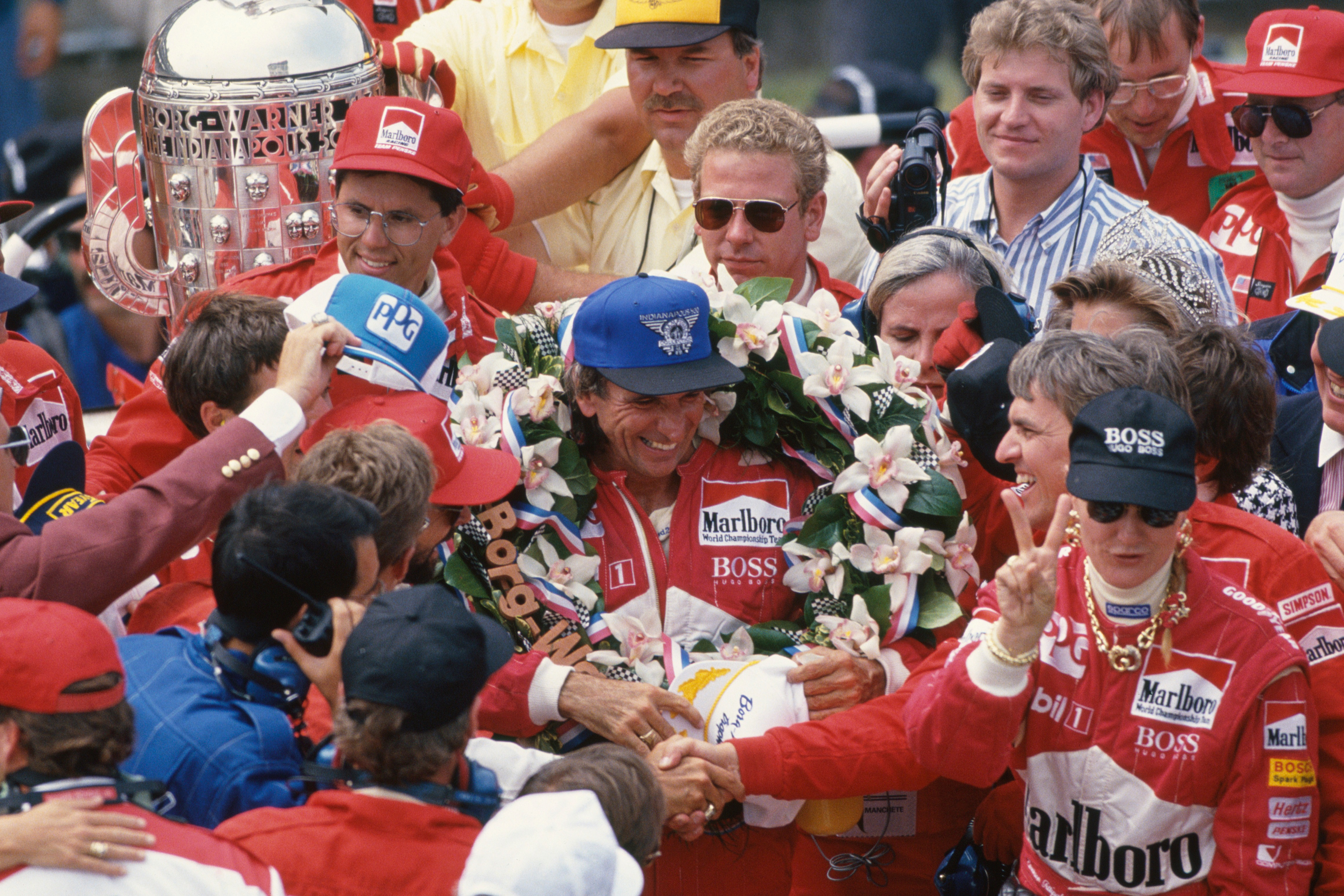
A poor late restart from rookie Mansell opened the door for Fittipaldi to win his second 500 in 1993
Photo by: Motorsport Images

How Ratzenberger beat the odds to realise his cruelly short-lived F1 dream

F1 uncovered: A weekend behind the scenes with a chief mechanic

When McLaren was pipped by Red Bull in a modern F1 classic

The big opportunity Sainz’s Williams switch affords to F1’s latest centurion

Inside the science of F1 fuel

How F1’s plan for rotating races could look in practice

The early decisions that set Sauber’s rookie for success

How F1 media coverage has evolved in line with its subject

Acosta's long road to his maiden MotoGP win

MotoGP Austrian GP: Acosta finally claims maiden win

Great debate: Which circuit should host the F1 2026 finale if the calendar has to change?

Live: MotoGP Austrian Grand Prix updates as it happens
Subscribe and access Autosport.com with your ad-blocker.
From Formula 1 to MotoGP we report straight from the paddock because we love our sport, just like you. In order to keep delivering our expert journalism, our website uses advertising. Still, we want to give you the opportunity to enjoy an ad-free and tracker-free website and to continue using your adblocker.


Top Comments