




The data that reveals how different Spa is under F1's 2026 rules
This year’s pole time at Spa-Francorchamps is almost four seconds slower than last season’s. But behind that figure lies a much more important story about F1’s 2026 cars. The data reveals why

Autosport Explains
Our experts decode the most important stories in motorsport.
At the start of this season, many drivers immediately pointed to Spa-Francorchamps, believing the famous Ardennes circuit would become one of the most challenging venues of the year from an energy management perspective.
This weekend has proved that prediction correct in two respects. Firstly, the challenge posed by the circuit’s most iconic corners is now significantly different or, as Lando Norris put it in China, "You're not going to see who has the biggest balls through Pouhon anymore.”
After qualifying, he and team-mate Oscar Piastri went even further, saying: “Pouhon isn't even a corner anymore.”
More interesting is the fact that teams are struggling with the optimal deployment strategy throughout the lap. Among others, Red Bull explained on Friday evening that it was still undecided over which strategy would work best. Williams had five different presets because the simulations had not produced a clear answer, allowing it to cover the full spectrum.
Spa's second sector exposes the biggest weaknesses
While there are differences between the teams, the contrast is even greater when comparing the 2025 and 2026 pole laps. Last season, Norris set a 1m40.562s in qualifying for the grand prix, while this year Kimi Antonelli claimed the best time with a 1m44.361s.
The first thing that stands out is that the 2025 car arrived at the braking zone for La Source carrying considerably more speed: 296km/h versus 283km/h. The minimum speed through Turn 1 differs by only 3km/h, but after that the real contrast begins to emerge.
With more electrical power available on corner exit, the 2026 car accelerates more quickly, meaning its speed along the old pitstraight and at the foot of Eau Rouge is significantly higher than last year. It is also clearly noticeable trackside, with the approach speed to Eau Rouge-Raidillon visibly higher than during the ground-effect era.

Andrea Kimi Antonelli, Mercedes
Photo by: Guido De Bortoli / LAT Images via Getty Images
Norris reached 307km/h at that point last year, whereas Antonelli hit no fewer than 330km/h this time. Through the second part of Raidillon, however, the 2025 McLaren gains significantly, although it should be noted that cars from that generation also produced more downforce.
The power unit side of the story comes to the fore again on Kemmel Straight. After reaching 328km/h, Antonelli gradually loses speed on the run towards Les Combes despite remaining flat out, naturally because clipping sets in. Norris continued to build speed throughout the straight in 2025 and only reached his top speed – 339km/h in his case – just before braking for Les Combes.
The remarkable aspect is that despite these major differences, the first sector times are almost identical. Antonelli was only 0.155s slower than Norris at the first timing point, but the shortcomings of the 2026 power units really become apparent in the second sector.

It is exactly as Fernando Alonso predicted at Silverstone: by deploying electrical energy from La Source to Les Combes and then again towards Blanchimont and the Bus Stop chicane, drivers are forced to complete most of sector two without MGU-K deployment. Unsurprisingly, that was the part of the lap drivers spoke about most openly on Saturday evening.
“For most of sector two you run just on the [combustion] engine,” Max Verstappen said in the FIA press conference. “What is that? 450, 500 horsepower, something like that, which I guess is more or less what a Formula 3 car has, but then with F1 downforce.”
Although the comparison with F3 is exaggerated (those cars actually produce around 380bhp), it is true that F1’s internal combustion engine now produces less power than the Mecachrome engines used in F2: roughly 540bhp versus 620bhp.

The comparison with 2025 reflects this perfectly. The difference is particularly striking from Les Combes to Pouhon, especially under braking for Rivage. Just before the braking point, the speed difference between the two years exceeds 40km/h. The 2026 car has less downforce, but the vast majority of the explanation lies on the power unit side of the equation.
That picture continues through Pouhon, which drivers have described as the most painful point of the lap in 2026. Last year, the double left-hander posed a significant challenge, reflected by the fact that even Norris, in the fastest car in the field, had to lift. This year it is comfortably flat for everyone, although the speed through both parts of Pouhon is around 30km/h lower than a year ago.
Fagnes and Stavelot tell a similar story, with the speed difference just before the braking zone for Stavelot once again exceeding 30km/h. The final sector, meanwhile, mirrors the first. Once again the 2026 car accelerates more quickly out of Stavelot, but the turning point comes at Blanchimont.
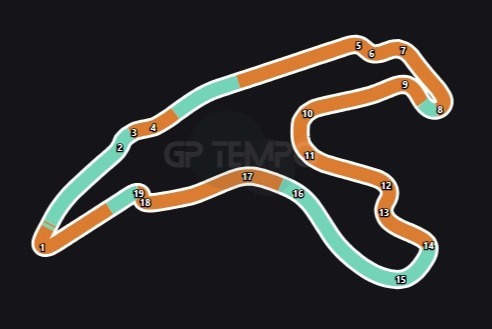
Norris explained on Friday that drivers lose around 50km/h through Blanchimont this year, and the data confirms that. Antonelli enters the corner at 335km/h and exits at 285km/h, whereas in 2025 the speed continued to build progressively.
After the Bus Stop chicane, the Mercedes qualifying trick can once again be seen in the data: using the full 350kW of electrical power for longer before lifting just before the finish line to comply with the regulations through “negative driver input”.
Stella admits Spa's character has changed
Formula One Management has argued that a slower car is not necessarily a worse car, and that is certainly true. The reduction in downforce is a positive development, forcing drivers to wrestle with the cars more once again.
More important than the lap time itself, however, is how that lap time is achieved. It is precisely that aspect which appears unnatural in 2026, something Spa has exposed more clearly than almost any other circuit so far.
It is a view shared by McLaren team principal Andrea Stella on Saturday evening: “So starting with the fact that in 2026, because of the energy starvation, some of the circuits, which are particularly long and very demanding in terms of electrical energy, they do change their character. I think this one we have to acknowledge.
“We knew already before 2026 that this would be the case, because it's apparent in the simulations. I think some improvements have been applied since the start of the season to minimise that. They made the situation a little better, but it's important that we implement the changes for 2027 to see these traits coming back.

Oscar Piastri, McLaren
Photo by: Alastair Staley / LAT Images via Getty Images
“It will not be to a full extent, because I still think there will be some limitations in terms of energy deployment. So somehow we'll have to kind of get used to it. And on the other side, we'll have to see what incrementally we can keep improving in these power unit regulations, such that we can retain the character of some challenging corners, where if you don't approach fast, the corner is no longer a corner.”
It is precisely that final point which Spa has exposed more clearly than anywhere else. At circuits such as Budapest and Zandvoort, the issue will be less pronounced, but this weekend has demonstrated exactly why the changes planned for 2027 and 2028 are so badly needed.


What Verstappen knew about Red Bull’s big upgrade when he signed his new F1 deal

Why Horner sees history repeating itself for Newey at Aston Martin

Mekies under the microscope: How different is his leadership at Red Bull from Horner?

The not-so-obvious chance Leclerc missed to usurp Verstappen

The hidden factor that gives Verstappen and Red Bull extra hope for 2027

Verstappen jokes about coded messages as Red Bull phases in Lambiase’s successor

What Verstappen will change after Red Bull’s poor F1 starts in Malaysia and Singapore

Verstappen urges Red Bull to fix race starts problem

How Toyota destroyed the competition to seal the WEC crowns

McLaren retains Fornaroli as F1 reserve and hands him WEC programme for 2027

How Andrew Jordan realised his teenage rallycross dream

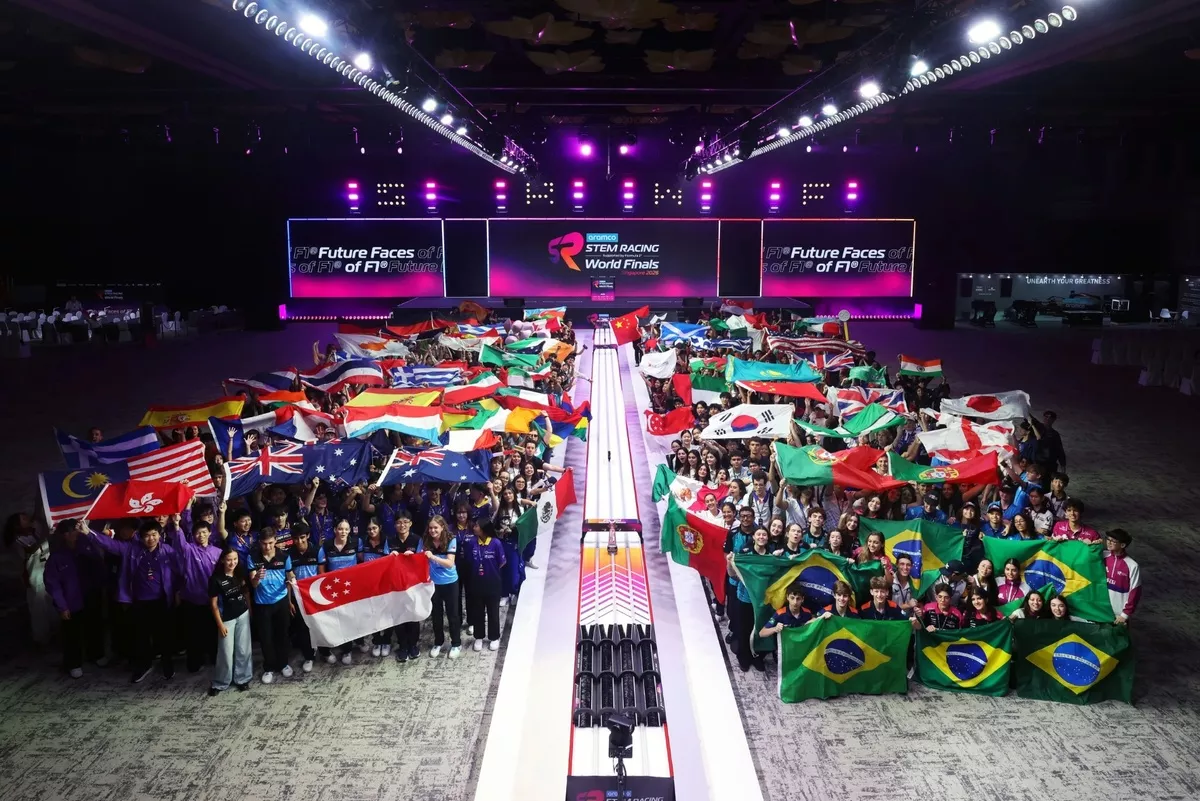
Inside the competition building F1’s future engineering talent
Subscribe and access Autosport.com with your ad-blocker.
From Formula 1 to MotoGP we report straight from the paddock because we love our sport, just like you. In order to keep delivering our expert journalism, our website uses advertising. Still, we want to give you the opportunity to enjoy an ad-free and tracker-free website and to continue using your adblocker.


Top Comments