


The boss F1 needs but (probably) can't have
A common critique of Formula 1 under Liberty's control is that it lacks engagement and direction. One man has all the qualities to alleviate those concerns - the trouble is, he might not be all that interested in the job

"It's reminiscent, in a way, of working with Bernie Ecclestone, whose departure was unfortunate. It's great to see a person with a real entrepreneurial spirit, a person who's single-handedly responsible for what happens in his racing series.
"Negotiations with him are not easy, but I'm certain that they're equally pleasurable for both sides and that they'll ultimately yield a result."
Sergey Vorobyev's words could be the basis of a manifesto for Formula 1's next leader. Whatever your opinion of Ecclestone, he got stuff done, and presently F1 is struggling to force through its planned changes to the same effect. In discussing the negotiations to possibly bring Formula E to St Petersburg, Vorobyev - the deputy general director of Russian Grand Prix promoter Rosgonki - has identified the man who could play a key role in changing that. The trouble is, he might not be that interested.
It's not known how Alejandro Agag feels about being compared to Ecclestone, but the Formula E CEO (soon to be chairman) makes his position on F1 clear. He describes the idea of leaving FE for F1 as "highly unlikely, not to say impossible".
"I love Formula 1, I love the history of Formula 1," Agag says. "But honestly I think now Formula E is a much more exciting place to work. That's my opinion."
In the electric single-seater series' paddock, there is a common thread: that none of it would exist without Agag. Under his stewardship FE has gone from pipe dream to reality, attracting an extraordinary number of manufacturers and changing the landscape of motorsport by forcing several of them to rethink or ditch other activities to focus on this disruptive new category.
For a long time, he has felt like a potential F1 chief-in-waiting. He knows the Liberty operation, as FE is part-owned by Liberty Global, the sister company to F1's owner. It feels like his imminent move from CEO to chairman indicates a changing of the guard and offers a chance for F1 to take advantage of Agag's grip on the electric series loosening by trying to tempt him away. But that might be a gross misreading of the situation.

The challenge of taking FE to new heights will undoubtedly remain extremely motivating for Agag, and he also has his new Extreme E project to keep him busy. The suggestion from some inside FE is that even though F1 is F1, its elusive, impalpable allure that captures so many isn't likely to attract Agag any time soon.
Admittedly, it's also tough to see where Agag would fit in. F1's not short of firepower at the top. Liberty Media's trinity of Chase Carey (CEO), Ross Brawn (sporting boss) and Sean Bratches (commercial chief) commands respect through the sheer weight of their respective CVs.
So, what's the point of discussing a hypothetical move that may or may not be possible? Because F1 is a relentless pursuit of excellence and it would be irresponsible not to explore ways the business itself can be improved and who could provide that. And there have been notable stumbling blocks.
Communication with the teams has been a problem. Several race promoters are unhappy. Revenues are down and the legacy of deals, whether relating to broadcasters or circuits, done in the Ecclestone era means Liberty has been fighting with one hand behind its back at times. Then there's the thorny issue of its well-intended 2021 overhaul - widely accepted to target the major areas in which F1 is flawed - failing to gain much traction and appearing to miss every loose deadline that a team boss, engine manufacturer or F1 personnel tries to set.
Part of Agag's success is that he's not afraid of losing competitors. FE is popular - if one manufacturer throws its toys out of the pram it shouldn't be a big problem to replace it
Agag would not be the solution to all those problems. There are no silver bullets in F1 and that does not just apply to the teams. But some of the areas F1 struggles in are where Agag has enjoyed his greatest successes in FE, especially communication.
There is a trend that Liberty's critics, whether they be disgruntled teams or promoters, are aligned on a lack of engagement and clear direction. In FE, Agag is a driving force in this area - a conduit between teams and the FIA, while making FE's position on matters clear and working to bring teams on-side. He's also at the heart of negotiations with cities, something that will continue when he stops being CEO and becomes chairman, as evidenced by Vorobyev's words at the top of this piece.
"The relationship between the teams has worked," says Agag. "We have these meetings always with the teams before the races on Friday. We also have a really transparent, open relationship and a lot of trust."

Agag has coped well with the challenge of juggling multiple manufacturers at a time when FE's technology is advancing and the scope for dissent has increased. His policy is to focus on what FE wants to happen and do what he can to convey why that is the right thing to his teams. As he points out: "One of them cannot really influence the rules, but the good thing with manufacturers is they don't even agree on what time of the day it is. So, there is never a united front!
"I don't even need to divide them, they divide themselves. They actually, as a nature, compete against each other, it's kind of a natural thing. If I'm running the 100 metres in the Olympic final and I make a deal with the guy on my left, it's impossible."
Part of his success in that area, which F1 shout take note of, is because he's never been afraid of losing his competitors. FE is popular and manufacturers want to be there: if one throws its toys out of the pram and leaves it should not be a major problem to replace it. That sort of stance is one F1 should adopt more strongly, for example with ongoing occasional quit threats from Ferrari or Red Bull. Ultimately F1 will never be short of interested participants, whether they are works teams or smaller independents.
By not running scared of what the competitive hordes may or may not do, Agag is able to foster real communication. This is something that teams have found difficult with Liberty. That's why private meetings started being held at the end of 2018. It had the desired effect as Carey responded by holding court more often, but it came across as lip service to the teams - a delayed reaction to keep an eye on what's going on. That's not quite the same level of trust Agag refers to with the teams in FE.

It's important to recognise the extent of the differences between the two series because it shows why FE must fundamentally be more appealing to Agag. He has moulded it in his image. It's successful and without the baggage that dogs F1 and undermines Liberty's intentions. F1 teams are massive organisations investing hundreds of millions of pounds or euros into their respective projects and they have agendas that come with that, not to mention a history of getting paid the big bucks.
Agag's strike-rate with teams and manufacturers is impressive. True, without the Volkswagen emissions scandal, which rapidly accelerated car manufacturers' plans to develop electric vehicles and plug-in hybrids, it could have been several seasons before the likes of Porsche or Mercedes had even looked at FE properly. But FE was the only series in position to benefit from that, so in that sense it was relatively easy: when you're the only game in town, everyone wants to play.
FE is successful and without the baggage that dogs F1 and undermines Liberty's intentions
But Agag was the reason FE was in that position, and he and his team had to deliver on their exclusive right to the world's first international electric championship. They had to get cities to commit to FE. They had to drum up money to cover that cost (which, admittedly, they almost burned through completely after just a few races).
It's too easy to strike off Formula E's rapid attraction of major manufacturers as 'it's cheap, sends the right message and they have to do it because everyone thinks fossil fuels are dirty and car manufacturers are evil'. They are key factors of course. But the series came from nothing, kept its manufacturers happy as more arrived and some failed to succeed, and scored big wins by keeping spec chassis and aero, while gradually evolving powertrain and battery technology.

At the same time, it has been filtering in advances such as brake-by-wire (introduced for the season) while discussing when is best, if at all, to bring in elements such as torque vectoring. The key has been weighing up how much road relevance or technological freedom is needed to suit different competitors' needs against the overall health of the series. If that sounds familiar, it's a basic summary of F1's conundrum over the current engine regulations.
At the heart of it all is Agag's openness. He's very willing to sit down with media, embracing a fairly open-door policy with a penchant for dropping enough info to get his views across or a nugget of news out in the open without having to wait for official press releases. That's just another area of communication where he understands the value of being a vocal spokesperson. There may not always be hard news to communicate, but he's almost always willing to comment on something that is relevant to his position.
Perhaps that's because although Agag has been involved in motorsport for many years, and he was a politician before that. F1 could barely have created a more suitable addition to its upper echelons to complement the likes of racing veteran Brawn or commercial stalwart Bratches if it had a blank sheet of paper.
He's faced many challenges in FE but nothing as big as F1 would offer. The question is, what is more attractive? And it's not as though FE's short of things to keep him busy. Mercedes and Porsche enter the fray next season, so maintaining cohesion and stopping budgets rising uncontrollably will represent a new 'toughest test so far' for FE to pass.
Agag's desire to help FE do that, and his chances of succeeding, appear much better than jumping ship. If that really is what F1 needs and Agag won't go to F1, then F1 needs to find someone with a similar skillset - which is another challenge entirely.


The driver who can wreck F1's "super exciting" 2020 silly season

Red Bull's Verstappen now has basis for first F1 title challenge

Ferrari: Mick Schumacher a good candidate for seat in Formula 1

Hamilton felt pressure of revitalised Mercedes team-mate 'Bottas 2.0'

Alfa team boss Vasseur: Squad must maximise results in chaotic races

Honda: Verstappen F1 relationship like seeing a young Senna

Ferrari: Key team personnel running F1 would be conflict of interest

Late Spa shunt could have cost Giovinazzi his drive - Alfa

How Toyota destroyed the competition to seal the WEC crowns

McLaren retains Fornaroli as F1 reserve and hands him WEC programme for 2027

How Andrew Jordan realised his teenage rallycross dream
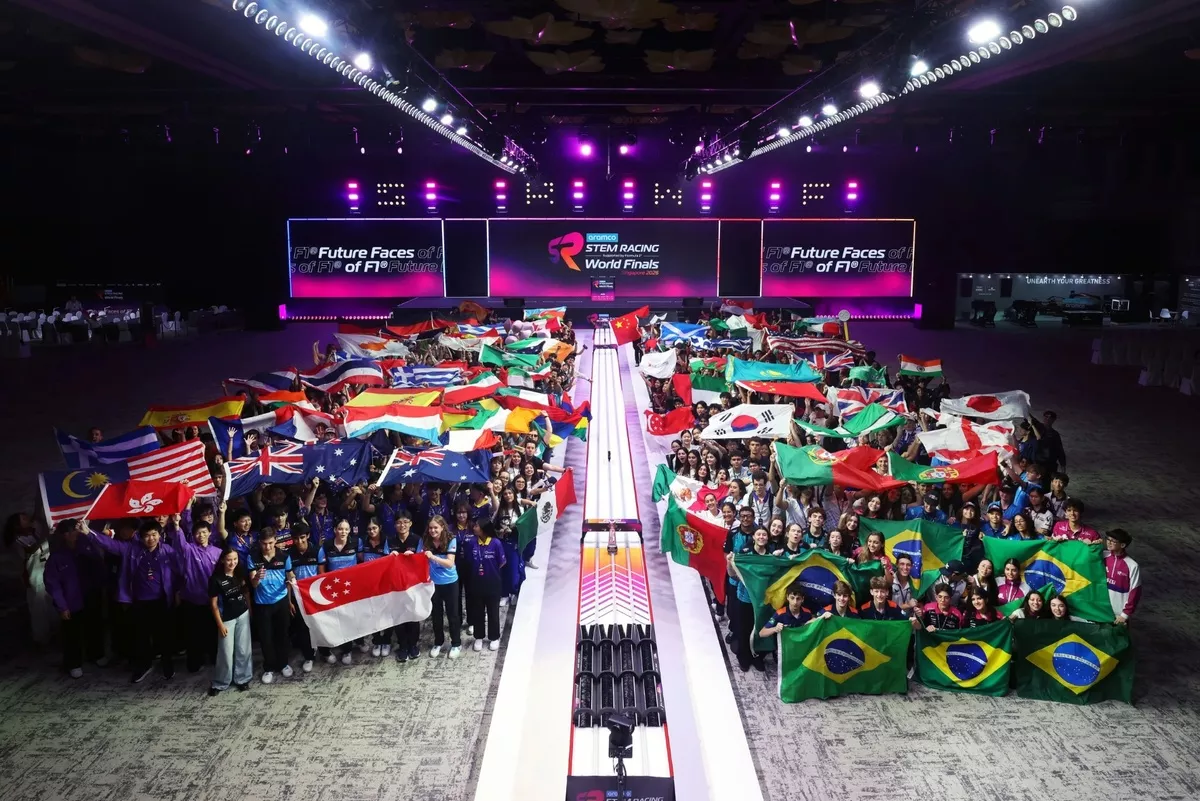
Inside the competition building F1’s future engineering talent
Subscribe and access Autosport.com with your ad-blocker.
From Formula 1 to MotoGP we report straight from the paddock because we love our sport, just like you. In order to keep delivering our expert journalism, our website uses advertising. Still, we want to give you the opportunity to enjoy an ad-free and tracker-free website and to continue using your adblocker.


Top Comments