


Retaining Lawson isn't enough – Red Bull must stop treating him like a failure
Red Bull has rewarded Liam Lawson's impressive 2026 season with another year in F1, but retaining him is only the first step if it wants to avoid repeating its past mistakes

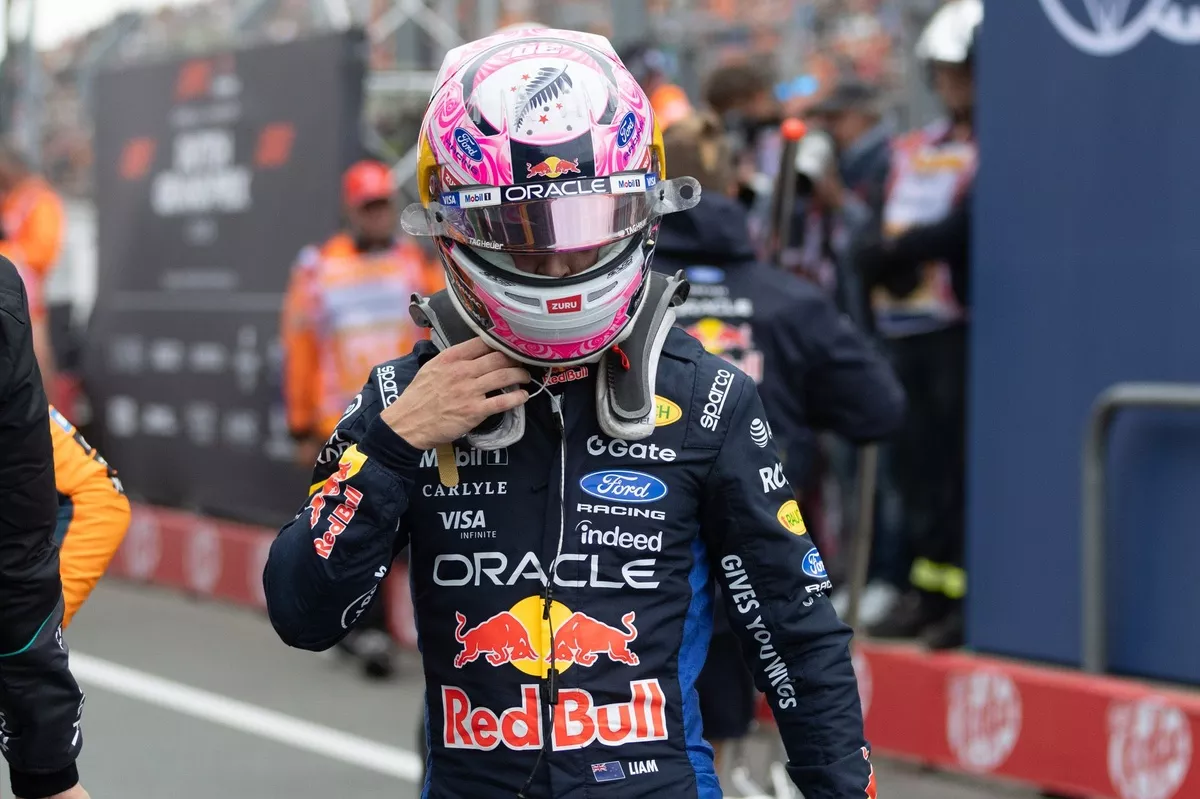
Liam Lawson never failed at Red Bull Racing in 2025. It was Red Bull that failed Liam Lawson.
Retaining his services for another year isn't just a logical decision, but perhaps the first sign that the organisation is changing the habits it developed under Helmut Marko. Yet there's perhaps one more step it needs to take to avoid failing Lawson again.–
It needs to stop treating its young drivers – Lawson included – like goods with an expiry date.
There's hardly anyone who would disagree that the New Zealander not only deserved to stay in F1 after his performances this year, but also earned that right under the pressure of having no clarity over his future for so long. Many would probably have cracked or become frustrated, but Red Bull trained him well in how to shield himself from that pressure and not let it affect his performance.
His strongest spell of the year perhaps coincided with a period when the paddock was increasingly asking the same question, and doing so more and more loudly: what else does this guy have to do to secure his future?
The final confirmation came after a run of five races in the points, four of which he finished seventh, putting him in a class of his own in the midfield. That run also included some stunning qualifying performances and bold moves on track. He's ninth in the standings, with more than double the points of Pierre Gasly, who occupies the next position in the championship table. And it's largely thanks to Lawson's contribution that Racing Bulls now looks set to secure its best result in the team's history.
Lawson's 2026 is surely his strongest season to date, at least in F1. But it's also the first in which he's actually been able to prove what he's capable of without being called up as a stand-in or rushed into an impossible task, as happened in early 2025.

Liam Lawson, Red Bull Racing
Photo by: James Sutton / Motorsport Images
Lawson's dreadful couple of races for Red Bull perhaps didn't come as a surprise to anyone – apart, seemingly, from the organisation itself. Yet expecting him to deliver something substantially better in the circumstances of his promotion – being placed in the same garage as Max Verstappen after just 11 F1 starts – was like expecting a newly graduated medical student to perform open-heart surgery on his second day in the job. Or a firefighter being sent into a burning skyscraper on his first call, without even having rescued a cat from a tree.
Yet those two races remain a somewhat defining part of how Lawson is perceived today – and perhaps one of the reasons why it took so long to confirm his future. The idea that he's someone who had his chance and failed still seems to dominate some people's assessment of Lawson, both outside Red Bull and perhaps within it.
But if you simply forget those couple of months – which the New Zealander himself seemed to suggest he had done, whether consciously or as a form of self-protection – the picture looks completely different. He did well when standing in for Daniel Ricciardo in 2023, and then had a strong end to the season when he finally replaced the Australian a year later.
But Lawson's F1 career to date, despite him never changing employers, has been incredibly fragmented. There were those two short spells with the Faenza team, then the mad rush into Red Bull, followed by his demotion. Funnily enough, even this year – the first in which he's about to finish the season with the same team he started pre-season testing with – he was still called up for three races to stand in for Isack Hadjar.
Still, there's one important thing to remember about Lawson's 2026. It's not just his best year. It may be his best precisely because he's finally been able to show what he's capable of when he's not being used as an emergency solution to fill a suddenly vacant cockpit. This year's VCARB 03 is the first car he can truly call his own in Formula 1, having worked on its development last year and tested it properly ahead of the championship.
Lawson's also more experienced, yes. But he's still just 24, which is somewhat difficult to comprehend given how much he's already been through in F1. And if it weren't for the failure of March 2025, he'd now be seen as banging on Red Bull's door rather than fighting for the right to stay with Racing Bulls.
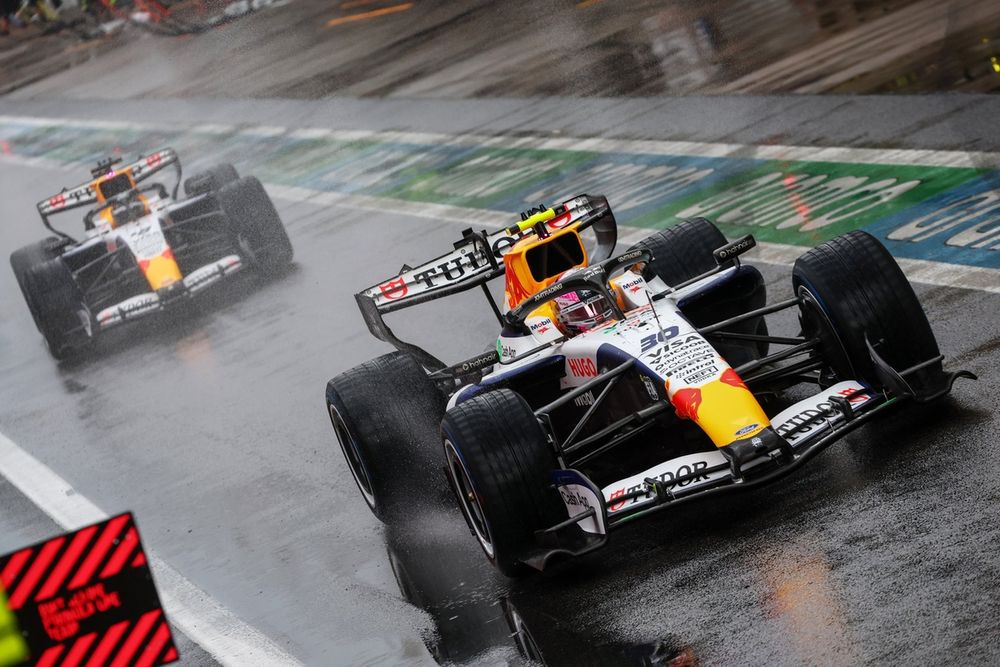
Liam Lawson, Racing Bulls
Photo by: Sam Bloxham / LAT Images via Getty Images
The subsequent decision to deny Nikola Tsolov a place in order to retain Lawson isn't just an indication of how highly Red Bull rates the New Zealander's season. It's also perhaps a clear sign that the organisation is beginning to move away from Marko's uncompromising approach and his tendency towards sudden, dramatic decisions.
There's no denying that the Austrian built something incredibly successful with his junior programme, and the results of his work speak louder than any criticism. Even on the current grid, there are plenty of former Red Bull juniors who were brought into F1 by Marko. But it's also true that some drivers never reached their full potential under that system.
The best of the best, including the two four-time world champions produced by Marko's approach, are the ultimate proof of his judgement. Yet there are also drivers like Jean-Eric Vergne, Sebastien Buemi and even Daniil Kvyat, who potentially had more to offer had they not been overlooked, shown the door or promoted too early.

There are more names to go through – and, after all, most of them also owe their careers and their successes in other championships or teams to Red Bull and Marko himself. But there's an undeniable feeling that some of them could have delivered more for the organisation that picked them up at a young age.
Lawson's F1 career could now have ended just as Vergne's did at the end of 2014, when the Frenchman wasn't retained by Toro Rosso after three seasons but didn't get his promotion to Red Bull when Sebastian Vettel decided to leave for Ferrari.

Jean-Eric Vergne was a match for Daniel Ricciardo at Toro Rosso, but their F1 careers took very different paths
Photo by: Sutton Images
Marko rushed Kvyat into the senior team instead, despite Vergne comfortably outscoring the Russian in their single season together. JEV never found another seat in F1, despite having previously been almost a match for Daniel Ricciardo. Kvyat was in the same position as the inexperienced firefighter Lawson would find himself in a decade later – and lost his Red Bull drive just over a year after being promoted.
But if Red Bull really is changing its approach, it also needs to stop treating Lawson as a failure. Because it wasn't him who failed a year and a half ago, but a system in which everyone was judged by the same yardstick: if you're as good as Verstappen, you'll survive. But not everyone is – not only in terms of absolute talent, but also in the way they develop. After all, generational talents are generational talents precisely because they're rare.
There's some talk now about Lawson having world championship potential – which is typical F1. When someone impresses, there's always going to be talk about it. It's a nice phrase to attach to a talented driver, but it's about as meaningful as writing someone off completely after two races.
Lawson's 2027 will probably begin against a backdrop of speculation that it could be his final year in F1. Because over the years under Marko, Red Bull has conditioned us to believe that its young drivers have an expiry date, and that if they haven't somehow made it into the senior team before that date arrives, they must make way for the next generation.

Liam Lawson, Racing Bulls
Photo by: Manuel Eletto / Getty Images
But is that really the right approach?
That's perhaps a question Red Bull needs to answer for itself. And if retaining Lawson really does signal a change, maybe the organisation should make it clearer that things will be different from now on – that a driver who is performing shouldn't have to fear being shown the door simply because he's become too experienced.
World championship potential or not, Lawson has proved he's good enough to race in F1 – and to do a great job for the team he's racing for.
And continuing to treat him like a failure isn't going to help that team get the best out of him, either.
Share Or Save This Story


Hamilton insists Ferrari tensions with Leclerc are over: "We've squashed it"

Ocon's F1 story is one of success, even if this is the end

Why Hamilton shouldn't regret his Ferrari radio rant - but why he was right to apologise


Lawson to stay in F1 as Racing Bulls announces 2027 driver pairing

What the Brazilian GP revealed about F1's ability to cope with rain

How the premium pack of F1 rookies fared in 2025


The surprising convergence behind F1's increasingly competitive 2026 season

Tsolov lands reserve driver role for F1 2027

How Norris prevailed in a swift errors tour of Interlagos

Retaining Lawson isn't enough – Red Bull must stop treating him like a failure

Inside Turkey’s revamp for the return of a modern F1 classic

With rallying back in the spotlight, it could probably teach F1 a thing or two

The numbers that reveal how MotoGP sprint races have decided the title fight
Subscribe and access Autosport.com with your ad-blocker.
From Formula 1 to MotoGP we report straight from the paddock because we love our sport, just like you. In order to keep delivering our expert journalism, our website uses advertising. Still, we want to give you the opportunity to enjoy an ad-free and tracker-free website and to continue using your adblocker.


Top Comments