


Mission control: Inside the FIA and F1's latest answer to football's VAR
A joint project between the FIA and F1, motorsport's governing body has opened the latest edition of its remote operations control - a mission control-like hub to help support F1's race stewards. Autosport went to Biggin Hill to take a look...

"If you go back, in 1966 with [England] and [West] Germany, you remember with the World Cup? You won it. I imagine at that time you wish there was no [review system], I guess you were happy that there wasn't."
This was FIA president Mohammed Ben Sulayem at the opening of the governing body's new remote operations centre (ROC) at Formula 1's Biggin Hill facilities, speaking to selected media and offering a sly barb about the legitimacy of England's FIFA World Cup triumph.
In that game 60 years ago, Geoff Hurst's shot inconclusively crashed from the top of the crossbar and onto the goal line. Of course, there was no virtual assistant referee (VAR) to check whether the ball had indeed crossed the line, but the referee gave it as a goal, and Hurst later put the game beyond all doubt when he thumped one into the opposition goal at the death of the game. Now, Mr. Ben Sulayem, let's talk about Frank Lampard in 2010...
When Ben Sulayem became president of the FIA, he was keen to set up F1's answer to VAR to modernise some of the decision making processes at the track. The inquest into the conclusion of the 2021 Abu Dhabi Grand Prix demonstrated that decision making in the stewards' room was perhaps one led by subjectivity, and a lack of consistency seemed to leave drivers and teams perplexed by certain calls. That's not to say that these issues haven't persisted, hence the application of driving guidelines to smooth out some of the more 50-50 incidents, but decisions could vary depending on the stewarding team at a given weekend.
Latency in decision making was also an issue. Picture this: you have an on-track incident, and the stewards have elected to review it. It's up to them to comb through all of the different scenarios and parameters involved, determine who was at fault, and hope that a big backlog of subsequent incidents does not crop up. When track limits offences weren't automated, they needed to manually go through all of the different angles to determine whether the driver was indeed completely outside of the white lines, thus delaying subsequent investigations. Small wonder, then, that frustration built up when not knowing if the race winner was due to receive a penalty...
The FIA's ROC was implemented to take some of the strain off the stewards by using an in-house team of analysts at base to watch the race, check radio traffic, observe key areas around the circuit, and expedite the information provided to the stewards in case an incident happens on-track. In being based at Biggin Hill - located on the edge of Greater London - where F1's broadcast feed and data is handled, the FIA has access to every single camera around the track, all GPS sensors, and its own cameras around the circuit to assist in matters of track limits offences.
The FIA's new quarters at Biggin Hill are known internally as "ROC 3.0", following its earlier versions based in the FIA's offices in Geneva (the first ROC, a four-to-six-person desk in a 'converted meeting room') and Paris. This is, essentially, the equivalent of the Premier League's VAR facilities at Stockley Park in west London - although F1 perhaps lends itself to the format more. Decisions don't need to be completely immediate; referees don't stop the game to give a foul, the race continues to run unless there's a red flag, and a lengthy pause as the referee goes to the monitor does not disrupt the flow. Instead, the broadcasting and data technology used gets flagged to the stewards in real time, rather than waiting for broadcast data streams that haven't been shown on TV yet. The new ROC is manned by around 20-30 volunteers, in partnership with universities to supply future officiating talent, and was first put into service over this year's Dutch Grand Prix weekend.
"[In terms of] race operations, we have race control itself," explains FIA sporting director Tim Malyon. "Everyone knows that's the centre of decision making during a race or in fact any other live session. We now have the ROC, we have the stewards obviously, and then we have what we call our race systems group that deal with a lot of the technology in the background, the positioning systems, the trackside light panels and all the other infrastructure that goes on around the race.
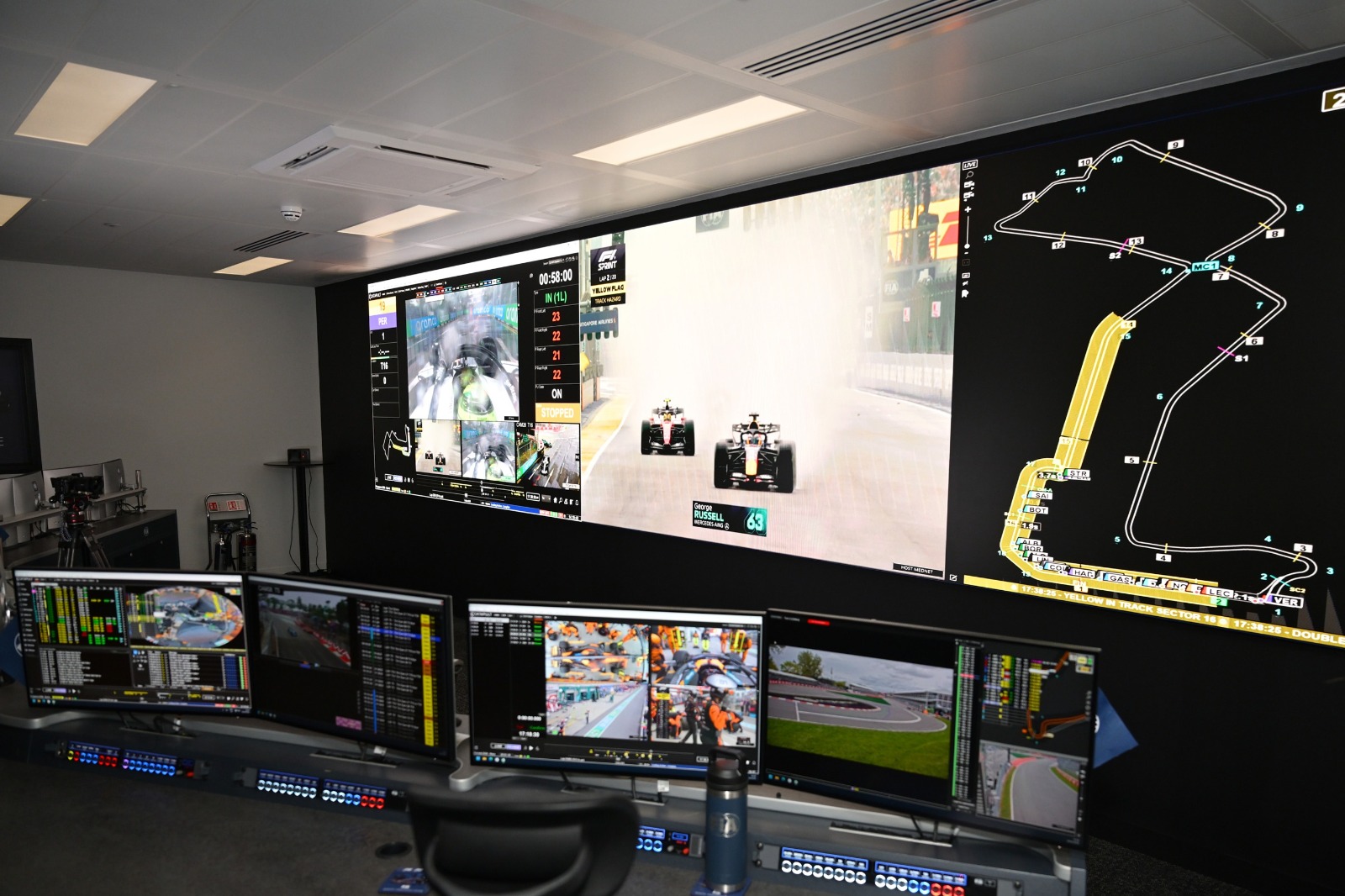
The FIA's new ROC has hundreds of different data streams to improve in-race officiating
Photo by: FIA
"The ROC here works very much in parallel to race control. The ROC will also will support both race control and the stewards in terms of analysis and that's the key point of what is the intent of this facility, it is a hub for analysis.
"During a race there's obviously a significant amount of data coming in to race control and now here at the ROC from video. We have all the stuff that people have available to the outside world, in terms of the TV cameras and the onboards, but beyond that we usually have somewhere in the order of 50 to 60 specific closed circuit TV cameras around the track. Beyond that the FIA travels with somewhere in the order of 40 to 50 cameras of our own, which we specifically install in various areas - be that team garages, be that team pit stop positions, be that specific cameras on the grid.
"So we've got an awful lot of video data coming in, we've obviously got all the audio from teams as well. We also have access to a real-time telemetry, not the level of detail that the teams are obviously operating to but the pertinent channels that support race control decision making also come through into both race control at the track and here. And then we obviously also have direct communication with the teams so we've got dialogue going on direct between race control and the teams.
"It's a centre of analysis, obviously that's an awful lot of information coming in and the idea is that this facility serves to distill that information into something which is easier for either race control or the stewards to act on and ultimately make a decision upon. This is an analysis facility, the decision making function remains in race control or in the stewards room at the track."
"The mission is very clear here, is to aid [race control] and also to also train for the future" Mohammed Ben Sulayem
On a tour of the ROC, the analysts offer a demonstration of their work during a grand prix weekend. One is in charge of monitoring those aforementioned grid cameras, checking if the drivers are in position at the start. Sensors are involved here too, but sometimes an out-of-position start can be missed occasionally; if a driver shows up as outside of their grid box, the analyst can immediately send a flag to race control and the stewards' office for further investigation.
Others look at track limits. The FIA now uses geofencing to provide the track limits pings, and the analysts at the ROC then have access to the local camera set-up to determine if the driver has indeed circumvented the white line. With the addition of blue lines between the track boundary and the kerb, it's become a lot easier to determine if the lap needs to be deleted, and the occasional pockets of gravel installed by the circuits also present a deterrent. Gone are the days of 2023's Austrian Grand Prix, where over 150 track limits offences took place at the final two corners.
"Our approach to track limits was twofold," Malyon says. "It was basically natural deterrence at the track. We've seen all the gravel strips that have been installed over the last couple of years, but a fundamental part of that was the ROC. It's the first point of call for track limits analysis and we have basically a four-tiered system. So there's a number of digital tools that run in the background. We have a computer vision tool and basically we can see on our screen with blue boxes and green lines: that's the configuration tool for the computer vision.
"We then have what we call geofencing and again you'll see on this screen here [as seen on the image below] you can see these little green boxes which are highlighted. Those interact with the positioning data from the car and if a car enters one of those green boxes then that will also be flagged.
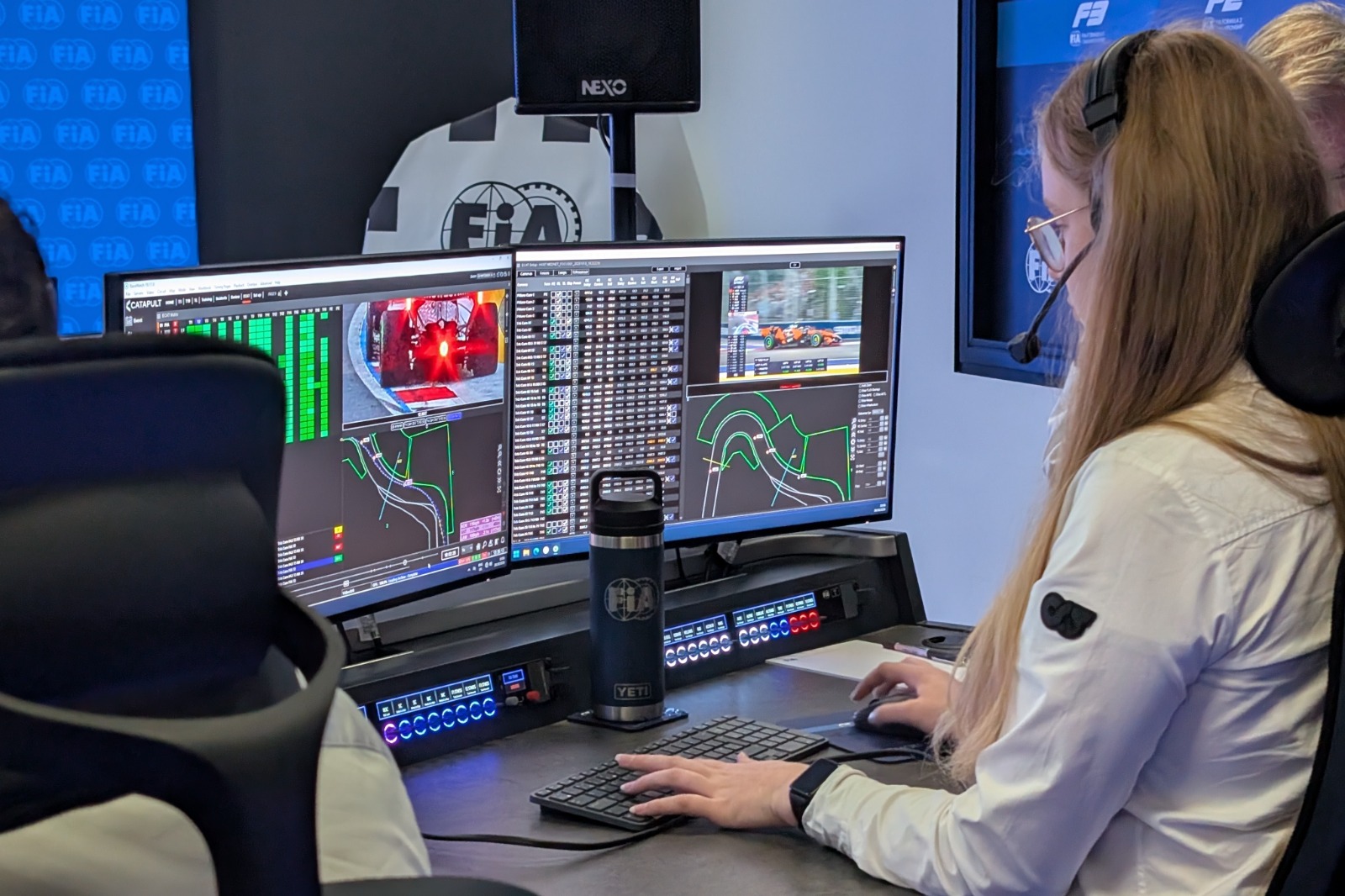
A demonstration of how track limits are monitored in the opening corners at Singapore, featuring geofencing and real-time observation
Photo by: Jake Boxall-Legge
"And then we also have what's called racing line deviation as a third line of defense and that is basically a real-time tool that monitors the racing line of each car and if a car deviates significantly from its typical racing line, it will also be flagged. So those first three layers feed into the final layer which is also within the ROC and that's the first human layer and that's that these guys will review a specific video. The guys here are presented with a list of potential track limits that they should look at and in what order they should look at [them].
"They will then review based on those three initial layers. If they believe that it then needs to escalate to race control, they can from those relevant dialogue boxes just click a button that then appears in race control. It gets reviewed in race control and if race control agrees with the assessment, that lap will get flagged for deletion. Ultimately it's the stewards that delete a lap so they will then review just to make sure that they're happy."
Then there's the yellow flag infringements, something that was in the news this year at the Austrian Grand Prix as George Russell took pole with a lap logged concurrently with Max Verstappen's crash at Turn 9. The analysts here will become aware of a potential infringement if a lap time is within a certain tolerance of a driver's fastest time, and will then comb through the telemetry data and camera angles to assess. This will be flagged as up for review, and the staff at the ROC will then forward any information required to race control - if there's a clear lift during the yellow flag period, the stewards may declare a no-further-action situation.
Another Russell incident that prompted further development within the ROC was his 2024 late-race shunt at the Australian Grand Prix, where his Mercedes was left on its side. Although the tools available showed that the car had stopped, the FIA felt that these needed to be developed to show if the car was in an unsafe position immediately to enforce a swift neutralisation to the race.
"This is what we call our in-focus display," Malyon says, "where, when there has been an incident, this can automatically pop up. If you configure it in that way it will show you all the pertinent information about that car to allow race control to make a decision about whether an intervention is needed, whether the current flagging situation is at the relevant level, et cetera. Over the course of the 2026 season, we've introduced a few new tools in terms of the race control suite to reinforce flagging and we're continuing to develop along those lines towards the end of the year, trying to robustly and timely introduce neutralisations where it's needed on grounds of safety."
Of course, this is something that may require some further development; Lance Stroll's stoppage at this year's Spanish Grand Prix produced a lingering yellow until the virtual safety car was finally called, owing to the inability of the marshals to pull the Aston Martin through the fence without venturing onto a live race circuit. At the same time, knowing the exact positioning of a stopped car has allowed green flag running to resume for longer, only breaking into a yellow or a VSC if the field is beginning its approach. This is useful for something like a first-corner collision; so long as the drivers aren't in immediate peril, the race can continue until the final corner of the lap before neutralisation.
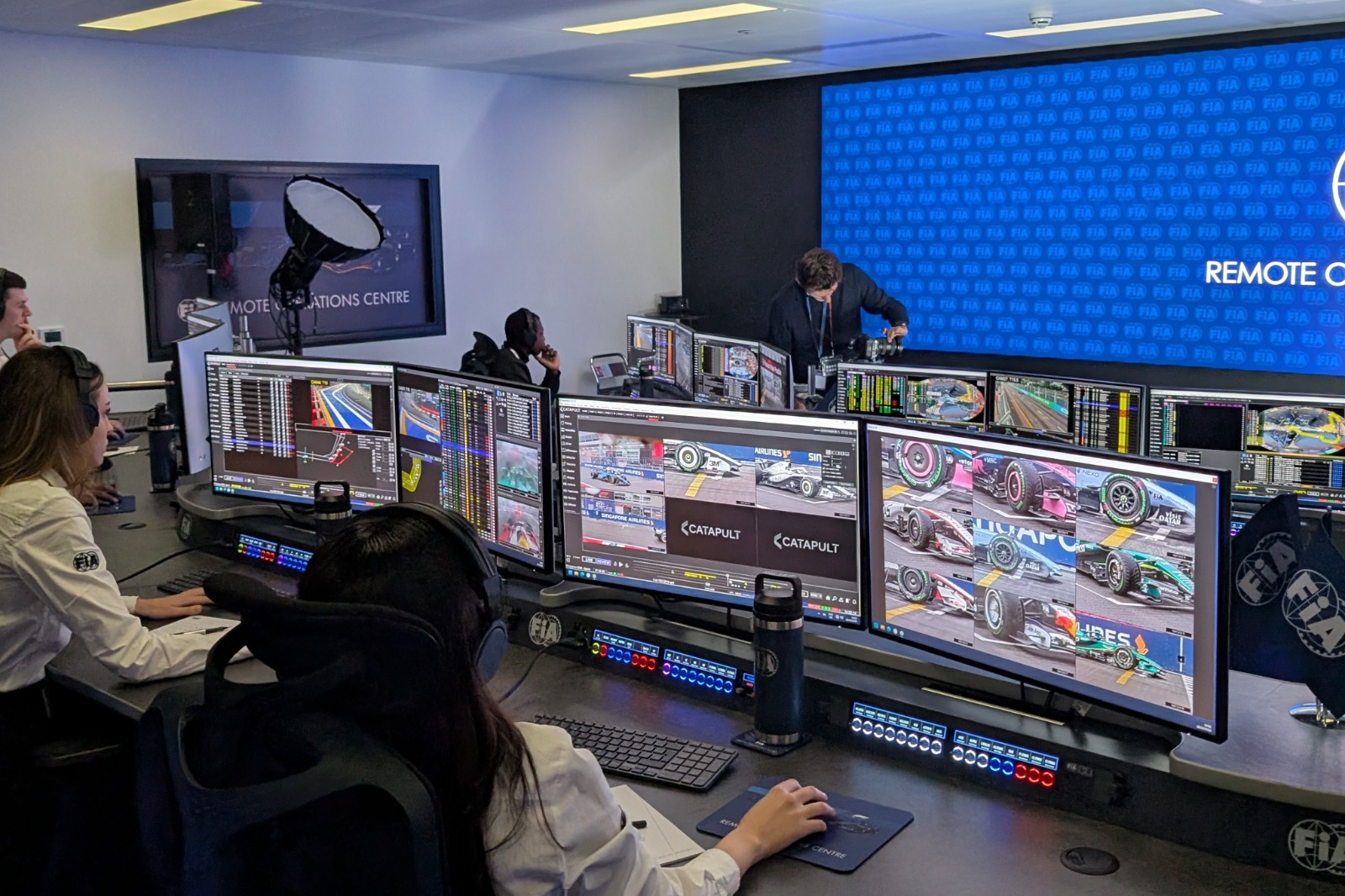
The ROC analysts can observe grid positioning, GPS data, and more to flag any issues to race control
Photo by: Jake Boxall-Legge
Ben Sulayem also sees the ROC as a training school for future race directors and officials. With open communication between the analysts during the course of the race, and the two-way communication between the race directors and those at the ROC, it presents a notion of how decisions can be made and in ways to improve the process at the track.
"The mission is very clear here, is to aid [race control] and also to also train for the future," says Ben Sulayem, who opened the facility with F1 CEO Stefano Domenicali. "We were running out before, in 2022 and 2023, we had an issue of also having good stewarding and race directors. People want to be part of the FIA, but when you go and train them, they are not as what F1 needs and demands. It's not okay to have an average person there just to fill up that position. Now with all of this, minimising the human error is very important, but getting rid of the human factor, it's impossible.
"You bring the new officials here, you give them courses, it's okay. But you take them to various [race] directors, it is not a very good environment there because it's a bit stressful, you have to be quiet, you can't ask questions. But I believe here we can use it, not only live online, but we can use it to train them with like bringing some of the old material of one of the races and then having the stewards, the new ones, learning from that. So we can just repeat any of the races and that's where we have a plan for that also."
"The ROC here works very much in parallel to race control; it will also will support both race control and the stewards - and that's the key point of what is the intent of this facility, it is a hub for analysis" Tim Malyon
The ROC staff also look after the F2 and F3 races, and Ben Sulayem wants the use of the remote operations to expand into other categories - the World Endurance Championship being one FIA-sanctioned series that should get the same treatment in the years to come.
For all the critique that race officials have received in the past, particularly when it comes to the consistency and speed of decision making, having an operations centre away from the circuit removes some of the noise of being at the track - indeed, this is why teams have their own versions back at their own facilities to help support the race team with data analysis and strategic reports.
Of course, there will still be stewards' decisions where several different parties may disagree, but setting a generally recognised precedent and measuring subsequent calls against that only adds to the clarity of a race weekend - and that ensures that the watching public is not left blindsided by a random 10-second penalty for a similar scenario to one that went unpunished.
By taking the burden away from race control with the use of the ROC, future decisions should hopefully feel well thought-out without the significant time penalty involved with poring through hundreds of data streams. One wonders why the FIA hasn't done this sooner...
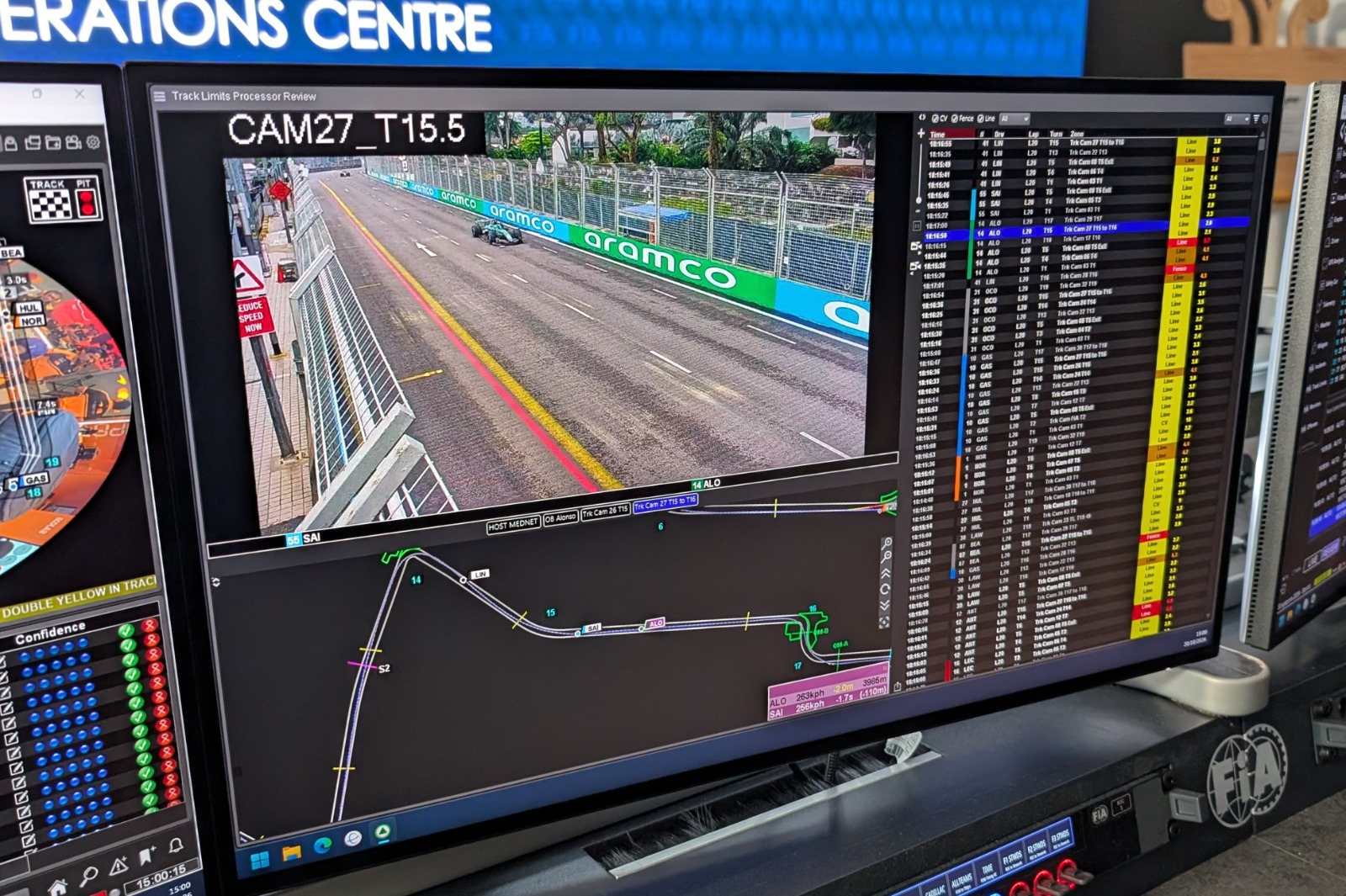
Numerous data channels ensure the analysts have full oversight of the race
Photo by: Jake Boxall-Legge


FIA expects F1 races in Qatar and Abu Dhabi to run as planned

Why Piastri has struggled to show his best with this year's McLaren MCL40

Lights, Camara, action: How Haas picked F1's latest rookie for 2027

Horner's inside story of how Red Bull built its own F1 engine

Why Mercedes' latest 2026 F1 update is no downgrade

Singapore Grand Prix Driver Ratings 2026

What we learned from the 2026 F1 Singapore GP sprint race and qualifying

The political minefield set out by F1’s recent cost-cap grievances

When Cadillac will open its F1 engine factory
Mission control: Inside the FIA and F1's latest answer to football's VAR

Marquez accepts that current MotoGP contract could be his last

Slater set for F1 practice debut with Audi in Mexico
Subscribe and access Autosport.com with your ad-blocker.
From Formula 1 to MotoGP we report straight from the paddock because we love our sport, just like you. In order to keep delivering our expert journalism, our website uses advertising. Still, we want to give you the opportunity to enjoy an ad-free and tracker-free website and to continue using your adblocker.


Top Comments