


Why McLaren believes some of its MCL39's qualities can survive F1 2026 shake-up
F1 2026's wholesale regulation changes don't mean McLaren's current title-winning form will count for nothing, says team boss Andrea Stella


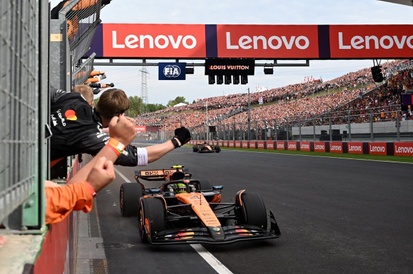
Lando Norris, McLaren
Photo by: Pirelli
McLaren team principal Andrea Stella thinks some of the philosophies that made his 2025 F1 car so successful can be carried over to 2026's all-new regulations.
In 2026 F1 is moving away from a heavy reliance on ground effect, reverting to cars with a flat underfloor and reduced downforce levels, while using active aerodynamics on the straights to compensate for a near 50-50 split between the internal combustion engine and a much larger electric element.
The new rules have been billed as one of the biggest regulation changes in F1 history, providing a unique opportunity for outfits who have struggled since 2022 to make a big leap. But while all teams are starting from a clean sheet, that doesn't mean some of the elements that made McLaren so successful over the past 18 months will suddenly become obsolete.
Speaking exclusively to Motorsport.com, team boss Stella believes several universal tenets of McLaren's design philosophy, which have made its recent cars so successful, will stand the team in good stead next year.
"I think there's a couple of things that carry over, independently of the technical regulations, and I hope that that will be a good position to be in for McLaren," Stella said. "One is the technical fundamentals whereby we pursued aerodynamic efficiency, interaction with the tyres, efficient cooling. It is universal.

Andrea Stella, McLaren
Photo by: Peter Fox / Getty Images
Stella is also separating know-how related to the current ruleset from the processes that helped the team move up the order at a rapid pace. While McLaren and its competitors are moving away from regulations dominated by downforce generated by the floors and extremely low ride heights to fully exploit them, the capabilities that have allowed the Woking-based squad to build class-leading cars over the past two seasons aren't going away.
"There's a part of the know-how that is transferable to the work on 2026 and there's a part of the know-how that you have to reinvent," the Italian added. "Now we know how we can pursue aerodynamic efficiency on this generation of cars, but this is the result of many, many elements, iterations, an accumulation of knowledge. Part of which is relevant for this floor, which works in ground effect with the fences and with the side wings, but next year's floor is completely different. So, you have to generate this knowledge again. From this point of view, that's not transferable.
"But some aspects of the methodology or how you generate this knowledge, I think that will be transferable. So, the fundamental reasons why we are in this strong position now, I think there's a large quantity that is transferable, and there's a certain amount that somehow will be lost. And that will be a ground in which there will be, potentially a levelling out among all teams, independently of where they were in 2025."
Share Or Save This Story


Rwanda turns to F1 as it moves forward from a chequered past

Five key takeaways from F1's big African Grand Prix reveal in Rwanda

F1 signs historic 10-year Rwanda deal to host African Grand Prix


Employing team orders can simply be a matter of common sense

Why McLaren cannot fix its F1 car handling until 2027

Why McLaren considers Norris-Piastri Singapore clash so “serious”

Colapinto urges fans to stop online abuse: “You’re not helping me or my future”

Evans given a hero's homecoming after WRC title triumph

How an unspectacular showing in a kart race is such good reason to celebrate

Lights, Camara, action: How Haas picked F1's latest rookie for 2027
Subscribe and access Autosport.com with your ad-blocker.
From Formula 1 to MotoGP we report straight from the paddock because we love our sport, just like you. In order to keep delivering our expert journalism, our website uses advertising. Still, we want to give you the opportunity to enjoy an ad-free and tracker-free website and to continue using your adblocker.


Top Comments