




How Schumacher’s trust made F1 engineering fun
Michael Schumacher was only vaguely on the radar of PAT SYMONDS before his Formula 1 debut 30 years ago at Spa. But after the Mercedes sportscar driver's remarkable cameo with Jordan at Spa, Pat became his race engineer at Benetton and the pair forged a partnership that would yield a world championship double
In these columns I generally try to delve into the technical matters that are catching the attention of fans and explain some of the engineering nuance behind them. This month, while keeping the engineering theme, I would like to explain how the race engineer and the driver interact and how the bond between them is an integral part of success.
It is a particularly apt subject as in other parts of the latest issue of GP Racing we reflect on the astonishing debut of Michael Schumacher at Spa 30 years ago. I had the privilege of working with Michael as his race engineer the following year, as he entered his first full season in Formula 1, and was his closest colleague through the next four years, a period that brought us 19 grand prix wins, two drivers’ world championships and one constructors’ title.
I met Michael prior to his F1 debut while working on the stillborn Reynard F1 project. Adrian Reynard brought this young man to see us one day and, while I was vaguely aware of his success with the Mercedes sportscar team and his win the previous year in F3 at Macau I, like many others, had not marked him out as one to watch. What I did find in that first meeting, however, was a man who appeared vastly more mature than his age of just 21.
When we started working together in 1992, I realised I had just seen the surface of this maturity. Underneath was an intelligence, ambition and self-assurance that was remarkable for a driver of his age. Having previously worked with Ayrton Senna, I could see that in Michael I was once again working with a future champion.
But how did that realisation happen and how did we form the bond that was to bring us so much success together? To find the answer we need to go back to pre-season testing in 1992.
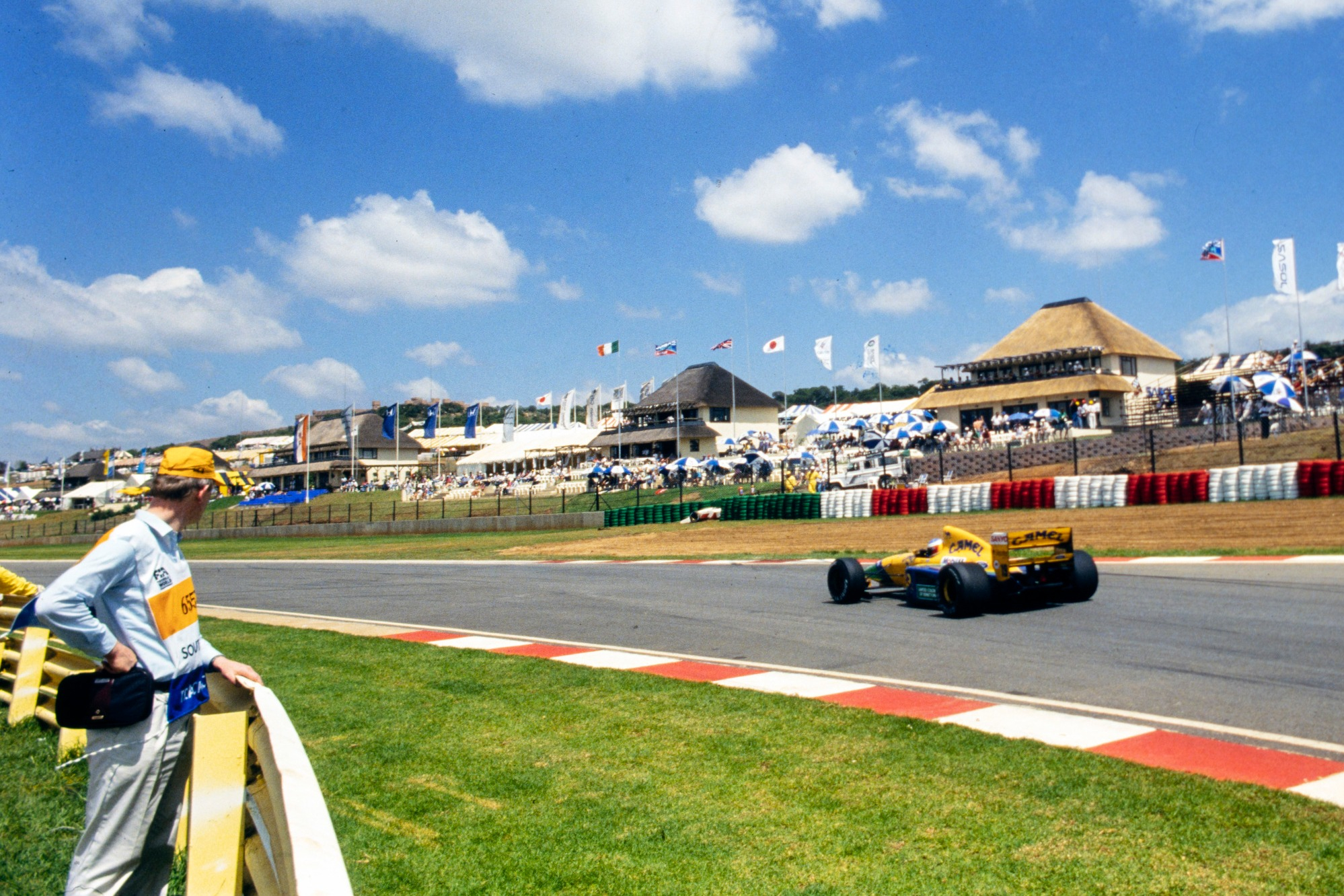
Symonds won Schumacher over at Kyalami in 1992 pre-season testing
Photo by: Motorsport Images
I had been a race engineer in Formula 1 for 10 years at this stage. Through that time with Toleman and Benetton we had established ourselves as a competitive team, but we had only won a single race. Michael therefore had no expectations or pre-conceived ideas. To gain his respect one needed to earn it.
Pre-season testing that year took place at Kyalami in South Africa, where the first round of the championship was to be held. We were there with the Benetton B191, a car we had inherited from the John Barnard era and therefore one I was not as intimately familiar with as if I had been involved in its conception. While Rory Byrne was working hard on the new car we would debut at the start of the European season, we did some rudimentary aero mapping of the car and put together some vehicle dynamics models to better understand how to exploit its potential.
Kyalami is an interesting track. In general, the corners are slow to medium speed but there is one tricky fast right-hand corner. During the test we worked away at the setup and arrived at something that was reasonably competitive and, for most of the circuit, comfortable to drive.
Driver and engineer need to think as one and that was certainly the case with Michael and myself. We would often find ourselves finishing each other’s sentences
Our bugbear was the fast corner. No matter how he approached it, Michael would find a disconcerting kick of oversteer in the middle of the corner. He was convinced we needed to reduce the front wing to cure this, but I was reluctant to compromise the nice balance we had in medium-speed corners.
Instead, I looked at my models and basic data acquisition we had, which confirmed my suspicions the car was rolling onto the rear bump rubber in the middle of the fast corner. There were different ways to tackle this, but I felt that, as we still had a little bit too much understeer in the very slow corners, a stiffer rear rollbar would both support the car out of the bump rubber in the fast corner and give a final trim to the slow corners.
Michael was adamant that this was not the way to go, as he thought of a stiffer rear roll bar as merely something that would promote more oversteer in the fast corner. Despite his reservations, I was determined we try it. The result was everything I hoped for, and we now had a balance good enough for sixth on the grid and a fourth placed finish. Michael was really happy with the car and acknowledged that I understood what I was doing. From that point on we had a mutual trust that was a major part of our future success.
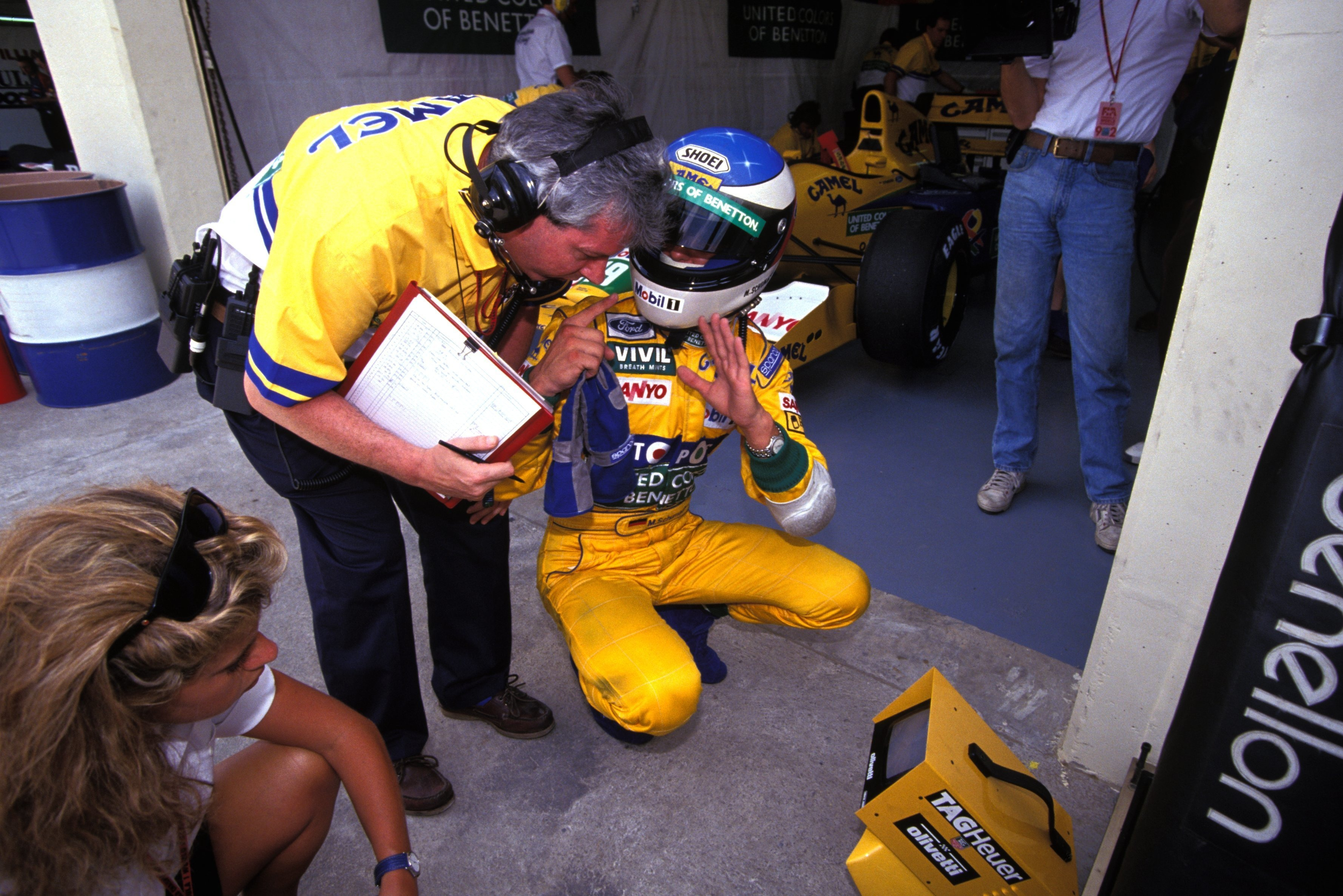
Schumacher and Symonds soon reached the point of total understanding
Photo by: Motorsport Images
The relationship between driver and engineer is a complex one. As well as establishing trust, the engineer needs to act as a coach, psychologist and tactician. It is important to build a relationship that extends beyond the track, and while this can be problematic to a team when a driver leaves and takes an engineer with him, that relationship is important to success.
PLUS: The last element of F1 performance that can't be found on a laptop
Driver and engineer need to think as one and that was certainly the case with Michael and myself. We would often find ourselves finishing each other’s sentences, and during our championship years our thinking was as one.
I loved working with Michael, and of course our success together was reward enough, but I think it showed most when we were racing the ultra-sophisticated active cars in 1993. The Benetton not only had active suspension but also four-wheel steer – the only F1 car ever to have this. In developing the control systems, Michael was a delight to work with. His open mind and his desire to use any technology to improve his performance was pure joy for an innovative engineer.
I have worked with some great drivers during my career, but there is no doubt in my mind that working with Michael epitomised everything that makes race engineering such a great job.
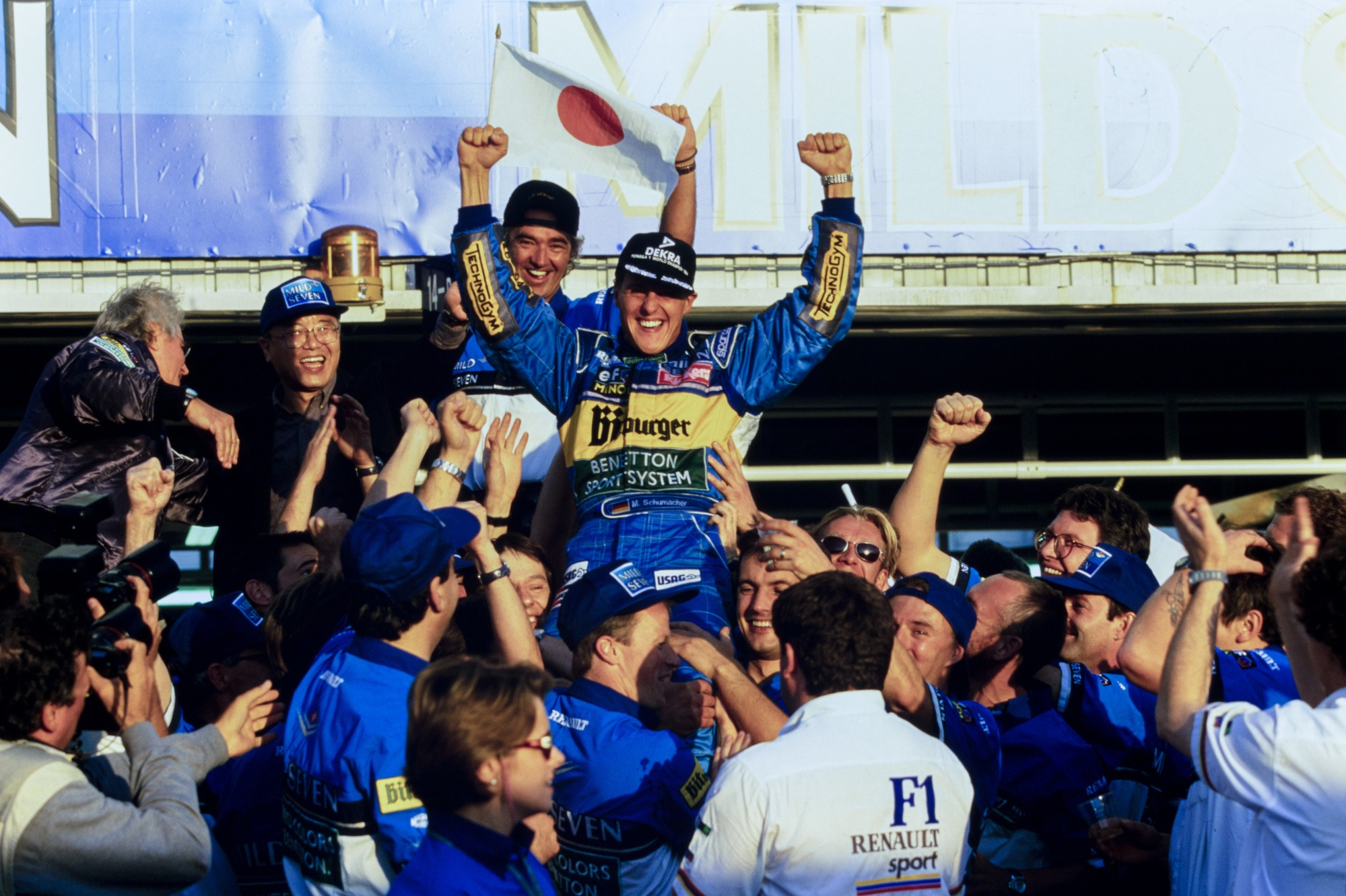
Schumacher and Flavio Briatore celebrate with the Benetton team after clinching the 1995 title in Aida
Photo by: Motorsport Images

How Ratzenberger beat the odds to realise his cruelly short-lived F1 dream

F1 uncovered: A weekend behind the scenes with a chief mechanic

When McLaren was pipped by Red Bull in a modern F1 classic

The big opportunity Sainz’s Williams switch affords to F1’s latest centurion

Inside the science of F1 fuel

How F1’s plan for rotating races could look in practice

The early decisions that set Sauber’s rookie for success

How F1 media coverage has evolved in line with its subject

Solberg has no regrets after WRC title near-miss: “It hurts a lot”

How the Bahrain GP in Malaysia exposed Red Bull’s hidden resurgence

Why the Motegi tyre drama delivers a lesson MotoGP teams cannot ignore

How FIA software bug caused chaos in Bahrain GP in Malaysia – and the emergency fix that saved the race
Subscribe and access Autosport.com with your ad-blocker.
From Formula 1 to MotoGP we report straight from the paddock because we love our sport, just like you. In order to keep delivering our expert journalism, our website uses advertising. Still, we want to give you the opportunity to enjoy an ad-free and tracker-free website and to continue using your adblocker.


Top Comments