


How Red Bull found more downforce for Hungary
Red Bull initially feared it would be on the back foot at Formula 1’s Hungarian Grand Prix, with the team seemingly less comfortable at high downforce circuits than previous years.

That's the consequence of a design direction that the team has taken with the new regulations.
Its drivers have often found themselves at the top of the speed trap figures in 2022, while in previous seasons they’d be at the bottom more often than not.
In order to tackle this issue in Hungary, Red Bull introduced a new beam wing layout, pairing it with its higher downforce rear wing offering.
This new beam wing design is what most of the grid would consider the conventional layout for these regulations, with two elements mounted in series, one above the other.
And, just like its rivals, the design featured elements with a more loaded central section and tapered outer tip.
Prior to this, Red Bull had bucked this trend, opting for a ‘stacked’ arrangement instead. Plus when it was required to reduce downforce and drag at higher speed circuits, it also ditched the upper of those two elements, as can be seen at the Azerbaijan Grand Prix (below).

Red Bull Racing RB18 beam wing comparison
Photo by: Giorgio Piola
Meanwhile, Alpine, which has trended towards the RB18’s overall aerodynamic layout with its A522, also introduced its version of the ‘stacked’ beam wing at Baku.
Like Red Bull, it also has a couple of different trim levels of this arrangement, with a slightly higher downforce variant used in Canada.
Meanwhile, like Red Bull, Alpine also opted to switch to its ‘conventional’ beam wing layout in Hungary, albeit there was further development, as it opted to trim the outer portion of the elements to offload some of the drag that might otherwise be generated by the older specification used at Imola, Miami, Barcelona and Monaco (inset).
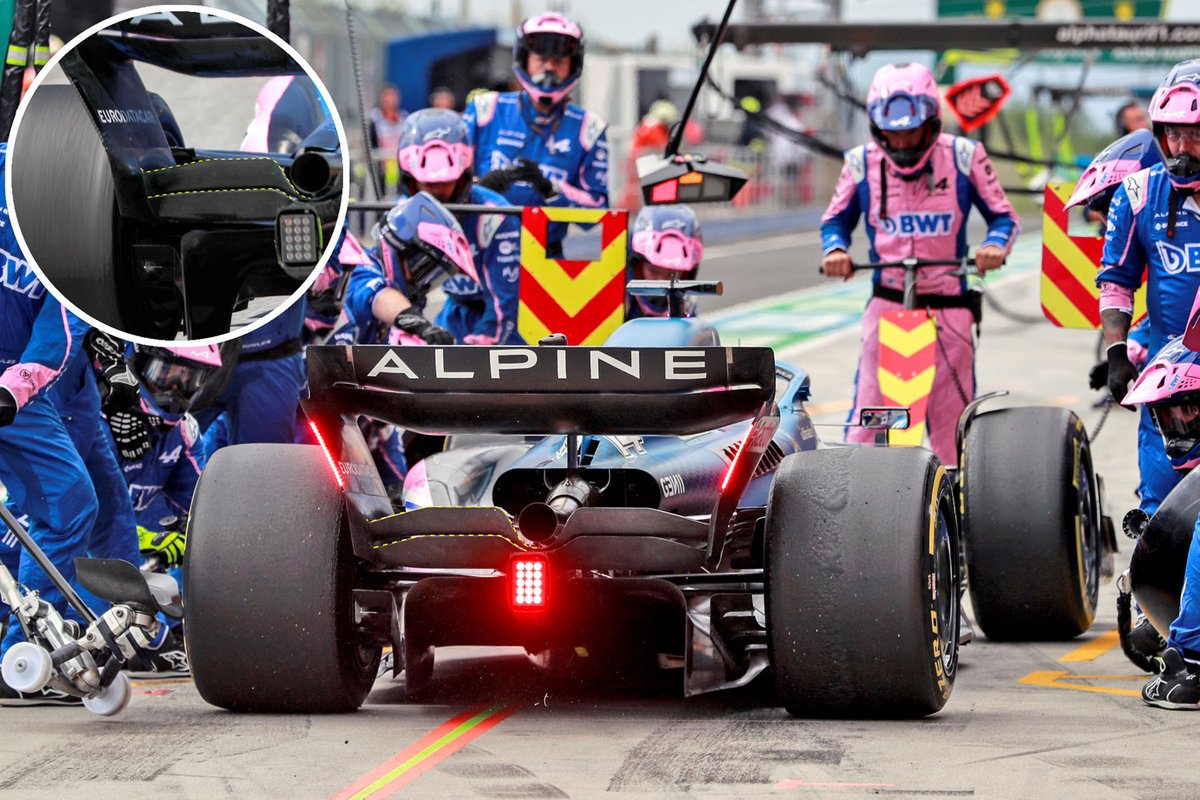
Alpine A522 beam wing comparison
Photo by: Giorgio Piola
Share Or Save This Story


Gallery: How F1 tech evolved during the 2024 season

How McLaren’s rear wing push changed the game in F1

What controls the frontline in the latest F1 design tech battles


Why Verstappen’s unusual run plan highlights F1 teams’ biggest challenge in Malaysia

Why Verstappen and Hadjar urge Red Bull to "make all the mistakes now" for 2027

Hidden F1 performance differentiator nobody is talking about in 2026

WRC Sardinia: Neuville snatches lead from Fourmaux as Hyundai remains on top

Why Verstappen’s unusual run plan highlights F1 teams’ biggest challenge in Malaysia

What we learned from Friday practice at the 2026 Bahrain GP in Malaysia

Why ‘Mr Formula E’ has called time on his racing career
Subscribe and access Autosport.com with your ad-blocker.
From Formula 1 to MotoGP we report straight from the paddock because we love our sport, just like you. In order to keep delivering our expert journalism, our website uses advertising. Still, we want to give you the opportunity to enjoy an ad-free and tracker-free website and to continue using your adblocker.


Top Comments