


How do the best races of F1 2022 stack up to 2021?
OPINION: A system to score all the grands prix from the past two seasons produces some interesting results and sets a standard that 2023 should surely exceed

Despite Max Verstappen’s runaway Formula 1 championship success in 2022, the new ground-effects rules were generally well received. Cars could follow each other more closely and we had some great battles during the campaign. But how good were the races compared to what came before?
Autosport teamed up with author Roger Smith in 2021 to start rating each grand prix. Assessing races is always tricky – how do you compare, for example, a masterclass, a wheel-to-wheel lead battle and a race full of unexpected drama? All have their merits, and different fans will have varying preferences as to what they want to see.
You could also have a fantastic fight further down the pack but, if it’s not for the podium spots, it just doesn’t have quite the same attraction. We’ve nevertheless attempted to turn the subjective into something approaching objective to create what we hope is a meaningful result, or at least one that is of interest and can encourage healthy debate.
Each race was scored across a range of criteria, including how incident-packed it was, titanic duels, shock factor, an exceptional drive and the conditions/other circumstances. Smith’s final ratings were created from the average of the top three relevant ‘highlights’ from that list. The average of that and Autosport’s own score was then taken as the final mark. When a race averaged a .5 score, it was rounded up to the nearest whole number.
We’ve now been doing this for two seasons, so what has the process produced so far?
In 2021, the top three races were the Sao Paulo GP (91%), scene of Lewis Hamilton’s incredible charge through the field to victory, the dramatic Hungarian GP (89%) that resulted in Esteban Ocon’s win for Alpine, and the Bahrain GP opener (85%) that featured the late lead battle between Verstappen and Hamilton. The worst scorers were the Belgian GP non-race (8%) and the dominant Verstappen wins in the Monaco (40%) and Styrian (42%) GPs, though that is of course no fault of the Dutchman that those contests were dull.
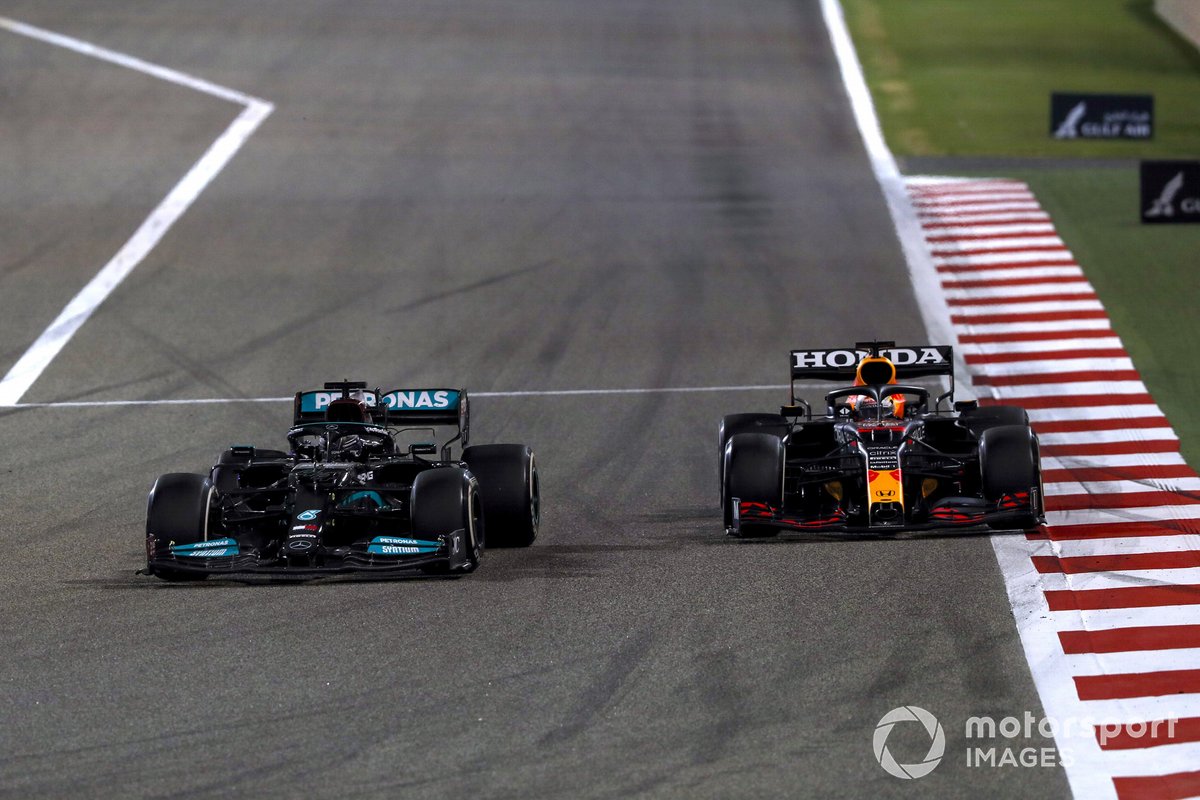
While the 2021 season had thrillers such as Hamilton and Verstappen's Bahrain duel, it was also blighted by stinkers such as Spa and Monaco
Photo by: Charles Coates / Motorsport Images
In 2022 the best performer was the British GP (88%), which featured Carlos Sainz’s first F1 win and plenty of overtaking, the Sao Paulo GP (scene of another first-time victor in George Russell, scoring 80%) and the Hungarian GP (80%), which included Ferrari’s strategy blunder and Verstappen winning and spinning from 10th on the grid. The worst races were the Azerbaijan (42%), Japanese (46%) and Mexican (53%) GPs, though they scored better than the lowest-rated events in 2021.
In other words, 2021 had higher peaks but also lower troughs than last season.
Averaging out the scores across the campaigns gives 2021 a score of 66%, which rises to 69% if the Spa debacle is ignored – as this writer feels it should be, both for this process and as a points-paying world championship event. Last year averages 67%, which is very similar and begs the question of whether the new rules really were all that good…
The next task for Smith, writer of Formula 1 All the Races, and Autosport (apart from scoring the new season), will be to give scores retrospectively back in time all the way to the inauguration of the world championship in 1950
But then we have to factor in context. The 2021 season was one of the hardest-fought championships in F1 history between two of its greatest drivers, following a regulation tweak that threw the dominant team (Mercedes) slightly off its stride. The only things it lacked was some cleaner racing between Verstappen and Hamilton, plus a better-run finale, though it’s hard to argue that the Abu Dhabi GP wasn’t dramatic. By contrast, Verstappen took the 2022 crown with four races to go, despite Ferrari’s strong start to the season.
While we try to judge each race on its merits, there is no doubt that the presence of a championship fight, particularly in the closing stages of a season, adds tension and drama to an event, boosting its potential score. In that context, 2021 was always going to have an advantage over 2022, so the closeness of the scores underlines how many decent races there were last year even though the destiny of the crown wasn’t in question following round 12 of 22 in France.

Despite lacking the same title fizz, 2022 still had its fair share of strong races including Verstappen's Hungary charge
Photo by: Mark Sutton / Motorsport Images
What could this tell us about 2023? If the new rules continue to deliver better racing and either Mercedes or Ferrari can up their game to take the fight to Red Bull over the scheduled 23 races, we should surely get a season that tops both 2021 and 2022.
And that’s before we talk about the impact of the cost cap and windtunnel restrictions, which should gradually bring the field together and increase the number of potential frontrunners over the coming years, one of the key aims of the 2022 changes that were never going to materialise overnight.
PLUS: The crucial tech changes F1 teams must adapt to in 2023
And we can go further. The next part of the task for Smith, writer of Formula 1 All the Races, and Autosport (apart from scoring the new season), will be to give scores retrospectively back in time all the way to the inauguration of the world championship in 1950. That will not only show us any trends and highlight brilliant (and poor) seasons, but it will also allow us to see which circuits have created the best races over the seven decades of F1.
As it stands, of the venues that hosted races in both 2021 and 2022, the highest scorers are Silverstone, Interlagos, the Hungaroring and Sakhir. We have a strong suspicion that will change as we add more data. Watch this space – and cross your fingers that 2023 averages more than 67%.

Adding more data to the debate will make for fascinating comparison - will Interlagos retain its place as one of the most prolific thrillers?
Photo by: Zak Mauger / Motorsport Images


Autosport magazine: Hamilton at Ferrari – and champions crowned

How the M8B became the most dominant car in McLaren’s history

Employing team orders can simply be a matter of common sense

The greatest F1 campaigns with no wins

Top 10 F1 results changed by backmarkers – the passes

Top 10 F1 results changed by backmarkers – the clashes

Stars, cars and highlights from the 2026 Goodwood Revival

The Egal has landed – again

MotoGP Australian GP: Marquez wins sprint to seize points lead, Martin crashes

MotoGP Australian GP: Marquez crashes and then takes pole in wet qualifying

What we learned from Friday practice at the 2026 United States GP

Honda rider Marini withdraws from Australian GP due to virus
Subscribe and access Autosport.com with your ad-blocker.
From Formula 1 to MotoGP we report straight from the paddock because we love our sport, just like you. In order to keep delivering our expert journalism, our website uses advertising. Still, we want to give you the opportunity to enjoy an ad-free and tracker-free website and to continue using your adblocker.


Top Comments