


Ferrari reckons 2013 Formula 1 campaign went awry from Canadian GP
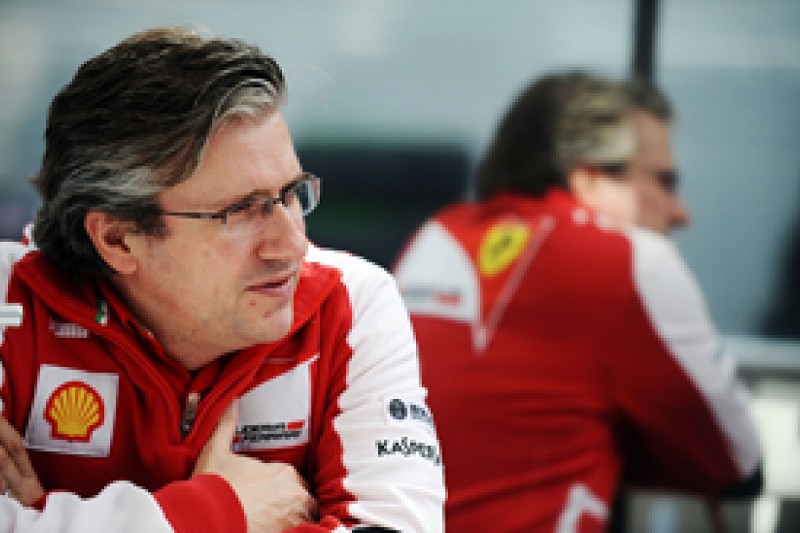
Ferrari technical chief Pat Fry believes it was the upgrade that the team brought for the Canadian Grand Prix that sent its 2013 Formula 1 title bid off course

Fernando Alonso had hopes of the championship early in the year after wins in China and Spain, but fell away from the increasingly-dominant Sebastian Vettel and Red Bull through the summer.
Asked by AUTOSPORT what happened when Ferrari started to drop off the pace around June and July, Fry said the issue was more about a particular development derailing the team's programme than the much-discussed windtunnel calibration issues.
"I am not sure that you can say it was down to windtunnel calibration," said Fry.
"I think through the winter we had a reasonable development period and a sensible development gradient.
"The first race upgrade package worked quite well, some bits better than we were expecting, and we understood that a bit later on.
"In reality, there was a different top body we took to Canada that we were unsure of, and then that gave us a few issues trying to understand that.

"If you would ask at what point did our development start rolling over, it was around that time I guess.
"When you are developing, if you have one thing that is not performing 100 per cent as you are expecting, what do you do with it? Because by then the windtunnel model has progressed and moved on and is four to six weeks ahead.
"So when you try to back out of something like that it gives you a load of other problems."
Fry admitted that Pirelli's change of tyre construction for the second half of the year had also been a hindrance, mainly because the original tyres had coincidentally played to Ferrari's strengths.
"[The Ferrari] has been light on tyres and warm up has been a struggle, and if you get a tyre that is overheating that just helps us out so much more," he said.
"That is not a clever bit of design or simulation or anything, that is just the choice of the tyres. And as things changed, we dropped away because of it.
"But it is for us to try to make the car work with what we have got."
Share Or Save This Story


Brundle awarded OBE in King’s New Year’s honours

The new rules dilemma that will define the 2025 F1 season

Jon Noble: An unfair perception or a genuine concern? Lifting the lid on Red Bull’s Tsunoda scepticism

How Leclerc has changed his steering wheel software for the first time since joining Ferrari
Why Vasseur's steady hand is exactly what fervent Ferrari needs right now

FIA looking into Red Bull and Ferrari's rotating F1 wings after Verstappen crashes

Is Red Bull better or worse off one year after Horner's sacking? Our writers have their say

Vinales: 'KTM sent me a contract, I signed it, and two weeks later they cancelled it'

One year on: How Red Bull changed post-Horner

How technical issues have cost Bagnaia 40 points in the MotoGP title fight
Subscribe and access Autosport.com with your ad-blocker.
From Formula 1 to MotoGP we report straight from the paddock because we love our sport, just like you. In order to keep delivering our expert journalism, our website uses advertising. Still, we want to give you the opportunity to enjoy an ad-free and tracker-free website and to continue using your adblocker.


Top Comments