


Can aggressive new Williams halt downward spiral?
Williams has gone aggressive with its 2018 design and it has heavily bolstered its technical team. But it has an unproven and inexperienced driver line-up and some key rivals are expected to vault forward. Does its optimism have any foundation?

Since catapulting up to third in the constructors' championship in 2014 with the help of a switch to Mercedes propulsion, it has been a case of diminishing returns for Williams. Third with 80% of the points of the previous season in 2015, fifth in '16, fifth in '17 with fewer points...the pattern is clear.
Formula 1 car launches are always steeped in optimism. But to predict even a levelling off of the Williams decline, let alone a revival based on something more tangible, there must be cogent reason to expect the trend to reverse. With a budgetary chasm to F1's big beasts, and reason to expect McLaren and Renault to take strides forward this year, Williams faces a tough task this year even to stand still. But there are at least reasons its trajectory could change.
First and foremost, this is the first Williams designed and produced entirely under the technical leadership of former Mercedes and McLaren man Paddy Lowe. That's significant, even if the days when a grand prix car could entirely reflect one individual's vision have long since passed.
"It absolutely isn't my car," says Lowe. "It was probably true in the past when cars were developed by much smaller teams and it was more of an individual process, but nowadays it's a huge team effort to put a car together and I've had the privilege to lead this team through the last 11 months.
"I'm very pleased with what we've been able to do with this car. It's the first step I hope on the road to moving ourselves further up the grid and the result of strong collaboration across the different departments to put together some big steps that we've made - some of which are visible, some of which aren't."

While the first of the 2018 cars to be revealed, the Haas VF-18, offered no surprises, the new Williams is more attention grabbing - and is likely to be even more so when the full aerodynamic complexity is revealed in the testing spec. It's impossible to be truly revolutionary in modern F1, but it's obvious that Lowe has had an impact on the car.
"We have the benefit of bringing a number of people together who have come from other teams to add to the existing team, which already had some strong players," he says. "When we put that all together, we were able to make some progress I would describe as more of a step change than evolution.
"A good example, which is visible, is the aerodynamic design and the philosophy behind that. What you see is a result of strong collaboration between the different groups within engineering.
"Aerodynamics can be seen as an aerodynamic problem, but it's delivered through a contribution from all across the company and not just from the aerodynamics department. That's an area we've strengthened when putting this car together. What you see in this car is largely a consequence of that."
Which is where Lowe comes in. His predecessor at Williams, Pat Symonds, described the chief technical officer as the conductor of the orchestra - and that's exactly what Lowe is. And when it comes to getting the different groups within the company working together, that's precisely where he should have a big impact.
It does appear that the dials have been moved a little to emphasise aero performance, a metaphor that oversimplifies but does encapsulate the need to ensure the objectives are set correctly to exploit the areas where performance can be delivered.
In recent years, Williams has lagged behind F1's big teams in terms of aerodynamic complexity. Downforce, delivered consistently, delivers lap time - and can help with areas such as tyre use where Williams has also struggled at times in the V6 hybrid era.

Crucially, this is another area of change. Lowe mentioned that Williams had recruited from rival teams, and Dirk de Beer's arrival as head of aero is significant. Previously at Ferrari, de Beer was one of the largely unsung heroes of the Enstone Lotus team's race-winning exploits of 2012/13.
"There is increased complexity," says Lowe. "You may not see it now, but the 2017 regulations permitted far more opportunity in the bargeboard area and we've seen a lot of growth of complexity in that space, and that continues this year, certainly on our car.
"Dirk came from Ferrari and was head of aerodynamics there when they developed their 2017 car, which was a very successful car. So we're very pleased to have him in the team.
"He started in March last year, the same as me, and has made a very big difference to that department giving the right kind of focus and leadership to take them forward. A lot of what we've achieved on the car is down to what Dirk has brought within aerodynamics."
"If you look at 2017, it would appear that Force India had a better philosophy: concentrate on less things and do them better. But we're here to change that and take ourselves forward" Paddy Lowe
But while the aero detail, which around the sidepods shows some of the conceptual thinking that was at play at Ferrari, is eye-catching, inevitably the halo is the first thing you spot. This is, after all, only the second pukka car we've seen with the safety device integrated in its structure.
There has been plenty of grumbling on the impact this has on the car design, more in structural terms than in the inevitable impact on aero. But as Lowe points out, it's also an area that gives some teams the opportunity to do it better than others. Doubly valuable when weight and safety of gravity comes into the equation.
"That's been a fairly significant project to deliver, principally around the structural requirements," says Lowe. "It has to carry some fairly significant loads and that's required some very hard work within the structures groups.
"The opportunity for differentiation would be around the mounting requirements, the loads it has to take that I mentioned. There is a small aerodynamic impact, which we can mitigate to some extent with some small shrouds, but even so it's not going to be a big factor from team to team.
"The biggest opportunity is how much weight do you have to spend that you didn't spend in the past. But I can't imagine the differences being that large."

It's clear even to the untrained eye that Williams has achieved the step change Lowe has described, although only time will tell whether that translates into performance. And there are some key problems that needed to be addressed for a team that has been on the slide.
Lowe hopes that this step change will recover the ground lost in ongoing development last year, but is realistic about the scale of the challenge his team faces.
"We accept that we have some great competition out there," says Lowe. "The obvious three teams at the front, McLaren with a different engine is certainly going to be more threatening, Renault clearly mean business and are making a very big investment in the sport, Force India did a fantastic job last year. That's already six and there only are 10 teams. The best we can do is the best we can, which is what we see in this new car.
"One of the weaknesses that was very obvious last year was the difference in performance from circuit to circuit. There were circuits at which we were very weak and circuits where we were relatively much stronger. We may not have got all the way there, but we hope to see a reduction in that circuit to circuit variability in our competitiveness.
"Ultimately, it's about your design philosophy and policies you adopt within your team in terms of how you develop the car and how you optimise it for the various different types of circuit.
"There is a range, you have Monza at one end and Monaco at the other so it's a tricky balance when you have a finite amount of resource to develop."
A Formula 1 car is a virtuous circle, with strengths in each area multiplying that of others. That's why saying the focus on aerodynamics is an oversimplification given, as Lowe stresses, aero is not only about aero.
But with the major change in regulations last year, it's clear that downforce has become yet more significant. And while Lowe doesn't get into whether Williams has perhaps not focused quite enough on this area in previous years, this appears to be the logical conclusion of what he does say.

"Aerodynamics has certainly increased in its relative effect on your competitiveness - and by intention," says Lowe.
"The regulations were designed for the first time to increase downforce rather than decrease it and that's changed the performance balance between aerodynamics and other factors like tyres and engines and brakes and so on.
"I can't comment on things that went before, I can only comment on the decisions we've made as a technical team to move ourselves to a better place and we'll have to see how effective those are. We think we're going in the right direction."
Williams is in the middle of an infamously uneven playing field, and its days as one of the big-spending giants are behind it. It's competing against a midfield pack that includes Force India, which has a similar budget but smaller facilities and pioneered the striking up of technical partnerships with other teams to receive components such as gearboxes.
This is a direction Williams has eschewed, and continues to do so. Williams is a small big team, whereas Force India is a big small team - and the swapping of those two words makes all the difference. It's clear Lowe is looking long term, for while going down the technical partnership route might make its job easier in the short term, in the long term it will find it easier to move up the order if it can deliver the success that will earn it the resources it needs to do so.
Lowe is quick to point to the success of Williams. After all, it has 114 wins (behind only Ferrari and McLaren) and a combined total of 16 drivers' and constructors' titles. It's clear he signed up to lead a team back to the glory days, not to accept permanent retrenchment in the midfield.
The success, or lack thereof, of this car should tell us a lot about whether this is a realistic objective in a sport where history counts for nothing compared to today's results. This approach could either prove to be a wise long-term planning, or a hubristic refusal to bow to the realities of a changing landscape.
"It would be a relatively easy decision to abandon a number of areas of the car that could be purchased as permitted from other manufacturers, but that puts us into a different context and maybe not one that is correct for the long-term ambitions of the team," says Lowe.
"If you look at 2017, it would appear that Force India had a better philosophy: concentrate on less things and do them better.
"But we're here to change that and take ourselves forward. We can concentrate on the right things but still leave ourselves positioned as a full constructor. That gives us the basis to mount championship campaigns in the future."

Lowe accepts this does make his job, if you define it as 'do the best you can this year', harder in the short-term. And that's the biggest challenge Williams faces with a car that will define just how far it is off delivering this latest first step back towards the glory days after too many false dawns.
Asked about the driver line-up, Lowe rightly toes the party line. Any team would baulk at having a driver pairing with a combined total of one season of race experience and there's no question Williams would be better off with a known quantity in the team rather than Lance Stroll and Sergey Sirotkin (with Robert Kubica as the third man).
"I'd like to be performing, at least in lap time, an awful lot closer to the front end" Paddy Lowe
But he's right to point to the highs Stroll delivered last year - the podium in Baku, the front row start at Monza and some handy drives when he achieved decent track position in a season when qualifying was a challenge. Every driver deserves the chance to join the dots of peak performance in their second season, and that's what Lowe needs Stroll to do this year.
As for Sirotkin, he did impress in testing and while the financial dimension was part of the equation in signing him it's important to remember that Kubica, too, offered cash.
But regardless of the whys and the wherefores - and it's important to note Lowe declares that Sirotkin was selected on talent and that it's "nonsense" to say it was based on money - this does mean Williams goes into the season with an unbalanced pairing. Given it pairs a Formula 3 European champion with a race-winner in GP2 and Formula Renault 3.5, it's far from the hopeless line-up some characterise it as - but compared to those of its immediate rivals it is questionable.

Whenever a new car is launched, the obvious question is what are the targets. Few teams can set rigid targets in terms of results, certainly not those in the position of Williams, so Lowe has a clear idea of what he wants to see form the team over the coming year.
"I'd like to be performing, at least in lap time, an awful lot closer to the front end," says Lowe. "We were between two and two-and-a-half seconds off the front through last year, and that's not where we want to be. I'd like that gap to be considerably closed down.
"If there happen to be others in that space and we don't make up position championship wise, that will be what it is, but we want to make progress towards the front from a lap time point of view and that takes us closer to competing for good grid positions and podium results. In the short, medium or long term, that's the direction we want to be heading.
"I'd also like to see us exploit that car strongly and get the points that it's capable of delivering with its performance. So that will be great teamwork, good work from the drivers, good consistency and reliability to score the points that we can. We can do a much better job of that than we did in 2017."
Williams has certainly taken the action it needed to take as a prerequisite of reversing the downward trend of recent seasons. But it faces an enormous challenge. The team is very optimistic about the car and believes in the work that it has done, but it needs to wring the most out of every pound spent if it's to avoid slipping further down the constructors' championship ladder.
Whatever happens, things have changed at Williams technically. The stopwatch will decide if it's for the better. And given how congested the midfield could be, a few tenths here or there could make a huge difference to where it stands in the pecking order.


Did Bianchi have potential to become F1 world champion?
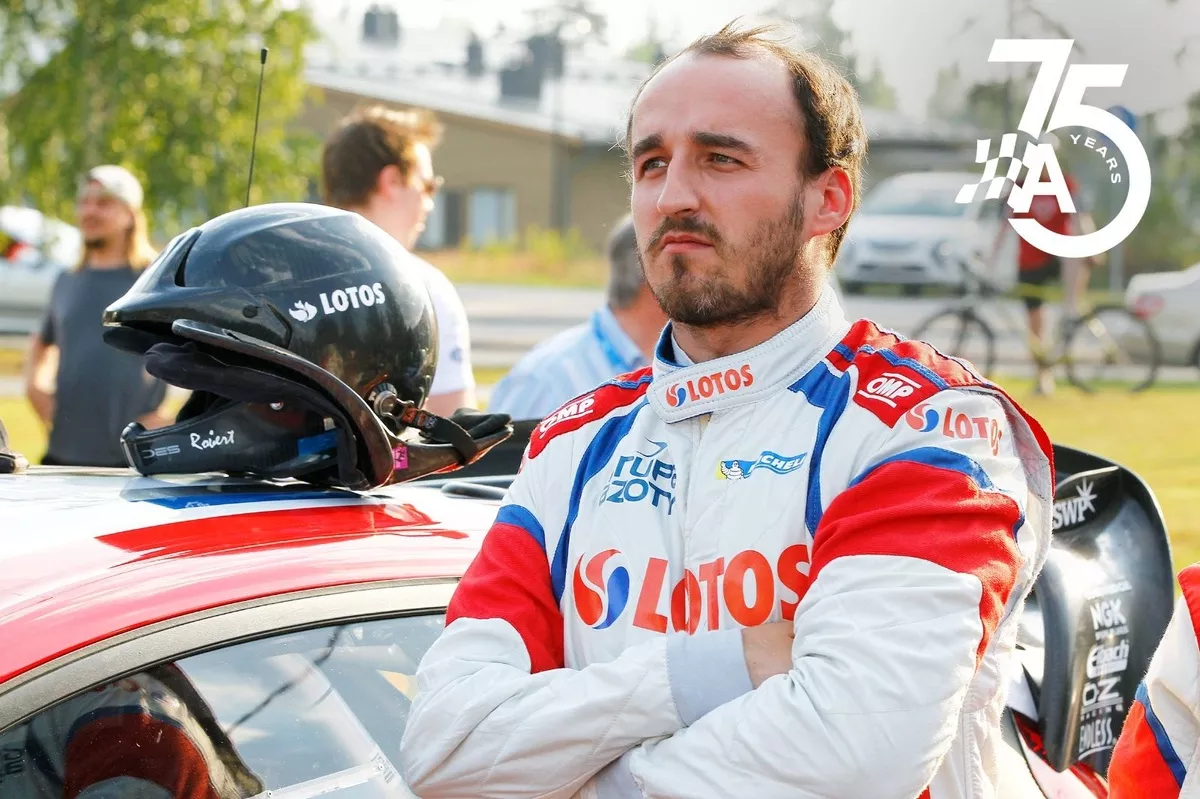
Autosport 75: Kubica's road to recovery and beyond

Autosport 75: When Red Bull had its own intra-team fight like Norris vs Piastri

Autosport 75: Why Verstappen was ready for F1 at 17

How the Senna myth has been transformed

Archive: When the French GP almost produced F1's greatest shock

Autosport 70: How Scheckter instigated Silverstone's most famous F1 incident

Autosport 70: The lost F1 team that launched Newey

Taken for a ride? The less heralded flaw of the 2026 F1 regulations

Sainz set for Rally1 outing in latest gen WRC car

United States Grand Prix Driver Ratings 2026

Martin's fight to get fit for Malaysian GP with MotoGP title at stake
Subscribe and access Autosport.com with your ad-blocker.
From Formula 1 to MotoGP we report straight from the paddock because we love our sport, just like you. In order to keep delivering our expert journalism, our website uses advertising. Still, we want to give you the opportunity to enjoy an ad-free and tracker-free website and to continue using your adblocker.


Top Comments