
Why the new electric tin-top series deserves to be taken seriously
The new Pure ETCR series will get underway at Vallelunga this weekend featuring great looking cars, top drivers and real tracks. Its format is wacky, but it exists in an era when its petrol-fuelled brethren are all artificially contrived, and has the potential to move the tin-top game on

“We all believe in the project,” enthuses latter-day tin-top superstar and early-season 2021 World Touring Car Cup points leader Jean-Karl Vernay. “Marcello Lotti and Eurosport are putting a lot of effort into it to make it big. We just have to show what this car is able to do, that it’s fun to watch, and we need other manufacturers. That’s clear – we can’t stay at three.
“We need to do a good job on track to make it fun, and other manufacturers will arrive, and if we are at five or six then it’s going to be pretty cool. The world is changing, and motorsport has to change also.”
There, in a nutshell, is the enthusiasm for Pure ETCR – which kicks off this weekend at Vallelunga – and the ‘we’re keeping our fingers crossed’ optimism that this latest electric venture could provide a template for the future of electric motorsport, and, by definition, perhaps even motorsport itself.
Lotti, as touring car devotees will know, was one of the founding fathers of the FIA European Touring Car Championship, which took on World status in 2005 and was promoted throughout by Eurosport Events. His WSC Group then launched a new concept, TCR, for 2015. And, when the WTCC’s ill-starred TC1 ruleset faded away at the end of 2017, an agreement was made with the FIA and Eurosport whereby TCR would become the FIA’s new flagship global tin-top category, using the World Touring Car Cup name and the WCTR acronym.
In March 2018, Lotti loyalist SEAT’s sub-marque Cupra launched an e-Racer at the Geneva Motor Show, and the concept of a new electric series, E-TCR, was born. But Lotti had already long been thinking of electric motorsport.
“Marcello is the pope of touring cars!” laughs Xavier Gavory, the WTCR and Pure ETCR series director who returned to Eurosport Events two years ago after some years working on the Dakar Rally. Gavory was still a student when, in the early 2000s, his path first crossed Lotti’s while working as an intern at Eurosport.
“He’s a real visionary,” he continues. “In the late 2000s I remember he was already talking about how to convert the touring cars at that time into a kind of hybrid vehicle with power made by braking and stuff. He was already seeing what the future could and would be.”
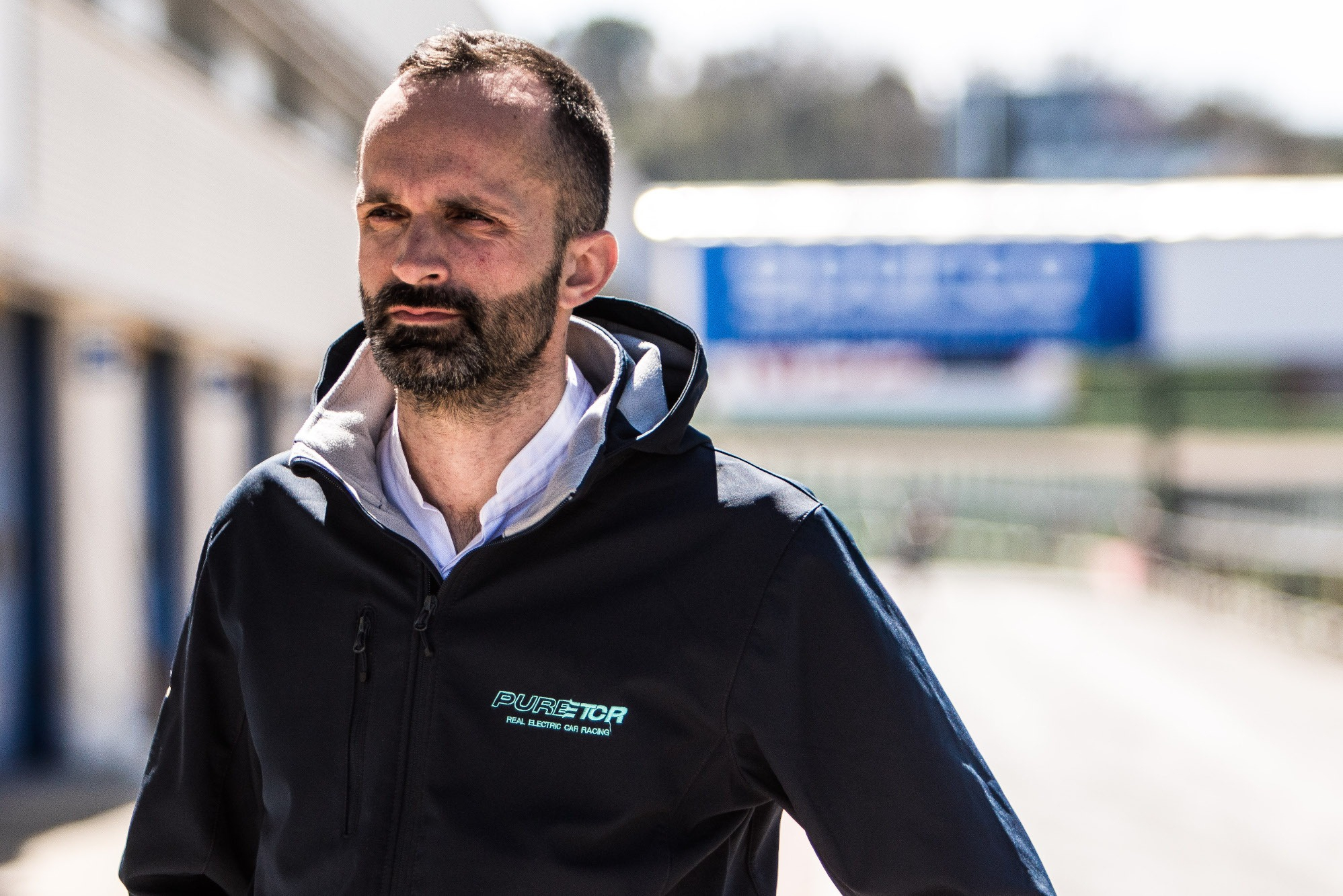
Xavier Gavory, Pure ETCR director
Photo by: @World
The initial Cupra e-Racer was effectively a prototype for what will take to the track in combat for the first time this weekend.
“We did the concept and most of the work ourselves,” recalls SEAT veteran Jordi Gene, who has returned to competition this year under the Cupra banner in WTCR and Pure ETCR at the age of 50, after spending the past few years developing race and road cars for the Spanish car giant.
“We did it together with a company called Rimac [a Croatian electric hypercar manufacturer]. We had the technology obviously, but some of the resources, like how to produce a battery, is a facility that we don’t have in-house. It was easier to join forces with another company, and do the development together.”
The e-Racer was shaken down at Idiada by Gene, and he undertook development work at the Circuit de Catalunya, Valencia, Calafat and in Croatia. All the while, momentum built for Pure ETCR, and eventually WSC appointed Williams Advanced Engineering to supply the batteries, Magelec Propulsion the motor, gearbox and inverter, and Goodyear the FE-style all-weather tyres. But, says Gene, the competition version of the e-Racer that he, DTM/World Rallycross superstar Mattias Ekstrom, exciting tin-top talent Mikel Azcona and Hungarian Daniel Nagy will campaign is not so different to its predecessor.
"When we accelerate or even decelerate in the Pure ETCR car, some people even get dizzy, because from zero to 240km/h the acceleration is constant, so it’s something that the brain is not used to" Jordi Gene
“The performance of the battery and the electronics was similar to what we have now,” he points out. “Let’s say that the car now is reliable, everything is done a bit more properly, all the components are a bit smaller so the car is a little bit lighter. It’s like an evolution of this very first concept that we did in 2018.”
And the performance of the rear-wheel-drive machines is eyewatering. The battery is good for 500kW peak power, or 680bhp in old money, at 12,000rpm, with 960Nm of torque. That allows for a 0-62mph acceleration of 3.2 seconds, and a maximum speed of 167mph.
“This new generation of electric racing, obviously we have a handicap which is the weight; the battery is very heavy, and even if we have it in a very low position and we have the weight distribution really well done, this weight is in the car, so some inertias in braking and high speed are there,” says Gene.
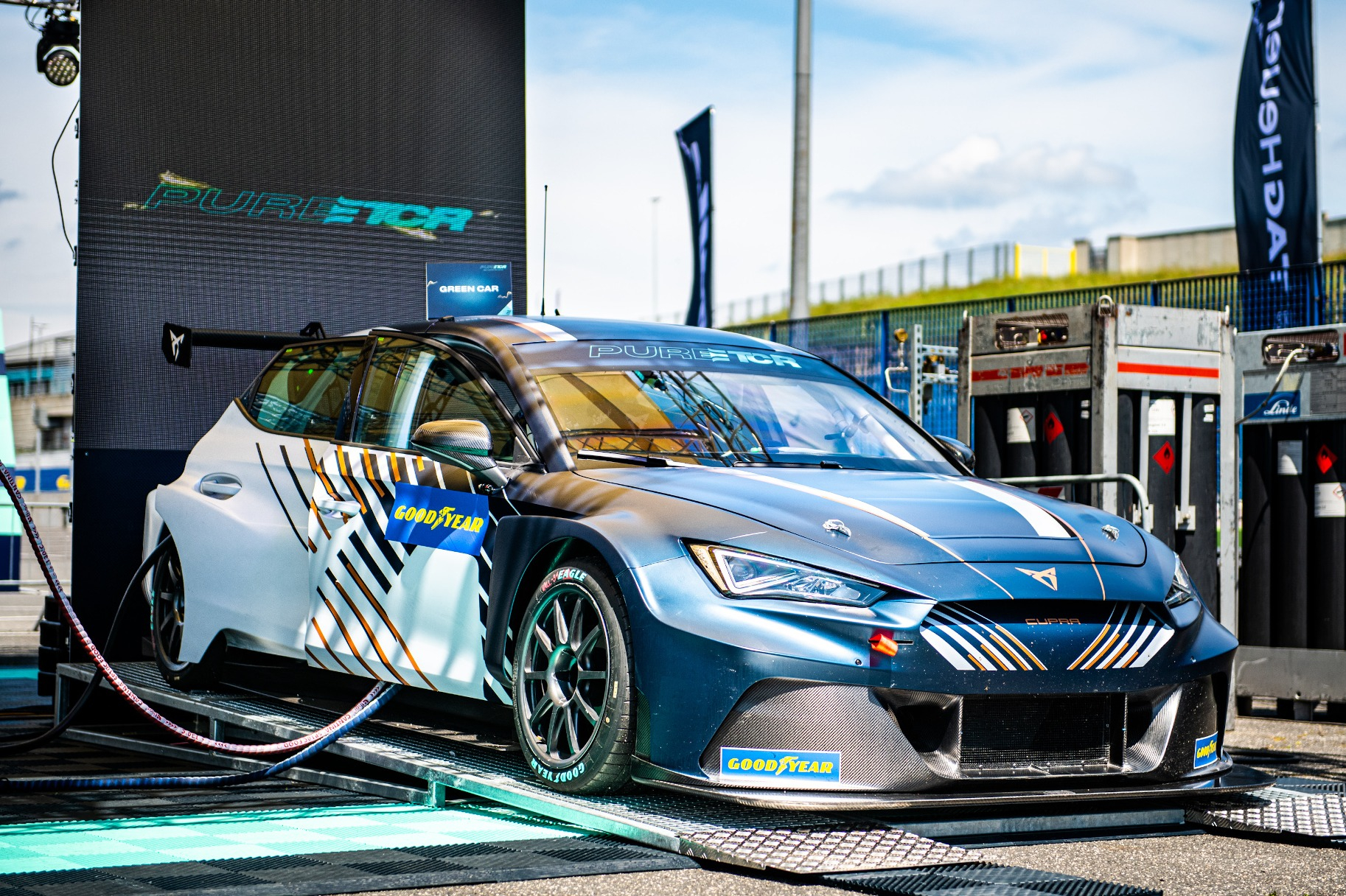
New ETCR machines have enormous peak power from 500kW battery
Photo by: @world
“So this makes the car very different. But on the other hand, when we accelerate or even decelerate in the Pure ETCR car, some people even get dizzy, because from zero to 240km/h the acceleration is constant, so it’s something that the brain is not used to.”
Vernay adds “you can’t even compare with Formula E”, a category in which he was slated to be one of the drivers in the inaugural 2014-15 season with the putative team of Labour peer Lord Drayson before he transferred it to Jarno Trulli. Vernay points out that the Pure ETCR Hyundai Veloster N he will race alongside Augusto Farfus, Tom Chilton and John Filippi has around double the power of those old Gen1 FE bolides.
“When you put the full power it’s nearly too much, and the walls are too close to the track!” he chuckles. “Seriously, when we do practice starts, or the power exiting hairpins, it’s quite amazing. You can’t use 100% the potential of the car, because it’s too much. When you put full power at 500kW, the temperature of the battery goes high super-quickly. You can do one or two laps let’s say, so it’s never enough to find your reference points on braking, turning and accelerating. But it’s fun and it’s a lot of power.”
That power will be enjoyed by 12 drivers this weekend, with the factory Cupra and Hyundai efforts joined by the Romeo Ferraris Alfa Romeo Giulia squad, represented by Luca Filippi, Stefano Coletti, Oliver Webb and Rodrigo Baptista. But here’s the catch, there are only six cars…
At each of the five rounds, the three teams will declare which drivers share each of their two cars, and then they are randomly drawn into two separate pools of six. For the whole weekend, the two pools compete independently. So, say you’re Hyundai: you probably want to nominate your two top drivers to share a car so they are in separate pools, and won’t be taking points off each other.
The first round consists of two three-car ‘battles’ of up to 15 minutes for each pool. Power is limited to 300kW, with the full 500kW available for 20-60 seconds as a ‘push to pass’ tool, but not if you are the race leader.
Round two comprises two-car battles up to 12 minutes, with the round one winners from each pool facing off against each other, the second place finishers doing likewise, and also the wooden-spoon carriers. This time, they use 450kW with no power boost.
Round three is a solo qualifying shootout over one or two laps, using the full 500kW, to set the grid for the SuperFinals. And those SuperFinals will use the same power as the round one battles, lasting up to 20 minutes.
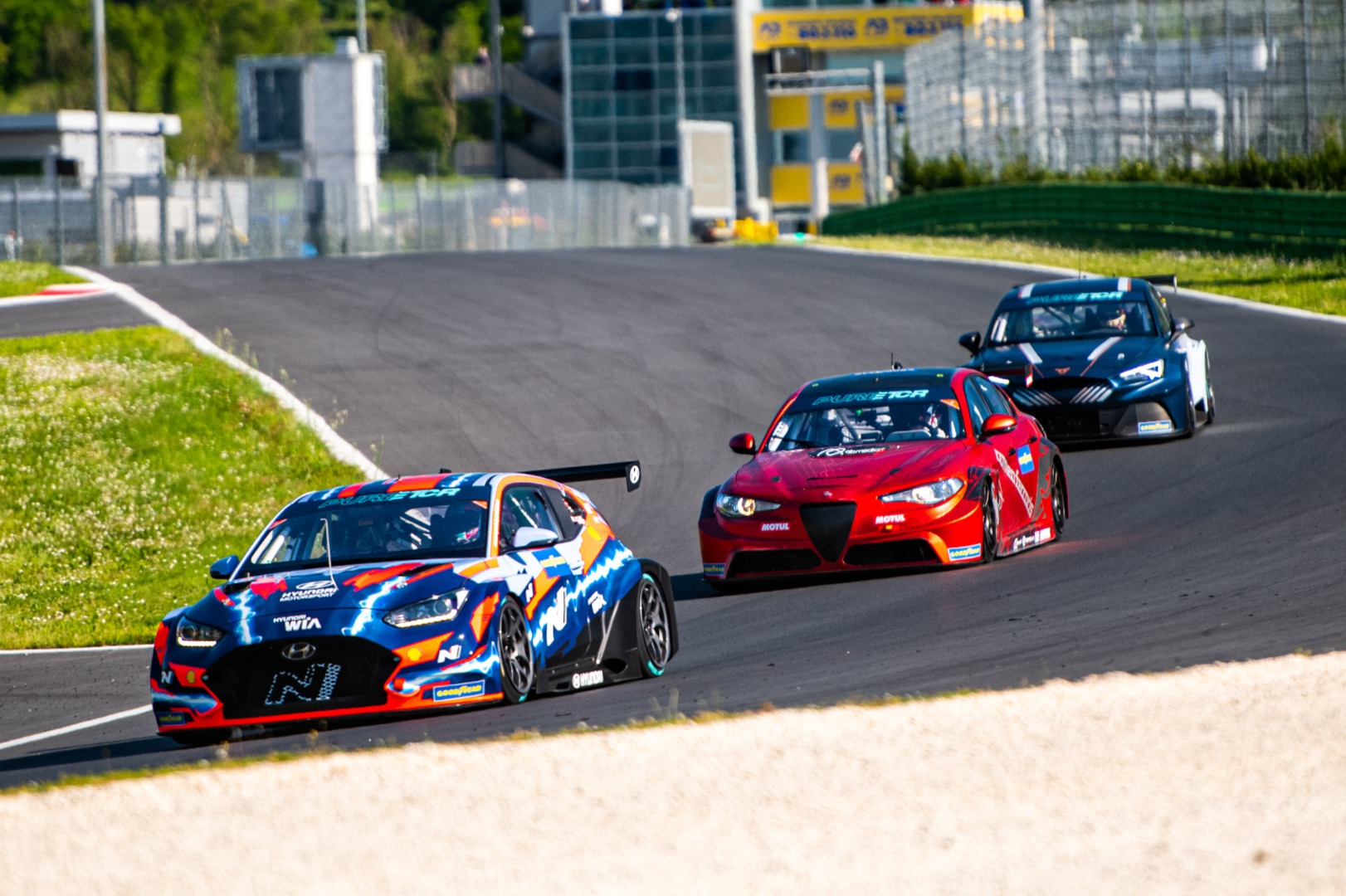
So-called 'battles' will replace conventional races as part of experimental format
Photo by: @world
“That’s the nice thing that these races will bring to the spectators – it’s something fresh, it’s something new,” says Gene. “It’s not the typical free practice, qualifying and then you go to the grid and let’s see who sees the chequered flag first. It’s really challenging because there are so many things happening all the time.”
Add to that the complexity of the car...
“The driver has to think a lot,” says Gene. “We have some parameters that we can change while we are driving – the traction control, power output, the way the power gets to the asphalt. Although the car is capable of doing it, to simplify things we don’t use regeneration for race purposes. There are many things that the driver can do, and the car will perform and react differently according to what we demand on it. We have to think, not only drive.”
It’s also going to be tricky for those such as Vernay and Gene who are doing double duty in the WTCR. Apart from the August date with the Copenhagen Historic Grand Prix street race, Pure ETCR shares the bill with its petrol-powered sister series at its other three rounds: Motorland Aragon, Hungaroring and Inje.
"We had a lot of things to do and fine-tune between the stress test and the first race, but we could see the potential of what we’re going to get. I’m very confident that the fight on track and the sport will be very good" Xavier Gavroy
“We did a test session in Hungary three weeks ago,” relates Vernay, “and I was in Pure ETCR the first day, and second day WTCR, and of course your references are completely different. Also the way you hit the brake pedal is very different, and I was let’s say struggling a little bit. It was nice to do this kind of session before the races – that will be very challenging, and I know now what I really need to focus on when I’m switching cars, and it won’t be easy.”
It’s a testament to the excitement around Pure ETCR that it should have attracted drivers of such calibre. And of course, the FIA also approves: it will gain the governing body’s World Cup status for 2022. Ironically, perhaps the COVID disruption of 2020 has proved a benefit. A ‘promotional year’ was planned with demo events at the Goodwood Festival of Speed, Copenhagen, in China and culminating at the 2021 Daytona 24 Hours, but this was called off.
Put it to Gavory that this frustration could actually have been a blessing, and he admits: “I’d say you are right. With WTCR, you had the cars, the tech, the pilots standing by, the structure, and everything was ready to race. For Pure ETCR it’s completely different, because the lockdown, the travel bans, everything literally changed the face of the series.

Vernay expects challenges from switching between normally-aspirated and electric-powered cars
Photo by: @world
“The cars did not exist at the time, the cars had to be developed; Williams is based in the UK and it was not possible to go there for the battery integrations. All the providers got literally stuck and were not able to provide the teams and the manufacturers with what they needed to develop the cars.
“At the end of the year we still managed to have a couple of events – one in Copenhagen to reveal our structure and our energy station [where the cars are charged], and one in Aragon to reveal the starting gate. We decided to promote the series in any case to keep the ball rolling – that was very important, to give positive signs to the manufacturers, the public and the stakeholders, saying, ‘Hey guys, OK we are postponing things, but things will happen’. You are probably right: we are maybe a bit stronger than we could have been last year.”
Will Pure ETCR work? The Eurosport Events crew held what was dubbed a ‘stress test’ a month ago at Vallelunga, presumably ‘stress’ applying to the human beings involved as well as the hardware for what was effectively a dress rehearsal.
“That’s exactly what it was!” jokes Gavory. “The series is a challenge in terms of the unprecedented sporting format and TV production. It’s a human challenge as well to put together all those new people: we have a lot of people from WTCR with long experience in touring cars, but we also have a lot of people coming from different horizons to enrich the concept and the way we are doing things. It’s a technological challenge for the manufacturers, and for the teams it’s a sporting and engineering challenge in terms of format.
“So to arrive at the first race with no rehearsal or no stress test or whatever would have been very complicated. We brought our energy station infrastructure, we charged the cars there for the very first time, we put on the grid our starting gate, we brought what we call the hot zone, an area where the pilots will wait for their turn to go on track and will be able to watch the race and get some data, and the teams got the chance to do some racing simulations. That was very exciting.
“We had a lot of things to do and fine-tune between the stress test and the first race, but we could see the potential of what we’re going to get. I’m very confident that the fight on track and the sport will be very good.”
So too is Gene, who expects all the cars to be “pretty similar in pace”. “We have all the same battery and the same motor, but the one that produces the better package on suspension, aerodynamics, energy management and drivers is the one that’s going to take the win,” he adds.
“There’s a lot of people looking at it – I know there are many brands interested in that concept, and I really hope that this attracts some other people because to me this is the future. I’m really happy to be in at the very beginning of this new chapter in motorsport.”
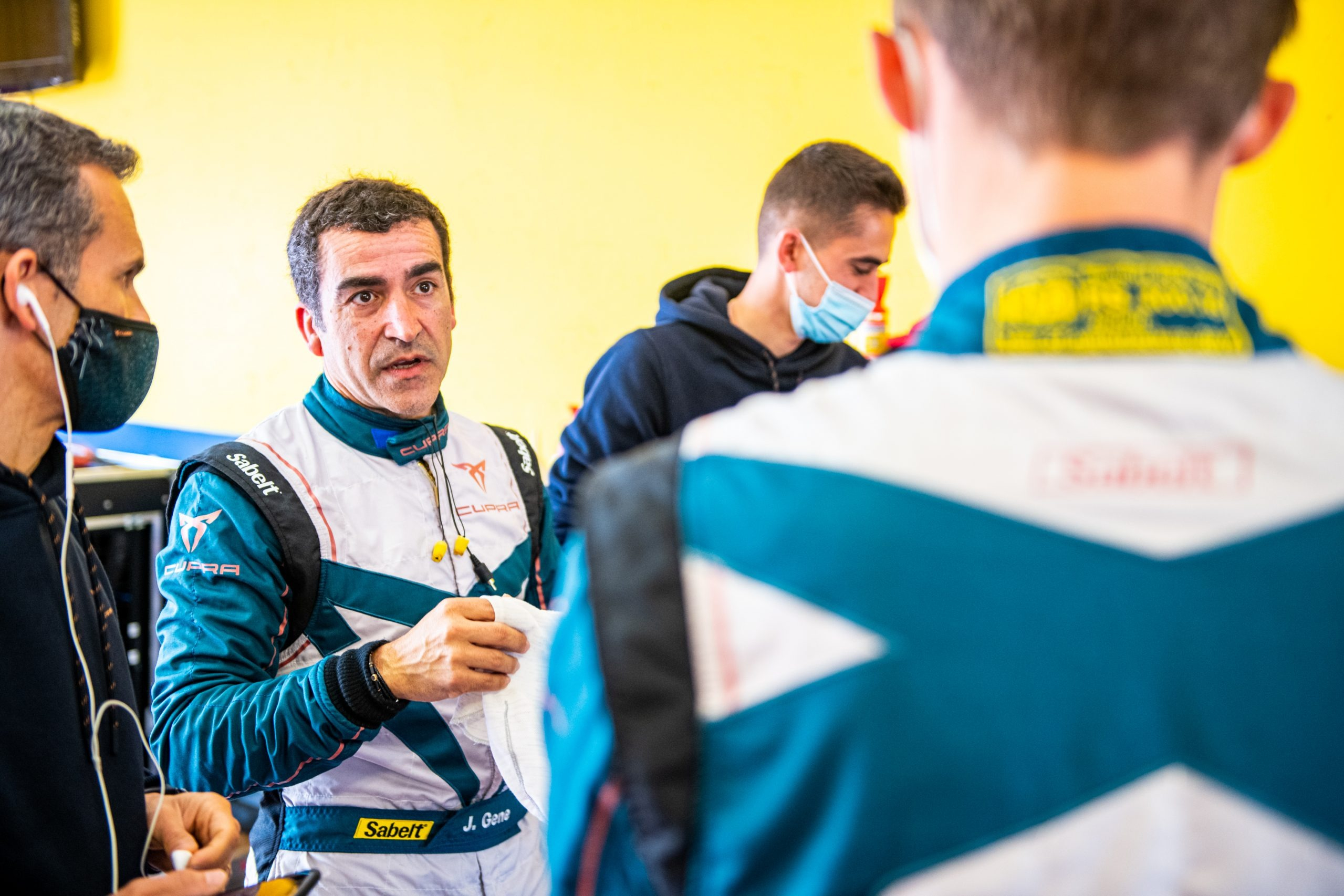
Jordi Gene returns to top-line competition with Cupra
Photo by: @world


Smith on the move in Autosport National Rankings

Antrobus and Kay close to Autosport National Rankings table-topper

The weekend the BTCC said goodbye to its showman character

How sensational Sutton closed in on the BTCC title

BTCC Croft: Doble clear of drama in Croft crashfest

BTCC Croft: Sublime Sutton wins on hard tyres

BTCC Croft: Cook wins wet-weather thriller from Sutton

BTCC Croft: Cook dominates qualifying race

MotoGP Austrian Grand Prix: Acosta tops Practice as KTM chases home win

Cadillac F1 owners Mark Walter and TWG Global face class-action lawsuit

Italy’s next F1 world champion?

Fortescue Zero purchases Team Penske for Formula E's Gen4 era
Subscribe and access Autosport.com with your ad-blocker.
From Formula 1 to MotoGP we report straight from the paddock because we love our sport, just like you. In order to keep delivering our expert journalism, our website uses advertising. Still, we want to give you the opportunity to enjoy an ad-free and tracker-free website and to continue using your adblocker.


Top Comments