
The driving force behind a 2025 club racing success
The MG Owners’ Club Championship was one of last season’s best-supported categories, and Jim Baynam and his notable MGB have been near ever-present during the past 45 years

Any championship that was able to grow its grid numbers during the tough economic times of 2025 was clearly doing something right. The MG Owners’ Club Championship did not merely grow, it blossomed and was bulging at the seams as it became one of the best-supported categories in the country. Average entries for the British Automobile Racing Club-administered contest increased by a whopping 50% to 33 cars, peaking with a full grid of 42 at Thruxton Retro.
“Everybody wanted to race at the Thruxton Retro meeting and to see 42 cars on the grid was sensational,” says championship organiser Jim Baynam. Those bountiful grids did follow slightly leaner spells in recent years, and Baynam says there are several factors behind the rapid rise.
“Club motorsport post-COVID struggled a bit,” he explains. “There were too many championships across motorsport and there were too many where you could race MGs, and all were suffering with entry levels. Times were tough but we were reasonably well supported and well financed and always managed to keep our head above the financial break-even point.
“Some other long established MG championships began to fail and entry levels were dropping to an unsustainable level. That resulted in a number of ZRs coming over to MGOC, which gave a welcome boost to our numbers. Plus, the bigger a grid, the more attractive a championship becomes. When the numbers climb, they climb quickly. People look at it and say, ‘This looks good, they’re getting 26 cars on a grid, we will have a look at them’.
“Most of our races are livestreamed by the BARC and we were getting over 10,000 hits per meeting so plenty of people witnessed our progress. Our numbers increased in early 2025 and grew and grew and grew.

“In addition to picking up a number of drivers from other championships, we had four or five new guys come in with MGBs. All that added together meant things progressed very quickly – it was unbelievable.”
Baynam has certainly played his part in that success. And he is not just a central figure in the championship now – he has been involved right from the very start back in 1981. Remarkably, he has raced the same MGB in the series for the vast majority of those 45 years.
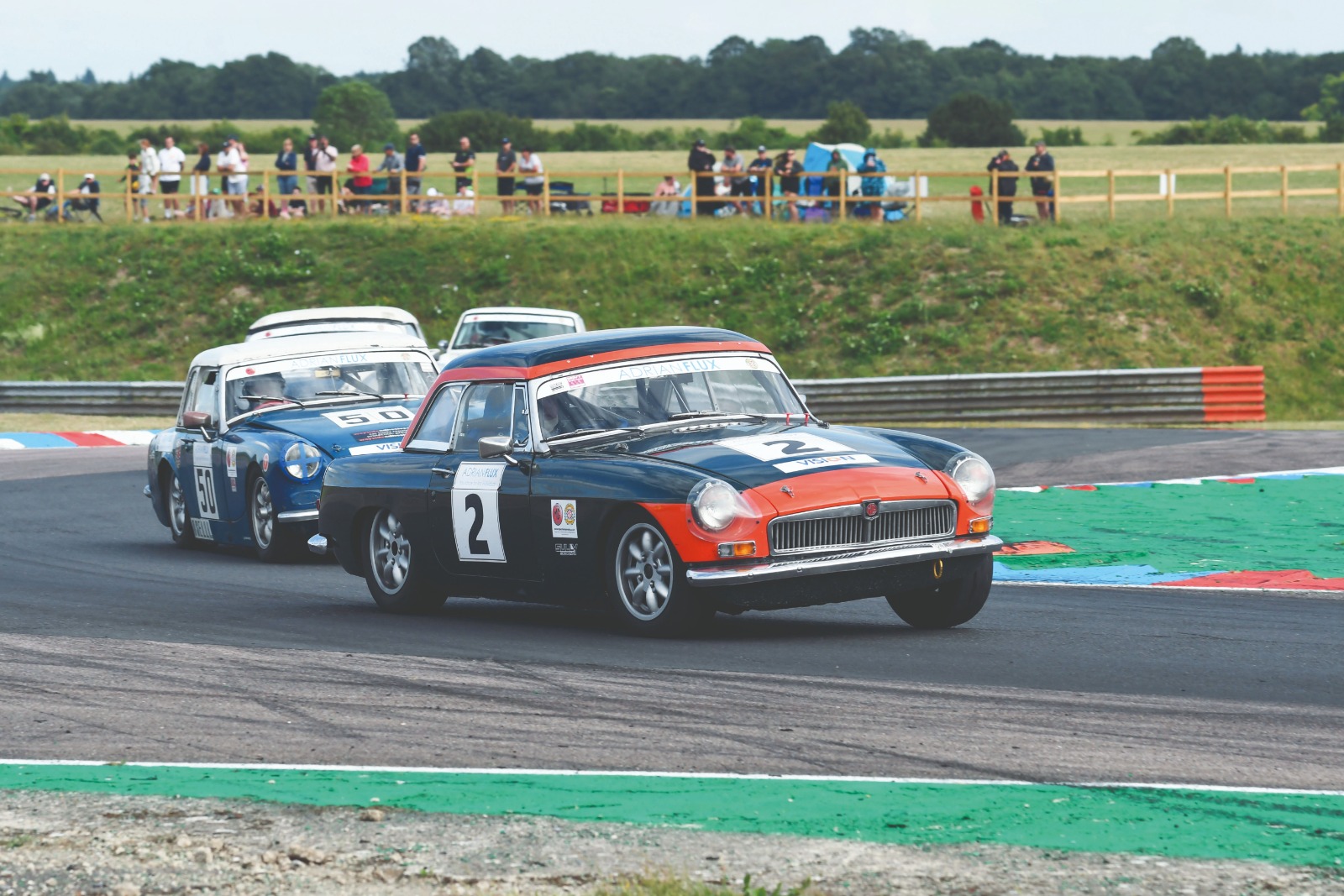
Baynam's MGB may be one of the older cars in the field, but he emerged as champion
Photo by: Steve Jones
Baynam had long been interested in motorsport when he began helping a friend who was racing a Lola with the 750 Motor Club. A chance encounter at one of these events then led to a lifetime of MG competition.
“At that time, my road car was an MGB, and we were at Thruxton one day and there were a load of MGs racing,” Baynam recalls. “I had a look and noted some of them were production-based relatively standard cars.”
Thoughts therefore turned very quickly to competing himself: “My plan was to turn my V8 road car into a race car. Things moved forward and I booked it in to have a rollcage installed. This was early 1981 and I picked up a copy of Autosport and saw an advert for an MGB that had raced in the 1980 Willhire 24-hour race. The Hounslow phone number was near to where I was living in Richmond, so I called them and the charismatic Rae Davis said, ‘Come over and see it’. After a quick look we retired to the local pub and, after a couple of pints, a deal was done and I’ve owned it almost ever since.”
The ‘almost’ comes from a brief interregnum when Baynam sold the MGB in 1983 and raced an MG Midget (he also later had spells competing in a three-litre V6 1970s TVR Tuscan and an MG Maestro). But he regretted letting the MGB go, admitting that he did so when he “didn’t have quite the emotional attachment to it I do now”.
"We struggled a bit because everybody wanted to start spending more money, but we always stuck with our production roots. We’re benefiting from it now – we’ve gone full circle" Jim Baynam
“After destroying the Midget at Mallory Park, I thought I would love to have my MGB back,” Baynam continues. “I’d seen the car around and rang the guy up and said, ‘You’re not racing the car much, do you fancy selling it back to me?’ He said, ‘Jim, I’m not desperate to sell it and wouldn’t sell it to anyone but I will sell it to you if you want it’. This was in 1988 and I’ve raced it every year since then.”
Alongside competing in the MGOC championship, it was not long before Baynam also became involved in the organisational side of things, assuming the coordinator role in 1987. Throughout this time, he has ensured the focus has very much been on production-based cars, despite occasionally wondering whether this was the right path to take.
“As years moved on, a lot of the MG boys began to want more,” says Baynam. “Higher spec engines, close-ratio gearboxes and Weber carbs etc. This wasn’t for us as our cars use the standard SU carburettors and standard gearbox.”
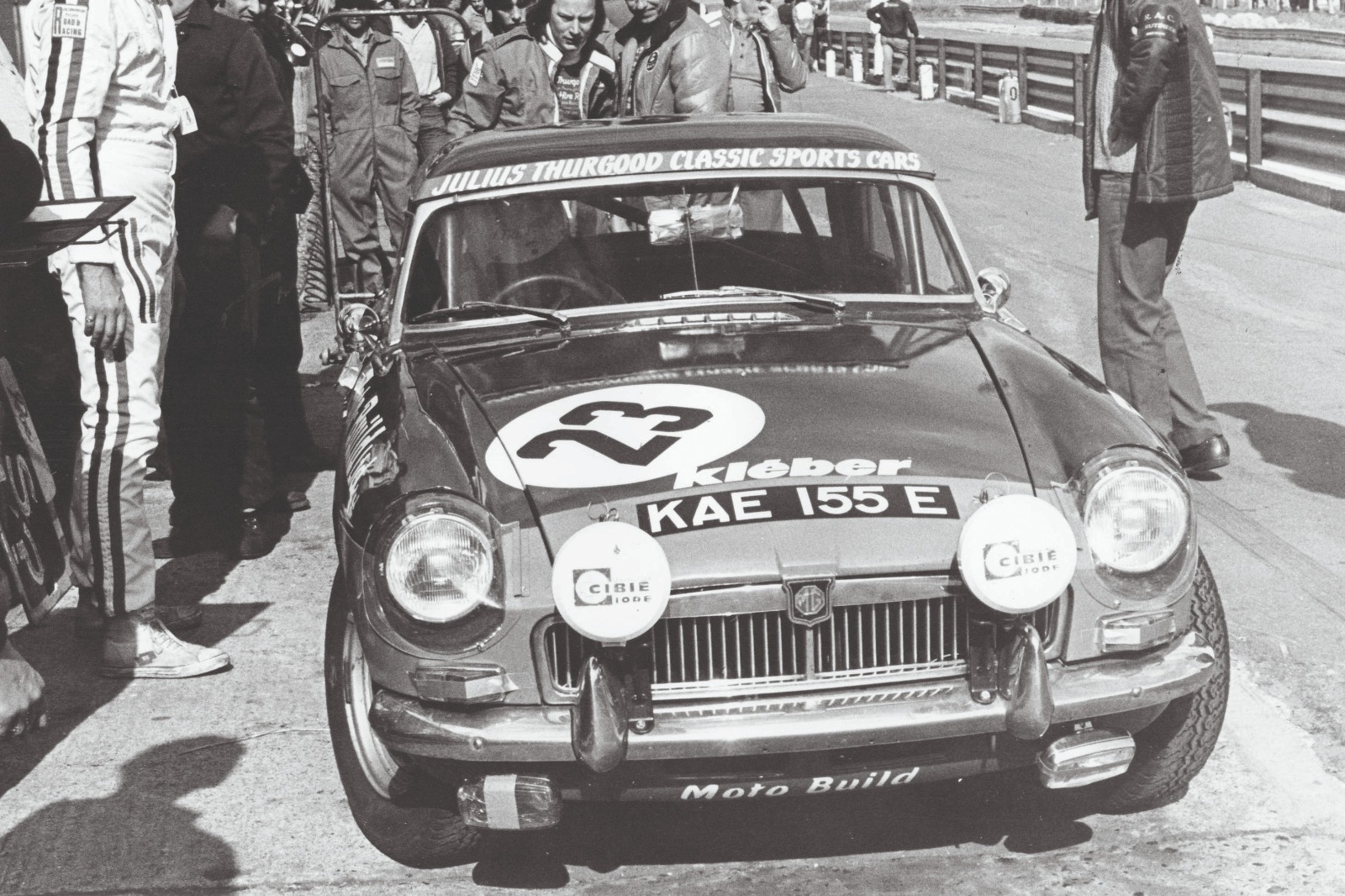
The 1980 Willhire 24 Hour was eventful for the MGB
Over the years, the standard cars dipped in popularity, but the championship remained true to its original ethos – and this paid dividends. “We only allow limited modifications,” Baynam adds, using his own MGB as an example. “My car was built from a road car into a ‘production-spec’ race car, which didn’t allow much more than a blueprinted engine,
lowered suspension and stiffer springs.
“Most other MG championships moved in a different direction. We struggled a bit because everybody wanted to start spending more money, but we always stuck with our production roots. We’re benefiting from it now – we’ve gone full circle. I always believed in what we were doing and, as time moved on, different MG models came in like the Maestro, MGF and ZRs.”
While these newer machines upped the ante, the MGBs and Midgets continued to play an important role. And despite his car’s increasing age, with it rumoured to be the most raced MGB in the world, Baynam enjoyed plenty of success – although it was not until around 12 years after making his debut that he finally scored his first win. He now has a record six MGOC titles to his name, securing his latest crown in October with a fairytale triumph in his final full year of racing.
“It was the most fantastic season and the number of guys coming into it meant we had four or five different overall winners in 13 races,” says Baynam. “This opened the door for a Class A classic class driver to potentially win the championship overall because the wins in Class Z were being shared around.
“I got off to a good start and won the first couple of races at Donington Park. My engine blew up in the penultimate meeting of the season at Castle Combe – it had been in the car for six seasons but eventually gave up the ghost. My good friends at Mass Racing put together a new engine in two and a half weeks and I managed to be on the grid for the season finale.
“It didn’t go exactly to plan, and we had some other problems, but luck was on my side and I’d done enough to win the championship for the sixth time.”
This was a particularly special success given that Baynam had already made the decision to scale back for 2026. “I do everything myself – I trailer it, prepare it and maintain it myself and, at the same time, I run around the paddock like a headless chicken wearing the organiser’s hat!” he laughs. “I’m not getting any younger and it’s all got a bit too much effort so, after racing for 45 years and over 550 races, I’m easing back a bit.
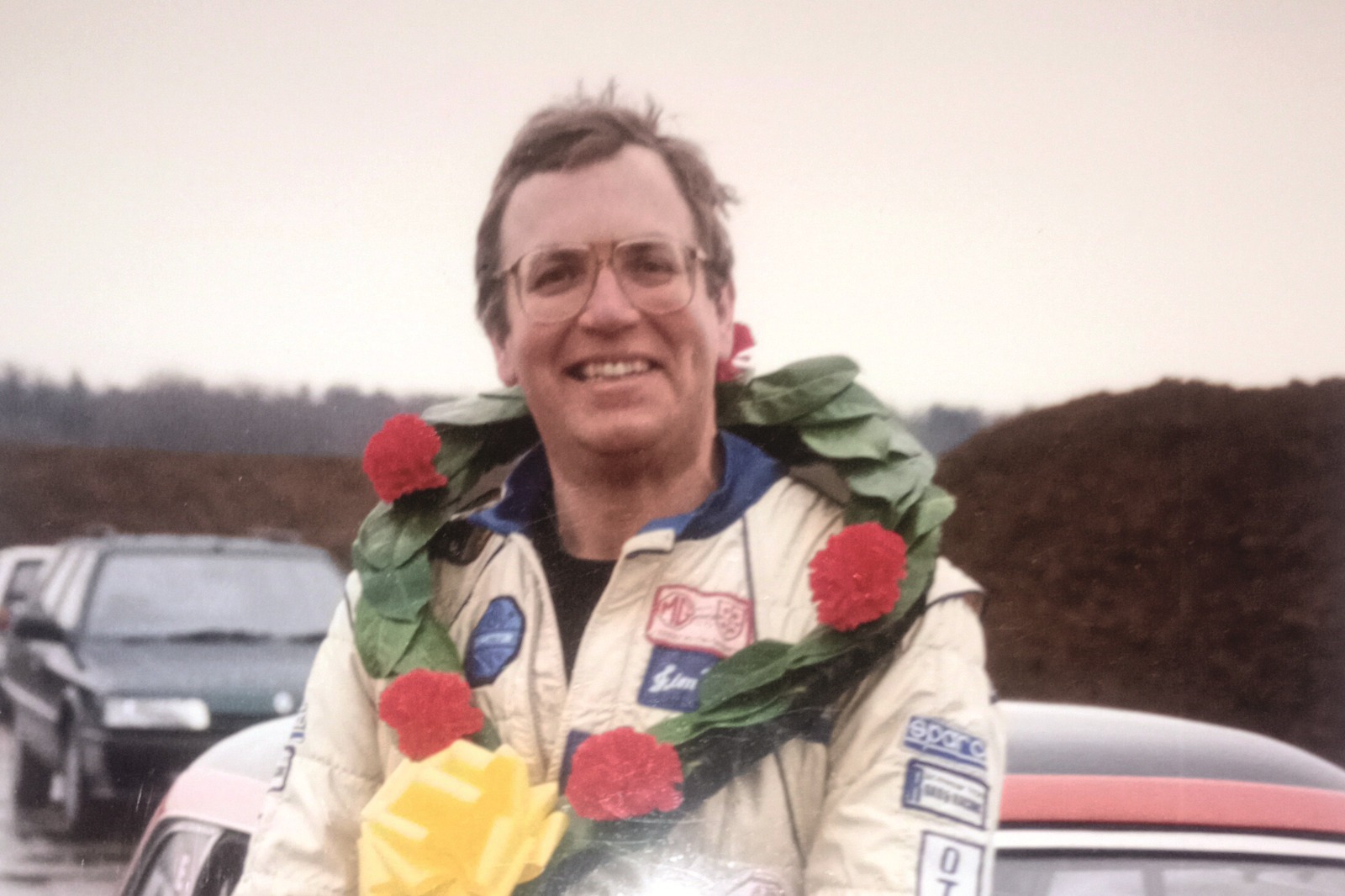
It took 12 years of competition before Baynam took his first win - of many
“I’m not hanging up my helmet just yet, but I won’t be doing a full season. I will probably do three meetings in 2026 and it will be very nice to have the number 1 on the car for the final time. I’m particularly looking forward to racing at Thruxton Retro in June as that weekend will mark 50 years since the car was first raced and the original owner, Geoff Gear, will be there to celebrate a remarkable record.”
Instead, Baynam’s focus will be on maintaining the excellent grids from 2025. “I’ve seen it with other championships; if you don’t keep the momentum going, people move away – you’ve got to keep them interested,” he says. “We’ve stood the test of time, stuck by our principles and had a bit of luck along the way, but to keep the championship going for 45 years is pretty damn good and a credit to the hundreds of drivers who have supported us.”
"When I bought the MGB, my thought was I will give it a couple of seasons and see how it works out. It’s incredible to think that 45 years later I’m still doing it" Jim Baynam
When Baynam thinks back to those humble early days, when he was one of just a handful of drivers on the inaugural grid at Brands Hatch in June 1981, he never expected to still be involved all these decades later.
“When I bought the MGB, my thought was I will give it a couple of seasons and see how it works out,” he remembers. “It’s incredible to think that 45 years later I’m still doing it – that certainly wasn’t the plan. One thing leads to another, and you get more involved in it.”
In addition to the many hats he wears on race days, Baynam is also a BARC director. He is certainly one of club racing’s stalwarts and it’s clear that he is relishing the success that the MGOC championship is currently enjoying. And there is still time for him to make some more memories in his famous MGB.
This article is one of many in the monthly Autosport magazine. For more premium content, take a look at the March 2026 issue and subscribe today.
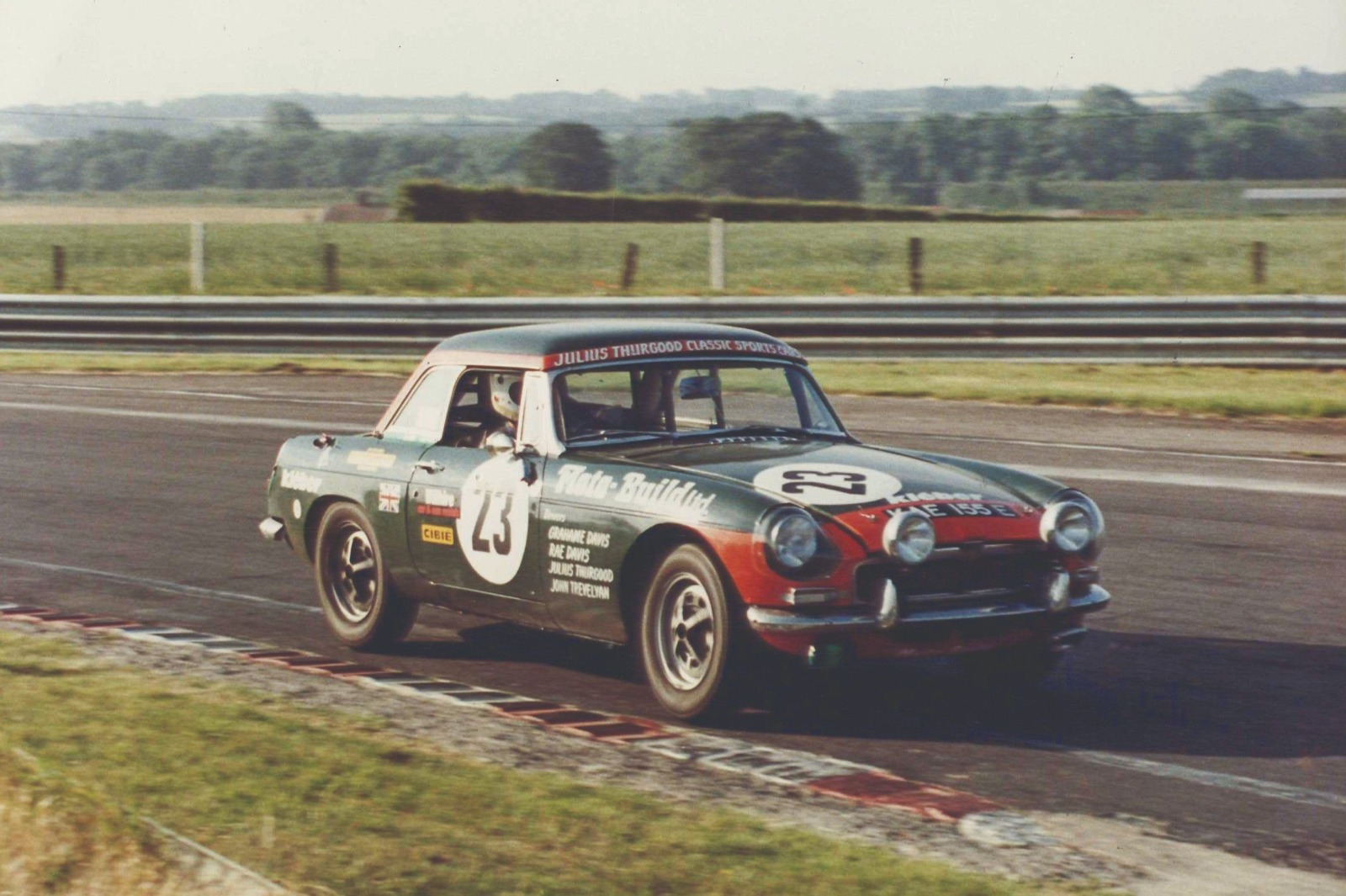
Here's to many more years of success for Baynam and the MGB


Dramatic Mini fight goes to the wire as Ovenden wins title by a point at Brands Hatch

McLaren junior Van Langendonck secures British F4 title

Voisin grabs Carrera Cup crown early despite messy Silverstone opener

The exciting changes afoot to transform Thruxton

Why a more open mindset is making life less stressful for serial winner Slater

New Porsche 911 Challenge car to be introduced to Sprint Challenge GB

Hurd's hat-trick heroics as he storms through Mini field at Donington Park

The Radical rise of a top prototype squad

MotoGP's final Australian GP at Phillip Island cancelled due to poor weather

Antonelli pole shows Mercedes is 'finally seeing the results' of car upgrades

Leclerc and Hamilton's differing theories behind Ferrari's Austin qualifying disappointment

Norris frustrated after United States GP qualifying: "I did a very bad job"
Subscribe and access Autosport.com with your ad-blocker.
From Formula 1 to MotoGP we report straight from the paddock because we love our sport, just like you. In order to keep delivering our expert journalism, our website uses advertising. Still, we want to give you the opportunity to enjoy an ad-free and tracker-free website and to continue using your adblocker.


Top Comments