


It is time to heal the wounds with the MotoGP Qatar GP over
Despite the sense of normality that prevailed in the paddock throughout last weekend's grand prix, the bitter dispute between the riders and MotoGP's organisers has left deep scars that will require a willingness on both sides to heal


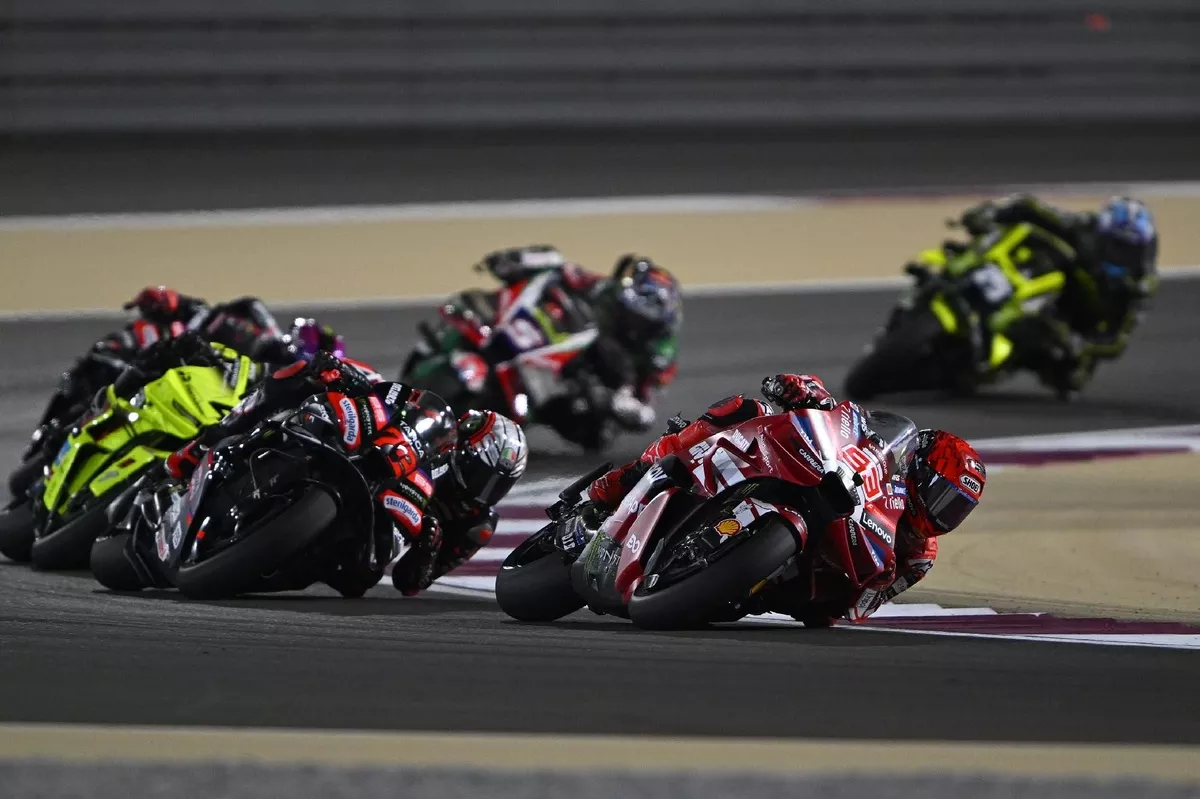
Marc Marquez, Ducati Team
Photo by: Gold and Goose Photography / Getty Images
Over the past six weeks, MotoGP riders progressively hardened their stance in an attempt to put pressure on the championship promoter, which remained determined to honour its contract with the Qatari government. Under that agreement, the race had to go ahead unless force majeure could be invoked.
Several countries represented in the paddock had advised their citizens to postpone any travel to the region because of the war involving the United States and Israel on one side and Iran on the other. However, as these were recommendations rather than outright travel bans, they carried insufficient legal weight to justify cancelling the event without breaching the contract.
Faced with that situation, executives at MotoGP Sports Entertainment Group (MGPSEG), the championship's commercial rights holder, deemed the assurances provided by the Qatari authorities sufficient. The latter had committed to providing cover against any escalation of the ongoing conflict.
Over recent weeks, details have emerged of the exchanges between the riders and MGPSEG, offering a glimpse of just how heated the confrontation became. A clash which, viewed with even the slightest perspective, has produced more losers than winners. The biggest casualty of all is MotoGP's image, which has emerged from Losail badly damaged by the increasingly visible rift between the main protagonists of the show and those responsible for running the championship in which they compete. While each side is entitled to defend its own interests, what has been conspicuously absent throughout this crisis is a conciliatory voice – an invaluable asset in situations such as this.
Nobody in their right mind would suggest that racing in Doha under the present circumstances was ideal. The problem is that this is not an ideal world, and it would be unwise to trivialise the position of those ultimately responsible for deciding whether to cancel the event. Not least because of everything such a decision would have entailed. This is not merely about money, but also about the message it would have sent and the potential consequences that might have followed. One need look no further than the Formula 1 grands prix in Qatar and Abu Dhabi, scheduled to take place in the coming weeks.

It would have been interesting to see what all those self-appointed heroes, who spent weeks stoking outrage and alarm on social media, would have done had they been the ones making the decisions. All the noise they generated gave way to absolute silence once the event had concluded without a single incident, and without the slightest hint of reflection on their part. Having milked the episode for a few extra followers, there will always be another controversy on the horizon to exploit. Just wait and see.
Yet the blatant pettiness of a few does not absolve those in positions of authority of their responsibilities. Riders are individualists by nature, and it would be unreasonable to expect them to safeguard the collective interests of the championship. That responsibility lies with those running it. And the Qatar episode demands a thorough exercise in corporate introspection if MotoGP is to avoid exposing its image to the sort of damage it has suffered over the past month.

Qatar podium
Photo by: Gold and Goose Photography / Getty Images
The fact that such different realities coexist within the same ecosystem – those of the riders and those of the executives – does not excuse either side from making every effort to bridge the divide. In that process, however, it is clear that those who deal with the political side of the sport on a daily basis have far more sophisticated tools at their disposal than those whose primary focus is simply to ride faster than their rivals.
Ultimatums, such as the one delivered at Sepang, should have no place in an environment where, at least in theory, everyone involved is working towards the same objective. And if matters reached that point, lawyers and all, it was largely because of the lack of empathy and willingness to mediate displayed during those meetings, where tensions escalated to almost unimaginable levels. Threatening riders with sporting sanctions is a red line that should never be approached if the championship's long-term health is to be protected.
Against that backdrop, the comments made by MotoGP deputy managing director Carlos Ezpeleta to Autosport on Sunday at Losail should be interpreted as a glimmer of hope, suggesting that not everything is lost.
"It is true that we have been more exposed than other sports that have also visited this region, and that has been because of all the noise surrounding the situation," he said. "That is something we need to manage better in the future. We probably need to work more effectively with the teams and the riders. You learn from everything, and we will try to do better in the future."
Yamaha's decision to prevent its employees from travelling to Qatar, on the basis of a clause in their employment contracts, deserves separate consideration. While that provision is entirely legitimate, of course, it is difficult to believe there was no less damaging way of handling the situation than issuing a statement at 6pm on the Sunday following the Malaysian Grand Prix, triggering an immediate response and condemnation from MGPSEG.
The shortcomings on the organisers' side have been laid bare. But the riders also have homework to do. Naturally, they seek to use whatever leverage they have to their advantage, although there are occasions when the limitations of their position become painfully obvious. In certain debates, their role is confined to precisely what defines them: they are riders. This time, however, they stepped forward to tackle an issue of far greater complexity.

Riders' parade
Photo by: Qian Jun / MB Media / Getty Images
Although their concerns about the wisdom of racing at Losail were understandable and entirely legitimate, their vulnerability – not only in relation to the championship's management, but also to their own teams – left them cornered and largely silenced. They were probably aware of just how complicated a situation they had got themselves into, and of the potential repercussions they could face. In that respect, the lack of unity among them is alarming.
It is difficult to imagine a more appropriate moment for the riders to finally organise themselves into an association capable of representing their collective interests. Yet the divisions were not confined to the riders themselves. They were also evident in their relationships with their own teams, and plain to see for anyone willing to look closely enough.
With just a fortnight to go before F1 arrives in Qatar, it is almost inconceivable that similar disagreements could spill over into that paddock. F1 is an environment in which everyone knows exactly what is at stake, and where threats are not aired openly, but delivered with a smile and a cup of coffee in hand.

Share Or Save This Story


How MotoGP teams and riders are organising themselves for their arrival in Qatar

MotoGP riders step up pressure in final bid to avoid Qatar Grand Prix

How Trackhouse is preparing for the post-Brivio era
It is time to heal the wounds with the MotoGP Qatar GP over

How Brazil showcased everything that's good about F1 - plus some that isn't

Records set by Toyota's WEC 2026 title-winning trio

Top 10 F1 cars of the 1970s
Subscribe and access Autosport.com with your ad-blocker.
From Formula 1 to MotoGP we report straight from the paddock because we love our sport, just like you. In order to keep delivering our expert journalism, our website uses advertising. Still, we want to give you the opportunity to enjoy an ad-free and tracker-free website and to continue using your adblocker.


Top Comments