
The restorer keeping a land-speed record-holder's memory alive
From a famous land-speed special to an Indianapolis 500 frontrunner, restorer and racer Geraint Owen has a fascination for making old machines work

UK club racing is home to a plethora of unique and wonderful machines, each with its own stories that have in some way played a part in the history of motorsport – no matter how big or small.
Many will have spent decades hidden from view though, left to rust in garages or undergone crude modifications making them almost unrecognisable from how they raced in period. And many would have fallen further into disrepair were it not for the hard work of restorers, who spend hundreds of hours fettling these machines, meaning they can return to track action with most in original specification.
Geraint Owen is no exception, and it’s little surprise that the 53-year-old Welshman has become a historic restoration stalwart, having followed in the footsteps of his father, Owen Wyn Owen – a renowned restorer of cars in his own right. Not to mention having a land-speed record car as a mainstay of home life growing up.
“Babs came home when I was 10 months old, so as I’ve grown up there’s always been a land-speed record car in the workshop,” says Owen. “You’re five years old, you don’t understand why other children don’t have big cars in a shed!”
Babs has become synonymous with the Owen family, but decades before – in the hands of fellow Welshman John Godfrey Parry Thomas – was when the machine first found success.
The car originally began life as a Higham Special, one of many vehicles owned by Count Louis Zborowski in the 1920s, and featured a V12 27-litre Liberty aero engine capable of some 450bhp.
Following Zborowski’s death at the wheel of a Mercedes in the 1924 Italian Grand Prix, the Higham Special was acquired by forward-thinking designer and driver Parry Thomas for £125, rechristened ‘Babs’ and underwent redevelopment ahead of attempts at the land-speed record.
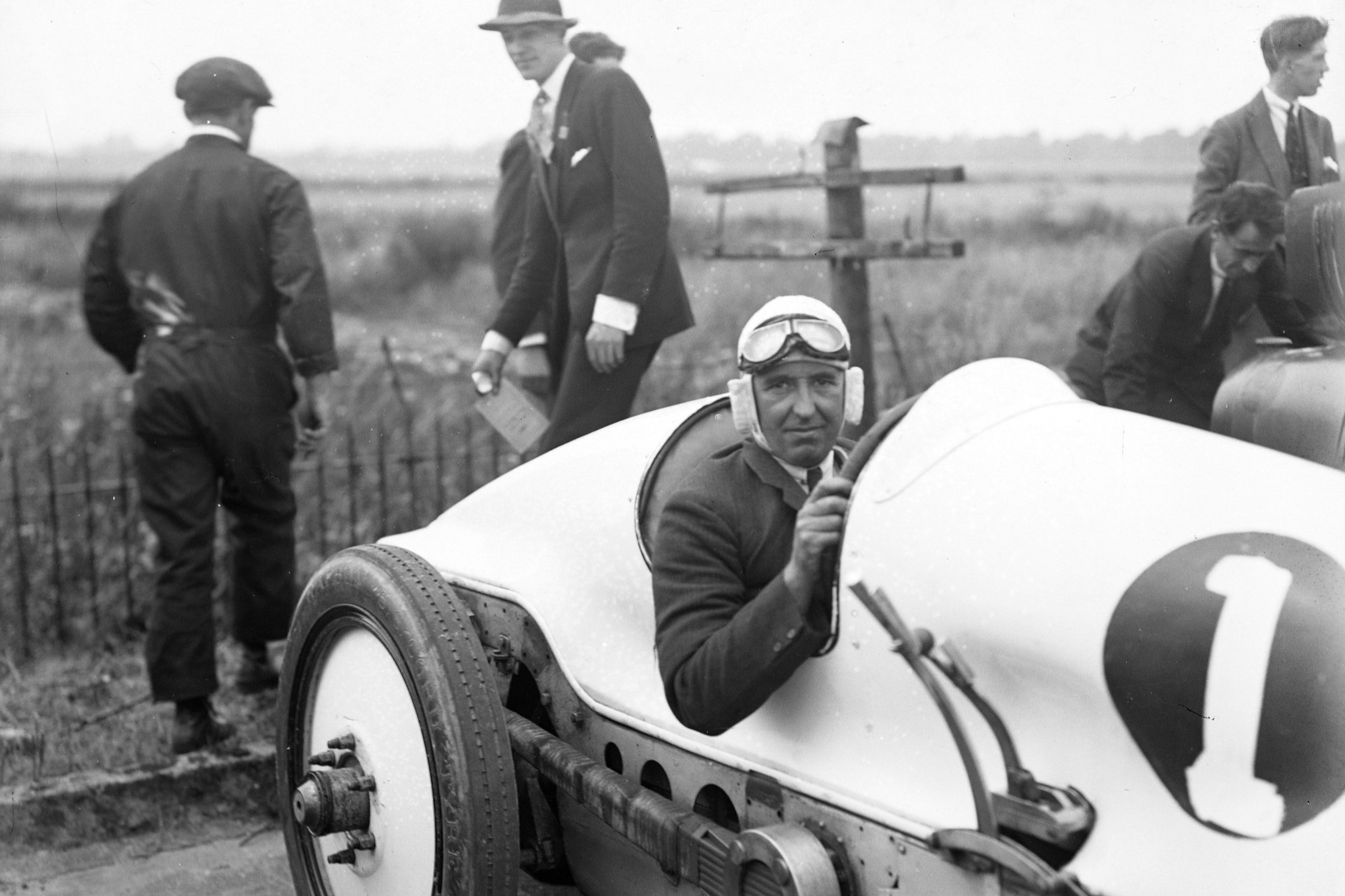
Pictured at Brooklands in 1924, J.G. Parry Thomas was a land-speed record-holder in the Higham Special, renamed 'Babs'
Photo by: Motorsport Images
With Parry Thomas at the wheel, it duly took the record on 27 April 1926, at a speed of 169.30mph (over a kilometre), before setting a new benchmark the next day of 171.02mph. A further attempt on 3 March 1927 to beat a new record set by Malcolm Campbell ended in disaster, though, as the car crashed – most likely due to a failure of the right-rear wheel – and Parry Thomas was killed instantly.
The decision was taken to have the damaged machine buried on the Pendine Sands beach, which is where it remained for more than 40 years until Owen’s father took it upon himself to locate, recover and rebuild the wreckage.
“Being a proud Welshman in the mid-1960s with the Campbell legacy that Donald Campbell went on to do and all the Malcolm Campbell stuff that had gone on before, he was rather annoyed that Parry Thomas had been rather forgotten in the mists of time,” says Owen Jr.
"The casing you could poke your finger through because it had just gone to pulp, but the gears inside were completely useable in the restoration" Geraint Owen
“He took a view that, even if he went and dug up the remains and ended up putting the crankshaft on its end in a museum somewhere, at least there would be something, somewhere, to act as a memorial to Parry Thomas.
“And so that was the path he went down. He eventually got permission to dig it up [from a relative of Parry Thomas] and he found a lot more than he was expecting in perhaps not quite as bad a condition as he was expecting.”
Despite being buried under the sand and exposed to salt water for more than 40 years, as well as the crash damage it had sustained, Babs was largely intact when it was retrieved in 1969. It underwent restoration across a two-year period and by the early 1970s was a rolling chassis before it was showcased across the country as more work was completed over the following years.
“If you put aluminium and steel in salt water they turn into a battery and the aluminium disappears and the steel parts are protected,” says Owen on how much of the wreckage survived. “The gearbox is the classic case, the casing you could poke your finger through because it had just gone to pulp, but the gears inside were completely useable in the restoration.”
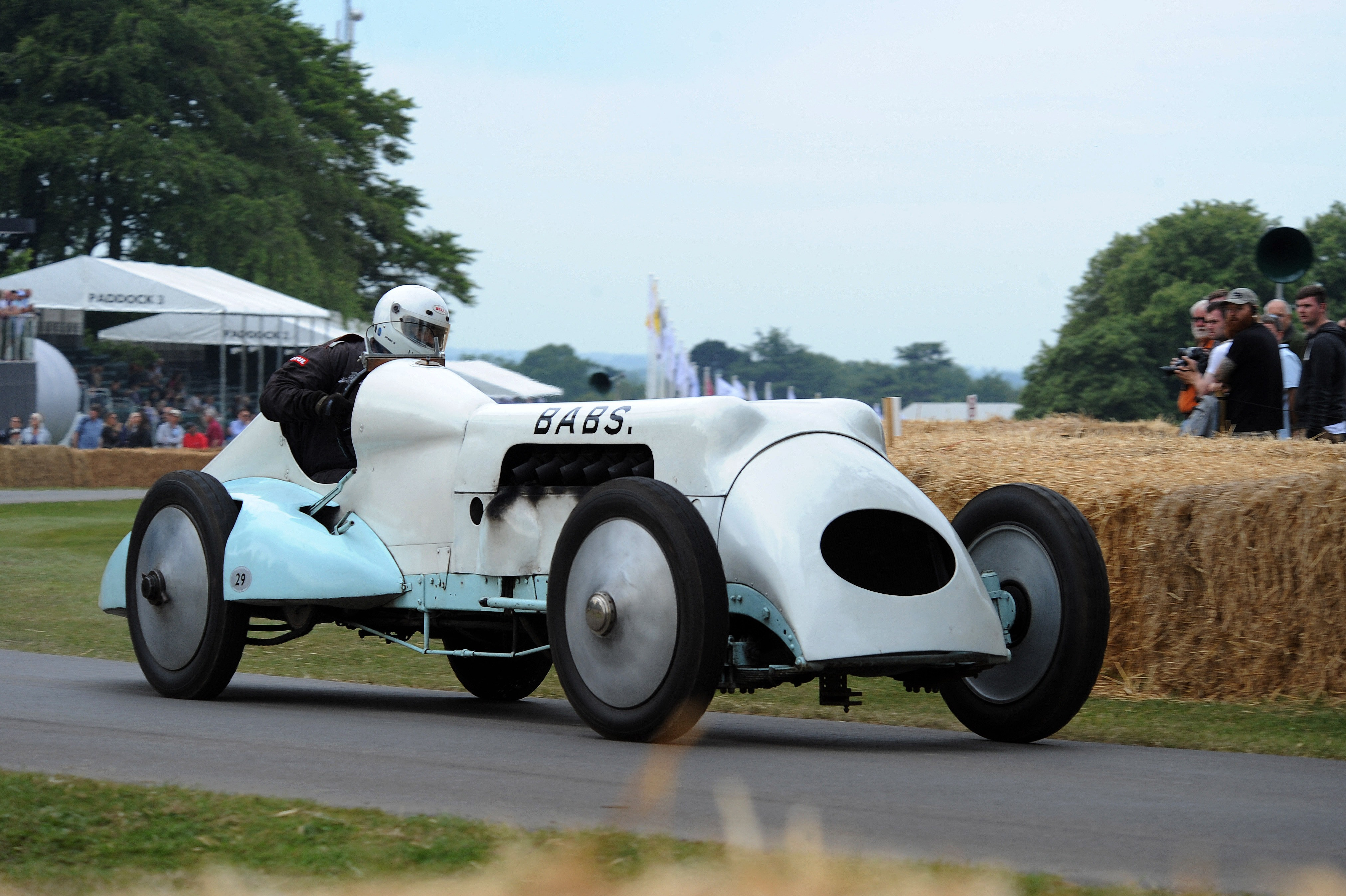
Owen has showcased 'Babs' at the Goodwood Festival of Speed, pictured in 2015
Photo by: Motorsport Images
The car has appeared at both the Goodwood Festival of Speed and Revival in recent years, although Owen admits it is due another restoration having now “been out of the ground longer than it was buried”.
While Babs might be the most famous machine that Parry Thomas drove, it certainly wasn’t the only one and, perhaps even more unsurprisingly, Owen has one of those other cars in his collection, having kept tabs on it for over 30 years.
“I am restoring the Parry Thomas Flatiron eight-cylinder grand prix car,” he says. “Instead of a big Brooklands outer circuit, land-speed record car like Babs or even his Leyland-Thomas, it was his little grand prix version of that, so it’s a little supercharged 1500cc.”
The two low-profile machines built were technically advanced for the time but both missed the 1926 British Grand Prix at Brooklands as they suffered from gearbox woes, although Parry Thomas did drive Owen’s future machine at the Junior Car Club 200 race later that year at the same venue, placing eighth. He also broke the class one-hour speed record, clocking 115mph.
The two cars then appeared in the 1927 British GP in the hands of WB ‘Bummer’ Scott and Harold Purdy, the former in Owen’s machine that also broke a number of diesel records in 1935 after a Perkins engine was fitted.
Over time, this was replaced with a Ford V8 and the car eventually came into the possession of renowned Bentley owner Vaughan Davis.
It was sold in 1953, with Owen making contact with the new owner while studying at university before finally acquiring the machine in 2014. Having been dismantled in the 1950s, the car is remarkably complete and very original having not been modified over the years.
“It’s completely bespoke, so the nuts and bolts are Thomas nuts and bolts,” says Owen. “I’ve got most of the car now but you start realising that you want to use the right sort of hose clips, rather than just using jubilee clips. So I’m making hose clips and I’m making all the nuts and bolts, and you’re making this and you’re making that.”
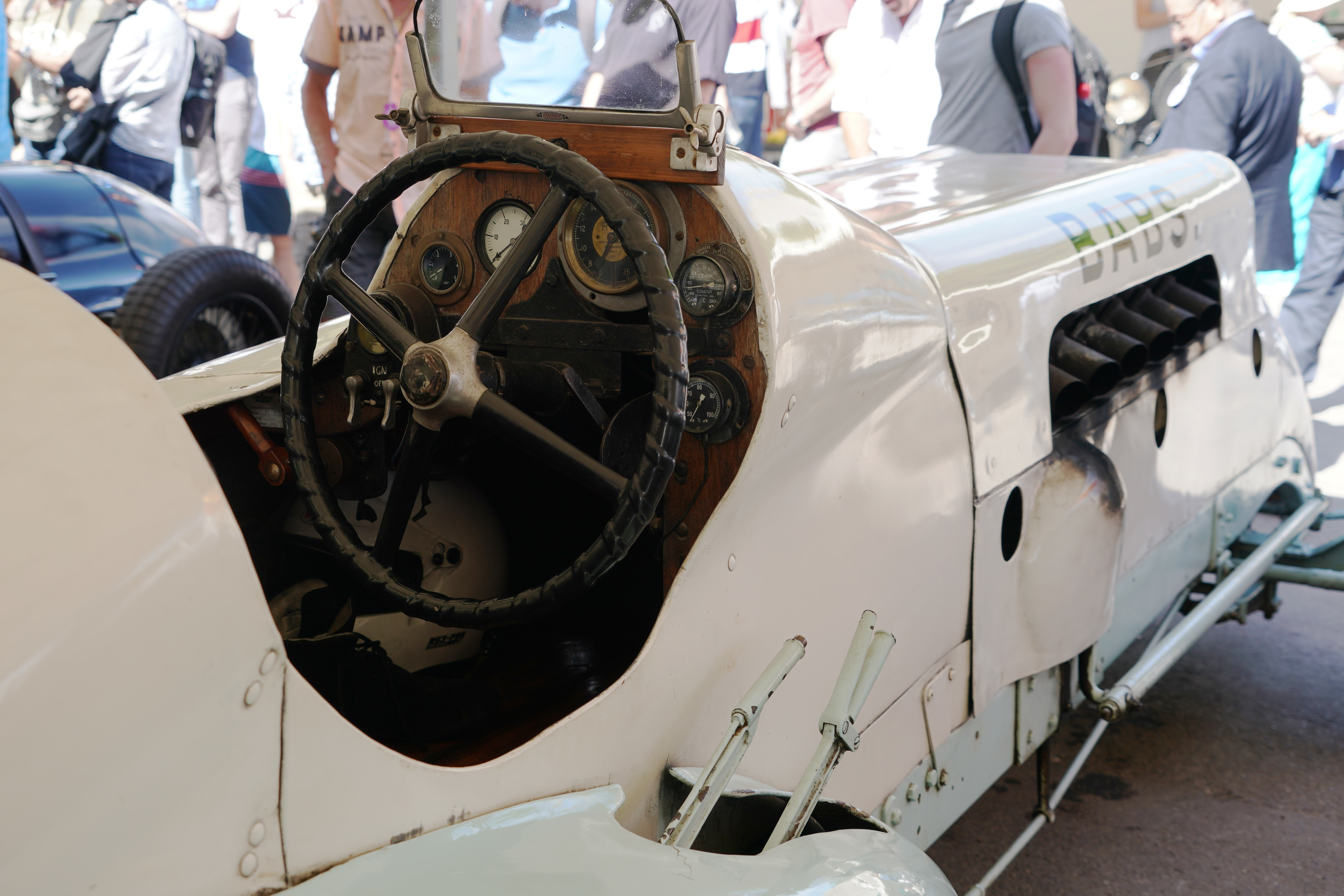
'Babs' has been in the Owen family's possession since Owen Jr was a child - he has now expanded his collection to include other Parry Thomas cars
Photo by: Motorsport Images
While the history of Parry Thomas and the Owen family seems to be intertwined, the now part-time university lecturer, who with his wife owns a commercial car storage company in Herefordshire, hasn’t limited himself when it comes to restoring cars.
A side-valved three-wheeler Morgan for his 16th birthday soon turned into an overhead-valve Jap-engined Morris – dubbed Jemima – that was raced in Vintage Sports-Car Club events for decades and still sits in the workshop having last been used in 2009.
A de Havilland Tiger Moth biplane engine was put into a 1928 Riley – that “seemed like a good idea at the time” – and success followed, including Owen’s first car race win at Cadwell Park in 2000. After selling that, he bought boxes of parts to build an eight-cylinder grand prix Type 35 Bugatti which again was sold, as was a Chevrolet Corvette C2 that he had raced – with success.
"The next thing you know is I’ve bought an Indycar, which seems like a stupid thing to do" Geraint Owen
In their place came a Kurtis 500S sportscar (which won the Peter Collins Trophy at the 2014 Goodwood Members’ Meeting) and the Kurtis Offenhauser, with Owen’s most recent addition being the Lister-Chevrolet in which he competed at the Goodwood Revival last month.
When Owen competes with these machines, he does it for the pleasure of taking them out and the enjoyment of competing as an amateur, while often beating teams with a crew of mechanics. But he also believes there are problems in historic racing.
“There are too many people driving cars they know nothing about,” he says. “People who are going racing in an old car could quite as easily go and do BMW Kumho Cup and they don’t really care [about the history]. They don’t get the fact that it’s an important this or that, and Jim Clark drove it.
“Historic racing is suffering from too many people going motor racing in old cars and not taking old cars that they love motor racing. Thankfully, clubs like the VSCC and Historic Grand Prix Cars Association seem full of enthusiasts.”
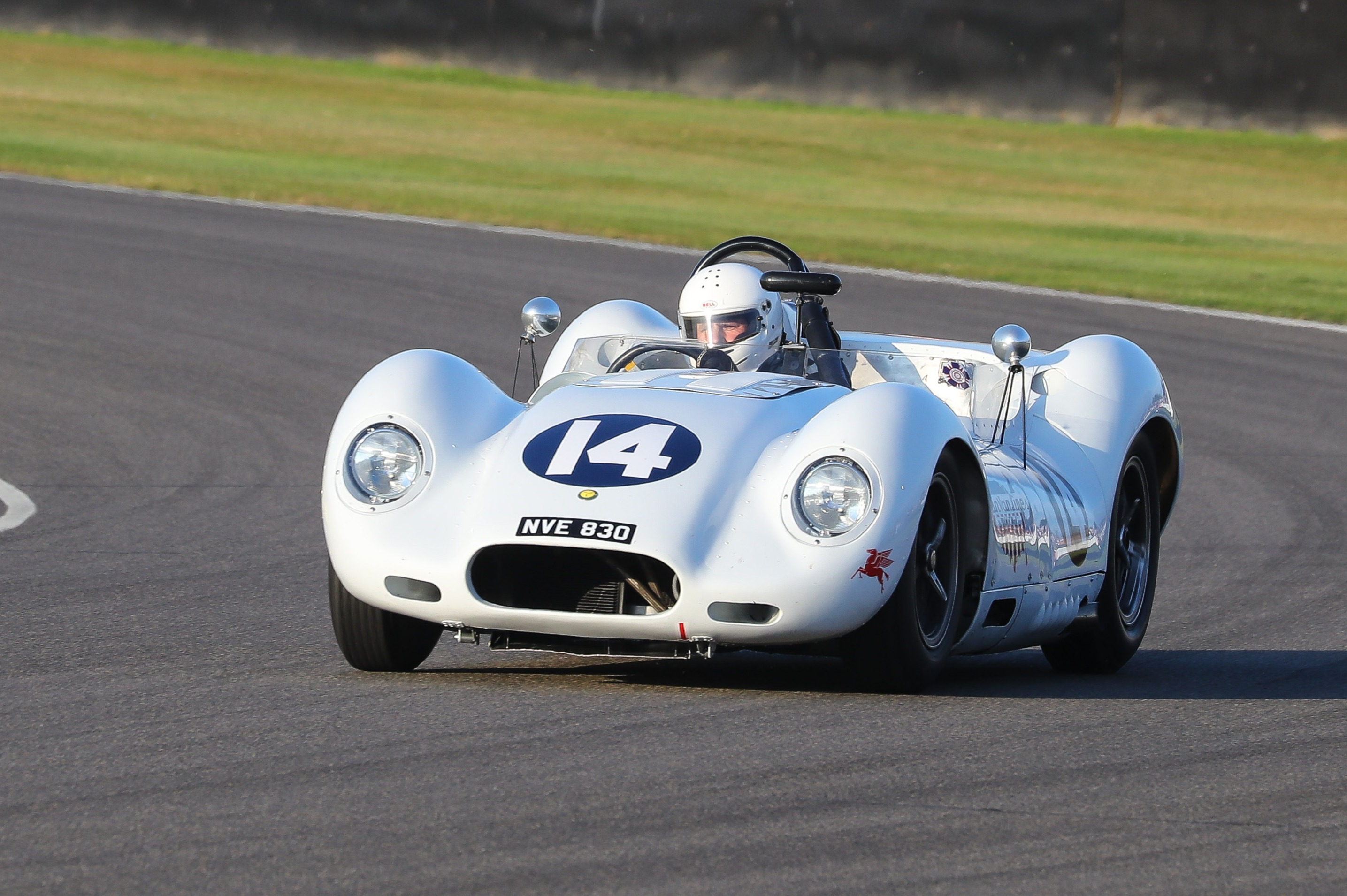
Owen competed at Goodwood Revival last month in newly-acquired Lister
Photo by: Richard Styles
Owen’s passion and enthusiasm for restoring historic machines means that cars such as Babs can remain active and help inspire the next generation of drivers, engineers and fans. As for Owen, while there’s no immediate plan to purchase another project, he’s always open to a new challenge.
“It’s making cars work that fascinates me,” he says. “I’ve had a turnover of cars because, once I’ve finished developing the car as far as my skills and arguably budget dictate, and I’ve got it going as fast as I can, [after] a couple of seasons I kind of go, ‘Well I don’t need to bring this back next year, where’s the new challenge?’”
When two worlds collide
While perhaps not as famous as Babs, one of Owen’s other restored machines certainly stands out just as much and has the history to match.
While attempting to establish FIA papers for his Kurtis 500S sportscar with someone in Houston, Texas, the opportunity to buy a unique bit of American history proved too good an opportunity to ignore.
“The guy I was speaking with said, ‘While you’re on the phone, you don’t know anybody that wants an Indycar?’,” says Owen. “And he described this Indycar and it wasn’t for me, and then he described a second Indycar that was for sale and said, ‘You’ll much more like this because it did Monza in 1958’.”
The car in question, a Kurtis-Offenhauser, had been driven in the Race of Two Worlds, an event held between drivers from Europe and America on Monza’s infamous banked layout. The event was only held in 1957 and 1958, with F1 drivers Stirling Moss, Juan Manuel Fangio and Jean Behra competing alongside US stars such as AJ Foyt, Jimmy Bryan and Jim Rathmann.
Owen’s car was raced by Jimmy Reece in the latter event, where he placed eighth, seventh and fifth respectively in the three heats.
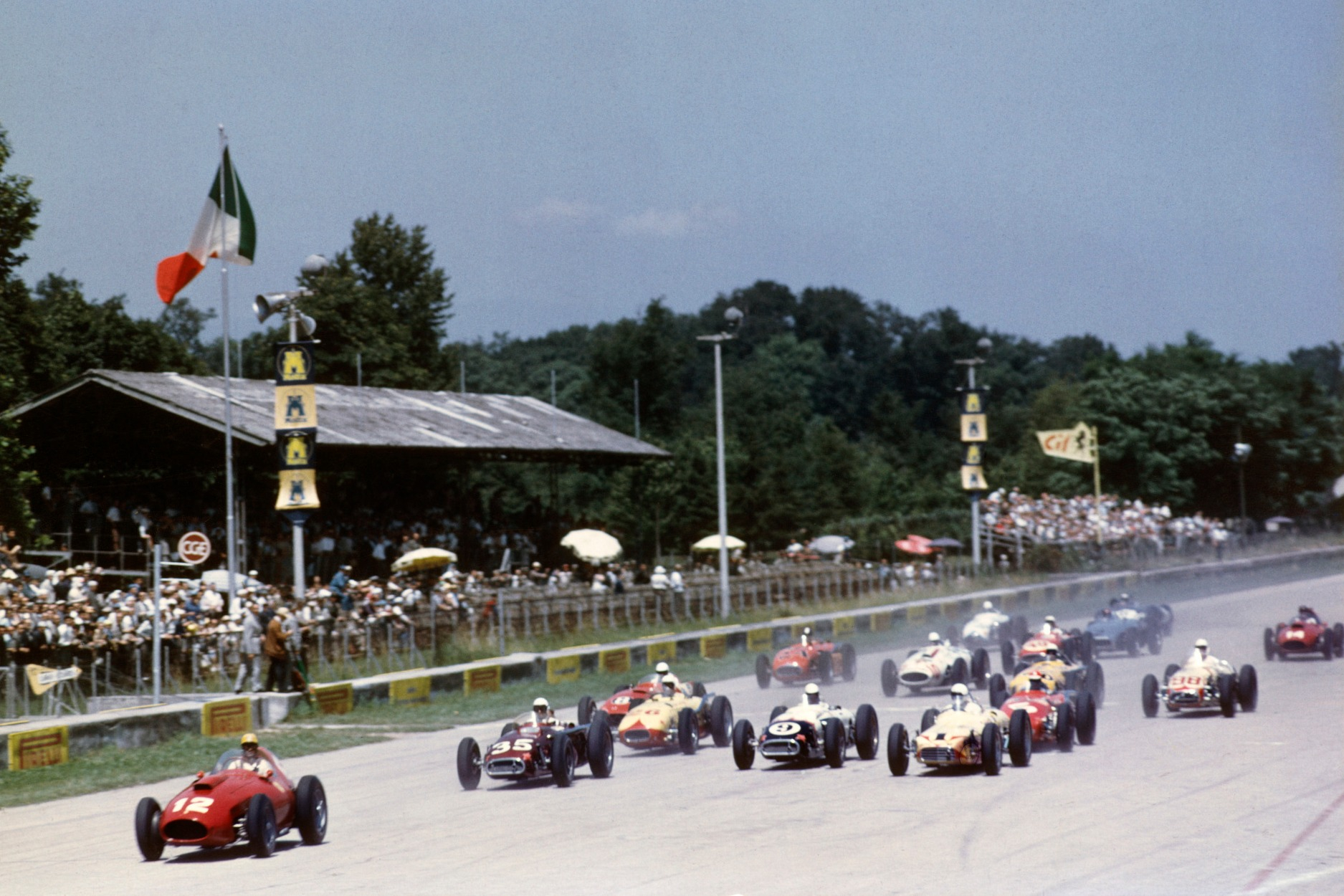
Race of Two Worlds at Monza, pictured here in 1958, brought Indycars and Formula 1 cars together
Photo by: Motorsport Images
Before appearing in Europe it was a regular attendee at the Indianapolis 500, driven by Fred Agabashian in the 1954 event where it finished sixth. The following year it went one better and took fifth after Walt Faulkner was relieved of driving duties by Bill Homeier during the race, which was overshadowed by the death of two-time Indy 500 winner Bill Vukovich.
The car’s active career between 1954 and 1959 included an appearance at the only Indycar race to take place at the Daytona International Speedway in 1959 where Dempsey Wilson qualified fourth at an average speed of 170.02mph. The car dropped out after 28 laps, having spun and touched the wall.
It returned to do the 1959 Indy 500 as the Wheeler Foutch Special, before it disappeared from public view.
The car had been restored to its 1954 specification by legendary Indycar builder AJ Watson and has been a mainstay in a number of historic events since
“Most of the Indycars got turned into super modifieds to do some dirt racing and just be generally abused, but this didn’t,” says Owen. “It turned up in the 1980s with a V8 and an autobox in it with two seats and two blokes driving it around on the road, but with most of the original bodywork. So it survived remarkably intact.
“I always thought an Indycar would be quite good fun and my friend Fred Harper always seems to be having quite a good laugh with his [Kurtis-Offenhauser that raced at both of the Race of Two Worlds events]. And so the next thing you know is I’ve bought an Indycar, which seems like a stupid thing to do.”
The car had been restored to its 1954 specification by legendary Indycar builder AJ Watson and has been a mainstay in a number of historic events since, in particular with the Historic Grand Prix Cars Association, and has thrilled fans at the Goodwood circuit.
“It’s been good, it’s been a lot fun,” says Owen. “Having said that, I snapped the crank at Silverstone Classic this year so it’s out of action for a period of time while that gets sorted!”
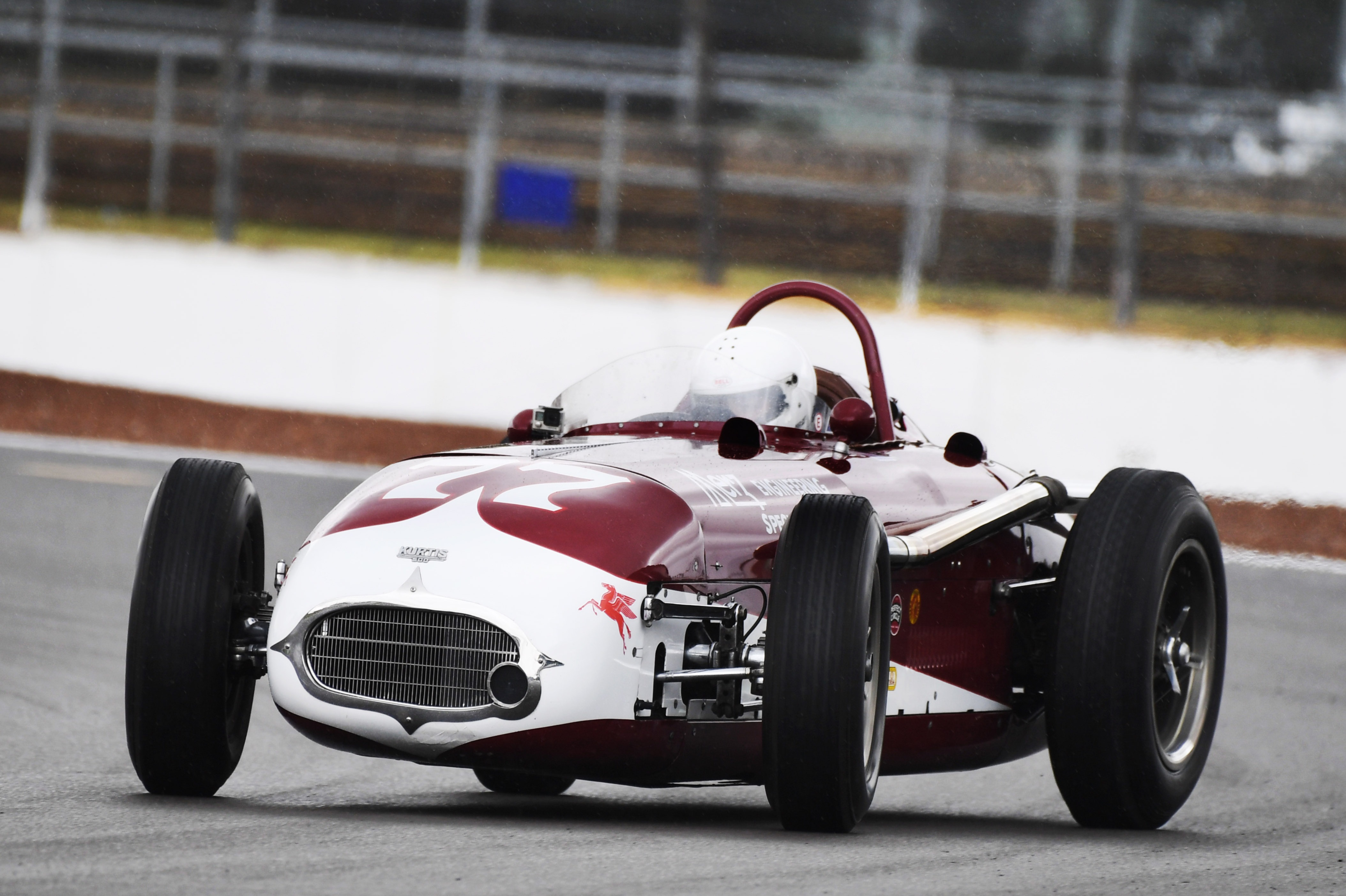
Owen's Kurtis-Offy raced at Monza and Indianapolis
Photo by: JEP


Piquet Jr, Visser and Eaton star at Brands Hatch's American SpeedFest

Johansson and Brown among the stars of Brands Hatch Masters Historic Festival

The verdict on Formula E’s Pit Boost delayed debut

How Rowland stamped his authority on Jeddah as rivals faltered

Formula E’s Pit Boost debut receives mixed response from drivers

The influencer fishing exercise Formula E hopes can achieve its long-term aims

Beckham, Aguero amongst celebrities set to drive Formula E cars in Miami

How Evans pulled off his last-to-first recovery in Formula E's dramatic opener

F1 champion Norris completes first full test in McLaren’s Le Mans Hypercar

How Solberg lit up WRC title fight in Chile

F2 adds extra Baku feature race and insists Qatar, Abu Dhabi still on – what does this mean for F1?

Healeys, MGBs and Lotus Elans top Castle Combe Autumn Classic
Subscribe and access Autosport.com with your ad-blocker.
From Formula 1 to MotoGP we report straight from the paddock because we love our sport, just like you. In order to keep delivering our expert journalism, our website uses advertising. Still, we want to give you the opportunity to enjoy an ad-free and tracker-free website and to continue using your adblocker.


Top Comments